
Key Takeaways:
- The upcoming 2027 BMW iX5 is poised to lead its segment in electric range, featuring an unprecedented 144 kilowatt-hours of usable battery capacity.
- This makes the BMW iX5 xDrive 60’s battery the largest ever installed in an electric BMW, significantly surpassing many luxury EV competitors.
- Despite its substantial 6,600-pound curb weight, BMW engineers have integrated advanced suspension and cell-to-pack technologies to ensure superior ride dynamics.
- The 2027 BMW iX5 combines elements of BMW’s foundational Cluster Architecture with cutting-edge Neue Klasse innovations, including sixth-generation cylindrical cells and an 800-volt architecture.
- Beyond the all-electric variant, BMW plans a diverse X5 lineup, featuring mild-hybrid, plug-in hybrid, and a pioneering hydrogen fuel-cell option.
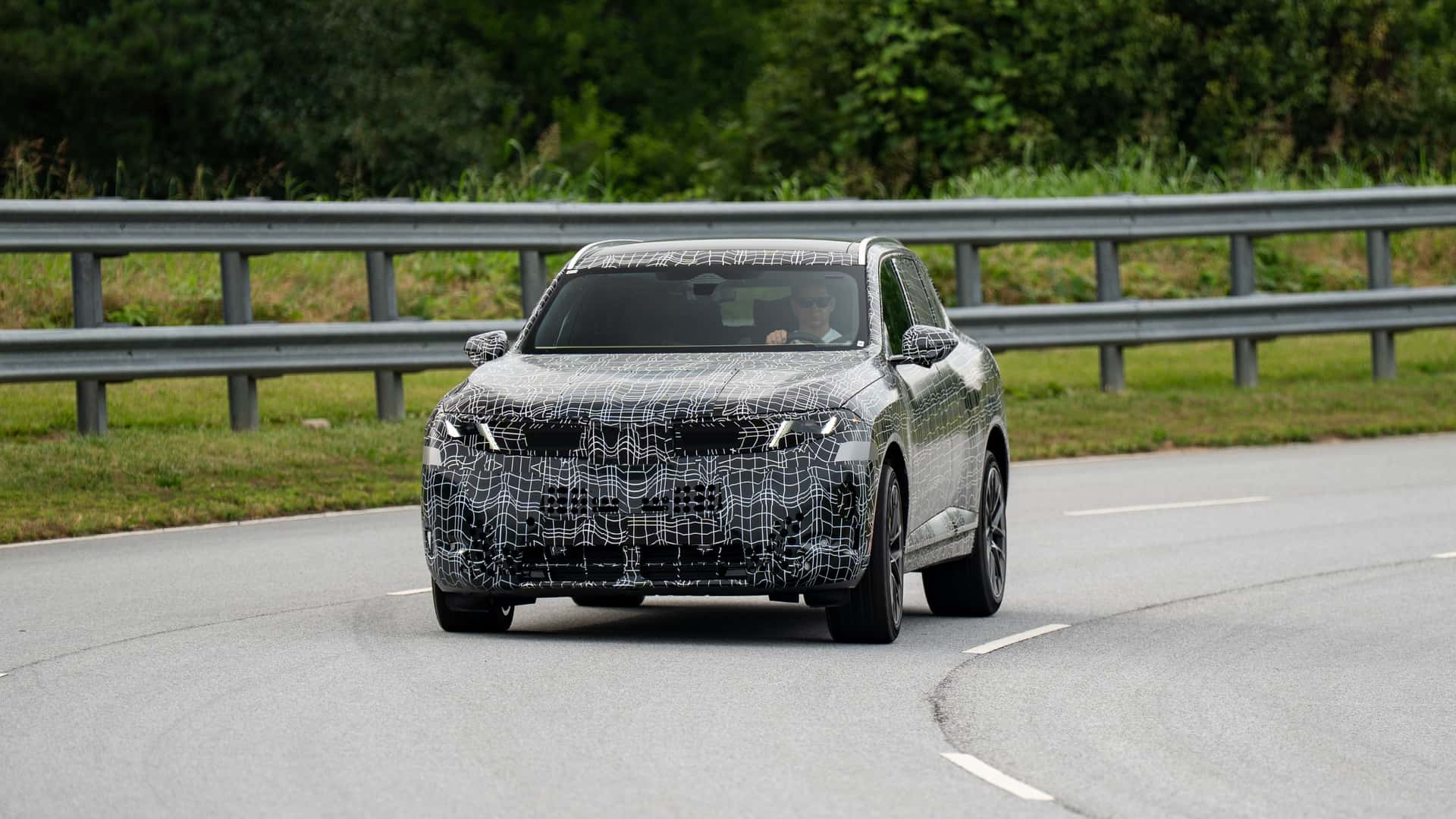
In a significant move poised to reshape the luxury electric SUV landscape, BMW is preparing to launch its 2027 BMW iX5, an all-electric variant of its highly successful X5 series. The automaker has confirmed that the electric SUV will house an exceptionally large battery pack, signaling its ambition to set new benchmarks for range within the premium segment.
Specifically, the 2027 BMW iX5 will offer 144 kilowatt-hours (kWh) of usable battery capacity for the U.S. market, with European models receiving a substantial 141 kWh. This colossal power unit will be the largest battery ever fitted into an electric BMW, underscoring a strategic push towards extended range capabilities.
Setting a New Standard for Electric Range
BMW’s strategic decision to equip the 2027 BMW iX5 with such a formidable battery pack positions the vehicle as a potential leader in electric range. While official EPA range figures are yet to be released, industry observers anticipate the iX5 to join an exclusive club of EVs offering well over 400 miles on a single charge.
This projection is supported by BMW’s existing electric portfolio. Models like the iX3 crossover and i3 sedan, with their 112 kWh (usable) battery packs, already deliver impressive ranges exceeding 400 miles. The significantly larger battery in the electric X5 strongly suggests a comparable, if not superior, performance.

The BMW iX5’s Battery Advantage Over Competitors
The 144 kWh usable capacity of the 2027 BMW iX5 places it at a distinct advantage over many direct and indirect rivals in the luxury electric SUV market. For context, the Porsche Cayenne Electric features approximately 113 kWh of gross battery capacity. Although its EPA range is not yet finalized, it is expected to achieve over 300 miles.
Another contender, the Lucid Gravity Grand Touring, comes with a 123 kWh gross battery, enabling it to deliver over 400 miles of EPA range. This is particularly notable given the Gravity’s highly aerodynamic design, which aids in efficiency. The BMW iX5, with its larger battery, is designed to outpace both these sophisticated electric SUVs in sheer energy storage.
Among the closest competitors, the Rivian R1S with its optional Max battery pack offers a usable capacity of 140 kWh. While this is substantial, the 2027 BMW iX5 still surpasses it. It is important to note that larger battery packs, exceeding 200 kWh, are found in heavy-duty electric trucks and SUVs from General Motors, such as the Chevy Silverado EV, GMC Hummer EV, and Cadillac Escalade IQ, which operate in a different segment altogether.
Addressing the Engineering Challenges of Weight
Integrating such a massive battery pack into a vehicle like the 2027 BMW iX5 is not without its engineering complexities. One of the primary tradeoffs is vehicle weight, which can impact efficiency, ride quality, and dynamic handling. According to a report by Autocar, the battery significantly contributes to a curb weight of approximately 3,000 kilograms, equivalent to about 6,600 pounds. This positions the electric X5 as one of the heaviest vehicles in its class.
BMW’s engineering team, however, appears to have deployed innovative solutions to mitigate the effects of this substantial weight. The vehicle incorporates a decoupled suspension system, separating the springs from the dampers. This design increases the internal volume of the air chamber, allowing for greater compression to manage the immense loads exerted by the vehicle’s mass.
Furthermore, the automaker has repositioned the adaptive dampers and anti-roll bars. This meticulous adjustment aims to achieve an optimal balance between the plush ride comfort expected from a luxury SUV and the agile handling characteristic of BMW vehicles, even with the added weight of the large battery.
Advanced Battery and Platform Integration
The 2027 BMW iX5 leverages advanced cell-to-pack technology, a method that eliminates the intermediate modules and structural layers typically found in battery construction. This innovation directly contributes to weight reduction and allows engineers to optimize space, keeping the floor height minimal despite the sheer size of the battery pack. BMW engineers have reportedly “shaved off a millimeter here and a millimeter there” to achieve this compact integration.
Crucially, the electric X5 utilizes BMW’s Cluster Architecture, a platform primarily designed for combustion engines but re-engineered to accommodate electric powertrains. Unlike the iX3, which is built on the newer Neue Klasse platform, the iX5’s reliance on the Cluster Architecture demonstrates BMW’s ability to adapt existing foundations for future electric mobility.
Despite its platform heritage, the 2027 BMW iX5 benefits from key technological advancements borrowed directly from the Neue Klasse initiative. These include the adoption of sixth-generation cylindrical battery cells and an 800-volt electrical architecture. The 800-volt system is particularly significant, as it enables faster charging times and more efficient power delivery, enhancing the overall EV experience.
Final Stages of Development and Future Outlook
BMW is currently conducting the final calibration drives for the electric X5 at its manufacturing facility in Spartanburg, signaling that the vehicle is nearing its production readiness. The launch of the 2027 BMW iX5 is highly anticipated for several reasons beyond its electric capabilities.
The electric version is expected to emerge as a powerful contender in America’s rapidly evolving electric vehicle landscape, offering a compelling blend of range, luxury, and performance. In addition to the all-electric model, BMW has ambitious plans to offer a comprehensive range of powertrain options for the new X5. This includes mild-hybrid gasoline and diesel variants, a robust plug-in hybrid model, and notably, the introduction of the first-ever hydrogen fuel-cell X5. This multi-faceted approach highlights BMW’s commitment to diverse sustainable mobility solutions for the future.
FAQ Section
What is the battery capacity of the 2027 BMW iX5?
The 2027 BMW iX5 will feature a significant 144 kWh of usable battery capacity for the U.S. market and 141 kWh for Europe. This is designed to provide extensive range, making it the largest battery ever installed in an electric BMW.
What is the estimated range of the 2027 BMW iX5?
While official EPA range figures are not yet confirmed, the substantial 144 kWh battery is expected to deliver well over 400 miles of range, positioning the electric X5 as one of the longest-range electric vehicles available.
How does the BMW iX5’s battery compare to competitors?
The 2027 BMW iX5’s 144 kWh usable battery capacity significantly surpasses rivals like the Porsche Cayenne Electric (113 kWh gross) and Lucid Gravity Grand Touring (123 kWh gross). It also exceeds the Rivian R1S’s Max pack (140 kWh usable), establishing a strong competitive edge in its segment.
What platform does the 2027 BMW iX5 use?
The 2027 BMW iX5 utilizes an adapted version of BMW’s Cluster Architecture, which is primarily a combustion engine platform. However, it integrates advanced technologies from BMW’s newer Neue Klasse platform, including sixth-generation cylindrical battery cells and an 800-volt electrical system.
What are the other powertrain options for the new BMW X5 line?
Beyond the all-electric 2027 BMW iX5, BMW plans to offer a diverse range of powertrains for the X5 series. These options include mild-hybrid gasoline and diesel versions, a plug-in hybrid model, and a groundbreaking hydrogen fuel-cell variant, catering to a broad spectrum of customer preferences.
How does BMW manage the weight of the large iX5 battery?
BMW addresses the iX5’s substantial weight (around 6,600 pounds) through innovative engineering. This includes decoupled suspension springs and dampers, a larger air chamber for compression, repositioned adaptive dampers, anti-roll bars, and cell-to-pack battery technology to reduce overall mass and maintain a low floor height.