
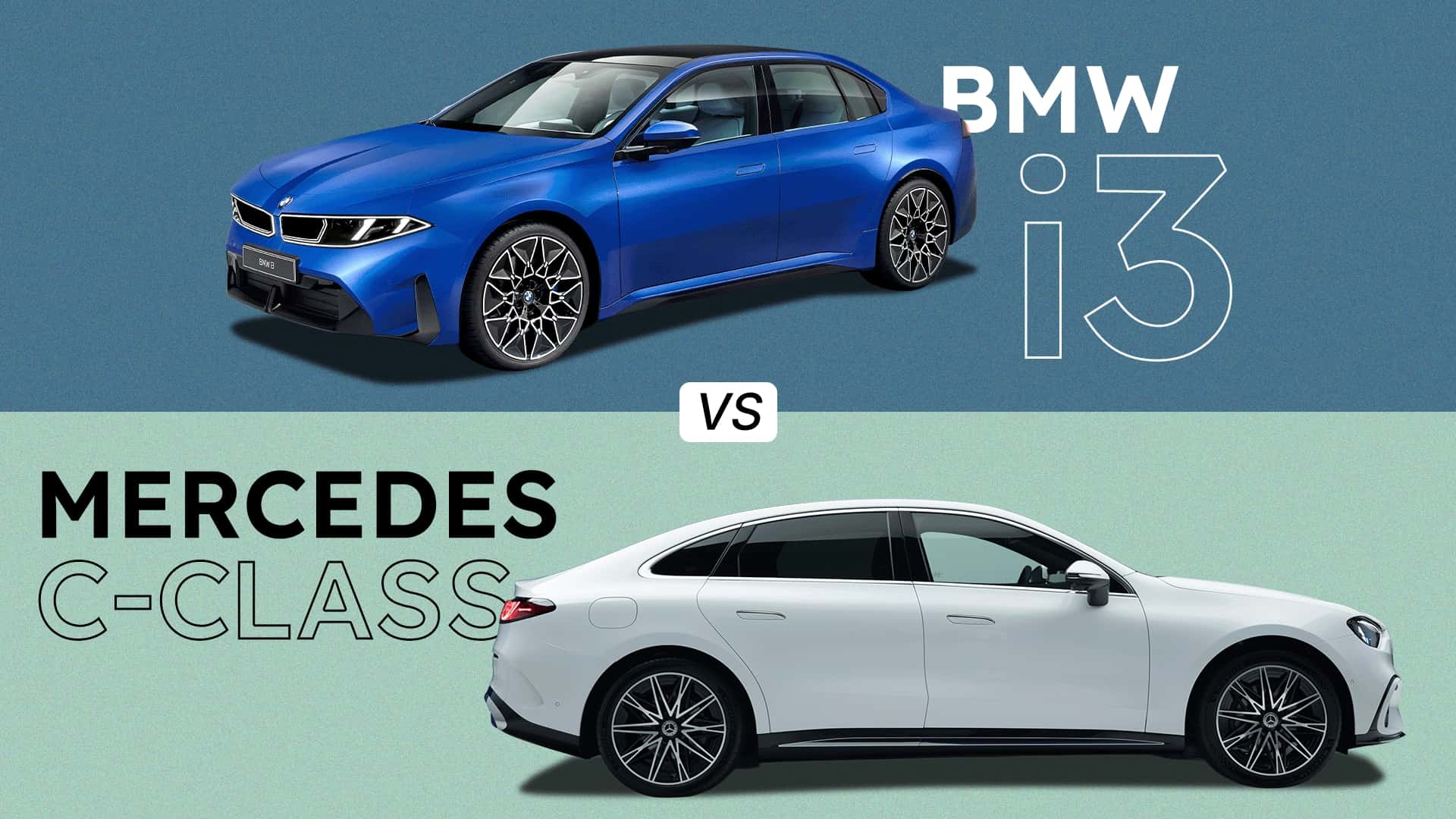
The electric vehicle (EV) landscape is witnessing a significant shift as traditional automotive giants, Mercedes-Benz and BMW, intensify their rivalry in the premium compact executive sedan segment. With the recent unveiling of the electric C-Class and the highly anticipated BMW i3, consumers are presented with two formidable contenders. These vehicles, slated for 2027 releases, mark a new chapter in a storied competition, albeit with distinct approaches to electric mobility.
Both models leverage advanced 800-volt platforms, promising rapid charging capabilities and enhanced efficiency – features that were once considered futuristic for EVs. While Mercedes-Benz touts its new C-Class EV as “the sportiest C-Class ever,” its foundational design principles retain a strong emphasis on traditional luxury. In contrast, the 2027 BMW i3 leans heavily into cutting-edge EV technology, signaling a more radical departure from conventional automotive design.

Initial specifications reveal a nuanced competition. The BMW i3 appears to hold an advantage in charging speed and projected range, a critical factor for many EV buyers. However, the launch iteration of the Mercedes-Benz C-Class EV boasts superior power and torque figures, suggesting a more performance-oriented initial offering. While comprehensive specifications for both models are still emerging, sufficient data has been released to provide a substantial comparative analysis between the 2027 Mercedes C-Class EV vs. 2027 BMW i3.
Key Takeaways: 2027 Mercedes C-Class EV vs. 2027 BMW i3
- Platform & Performance: Both utilise 800-volt architecture for efficiency. The C-Class EV (482 hp) leads in initial power, while the i3 (469 hp) offers competitive acceleration.
- Dimensions & Space: The C-Class EV is larger overall, positioning it closer to a traditional E-Class, yet the i3 seemingly provides more rear occupant space despite its smaller footprint.
- Battery & Range: BMW i3 features a larger 108.7 kWh battery, achieving a WLTP range of 559 miles (900 km). The C-Class EV offers a 94.3 kWh pack with 473 miles (762 km) WLTP.
- Charging Speed: The i3 boasts a higher peak charging rate of 400 kW, adding 249 miles (400 km) in 10 minutes. The C-Class EV supports up to 330 kW, replenishing 202 miles (325 km) in 10 minutes.
- Technological Philosophy: Mercedes adopts an overt display of technology with large screens. BMW embraces a ‘shy tech’ approach, integrating features subtly and providing a unique panoramic display.
- Driving Dynamics: The C-Class EV offers optional adaptive air suspension and rear-wheel steering for versatile comfort. The i3 features a ‘Heart of Joy’ supercomputer for refined control and a ‘limo stop’ function.
- Bidirectional Charging: Both support Vehicle-to-Load (V2L), with the i3 additionally confirmed for Vehicle-to-Home (V2H) and Vehicle-to-Grid (V2G) capabilities.
Dimensions and Interior Architecture: A Tale of Two Sizes
In the evolving segment of electric compact executive sedans, size and interior packaging play a crucial role. The new Mercedes-Benz C-Class EV measures 192.2 inches (4.88 meters) in length, resting on a substantial 116.6-inch (2.96 meters) wheelbase. It is also 1.1 inches (2.7 cm) wider and 0.9 inches (24 mm) taller than its Bavarian counterpart.
Comparatively, the 2027 BMW i3 presents a slightly more compact footprint at 187.4 inches (4.76 meters) long, with a 114.1-inch (2.89 meters) wheelbase. This makes the C-Class EV notably larger, extending by 4.8 inches (12 centimeters) and offering a 2.5-inch (6.5 cm) longer wheelbase.

Intriguingly, the C-Class EV’s dimensions position it closer in size to the current internal combustion engine E-Class sedan, while the i3 maintains a size profile more aligned with the traditional 3 Series. Despite its larger exterior, early assessments suggest that the C-Class EV’s rear passenger compartment offers less legroom and foot space than one might anticipate, particularly for taller occupants. The i3, despite its marginally smaller exterior, appears to provide a more generous rear seating experience.
Practicality for the C-Class EV is bolstered by a 16.6 cubic-foot (470-liter) trunk, complemented by a 3.6 cubic-foot (101-liter) ‘frunk’ or front trunk, offering versatile storage options. BMW has not yet released official cargo volume figures for the i3, making a direct comparison in this aspect currently unfeasible.
Electric Powertrain and Performance Dynamics
The performance metrics of these upcoming electric sedans highlight each manufacturer’s engineering priorities. The launch-spec Mercedes-Benz C400 4Matic features a potent dual-motor powertrain, delivering a combined output of 482 horsepower and 590 pound-feet (800 Nm) of torque. This configuration allows for a rapid acceleration, achieving 0 to 62 mph (100 km/h) in a swift 3.9 seconds.
Mercedes’ powertrain design includes a primary rear motor connected to a two-speed transmission, engineered to optimise both acceleration and energy efficiency. The front motor possesses the ability to mechanically decouple from the wheels, further conserving energy when all-wheel drive is not required.
Conversely, the 2027 BMW i3 xDrive 50, which shares its powertrain with the recently reviewed iX3 model, produces 469 hp and 476 lb-ft (645 Nm) of torque. This places it 13 hp and 114 lb-ft (155 Nm) behind the C-Class EV in peak power and torque. While BMW has yet to publish an official 0-62 mph acceleration figure for the i3, estimates based on the heavier iX3 (which completes the sprint in 4.9 seconds with the same power) suggest the i3 will accelerate to 62 mph in approximately 4.5 seconds.
Both Mercedes-Benz and BMW are expected to broaden their respective lineups with additional variants. These will likely include more efficient single-motor configurations, potentially offering even greater range, as well as high-performance models under the AMG and M badges. Speculation suggests the electric M3 equivalent could feature an advanced quad-motor setup with sophisticated torque vectoring, while the AMG version of the electric C-Class is reportedly being developed with a three-motor architecture.
Charging Prowess and Range Efficiency
When it comes to the crucial metrics of range and charging capabilities, the 2027 BMW i3 demonstrates a clear advantage. It is equipped with a larger 108.7 kWh battery pack, surpassing the C-Class EV’s 94.3 kWh unit. This translates into a WLTP (Worldwide Harmonised Light Vehicle Test Procedure) range of 559 miles (900 km) for the i3, significantly outperforming its rival’s 473 miles (762 km) rating. It is important to note that WLTP figures typically present a more optimistic estimate compared to EPA (Environmental Protection Agency) range figures, which have not yet been released for either vehicle.
In terms of fast charging, the BMW i3 also takes the lead with a remarkable peak charging power rating of 400 kW. This enables it to replenish 249 miles (400 km) of range in just 10 minutes and charge its battery from 10% to 80% in approximately 21 minutes. The Mercedes-Benz C-Class EV, while still offering impressive charging speeds, has a lower peak rating of 330 kW. This allows it to add 202 miles (325 km) of range in 10 minutes and complete a 10% to 80% charge in 22 minutes. Anecdotal evidence from a Mercedes GLC EV suggests that the C-Class EV might exceed its maximum stated charging rating under ideal conditions, potentially reaching over 350 kW.
Future variants are also a consideration. Leaked specifications for a single-motor, smaller-battery iX3 indicate an 82.6 kWh battery offering 395 miles (620 km) WLTP range and 315 horsepower, accelerating to 62 mph in 5.9 seconds. BMW is highly likely to mirror these specifications in an i3 variant, potentially offering a single-motor version with the larger battery for an exceptionally long range.
Both the 2027 Mercedes C-Class EV and the 2027 BMW i3 are confirmed to support Vehicle-to-Load (V2L) bidirectional charging, allowing them to power external devices. BMW has further confirmed that the i3 will support Vehicle-to-Home (V2H) and Vehicle-to-Grid (V2G) charging, enhancing its utility within smart home ecosystems and grid management.
Technological Approaches and User Experience
Both electric sedans showcase highly advanced technological integrations, yet their presentation and underlying philosophies diverge significantly. BMW adopts a ‘shy tech’ approach, where much of its sophisticated technology is discreetly integrated and emerges only when required by the user. Mercedes-Benz, conversely, opts for a more explicit display of its innovations, often presenting features in a more pronounced manner.
A prime example is the optional 39.1-inch pillar-to-pillar dashboard display in the C-Class EV, a single, expansive screen designed to create an immediate impression of futurism. The standard configuration still offers three separate screens. In contrast, the BMW i3 maintains a more understated aesthetic. While its 17.9-inch parallelogram-shaped central screen is distinctive—designed to evoke the driver-oriented cockpits of classic BMWs—it functions as a refined, albeit conventional, infotainment display.
BMW’s innovative 43-inch panoramic display, spanning the entire lower edge of the windshield, acts as a sophisticated hybrid between a traditional screen and a head-up display. It presents critical driving information directly in the driver’s line of sight and offers six customisable slots for various widgets. This setup, previously experienced in the iX3, has garnered positive feedback for its intuitive and immersive qualities, potentially giving the i3 an edge in driver-focused information delivery.
In terms of driving dynamics, the C-Class EV offers an optional Comfort and Agility Package. This includes adaptive air suspension and 4.5 degrees of rear-wheel steering, endowing the vehicle with a broader range of characteristics, from supple comfort to agile handling. These features, if executed with the same finesse as in the GLC EV, will provide the Mercedes with a level of ride comfort and adaptability that the i3, which lacks these specific options, may struggle to match.
BMW, however, highlights its ‘Heart of Joy’ supercomputer, which precisely manages the i3’s driving characteristics. This system, also experienced in the iX3 SUV, delivers a remarkably smooth, sharp, and controlled driving experience, allowing for engaging yet controllable oversteer. It also facilitates a ‘limo stop’ function, designed to bring the vehicle to a graceful, jolt-free halt. While the Mercedes also aims for smooth braking, the BMW’s specific feature is noted for its exceptional refinement.
The Enduring Rivalry in an Electric Era
The impending arrival of the 2027 Mercedes C-Class EV and the 2027 BMW i3 signals a renewed intensity in one of the automotive industry’s longest-standing rivalries. While both German marques continue to target the discerning compact executive sedan buyer, their visions for electric mobility have diverged. Mercedes-Benz appears committed to translating its established brand values of opulent luxury and refined performance into the electric age, offering an EV that seamlessly integrates into its existing brand identity.
BMW, conversely, seems to be leveraging electrification as a catalyst for breaking traditional design and engineering norms, albeit still drawing inspiration from its rich heritage. The i3 presents itself as the more overtly advanced and futuristic electric vehicle, prioritising EV-specific innovations and a distinctive user interface. The C-Class EV, meanwhile, positions itself as a well-rounded luxury sedan that happens to be powered by electricity, aiming to satisfy a broader spectrum of discerning customers.
Ultimately, a definitive verdict on which vehicle is superior will necessitate a direct, back-to-back driving comparison. Nevertheless, the emergence of these two highly capable electric sedans ensures that this age-old competition will continue to thrive, offering consumers compelling choices in the rapidly expanding electric vehicle market.
Frequently Asked Questions (FAQ)
What are the primary differences in design philosophy between the 2027 Mercedes C-Class EV and the BMW i3?
The Mercedes C-Class EV largely translates its existing luxury brand values into an electric platform, focusing on refinement and comfort. The BMW i3, however, embraces electrification as an opportunity for innovation, showcasing a more futuristic design and advanced EV-centric technologies that challenge traditional automotive norms.
How do the battery capacity and range figures compare for these two electric sedans?
The 2027 BMW i3 is equipped with a larger 108.7 kWh battery, offering an impressive WLTP range of 559 miles (900 km). The Mercedes C-Class EV features a 94.3 kWh battery, providing a WLTP range of 473 miles (762 km), making the i3 the clear leader in initial range projections.
Which vehicle offers faster charging capabilities?
The BMW i3 boasts superior charging speeds with a peak rating of 400 kW, capable of adding 249 miles (400 km) of range in just 10 minutes. The Mercedes C-Class EV has a peak rating of 330 kW, replenishing 202 miles (325 km) in the same timeframe, though it may exceed this in ideal conditions.
What distinguishes the interior technology and display systems?
The C-Class EV features an optional expansive 39.1-inch pillar-to-pillar display, indicative of Mercedes’ overt tech showcase. The i3 adopts ‘shy tech’ with a distinctive 17.9-inch central screen and a 43-inch panoramic windshield display, offering an immersive, driver-focused information experience.
Do both models support bidirectional charging?
Yes, both the 2027 Mercedes C-Class EV and the 2027 BMW i3 support Vehicle-to-Load (V2L) bidirectional charging. Additionally, the BMW i3 has confirmed support for Vehicle-to-Home (V2H) and Vehicle-to-Grid (V2G) capabilities, enhancing its energy utility.
How do the driving dynamics and chassis options differ?
The C-Class EV offers an optional Comfort and Agility Package, including adaptive air suspension and rear-wheel steering for enhanced comfort and versatility. The i3, while lacking these specific options, features BMW’s ‘Heart of Joy’ supercomputer for a precise, controlled driving experience and unique functionalities like the ‘limo stop’.
What does the difference in exterior dimensions imply for buyers?
The C-Class EV is larger, aligning more with a traditional E-Class size, appealing to those seeking more road presence. The i3 is closer to a 3 Series, potentially offering more nimble handling in urban environments and appealing to those who prefer a slightly more compact executive sedan, despite its surprising interior space.
Are there plans for high-performance variants of these models?
Yes, both manufacturers are expected to launch high-performance versions. The electric M3 equivalent (based on the i3 platform) is anticipated to feature a quad-motor setup, while the AMG variant of the electric C-Class is reportedly being developed with a three-motor configuration, promising significant power upgrades.