
Key Takeaways
- A longtime Tesla owner, Robert Rosenfeld, spent a week exclusively driving a 2025 Rivian R1S, offering a unique perspective on shifting EV brand loyalty.
- The Rivian R1S Tri-Motor Max Pack, priced at approximately $111,000, offers superior range (371 miles) compared to Tesla’s Model X (314 miles) and Cybertruck (301-325 miles).
- Rosenfeld lauded the Rivian R1S for its extensive customization options, versatile SUV design, premium interior, and customizable driving dynamics, including a highly praised 360-degree camera system.
- Despite the Rivian’s strengths, Tesla’s advanced software, particularly its Full Self-Driving (FSD) capability, and familiar user interface remained key factors for Rosenfeld to retain his Tesla.
- The comparison highlights a broader industry trend where competing EV brands, including Rivian, are narrowing technological gaps, offering compelling alternatives to established Tesla owners.
In the rapidly evolving landscape of electric vehicles (EVs), a fundamental question resonates with a growing segment of owners: Is there a compelling alternative beyond Tesla? As the EV market matures, with numerous manufacturers introducing sophisticated models, many long-time Tesla drivers are contemplating their next move. This query is particularly pertinent given Tesla’s historical dominance and the significant investment many owners have made in its ecosystem.
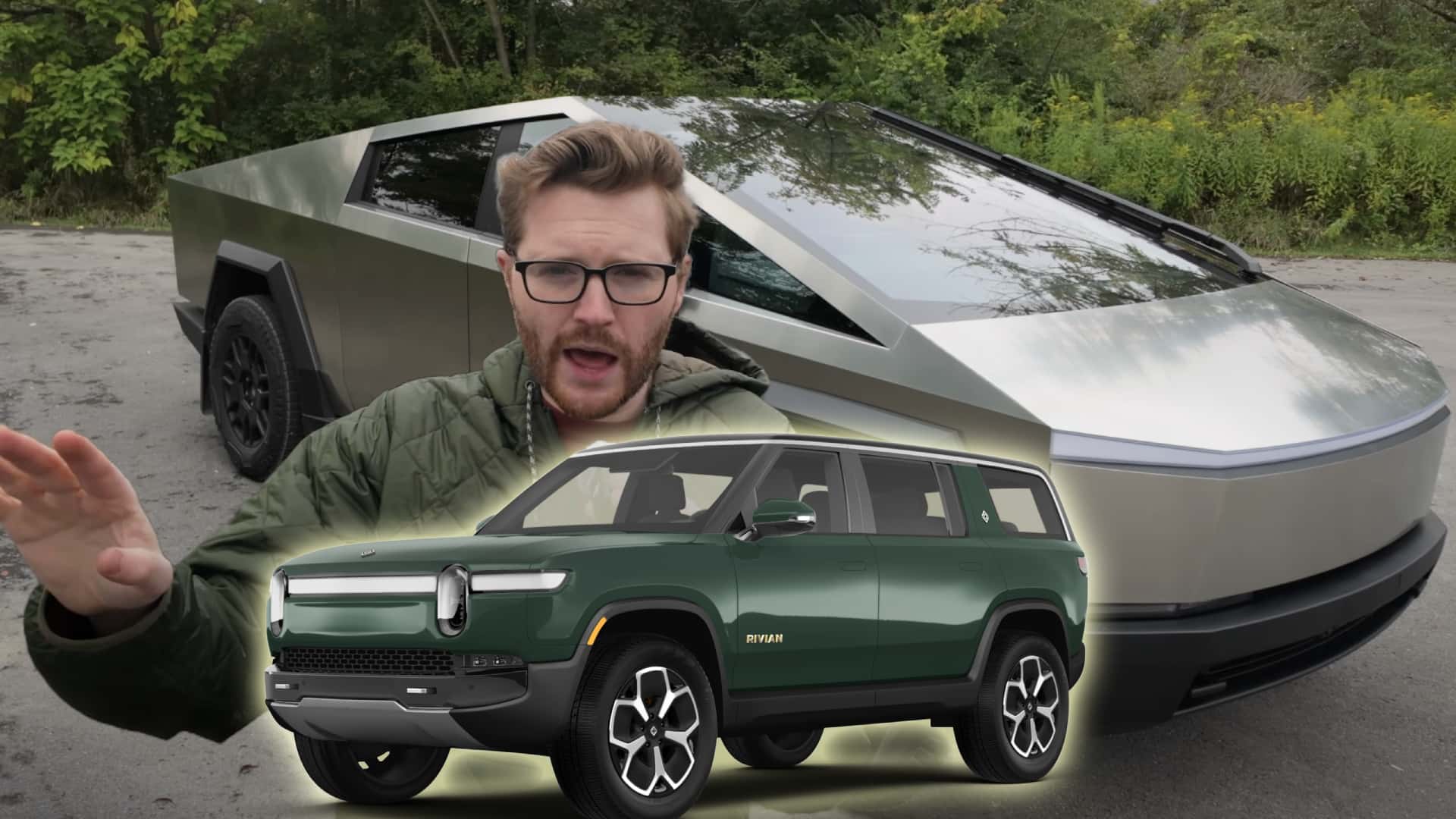
One such individual navigating this evolving choice is YouTuber Robert Rosenfeld, a prominent figure in the Tesla community. Since 2019, Rosenfeld has exclusively owned Tesla vehicles, progressing from a Model Y to a Model X, and currently, a Cybertruck. His extensive experience with Tesla has cemented his reputation as a devoted enthusiast, sharing his insights with a substantial online audience.
The Shift: A Week with the Rivian R1S
Recently, Rosenfeld embarked on an experiment to explore the broader EV market, stepping away from his Teslas to exclusively drive a loaner 2025 Rivian R1S for an entire week. This temporary switch offered him a direct, immersive comparison, providing invaluable insights into how another premium electric SUV stacks up against the familiar Tesla experience. His findings offer a detailed look at the differences between two of America’s most technologically advanced electric vehicles.
While Rosenfeld ultimately decided to retain his Tesla, his detailed review of the Rivian R1S provides critical context for any EV owner considering a change. His decision, while influenced by factors such as his audience of Tesla devotees and his use of referral codes, underscores the distinct philosophies and offerings of these pioneering brands in the electric vehicle space.
Software-Defined Vehicles: Tesla vs. Rivian
Both Rivian and Tesla are widely recognized for their commitment to software-defined vehicles. This innovative approach allows for first-rate smartphone app integration and continuous over-the-air (OTA) updates, enabling constant improvements and new features. This characteristic sets them apart in the automotive industry, making them compelling choices for tech-savvy consumers.
Anecdotal evidence suggests that Rivian’s electric vehicles frequently top the list for Tesla owners exploring alternatives. However, Rivian’s current lineup is comparatively smaller and typically more expensive than Tesla’s diverse offerings. This dynamic is set to change with the anticipated debut of the more accessible $45,000 Rivian R2 next year, potentially broadening its appeal significantly.
Comparing Pricing and Range: R1S Tri-Motor Max Pack Against Tesla Flagships
The specific 2025 Rivian R1S configuration evaluated by Rosenfeld, the Tri-Motor Max Pack variant, carries a price tag of approximately $111,000. This places it squarely in competition with high-end Tesla models such as a well-equipped Cybertruck or a Model X Plaid, indicating a direct rivalry within the premium electric SUV segment.
A notable advantage of the Rivian R1S Tri-Motor Max Pack is its impressive estimated range of 371 miles on a single charge. This figure surpasses the 314 miles offered by the Tesla Model X and the 325 or 301 miles available in different configurations of the Cybertruck. For drivers prioritising extended travel capability, the Rivian presents a significant lead in range.
Design and Interior: Customization Versus Minimalism
A primary point of distinction highlighted by Rosenfeld revolves around vehicle customization and aesthetic options. He expressed appreciation for the extensive trim levels, colour palettes, and wheel choices available for the Rivian R1S and its pickup truck counterpart, the R1T. This contrasts sharply with Tesla’s more minimalist approach, which offers significantly sparser configurability across its model range.
Beyond aesthetics, Rosenfeld also lauded the Rivian R1S for its utilitarian and robust design. He noted the vehicle’s “boxy design, versatility and SUV capability,” appreciating the ample cargo space, stating, “I’ve got a whole lot of room for hauling, which is nice.” This emphasis on practical utility and adventure-ready aesthetics defines much of Rivian’s brand identity, a departure from Tesla’s sleek, futuristic forms.
Cabin Experience and Controls
As an experienced Tesla owner, Rosenfeld is accustomed to the brand’s minimalist interior philosophy, characterised by “very few buttons.” He found the Rivian R1S cabin similarly intuitive, describing it as a premium vehicle interior that “checks most of the boxes.” While acknowledging Rivian’s distinct “adventure-y vibe” might not align with everyone’s preference, he recognised its high-quality construction and thoughtful design.
A particular feature that garnered considerable praise from Rosenfeld was the Rivian’s 360-degree top-down camera system. This comprehensive view significantly aids in parking and manoeuvring, a functionality he explicitly stated he wished Tesla would adopt. Despite both brands favouring digital controls, Rosenfeld, like many automotive enthusiasts, acknowledged a personal preference for a greater number of physical controls in both vehicles.
Driving Dynamics and Road Trip Suitability
The driving experience of the Rivian R1S also received high marks from the seasoned EV driver. Rosenfeld highlighted the substantial degree of customization available for the R1S’s driving dynamics. This includes adjustable regenerative braking, configurable display layouts, and various driving modes, allowing owners to tailor the vehicle’s performance to their specific preferences and road conditions.
These customizable settings stand in contrast to the often more fixed driving profiles found in some other EVs, offering a more engaging and personalised experience. Rosenfeld confidently concluded that he “had no qualms about taking this on a road trip,” underscoring the R1S’s capability as a long-distance electric tourer, an important consideration for many EV buyers.
The Software Divide: Tesla’s FSD Versus Rivian’s Evolution
Despite the numerous positive attributes of the Rivian R1S, it was ultimately software that solidified Rosenfeld’s continued loyalty to Tesla. He expressed reservations regarding the Rivian’s menu structures, attributing some of his discomfort to a difference from his familiar Tesla interface. Specific criticisms were directed at the perceived clunkiness of the Rivian’s maps and HVAC controls, areas where he felt Tesla offered a more refined user experience.
Crucially, as a significant user of Tesla’s Full Self-Driving (FSD) system – a feature not universally adopted by all Tesla owners – the absence of a direct Rivian equivalent presented a notable drawback for Rosenfeld. While Rivian has recently begun to implement hands-free highway driving assistance, its roadmap for full autonomy is still developing, creating a current gap in advanced driver-assistance systems compared to Tesla.
The ‘Apple vs. Android’ Analogy in the EV World
Rosenfeld aptly summarised the fundamental difference between the two manufacturers by drawing an analogy to the Apple versus Android ecosystems. He characterised Tesla as the “Apple” of the automotive world, providing a highly curated, often singular experience where the company dictates precisely what the user receives. This approach prioritises seamless integration and a consistent user journey.
Conversely, Rivian embodies the “Android” philosophy, offering a wealth of options, extensive customizations, and greater configuration possibilities. This allows owners to tailor their vehicles to a higher degree, appealing to those who value flexibility and choice. While switching smartphone ecosystems can be challenging, the transition between vehicle brands, arguably, presents fewer deep-seated integration hurdles.
A Second Perspective: The Pilot’s Transition to Rivian R1S
Reinforcing the narrative of Tesla owners exploring alternatives, YouTuber Darren Byrd, a pilot known for aviation content, recently shared his experience of trading a Tesla Model X for a similar Rivian R1S. Byrd’s video provided a balanced assessment, detailing both the advantages and disadvantages of his new purchase. Overall, he expressed satisfaction, describing the Rivian R1S as “a more normal car that happens to be electric” compared to his previous Falcon Door-equipped Tesla.
This perspective from an owner who successfully made the switch provides valuable context, illustrating that for many, the Rivian R1S offers a compelling, albeit different, ownership experience. It underscores the maturing diversity within the electric vehicle market.
Navigating the EV Landscape: Advice for Discerning Buyers
For current Tesla owners contemplating a move to a different electric vehicle, a strategic approach begins with identifying their primary motivations and priorities. The market now offers a sophisticated array of choices catering to specific preferences, making an informed decision crucial.
If range and ubiquitous charging access are paramount, newer NACS-equipped models like the Hyundai Ioniq 5 present a compelling option, leveraging expanding charging infrastructure. For those who prioritise cutting-edge software and advanced driver-assistance systems, Rivian remains arguably the closest competitor to Tesla, with the potential to rapidly close any existing technology gaps through its robust OTA updates.
Alternatively, if high-performance driving is the core appeal, the market abounds with powerful alternatives. While few modern EVs can be considered slow, vehicles such as the Polestar 3 or the Porsche Taycan consistently stand out as potent and engaging options for enthusiasts. The landscape of electric vehicles is continuously improving, offering an ever-broadening spectrum of choices to meet diverse consumer needs.
Experience Rivian on the road—schedule your demo drive today.
Frequently Asked Questions (FAQ)
What was Robert Rosenfeld’s background before reviewing the Rivian R1S?
Robert Rosenfeld is a prominent YouTuber and a devoted Tesla owner since 2019. He has owned multiple Tesla models, including the Model Y, Model X, and a Cybertruck, building a significant audience around his Tesla-centric content before trying out the Rivian R1S.
What were the main reasons Rosenfeld considered a Rivian R1S?
Rosenfeld sought to explore alternatives in the EV market, curious about how competing premium electric SUVs performed. He wanted to understand the differences between Tesla’s established ecosystem and Rivian’s offerings, driven by a common question among many Tesla owners.
How does the Rivian R1S Tri-Motor Max Pack’s range compare to Tesla models?
The 2025 Rivian R1S Tri-Motor Max Pack boasts an estimated 371 miles of range. This is notably higher than the Tesla Model X’s 314 miles and the Cybertruck’s 301-325 miles, positioning the Rivian as a strong contender for long-distance travel.
What aspects of the Rivian R1S did Rosenfeld praise?
Rosenfeld praised the Rivian R1S for its extensive customization options, versatile and robust SUV design, premium interior, and customizable driving dynamics. He particularly highlighted the effective 360-degree top-down camera system and its suitability for road trips.
Why did Rosenfeld ultimately decide to keep his Tesla despite liking the Rivian?
Software and advanced driver-assistance systems were the primary reasons. Rosenfeld, a frequent user of Tesla’s Full Self-Driving (FSD), found Rivian’s menu setups, maps, and HVAC controls less intuitive. The absence of a direct Rivian equivalent to Tesla’s FSD was a significant factor.
What is the ‘Apple vs. Android’ analogy used to describe Tesla and Rivian?
Rosenfeld used this analogy to illustrate their differing philosophies. Tesla is likened to Apple, offering a curated, less customizable experience. Rivian is compared to Android, providing more options, extensive customizations, and greater configuration possibilities for owners.
What future Rivian model is anticipated to change the market dynamic?
The Rivian R2, expected to debut next year at a price point of around $45,000, is highly anticipated. This more accessible model could significantly expand Rivian’s market reach and offer a more direct competitor to a broader range of Tesla vehicles.
What advice is offered for Tesla owners looking to switch to another EV?
Owners should identify their priorities: range and charging (e.g., NACS-equipped Hyundai Ioniq 5), software and advanced tech (Rivian), or performance (Polestar 3, Porsche Taycan). The EV market now offers diverse options to meet specific consumer needs.