
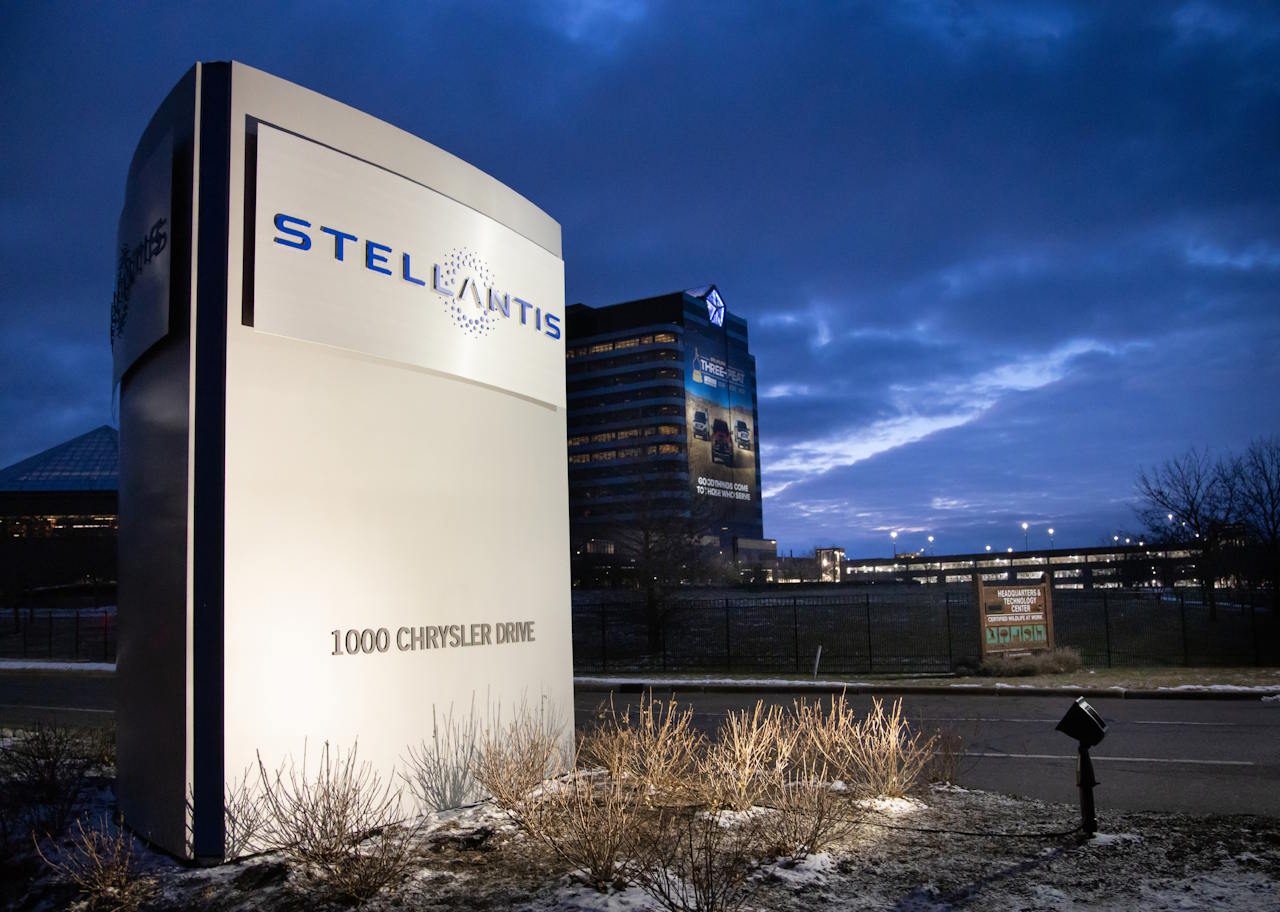
Stellantis Posts Major Write-Down Amid EV Strategy Shift
Franco-Italian automotive giant Stellantis has announced a substantial write-down of €22 billion (approximately $A37 billion) in its second-half 2025 profits. This significant financial charge reflects a strategic pivot away from aggressive electric vehicle (EV) expansion, including the divestment or discontinuation of several battery manufacturing projects.
Rationale Behind the Strategic Reset
The company has characterized these charges as a necessary “reset to meet customer preferences and to support profitable growth.” Stellantis stated that a comprehensive review of its strategy and associated costs was undertaken to align the company with “real-world preferences of its customers.” While affirming its commitment to remaining at the forefront of EV development, Stellantis indicated that future progress will be “governed by demand rather than command.” The company acknowledged it had “over-estimated” the pace of the energy transition, which it believes had led to a disconnect with the practical needs and desires of many car buyers.

New Focus on Hybrids and Market Adjustments
In line with its revised strategy, Stellantis is now prioritizing hybrid vehicles, particularly in the North American market with its Jeep and Chrysler brands. The company has also cancelled the proposed electric RAM 1500. Furthermore, Stellantis has divested its 49 per cent stake in the Ontario-based battery manufacturer NextStar Energy to its joint venture partner, LG Energy Solution. Details of Stellantis’s long-term EV plans are expected to be unveiled in May with the release of its new strategic plan.
Industry-Wide Reassessment of EV Strategies
Stellantis’s move away from extensive EV commitments is part of a broader trend observed among automakers heavily reliant on the North American market. Earlier, Ford announced a $US19.5 billion hit to its profits as it shifted focus back towards internal combustion engine (ICE) and hybrid models, notably scrapping the F-150 Lightning. Ford has publicly cited an inability to compete with Chinese EVs as a contributing factor.
Contrasting Global EV Market Trends
However, the decisions by these North American-centric automakers contrast with the robust growth in EV sales seen in Europe and China, which appears to challenge the notion that the shifts are solely demand-driven. In China, battery electric vehicle (BEV) sales saw consistent increases throughout 2025, culminating in 1,108,000 units sold in December. This contributed to annual new energy vehicle (NEV) sales reaching 16.49 million, marking a 28.2 per cent year-on-year increase. Similarly, in the European Union, BEVs constituted 17.4 per cent of new car registrations in 2025, up from 13.6 per cent in 2024, despite a modest 1.8 per cent overall growth in car registrations.
