
Key Takeaways:
- VEV has completed one of the UK’s largest heavy goods vehicle (HGV) charging deployments, installing 5 MW of high-power DC infrastructure across three Maritime Transport logistics hubs.
- The project at Wakefield, Tilbury, and Doncaster features eighteen DC chargers (100 kW to 400 kW), capable of simultaneously charging up to 36 electric trucks.
- This infrastructure is designed to support 56 electric HGVs, each expected to cover approximately 120,000 km annually, signifying a significant shift towards sustainable freight.
- VEV managed the entire process, from site design and power systems engineering to civil works and integration with its VEV IQ smart charging platform for optimised energy management.
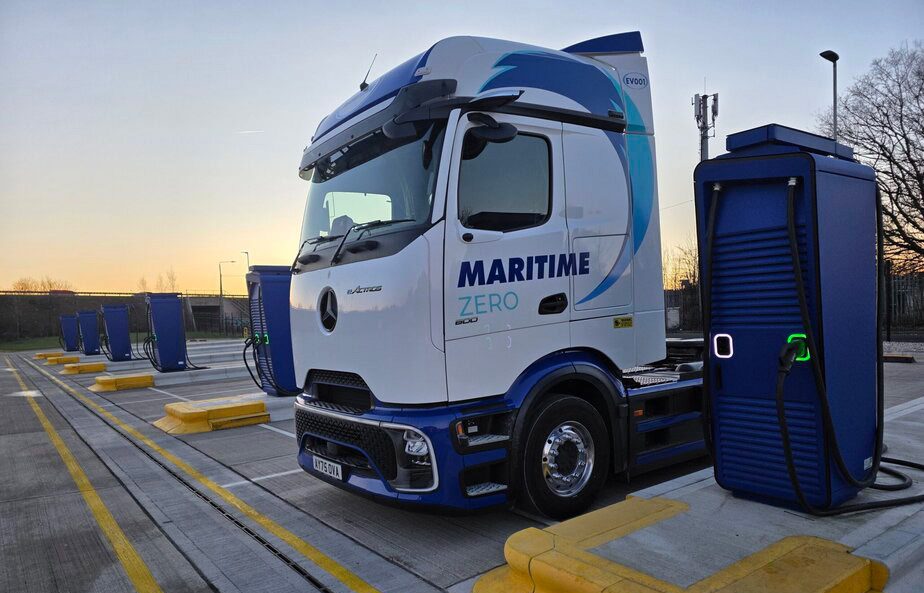
- The initiative is a crucial part of Maritime Transport’s ‘Maritime Zero’ fleet electrification program, bolstered by the UK government’s Zero Emission HGV and Infrastructure Demonstrator (ZEHID) Program, with plans for a broader rollout across 13 depots.
In a significant stride towards decarbonising the UK’s logistics sector, VEV has successfully deployed a robust 5 MW high-power DC charging infrastructure across three pivotal Maritime Transport logistics depots. This monumental installation, located in Wakefield, Tilbury, and Doncaster, represents one of the largest heavy goods vehicle (HGV) charging projects in the country, marking a critical transition from pilot phases to operational reality for electric freight.

The comprehensive deployment underpins Maritime Transport’s ambitious fleet electrification programme, ‘Maritime Zero’. It establishes a robust foundation for integrating a substantial electric HGV fleet into the company’s national operations, pushing the boundaries of sustainable supply chain management in the UK.
Pioneering Electric Heavy Goods Vehicle Charging Infrastructure
The newly commissioned infrastructure boasts eighteen state-of-the-art DC chargers, with individual capacities ranging from a robust 100 kW to an impressive 400 kW. These high-power units are strategically distributed across the three sites, designed to facilitate the simultaneous charging of up to 36 electric trucks. This capacity is essential for supporting the intensive operational demands of a modern logistics fleet.
Upon full operational integration, these three sites are projected to power 56 electric heavy goods vehicles. Each of these electric HGVs is anticipated to cover approximately 120,000 kilometres per year, underscoring the substantial impact of this deployment on reducing carbon emissions across vast distances within the UK’s freight network.

Strategic Locations for National Impact
The selection of Wakefield, Tilbury, and Doncaster as the initial deployment sites is strategically significant. These locations are key logistics hubs within the UK, facilitating critical distribution routes and connections across the nation. Placing high-capacity electric heavy goods vehicle charging at these points ensures that electric trucks can operate efficiently along vital corridors, minimising range anxiety and maximising operational uptime.
This concentrated effort at critical junctures of the UK’s logistics network demonstrates a clear vision to create interconnected charging ecosystems. Such strategic positioning is vital for scaling up electric HGV adoption and ensuring the seamless integration of zero-emission vehicles into existing supply chains.
VEV’s End-to-End Solution for Complex Deployments
VEV’s involvement extended beyond mere installation, encompassing the entire design and delivery spectrum of this complex project. Their expertise covered critical aspects such as site layout optimisation, intricate power systems engineering, and comprehensive civil works to prepare the depots for the advanced charging infrastructure.
A core component of VEV’s offering is the seamless integration of the charging hardware with its proprietary VEV IQ smart charging platform. This intelligent system provides real-time visibility into charger and energy performance, offering invaluable data for operational efficiency. It also features automated load balancing capabilities, crucial for managing the immense power requirements across the depot network without straining local grids.
Optimised Charging Schedules and Energy Management
The VEV IQ platform’s ability to optimise charging schedules is a game-changer for large-scale fleet operations. By intelligently scheduling charging times, the system can leverage off-peak electricity tariffs, reduce energy costs, and ensure that vehicles are ready for their routes when needed. This level of sophisticated energy management is vital for the economic viability and operational effectiveness of electric heavy goods vehicle fleets.
Such smart charging technology addresses many of the complexities associated with high-power charging, allowing logistics companies like Maritime Transport to maximise their investment in electric vehicles while ensuring reliable and cost-effective operations.
Maritime Transport’s Decarbonisation Ambitions
This substantial deployment is a cornerstone of Maritime Transport’s broader fleet electrification program, spearheaded by its dedicated ‘Maritime Zero’ division. The initiative aligns with the company’s long-term strategic goal to establish the cleanest full-load supply chain in the UK, demonstrating a strong commitment to environmental stewardship and sustainable business practices.
The project receives crucial backing from the UK government’s Zero Emission HGV and Infrastructure Demonstrator (ZEHID) Program. This government support underscores the national importance of electrifying heavy transport and provides the necessary impetus for companies to invest in such transformative technologies. The ambitious plan targets the rollout of electric heavy goods vehicle charging infrastructure across 13 Maritime depots within its national network, signalling a widespread shift.
Leadership Perspectives on Electrification
Tom Williams, Deputy CEO at Maritime Transport, articulated the significance of this milestone, stating, “We’ve got big ambitions on electrification, and this is a massive step forward from pilot phase into operational reality within our network. The infrastructure now in place gives us the capacity and confidence to expand our electric fleet as part of our long-term strategy to run the cleanest full-load supply chain in the UK.” His statement highlights the transition from experimental stages to fully integrated, operational electric logistics.
Echoing this sentiment, Marcelo Soares, VP Customers and Partnerships at VEV, emphasised the challenging nature of heavy freight decarbonisation. “Heavy freight is one of the most difficult sectors to decarbonise due to the scale of power required and the operational intensity of fleets,” Soares noted. He further asserted, “Delivering 5 MW of charging capacity across live logistics depots shows that electric HGV infrastructure can now be deployed at a meaningful scale in the UK. This is not a pilot. It is real operational infrastructure.” These expert insights underscore the practical, tangible progress being made in a notoriously difficult sector.
Overcoming Challenges in Heavy Freight Decarbonisation
The electrification of heavy freight presents unique challenges compared to passenger vehicles. These include the immense power requirements for rapid charging, the large battery capacities needed for long-haul routes, and the integration of charging infrastructure into demanding operational schedules of logistics depots. The VEV-Maritime Transport collaboration directly addresses these hurdles by providing high-power, intelligently managed electric heavy goods vehicle charging solutions at strategic locations.
This project serves as a powerful testament to the feasibility of large-scale electric HGV adoption, demonstrating that the necessary infrastructure can be deployed effectively. It provides a blueprint for other logistics operators looking to transition their fleets, mitigating risks and showcasing the operational benefits of going electric.
The Future of UK Logistics: Paving the Way for Zero-Emission Transport
The successful deployment of 5 MW of charging capacity for Maritime Transport represents more than just a technological achievement; it is a critical step towards the UK’s broader environmental goals. By demonstrating that electric heavy goods vehicle charging can be implemented at scale in live operational environments, VEV and Maritime Transport are accelerating the pace of decarbonisation in one of the economy’s most carbon-intensive sectors.
This initiative not only reduces direct emissions but also fosters innovation in smart grid management and energy optimisation, creating a more sustainable and resilient transport ecosystem. As more companies follow suit, the UK is poised to establish a robust network of electric freight corridors, contributing significantly to cleaner air and a greener future.
Frequently Asked Questions (FAQ)
What is the total charging capacity deployed by VEV for Maritime Transport?
VEV has installed a total of 5 megawatts (MW) of high-power DC charging infrastructure across three Maritime Transport logistics depots. This substantial capacity is designed to meet the significant energy demands of a large fleet of electric heavy goods vehicles (HGVs).
How many electric trucks can charge simultaneously at these depots?
The deployment includes eighteen DC chargers that collectively support up to 36 electric trucks charging simultaneously. This capability is crucial for managing the operational intensity and tight schedules inherent in modern logistics and freight operations.
Which Maritime Transport depots received the new charging infrastructure?
The 5 MW charging infrastructure has been installed at three key Maritime Transport logistics depots located in Wakefield, Tilbury, and Doncaster. These sites were chosen for their strategic importance within the UK’s national logistics network.
What role does VEV IQ play in this deployment?
VEV IQ is VEV’s smart charging platform that integrates with the physical charging infrastructure. It provides real-time visibility into charger and energy performance, facilitates automated load balancing, and optimises charging schedules to efficiently manage power across the entire depot network.
How is the UK government supporting this electrification initiative?
The project is an integral part of Maritime Transport’s ‘Maritime Zero’ fleet electrification program, receiving support from the UK government’s Zero Emission HGV and Infrastructure Demonstrator (ZEHID) Program. This government backing is crucial for driving large-scale, sustainable transport solutions.
What is the long-term vision for Maritime Transport’s electric fleet?
Maritime Transport’s long-term strategy, through its ‘Maritime Zero’ division, aims to run the cleanest full-load supply chain in the UK. This initial 5 MW deployment is a significant step, with plans to expand electric heavy goods vehicle charging infrastructure across 13 of its national depots.
Why is electrifying heavy freight particularly challenging?
Electrifying heavy freight is challenging due to the massive power requirements for charging large truck batteries, the high operational intensity of fleets that demand quick turnarounds, and the need for reliable, extensive infrastructure. This project demonstrates practical solutions to these complex issues.