
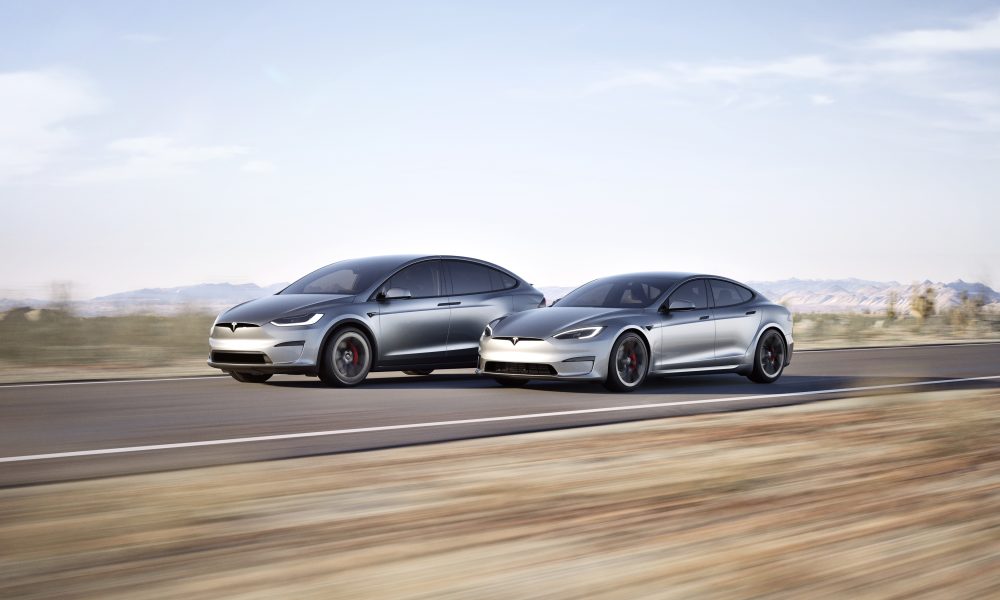
Tesla has officially commenced the process of phasing out its pioneering Model S sedan and Model X SUV, marking the conclusion of an era for the vehicles that were instrumental in establishing the company’s formidable presence in the automotive industry. This strategic shift underlines Tesla’s evolving vision, moving towards a future dominated by advanced robotics and higher-volume manufacturing.
The definitive move comes months after the electric vehicle giant indicated its plans to cease production of these two flagship models by 2026. The latest development, signaling a concrete timeline for this transition, has been communicated by Tesla’s South Korean subsidiary, setting a firm cutoff for new orders.

A Definitive Deadline Emerges
In a significant announcement, Tesla’s Korean arm has officially established March 31, 2026, as the final date for placing new orders for both the Model S and Model X. This declaration represents the first instance of Tesla publicly setting a hard, global deadline for these models, moving beyond general projections.
Following this crucial date, prospective buyers in South Korea will no longer be able to configure and order these vehicles to their specifications. Instead, availability will be restricted solely to existing inventory. While the immediate operational detail pertains to the South Korean market, the announcement carries broader implications, serving as a global signal for the impending discontinuation of these iconic models.
This cutoff date aligns with earlier confirmations from the company that it would discontinue production of both vehicles in 2026. The phased approach, beginning with specific markets, indicates a carefully managed transition away from these long-standing product lines.

The Dawn of a Robotics-Focused Future
The decision to sunset the Model S and Model X programs is a pivotal component of Tesla CEO Elon Musk’s long-term strategic vision for the company. During the Q4 2025 Earnings Call in January, Musk acknowledged the profound impact of these vehicles, stating they deserved an “honorable discharge” for their foundational contributions to Tesla’s success and the broader electric vehicle landscape.
The primary driver behind the Model S and Model X phase-out is the imperative to repurpose existing manufacturing lines. These lines, once dedicated to the premium electric vehicles, are now earmarked for the high-volume production of the Optimus humanoid robot. Tesla has set ambitious targets for Optimus, aiming for an annual production rate of up to one million units.
This pivot underscores Tesla’s commitment to diversifying its portfolio beyond automotive manufacturing, with robotics slated to become a significant pillar of its future operations. The repurposing of substantial manufacturing infrastructure for Optimus highlights the strategic importance Tesla places on its advancements in artificial intelligence and robotic capabilities.
Shifting Market Dynamics and Declining Sales
While the Model S and Model X hold immense historical significance, their market performance in recent years has seen a noticeable decline. Sales of these premium models have experienced a sharp downturn, prompting Tesla to re-evaluate their role within the company’s product strategy.
By 2025, the combined deliveries of the Model S and Model X represented approximately 3 percent of Tesla’s total global vehicle deliveries. This figure marks a significant reduction from previous periods, reflecting a broader shift in consumer preferences and an intensifying competitive landscape within the luxury electric vehicle segment.
The Model S, in particular, witnessed substantial year-over-year sales drops, exceeding 50 percent in some quarters. Concurrently, the Model X faced mounting pressure from a new wave of formidable rivals, including the Rivian R1S and the BMW iX, which have captured a growing share of the premium electric SUV market.
Moreover, a significant number of buyers have gravitated towards Tesla’s more affordable, higher-volume offerings, such as the Model 3 sedan and Model Y SUV. This internal shift, coupled with external competitive pressures, made the Model S and Model X phase-out a difficult but necessary strategic choice for the company.
Legacy of Innovation: Beyond Sales Figures
Despite their dwindling sales volumes, the Model S and Model X remain celebrated as technological showcases for Tesla. From their inception, these vehicles pushed the boundaries of what was thought possible for electric cars, integrating cutting-edge features and performance capabilities that redefined industry standards.
The Plaid variants of both models exemplify extreme performance, offering blistering acceleration figures that rival, and often surpass, traditional supercars. Beyond raw power, both models have consistently featured Tesla’s advanced Full Self-Driving (FSD) capability, serving as platforms for the ongoing development and deployment of autonomous driving technologies. Their interiors also set benchmarks for luxury and minimalist design within the EV space.
The Model S, introduced in 2012, was a groundbreaking vehicle that unequivocally demonstrated the viability of electric vehicles as direct competitors to established luxury sedans. Its long range, rapid acceleration, and innovative touchscreen interface fundamentally challenged the perceptions of electric cars. Similarly, the Falcon-wing-door Model X, launched later, introduced unique design elements and set new benchmarks for family haulers with its combination of space, technology, and distinctive entry system.
Fremont’s Evolving Role and Workforce Stability
The strategic Model S and Model X phase-out is not expected to diminish the operational significance of Tesla’s Fremont factory. This manufacturing hub will continue to play a crucial role in the company’s automotive production, focusing on the refreshed Model 3 and Model Y, which remain Tesla’s best-selling vehicles globally.
The transition of production lines to accommodate Optimus robotics manufacturing is a strategic repurposing that reinforces Fremont’s adaptability. Tesla has proactively stated that this shift is not anticipated to result in job losses. On the contrary, the company projects that the expansion into high-volume Optimus production could potentially lead to an increase in headcount, supporting the growth of its robotics division while maintaining its core automotive output.
This approach ensures that the Fremont facility remains a vital automotive manufacturing site while simultaneously evolving into a key center for Tesla’s burgeoning robotics ventures, securing its position at the forefront of technological innovation.
A Bittersweet Farewell for Enthusiasts
For a dedicated community of Tesla fans and early adopters, the impending Model S and Model X phase-out represents a bittersweet moment. These vehicles are not merely modes of transport; they are symbols of innovation, disruption, and Tesla’s audacious journey to electrify the automotive world.
Many enthusiasts, particularly those with families, have expressed a strong desire for the Model X to remain in production, citing its unique appeal and utility as a spacious family vehicle. The iconic Falcon Wing doors and versatile interior configurations offered a distinct proposition that many believed was unmatched.
Despite the end of production, current owners of the Model S and Model X can expect continued robust support from Tesla. The company is committed to providing ongoing software updates, enhancements, and comprehensive service for these vehicles for many years to come, ensuring their longevity and functionality for existing owners.
Charting Tesla’s Next Chapter
With the Model S and Model X programs drawing to a close, Tesla’s strategic focus is squarely on its future product roadmap, particularly the ambitious Optimus robot project. The reallocation of manufacturing resources underscores a bold pivot towards autonomy, advanced robotics, and the production of higher-volume vehicles.
The Model S and Model X phase-out is thus not merely an end but a strategic reorientation, allowing Tesla to concentrate its considerable engineering and manufacturing capabilities on what it perceives as the next frontier of innovation. The Optimus robot is positioned as the linchpin of this new chapter, embodying Tesla’s broader vision to revolutionize not only transportation but also labor and artificial intelligence.
This concerted effort to streamline its product offerings and redirect resources towards emerging technologies exemplifies Tesla’s relentless pursuit of its long-term goals, solidifying its reputation as a company constantly pushing the boundaries of what is possible.