
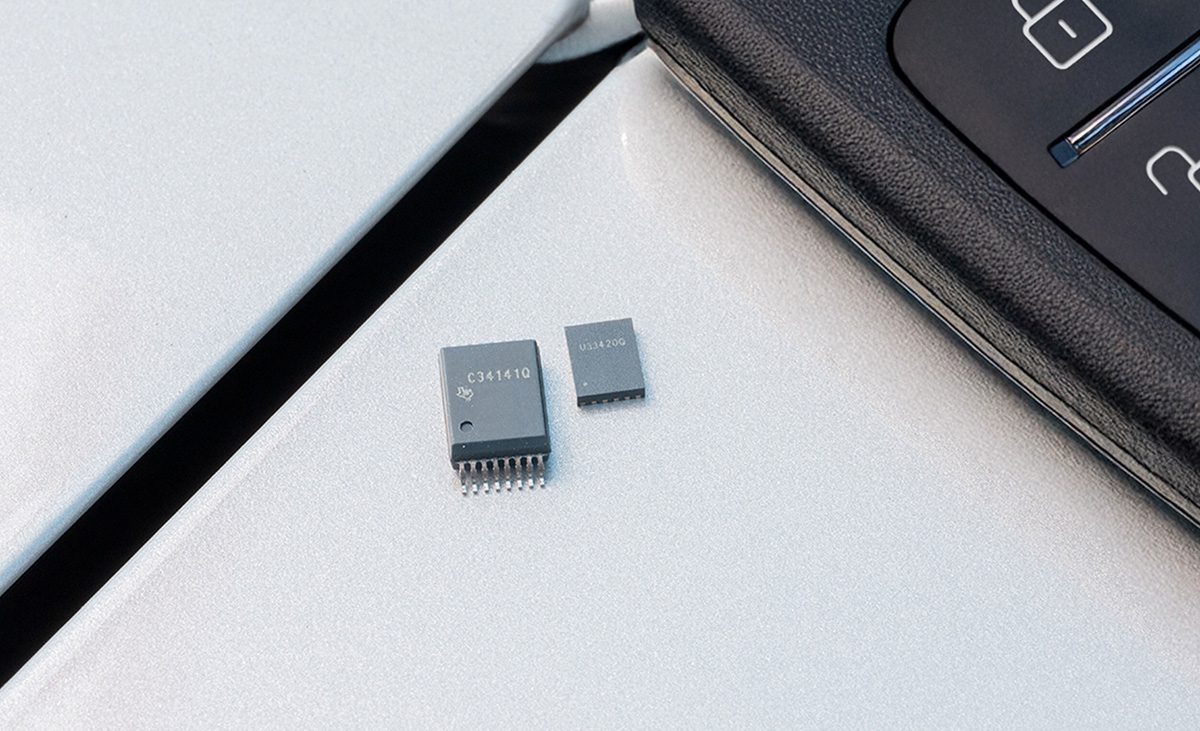
In a significant advancement for power electronics, Texas Instruments (TI) has announced the introduction of two innovative isolated power modules, the UCC34141-Q1 and UCC33420. These new modules leverage TI’s groundbreaking IsoShield packaging technology, promising to deliver unprecedented power density and substantial space savings in critical applications such as electric vehicles (EVs) and high-performance data centers. The development marks a crucial step forward in addressing the growing demands for efficiency, miniaturization, and safety in modern electronic systems.
Advancing Power Integration Through IsoShield Technology
The core of this innovation lies within TI’s proprietary IsoShield packaging technology. This approach intelligently integrates a planar transformer and an isolated power stage into a singular, compact multichip package. This unique combination is designed to overcome the inherent limitations of traditional discrete isolated-power designs, where components are typically spread across a larger footprint.

By streamlining the integration of these critical power components, the IsoShield technology achieves remarkable performance improvements. Texas Instruments reports that this integrated design can deliver up to three times the power density compared to conventional discrete solutions. Concurrently, it facilitates a reduction in overall solution size by as much as 70%, offering engineers unparalleled flexibility in space-constrained applications.
Each of these new modules is capable of providing up to 2 Watts of power, making them suitable for a diverse range of low-power isolated applications. A key feature of the IsoShield technology is its robust isolation capabilities, supporting functional, basic, and reinforced isolation levels. This comprehensive isolation ensures enhanced safety and reliability across various operational environments, crucial for both human safety and system integrity.
The Critical Role of Isolated Power in Modern Electronics
Isolated power is fundamental to the reliable and safe operation of many advanced electronic systems. It serves to electrically separate different sections of a circuit, preventing the flow of unwanted currents and protecting sensitive components or human operators from high voltages. In environments like electric vehicles or large-scale data centers, where high voltages and complex electrical networks are prevalent, isolation is not merely a design choice but a safety imperative.
Functional isolation provides basic protection against electric shock, while basic isolation offers a single layer of protection. Reinforced isolation, the highest standard, provides a single insulation barrier equivalent to two layers of basic insulation, offering superior protection. The ability of TI’s new modules to support all three levels ensures broad applicability and adherence to stringent industry safety standards, further strengthening their appeal in demanding sectors.
Transforming Electric Vehicle Power Electronics
The automotive industry, particularly the rapidly expanding EV segment, stands to benefit significantly from TI’s latest offering. Modern electric vehicles are increasingly complex, relying on intricate power electronics systems to manage battery power, motor control, charging, and auxiliary functions. As consumers demand longer ranges, faster charging, and more features, engineers face immense pressure to design lighter, more efficient, and compact systems.
TI’s IsoShield isolated power modules directly address these challenges. By enabling a drastic reduction in the size and weight of power conversion circuitry, these modules contribute to the design of lighter EV power electronics systems. A reduction in vehicle weight directly translates into improved energy efficiency and extended driving range, critical performance metrics for electric vehicles. Furthermore, smaller components mean more design flexibility, allowing engineers to optimize layouts for better thermal management and overall system performance.
Enhancing Distributed Power Architectures in EVs
The shift towards distributed power architectures within EVs is a key trend, where various subsystems operate semi-autonomously, each requiring localized power regulation and isolation. These architectures improve modularity, simplify wiring harnesses, and enhance fault tolerance. However, they also necessitate robust isolation between different voltage domains to prevent electromagnetic interference (EMI) and ensure safety.
The UCC34141-Q1 and UCC33420 modules are ideally suited for such distributed power designs. Their high power density allows for compact, isolated power supplies to be placed precisely where needed, minimizing power losses and improving system responsiveness. In the context of functional safety, a paramount concern in automotive design, this packaging approach plays a crucial role in avoiding single-point failures, thereby enhancing the overall reliability and safety of EV power electronics systems.
Boosting Efficiency and Density in Data Centers
Beyond electric vehicles, data centers represent another critical application area for these advanced isolated power modules. The relentless growth of cloud computing, artificial intelligence, and big data analytics continues to drive the demand for ever-increasing computational power. Data centers are under constant pressure to cram more processing capability into finite physical footprints, necessitating highly efficient and compact power delivery solutions.
The ability of TI’s IsoShield modules to deliver up to three times the power density means that data center operators can integrate more power delivery capacity within the same physical space. This directly translates to higher rack density, allowing for more servers and networking equipment to be deployed, ultimately enhancing the overall computational capacity of the facility. The 70% reduction in solution size also frees up valuable board space, which can be utilized for additional computing resources or more sophisticated thermal management solutions.
Furthermore, the inherent safety and reliability offered by the integrated isolation capabilities are vital for data center operations. Maintaining continuous uptime and preventing electrical faults are critical to avoiding costly service disruptions. The robust design of these modules contributes to the overall stability and long-term reliability of power infrastructure within data centers, ensuring that critical operations run smoothly and without interruption.
Product Specifications and Availability
Texas Instruments has made both modules readily available to developers and manufacturers. The UCC34141-Q1 is designed for mid-voltage applications, accommodating inputs ranging from 6 V to 20 V. It comes in a compact package measuring 5.85 mm x 7.5 mm x 2.6 mm, making it suitable for a wide array of power management requirements where space is at a premium.
For low-voltage applications, the UCC33420 module offers a 5 V solution in an even smaller 4 mm x 5 mm x 1 mm package. This miniature footprint opens up possibilities for integration into highly compact devices and systems where every millimeter counts. Both products are supported by comprehensive resources from Texas Instruments, including evaluation modules, detailed reference designs, and advanced simulation models, facilitating rapid design and prototyping for engineers.
The Future of Power Electronics Miniaturization
The introduction of the UCC34141-Q1 and UCC33420 isolated power modules, underpinned by the innovative IsoShield packaging technology, underscores Texas Instruments’ commitment to pushing the boundaries of power electronics. By addressing critical industry needs for higher power density, smaller solution sizes, and enhanced safety, these modules are poised to play a pivotal role in the next generation of electric vehicles, data centers, and other high-reliability applications.
As industries continue their pursuit of greater efficiency, reduced environmental footprint, and enhanced performance, breakthroughs in power management such as IsoShield will be instrumental. These advancements empower engineers to create more sophisticated, compact, and reliable electronic systems, driving innovation across diverse technological landscapes.