
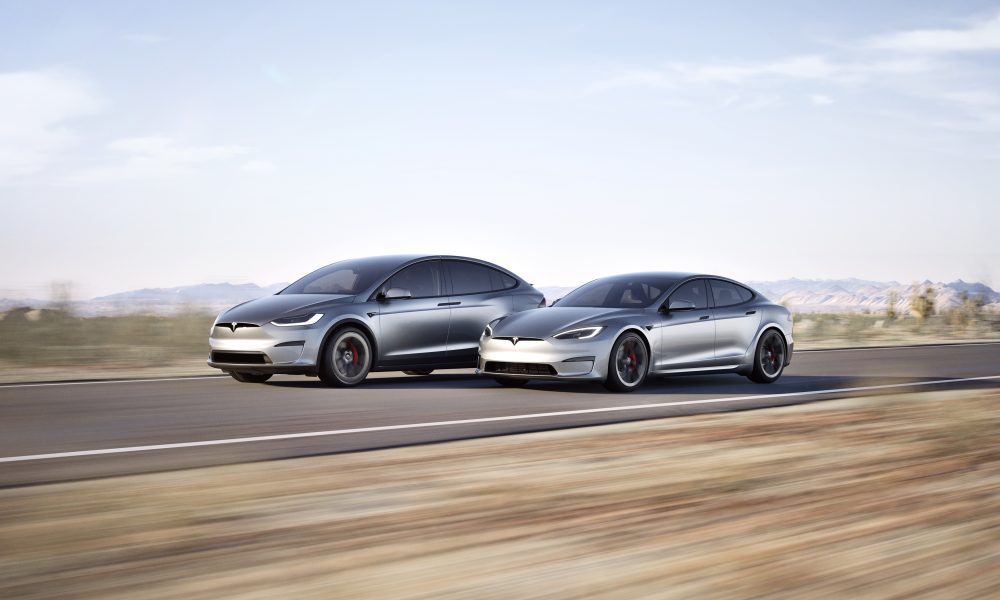
Tesla has officially commenced the phased discontinuation of its premium Model S sedan and Model X SUV, marking a significant strategic shift for the electric vehicle giant. This move signals the end of an era for the vehicles that were instrumental in establishing Tesla’s dominance in the automotive sector and its reputation as a disruptive force in the global car industry.
The company’s decision, which follows earlier confirmations about ceasing production of these two flagship models by 2026, is now taking concrete shape with a firm global deadline for new orders. This strategic pivot underscores Tesla’s evolving priorities, particularly its ambitious foray into robotics.
Korean Market Sets Definitive Cutoff for New Orders
In a tangible demonstration of this impending shift, Tesla’s South Korean subsidiary has announced a hard cutoff date of March 31, 2026, for new orders of both the Model S and Model X. This represents the first global deadline publicly declared for the two luxury electric vehicles.
Following this date, prospective buyers in South Korea will only have access to existing inventory, effectively initiating the wind-down process for new sales in the region. This development is being closely watched as a potential blueprint for other international markets as the global Tesla Model S and Model X discontinuation proceeds.
A Strategic Repurposing: Paving the Way for Optimus Robotics
The decision to cease production of the long-standing Model S and Model X aligns with CEO Elon Musk’s broader vision for Tesla’s future. During the company’s Q4 2025 Earnings Call in January, Musk conveyed a sense of respect and gratitude for the models, stating that the two cars deserved an “honorable discharge” for their foundational contributions to the company.

The primary rationale behind this major manufacturing realignment is to repurpose existing production lines at the Fremont factory for the high-volume manufacturing of the Optimus humanoid robot. Tesla has set an ambitious target to produce up to one million units of the Optimus robot annually, a goal that necessitates a complete overhaul of its manufacturing infrastructure.
This strategic pivot highlights Tesla’s commitment to diversifying beyond traditional automotive manufacturing, embracing a future where robotics and artificial intelligence play a central role in its business model. The Optimus project is seen as a cornerstone of Tesla’s next phase of growth and technological innovation.
Market Realities: Declining Sales and Intensified Competition
While the Tesla Model S and Model X discontinuation is a significant move, it is also a choice that has been foreshadowed by market dynamics. Sales of these premium models have experienced a sharp decline in recent years, reflecting a shift in consumer preferences and an increasingly competitive luxury electric vehicle market.
Even the high-performance Plaid configurations, known for their blistering acceleration and advanced capabilities, have faced challenges in maintaining sales momentum. This trend indicates that even cutting-edge performance features were not enough to counteract broader market shifts.
In 2025, the combined sales of the Model S and Model X accounted for approximately 3 percent of Tesla’s global deliveries. This figure represents a significant reduction from prior periods, underscoring the intensified competition within the luxury EV segment.
The Model S, for instance, saw its sales drop by over 50 percent year-over-year in certain quarters. Simultaneously, the Model X has encountered considerable pressure from a growing array of rivals, including innovative electric SUVs such as the Rivian R1S and the BMW iX, which have captured segments of the premium EV market.
The Enduring Legacy of Technological Innovation
Despite their dwindling sales volume, the Model S and Model X remain pivotal in Tesla’s history and continue to serve as showcases for the company’s technological prowess. The Plaid variants, in particular, embody peak electric performance, delivering blistering acceleration that redefined expectations for electric vehicles.
Beyond raw power, these models were pioneers in integrating advanced Full Self-Driving (FSD) capability and offering luxurious, technologically sophisticated interiors. They set benchmarks for range, software updates, and user experience that influenced the broader automotive industry.
The Model S, first introduced in 2012, was a groundbreaking vehicle that demonstrated the viability and desirability of long-range electric sedans capable of competing directly with established luxury internal combustion engine vehicles. Its success paved the way for mainstream EV adoption.
Similarly, the Model X, with its distinctive Falcon Wing doors, pushed the boundaries of family-friendly electric SUVs, setting new standards for design and functionality in the segment. These innovations cemented Tesla’s reputation as a leader in automotive engineering and design.
Manufacturing Realignment and Workforce Implications
The phase-out of the Model S and Model X facilitates Tesla’s strategic pivot towards autonomy, robotics, and the production of higher-volume, more accessible vehicles. The Fremont factory, which has been central to the production of these models, will continue to be a vital automotive hub.
Post-discontinuation, the Fremont facility will concentrate on producing the refreshed Model 3 sedan and Model Y SUV, ensuring its sustained role in Tesla’s core automotive operations. Concurrently, the factory will expand its capabilities to integrate robotics manufacturing, primarily for the Optimus project.
Tesla has stated that this significant operational shift is not anticipated to result in job losses. In fact, the company projects that the ramp-up of Optimus production could potentially lead to an increase in headcount, signaling a redeployment and expansion of the workforce into new, high-growth areas.
A Bittersweet Farewell for Enthusiasts
For long-time Tesla enthusiasts and owners, the Tesla Model S and Model X discontinuation represents a bittersweet moment. These vehicles are not merely cars; they are symbols of innovation, representing a pivotal chapter in the global transition to sustainable transportation.
The Model S, with its revolutionary design and performance, proved that electric vehicles could be both practical and aspirational. The Model X, meanwhile, offered a unique blend of luxury, utility, and futuristic design that appealed greatly to families seeking advanced transportation solutions.
Many fans had vocally advocated for the Model X to remain in production, particularly citing its appeal and practicality for larger families. Despite their eventual retirement from production, owners of these iconic models can be assured of continued software support and service for many years to come.
As the company bids farewell to its foundational luxury vehicles, Tesla’s primary focus unequivocally shifts towards its ambitious future product roadmap. The Optimus robot, in particular, stands as the central pillar of this new direction, underscoring the company’s evolution beyond conventional vehicle manufacturing into a broader technology and AI powerhouse. This transition marks the beginning of a new chapter, defined by autonomy, robotics, and high-volume innovation.