
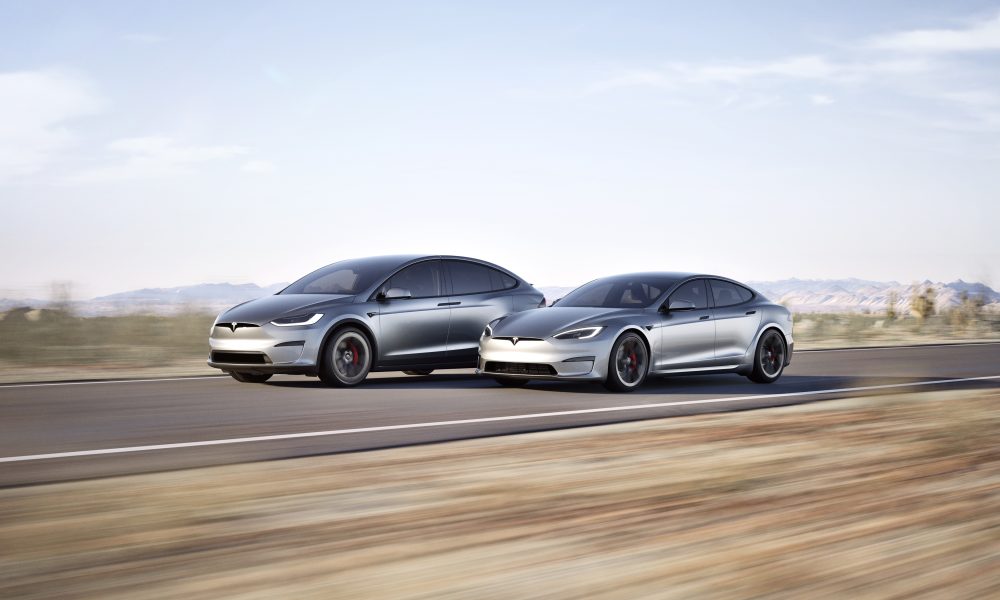
In a landmark decision signifying a profound reorientation of its manufacturing and product strategy, Tesla has officially commenced the phase-out of its foundational Model S and Model X vehicles. This move, which includes setting a firm cutoff date for new orders in key markets, marks the conclusion of an era for the electric automaker’s flagship luxury models, paving the way for a significant pivot towards advanced robotics and an expanded vehicle lineup.
The company’s Korean arm recently announced March 31, 2026, as the final date for new orders of both the Model S and Model X, effectively establishing the first concrete global deadline for these iconic vehicles. After this date, only existing inventory will be available for purchase in South Korea, underscoring the irreversible nature of this transition.
The End of an Era for Tesla’s Flagship Models
The decision to sunset the Model S and Model X, confirmed by Tesla months ago to halt production in 2026, is more than a mere product cycle adjustment. It represents a symbolic moment for a company that redefined the automotive landscape.
These two models were instrumental in establishing Tesla’s reputation not only as a formidable automaker but also as a disruptive force within the entire car industry. They showcased the viability and desirability of electric vehicles, fundamentally shifting consumer perceptions.
During the Q4 2025 Earnings Call in January, Tesla CEO Elon Musk acknowledged the immense contributions of these vehicles, stating they deserved an “honorable discharge” for their role in the company’s journey and the broader electric vehicle revolution. Despite their historical significance, the signal for winding down their production has unequivocally arrived.

Market Dynamics and Declining Sales
The gradual withdrawal of the Model S and Model X aligns with observed market trends and Tesla’s long-term strategic objectives. Sales of these premium models have seen a sharp decline in recent years, even with the introduction of performance-focused Plaid configurations designed to attract high-end buyers.
In 2025, the Model S and Model X collectively accounted for approximately three percent of Tesla’s global deliveries. This figure represents a significant drop from previous periods, as competition intensified within the luxury electric vehicle segment, and a broader shift occurred towards more accessible and affordable options like the Model 3 and Model Y.
Specifically, the Model S experienced a sales decline of over 50 percent year-over-year in certain quarters. The Model X faced similar market pressures from formidable rivals, including the Rivian R1S and BMW iX, which carved out significant portions of the luxury SUV market.
Despite their dwindling volume, the Model S and Model X remain technological showcases. Their Plaid variants continue to deliver blistering acceleration, advanced Full Self-Driving capability, and luxurious interiors, solidifying their legacy as innovators.
Repurposing for Robotics: The Optimus Imperative
The primary driver behind the Model S and Model X phase-out is a crucial component of Tesla’s strategic shift: the ambitious plan to repurpose manufacturing lines for the high-volume production of the Optimus humanoid robot. Tesla is targeting an annual production rate of up to one million Optimus units.
This move highlights a critical pivot for the Optimus program, transitioning it from an intriguing technological demonstration to a serious, large-scale manufacturing endeavor. Tesla is accelerating its push to bring the humanoid robot to high-volume production, a story vividly told through its recent job listings.
With well over 100 Optimus-related job openings posted across its U.S. facilities, Tesla is seeking expertise in a wide array of fields, including Robotics Software Engineers, Manufacturing Engineers, Mechanical Integration Engineers, and AI Engineers focused on world modeling and video generation. An active listing for a Software Engineer on the Optimus team specifically calls for candidates to “build scalable and reliable data pipelines for Optimus manufacturing lines and develop automation tools that accelerate analysis and visualization for mass manufacturing.”
Elon Musk underlined the strategic importance of Optimus during the Q4 2025 earnings call on January 28, 2026, by announcing the end of Model S and Model X production and the repurposing of those lines at the Fremont, California factory for Optimus robot manufacturing. This decision underscores that Optimus is increasingly viewed as a central, if not primary, business focus for the company.
A production-intent prototype of Optimus Version 3 is anticipated in early 2026, with Tesla aiming to establish a one million-unit production line and begin manufacturing by the end of 2026. To support this aggressive ramp-up, Tesla broke ground on a massive new Optimus manufacturing facility at Gigafactory Texas in late 2025, with long-term ambitions to reach ten million units per year. Tesla Giga Texas to feature massive Optimus V4 production line.
The Economic Vision Behind Optimus
The business rationale for such aggressive scaling is rooted in labor economics. Musk has boldly stated that “Optimus has the potential to be the biggest product of all time,” reasoning that if Tesla can produce capable humanoid robots at scale and a reasonable cost, virtually every task currently performed by human labor becomes a potential application.
In a separate statement, Musk further emphasized Optimus’s long-term significance, suggesting it could surpass Tesla’s vehicle business in scale and potentially generate $10 trillion in revenue. The industries Tesla is initially targeting are those heavily reliant on repetitive physical labor, including manufacturing assembly, material handling, quality inspection, and logistics tasks such as loading, unloading, sorting, and transporting goods in warehouses and distribution centers.
Looking further ahead, Tesla’s vision for Optimus includes penetration into household, medical, and logistics scenarios at a deployment scale comparable to that of a smartphone rollout. This comprehensive vision is central to Tesla’s strategic shift.
The Fremont factory, a key automotive hub, will continue production of the refreshed Model 3 and Model Y, while simultaneously expanding its operations into robotics. Tesla has clarified that this strategic realignment is not expected to result in job losses; in fact, it could lead to an increase in headcount as Optimus production scales up.
For long-time Tesla enthusiasts, the sunset of the Model S and Model X represents a bittersweet moment. The Model S, introduced in 2012, demonstrated that electric vehicles could rival luxury sedans in performance and desirability. The distinctive Falcon-wing-door Model X subsequently set new benchmarks for family haulers. Owners of these vehicles can expect continued software support and service for years to come.
Shaping the Future Lineup: New Vehicles Emerge
As the Model S and Model X make their exit, Tesla’s focus pivots sharply towards its future product offerings, particularly in the vehicle segment. This new direction seeks to fill existing gaps in the market and capitalize on evolving consumer demands.
The Cyber-Minivan Mystery
Further hinting at an evolving vehicle strategy, Elon Musk recently stirred speculation with a post on X (formerly Twitter) on March 25, 2026, stating,
Something way cooler than a minivan is coming
— Elon Musk (@elonmusk) March 25, 2026
This statement suggests Tesla may be developing a new vehicle tailored for larger families, especially pertinent as the Model X, the company’s only family-oriented vehicle with ample space, is being phased out.
Speculation abounds regarding the nature of this mysterious vehicle. While many Tesla owners have expressed a desire for a minivan-like vehicle, other possibilities include the ‘Robovan,’ a large people mover Tesla unveiled at the “We, Robot” event in 2024. Musk also posted about the Cybertruck’s three Isofix attachments, suggesting it could accommodate three child seats or adults, potentially as a way to temper expectations for a completely new, larger family vehicle, especially with a Model Y L appearing at Giga Texas.
However, the prevailing sentiment points towards a ‘CyberSUV’—a vehicle large enough to transport a car full of children, yet designed with Tesla’s distinctive aesthetic found in its most recent releases. This could include a signature light bar and a sleek, futuristic appearance. Tesla has previously teased the potential of a CyberSUV, showcasing clay models in a September teaser video titled “Sustainable Abundance.” Tesla appears to be mulling a Cyber SUV design.
Fans and owners have long advocated for such a development. With the large SUV segment largely dominated by combustion engine vehicles, Tesla has a significant opportunity to disrupt this market, potentially drawing consumers away from traditional mainstays like the Chevrolet Tahoe and GMC Yukon to electric powertrains. As the Model S and Model X sunset process intensifies, the timing for considering Tesla’s next vehicle development becomes increasingly critical.
The Long-Awaited Model Y L for the U.S. Market
Further indications of an expanded vehicle lineup came from a recent sighting at Giga Texas. On March 23, 2026, drone pilot Joe Tegtmeyer captured intriguing footage of a mysterious vehicle at Tesla’s facility, appearing distinctly different from any model currently manufactured for the U.S. market.
The vehicle, observed partially unboxed within a wooden shipping crate amidst construction materials, immediately sparked widespread speculation among Tesla enthusiasts and analysts. Many are convinced it is the long-rumored Model Y L, the extended-wheelbase variant already popular in China and currently produced at Gigafactory Shanghai.
Well this is interesting at Giga Texas today … what do YOU think this is? 🤔😎 pic.twitter.com/U9pLvqbf7L
— Joe Tegtmeyer 🚀 🤠🛸😎 (@JoeTegtmeyer) March 23, 2026
Images reveal an elongated silhouette, with side-by-side comparisons highlighting key differences from the standard Model Y. The rear door extends notably farther over the wheel arch, and the rear glass appears to run seamlessly to the spoiler lip, unlike the metal trim seen on shorter versions. One overlay analysis precisely aligned the visible proportions with the Chinese-market Model Y L, which measures approximately 4.98 meters long with a 3.04-meter wheelbase—about seven inches longer overall than the standard Model Y sold in the U.S.
Model Y L, with a support structure on top, likely for shipping. pic.twitter.com/ET3w46DjpJ
— Owen Sparks (@OwenSparks) March 23, 2026
The vehicle appears to be a bare “body-in-white” shell, a common form for prototypes dispatched abroad for tooling validation and local manufacturing ramp-up. The Model Y L, already launched in China and other markets, offers six- and seven-seat configurations, along with roughly ten percent more cargo space and enhanced family-friendly versatility.
This sighting aligns with Tesla’s broader strategy, as industry observers anticipate the localization of Model Y L production at Giga Texas by mid-2026. This move would cater to American families desiring additional room without needing to upgrade to the larger Cybertruck or a potential future full-size SUV. Bringing this design stateside could generate tens of thousands of additional annual deliveries while effectively leveraging existing Model Y production lines. Consumer demand for the Model Y L in the U.S. has been strong, particularly as Tesla plans to phase out the Model X, which has historically been the company’s most suitable vehicle for large families. Tesla Model Y lineup expansion signals an uncomfortable reality for consumers.
While Tesla has yet to make an official comment, the timing of this discovery, amid Giga Texas expansion and consistent Model Y output, strongly suggests that the mysterious crate holds more than just a random prototype. If confirmed as the Model Y L, it would mark another pivotal step in Tesla’s effort to refresh its bestselling SUV for global demand, and perform exceptionally well in the U.S. market.
A Comprehensive Strategic Shift
The concerted actions by Tesla—from the measured discontinuation of its founding luxury vehicles to the aggressive scaling of its Optimus robotics program and the hints of new vehicle derivatives—collectively underscore a profound Tesla’s strategic shift. This realignment positions the company firmly towards an ecosystem centered on autonomy, advanced robotics, and a diversified, high-volume vehicle portfolio.
This strategic pivot is designed to future-proof Tesla, allowing it to move beyond its initial success in premium electric vehicles and into new frontiers of technology and manufacturing. While it elicits a bittersweet sentiment for loyal fans who cherish the legacy of the Model S and Model X, it signifies Tesla’s unwavering commitment to innovation and its bold vision for a technologically integrated future. The company’s evolving identity promises continued breakthroughs that will shape not only the automotive sector but also the broader technological landscape.