
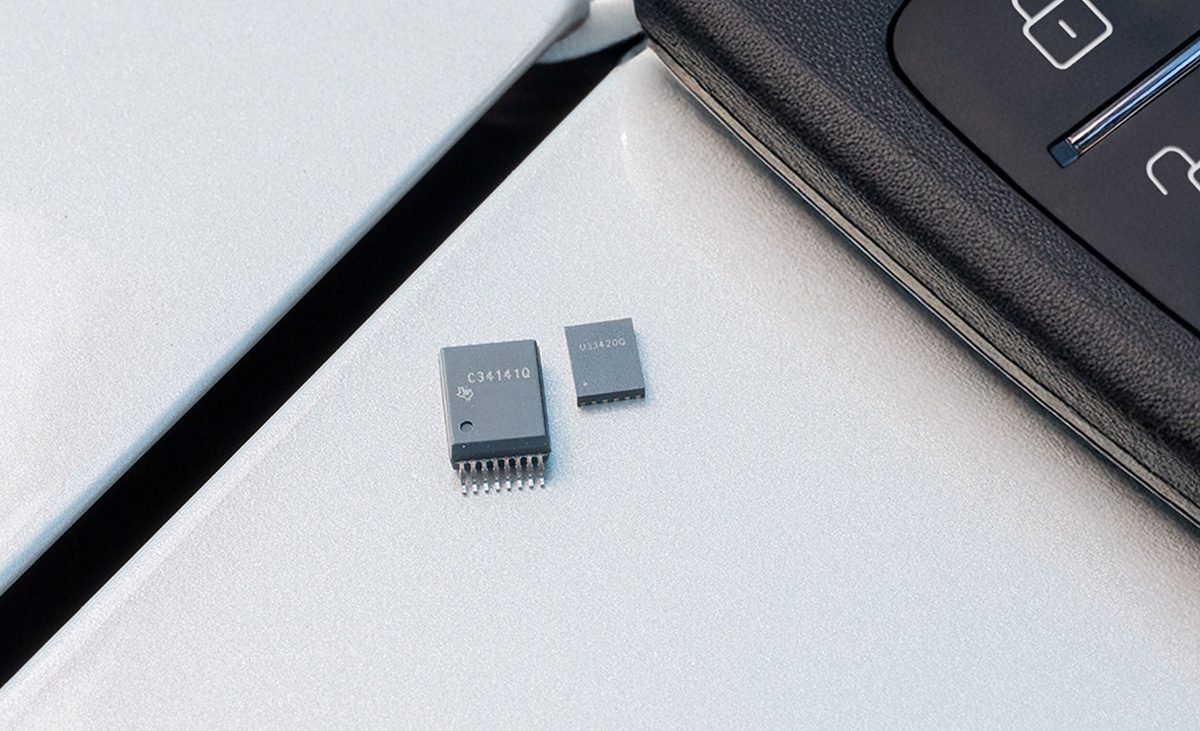
In a significant advancement for power electronics, Texas Instruments (TI) has introduced a new line of isolated power modules, featuring its innovative IsoShield packaging technology. These modules are poised to redefine power density benchmarks in critical applications, most notably within the rapidly evolving electric vehicle (EV) sector and high-demand data centers.
The newly launched UCC34141-Q1 and UCC33420 modules integrate a planar transformer and an isolated power stage within a single, compact multichip package. This pioneering approach is engineered to deliver up to three times the power density compared to conventional discrete isolated-power designs, simultaneously reducing the overall solution size by as much as 70 percent. This spatial efficiency is particularly crucial in environments where every millimeter and gram counts.

Advancing Power Management with IsoShield Technology
The core innovation lies within TI’s proprietary IsoShield packaging technology. By consolidating complex components into a singular multichip package, TI addresses long-standing challenges associated with bulky and less efficient discrete designs. This integration not only enhances power delivery capabilities but also streamlines the manufacturing process and improves overall system reliability.
The modules are capable of supplying up to 2 watts of power, a vital capability for a range of isolated auxiliary power needs. Furthermore, they are designed to support functional, basic, and reinforced isolation, adhering to stringent safety and performance standards across various industrial and automotive applications. This multi-level isolation capability underscores their versatility and robustness.
Redefining Distributed Power Architectures
Texas Instruments is strategically positioning these new modules for widespread adoption in distributed power architectures. In such systems, the ability to ensure robust isolation and inherent fault tolerance is paramount for maintaining operational integrity and safety. The IsoShield-enabled modules directly address these requirements, offering a compact and highly reliable solution for power delivery.

Distributed power architectures are increasingly common in modern electronic systems, where power is generated or converted at multiple points rather than from a single central source. This design philosophy improves efficiency, reduces power losses over long distances, and enhances system resilience. The UCC34141-Q1 and UCC33420 modules are engineered to fit seamlessly into these intricate power networks.
Transformative Impact on Electric Vehicles
The advent of these high-density isolated power modules carries profound implications for the electric vehicle industry. EV engineers consistently grapple with the challenge of minimizing vehicle weight while maximizing efficiency to extend range and enhance performance. TI’s new offerings provide a direct solution to this critical design conundrum.
By enabling the design of lighter and more efficient systems, the IsoShield modules contribute directly to several key performance indicators for EVs. Reduced component size and weight can translate into longer battery range, faster acceleration, and improved energy consumption. This innovation supports the broader trend towards more compact and powerful EV powertrains and auxiliary systems.
Auxiliary power systems in EVs, such as those controlling battery management systems (BMS), communication interfaces, and various sensors, require reliable isolated power. The compact nature of these modules allows engineers to integrate these critical functions more effectively within the limited space of an electric vehicle, without compromising on safety or electrical integrity.
Enhancing Data Center Efficiency and Safety
Beyond the automotive sector, data centers stand to benefit significantly from the increased power density and reduced footprint offered by the new IsoShield modules. Modern data centers are in a perpetual race to cram more computing power into smaller physical spaces, driven by escalating demands for cloud services, artificial intelligence, and big data analytics.
The ability to integrate more power into smaller footprints directly translates into higher rack density and optimized use of valuable floor space within data centers. This not only enhances the computational capacity of a given facility but also contributes to better energy management and reduced operational costs over time.
Crucially, the modules also bolster safety and reliability within these power-intensive environments. The robust isolation properties help prevent electrical faults from propagating across different parts of the system, safeguarding sensitive equipment and ensuring continuous operation. This is especially vital in critical data center infrastructure where downtime can incur substantial financial and reputational costs.
Mitigating Single-Point Failures in Functional Safety Designs
A significant advantage highlighted by TI is the packaging approach’s capacity to help mitigate single-point failures, particularly in designs oriented towards functional safety. Functional safety, critical in both automotive and industrial applications, demands that systems operate predictably and safely even in the event of component failures. The integrated, highly reliable nature of the IsoShield modules contributes directly to meeting these stringent safety standards.
By reducing the number of discrete components and integrating the isolated power stage and transformer, the potential for failure points is inherently minimized. This architectural simplification, combined with the robust isolation capabilities, allows engineers to design systems that are more resilient to faults and more compliant with international safety regulations.
Technical Specifications and Availability
The new isolated power modules are available in two distinct configurations to cater to a variety of application needs. The UCC34141-Q1 is engineered as a mid-voltage device, supporting an input range from 6 volts to 20 volts. It comes in a compact package measuring 5.85 mm by 7.5 mm by 2.6 mm, making it suitable for applications requiring higher voltage handling within a constrained footprint.
Conversely, the UCC33420 targets low-voltage applications, operating as a 5-volt module. This variant is even smaller, housed in a 4 mm by 5 mm by 1 mm package. Its minuscule dimensions make it an ideal choice for highly space-constrained designs where minimal height and area are critical considerations.
Both the UCC34141-Q1 and UCC33420 modules are currently available for immediate deployment. To facilitate rapid integration and development, Texas Instruments is also providing comprehensive support, including evaluation modules, reference designs, and detailed simulation models. These resources empower engineers to quickly assess and implement the new technology into their next-generation designs, accelerating product development cycles.
The Future of Power Electronics
Texas Instruments’ introduction of the IsoShield isolated power modules marks a pivotal moment in the evolution of power electronics. As industries like EV manufacturing and data center operations continue their relentless pursuit of greater efficiency, smaller form factors, and enhanced reliability, innovations such as these become indispensable.
The ability to drastically increase power density while simultaneously shrinking solution sizes offers designers unprecedented flexibility and capability. This not only optimizes current system designs but also opens up new avenues for innovation in applications that were previously limited by power management constraints. The IsoShield technology underscores a broader industry trend towards intelligent integration and miniaturization, promising a future of more compact, powerful, and sustainable electronic systems.