
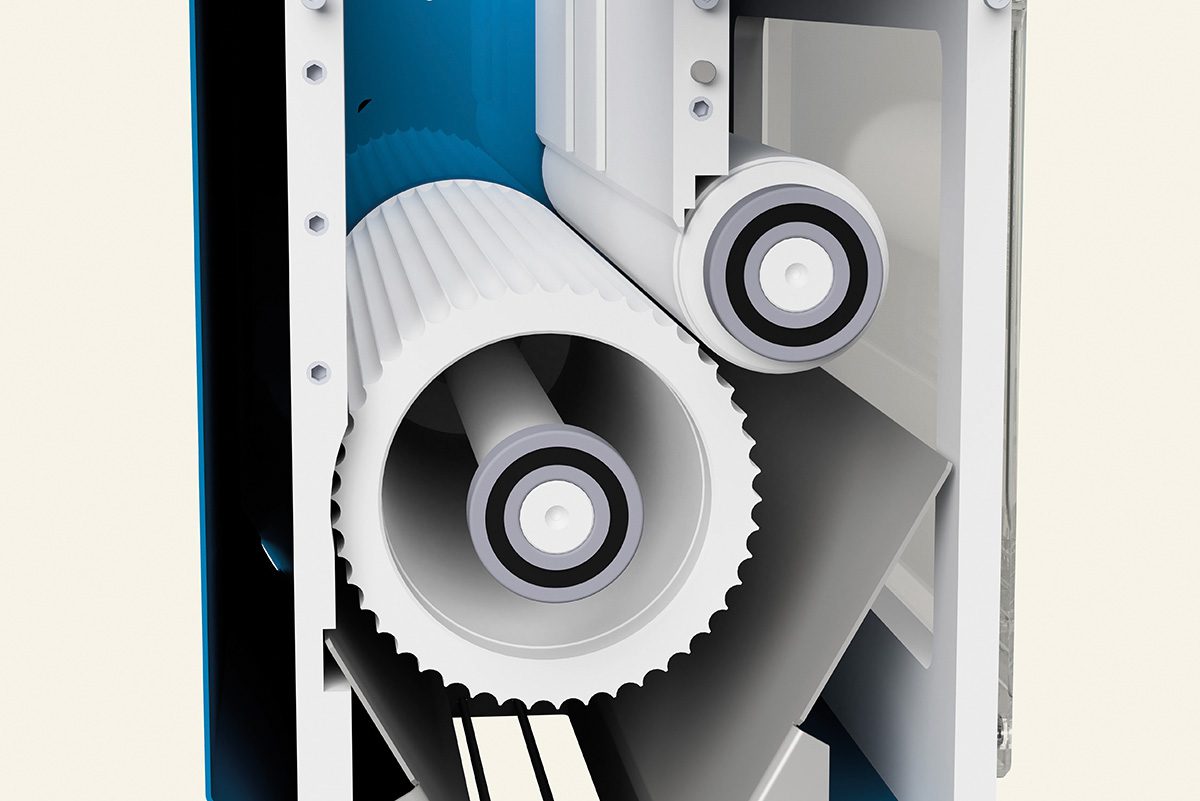
In a significant development for the rapidly evolving battery manufacturing sector, Coperion K-Tron has officially launched its RF400 Roller Feeder. This innovative feeding system is specifically engineered to enhance consistency in dry-electrode processing, a critical step in advanced battery production, particularly at laboratory and pilot scales. The introduction of the RF400 aims to address persistent challenges related to material handling and uniform deposition in this cutting-edge dry-electrode manufacturing technology.
The RF400 Roller Feeder arrives at a pivotal time when the global push for more efficient and sustainable energy storage solutions is accelerating. Its design focuses on delivering uniform deposition of electrode dry blends, a crucial factor in minimizing production waste and significantly reducing variability in the manufacturing process. This precision is essential for developing the next generation of high-performance and reliable battery cells.

Advancing Dry-Electrode Manufacturing Technology
Dry-electrode manufacturing technology has garnered considerable attention within the battery industry due to its promising advantages over traditional wet coating methods. One of the primary benefits is the potential for significantly lower energy consumption during the production process. This reduction in energy use translates into a smaller carbon footprint and operational cost savings, aligning with broader sustainability goals.
Furthermore, this innovative approach promises less reliance on solvent handling. Conventional wet coating processes typically involve the use of volatile organic solvents, which require extensive recovery systems and present environmental and safety concerns. By mitigating the need for these solvents, dry-electrode manufacturing offers a cleaner, safer, and more environmentally friendly alternative for producing battery electrodes.
Despite these compelling advantages, the adoption of dry-electrode manufacturing technology has faced hurdles. The nature of dry materials makes material handling and ensuring uniform deposition inherently more challenging compared to solvent-based slurries. Achieving a consistent, even layer of electrode material across a substrate without the aid of a liquid carrier demands highly specialized equipment and precise control mechanisms.

These challenges can lead to inconsistencies in electrode quality, which directly impacts battery performance, longevity, and overall cost-effectiveness. Therefore, solutions that can effectively overcome these processing complexities are vital for the widespread commercialization and scalability of dry-electrode manufacturing technology.
Precision Engineering: How the RF400 Works
The core innovation of the RF400 lies in its sophisticated mechanical design, which directly tackles the material handling complexities inherent in dry-electrode processing. The system employs a uniquely engineered grooved feed roller that works in tandem with a smooth scraper roller. This specific configuration is crucial for achieving the feeder’s operational objectives.
The interaction between these two rollers ensures that the dry electrode material is fed gently and consistently into the production line. This gentle handling is paramount for preserving the integrity and uniform properties of the dry blends, preventing material degradation or compaction that could otherwise compromise electrode quality. The consistent feeding mechanism guarantees a steady and predictable flow of material, which is critical for maintaining process stability.
A key functional advantage of this roller pairing is its ability to prevent material bridging at the outlet. Bridging occurs when dry, powdery materials clump together and obstruct the flow, leading to interruptions and inconsistent deposition. The RF400’s design actively counteracts this issue, ensuring an uninterrupted and smooth discharge of material. This uninterrupted flow is essential for continuous pilot-scale operations and for generating reliable data for process optimization.
Beyond preventing bridging, the system significantly improves material distribution across the calender roller positioned below. The calender roller is responsible for compacting and consolidating the electrode material onto a current collector. An even distribution from the feeder ensures that the subsequent calendering process results in a uniformly dense and consistent electrode layer, which is fundamental for optimal electrochemical performance of the finished battery.
Enhanced Control and Operational Efficiency
To further bolster its capabilities, the RF400 Roller Feeder is designed for seamless integration with Coperion K-Tron’s established control systems. Specifically, it integrates with the KCM-III controls and leverages the company’s Smart Force Transducer weighing technology. This synergistic integration provides a comprehensive platform for advanced process management, critical for pioneering dry-electrode manufacturing technology.
The integration enables real-time monitoring of the feeding process. Operators can observe key parameters and material flow dynamics as they happen, allowing for immediate identification of any deviations or inconsistencies. This instantaneous feedback loop is invaluable for maintaining tight control over the delicate dry-electrode deposition process.
Coupled with real-time monitoring, the system offers precise feed-rate control. This granular control allows manufacturers to accurately regulate the amount of dry electrode material being deposited, directly influencing the thickness and consistency of the electrode layer. Such precision is indispensable for both experimental runs in the lab and for establishing repeatable processes in pilot lines.
Moreover, the RF400 system provides the flexibility to make crucial adjustments for changing material characteristics. Dry electrode blends can exhibit variations in density, flowability, or particle size, even within the same batch or across different formulations. The ability to fine-tune the feeder’s operation in response to these material changes ensures consistent performance and high-quality output, regardless of minor material variabilities. This adaptability is particularly beneficial for research and development efforts exploring new material chemistries for dry-electrode manufacturing technology.
Scalability for Innovation: From Lab to Pilot Production
A notable feature of the RF400 is its adjustable coating width, which can be configured up to 400 mm. This range makes the feeder exceptionally well-suited for a wide array of lab and pilot-scale battery production setups. In the early stages of battery development, researchers and engineers require versatile equipment that can handle various experimental parameters and scale prototypes.
The capacity to adjust the coating width allows for significant flexibility in testing different electrode dimensions and designs without the need for multiple specialized machines. This adaptability accelerates the research and development cycle, enabling quicker iteration and optimization of electrode formulations and manufacturing processes for dry-electrode manufacturing technology.
For pilot lines, which bridge the gap between laboratory-scale research and full-scale commercial production, the RF400’s capabilities are equally critical. It provides a reliable and scalable platform to test the feasibility of new dry-electrode formulations and processes under conditions that closely mimic industrial environments. The consistent performance of the RF400 at this scale helps to validate process parameters and ensures that new technologies can be confidently transitioned to larger production volumes.
Industry Impact and Expert Outlook on Dry-Electrode Manufacturing Technology
The launch of the RF400 Roller Feeder underscores Coperion K-Tron’s commitment to advancing the frontiers of battery production technology. By focusing on the intricacies of dry-electrode processing, the company is addressing a key bottleneck in the development of next-generation batteries that are both more sustainable and cost-effective. The implications of such advancements extend to various applications, from electric vehicles to grid-scale energy storage.
Jay Daniel, Head of R&D Feeders and Feeding Systems at Coperion K-Tron, highlighted the significance of this innovation, stating, The RF400 will set a new standard in the industry.
This statement reflects the potential of the new feeder to not only optimize current dry-electrode manufacturing technology but also to pave the way for future breakthroughs in battery efficiency and production methodology.
The ability to achieve precise, uniform dry-electrode deposition consistently and efficiently is a cornerstone for unlocking the full potential of dry-electrode manufacturing technology. As the global demand for batteries continues to surge, technological advancements that improve manufacturing processes, reduce environmental impact, and enhance product quality will be paramount. The RF400 Roller Feeder is positioned to play a crucial role in meeting these evolving industry requirements, fostering greater innovation and efficiency in battery development and production.