
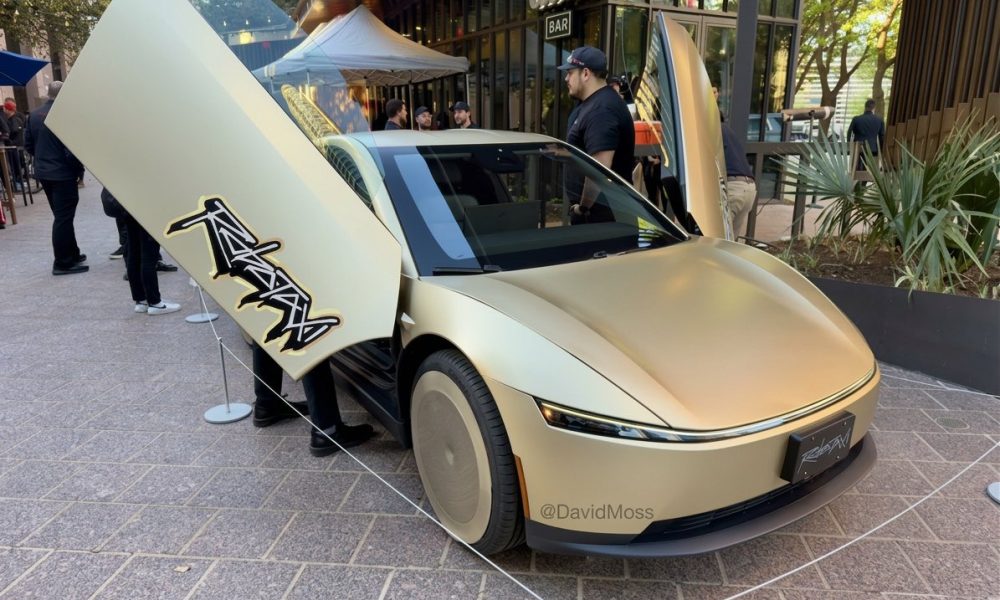
In the dynamic landscape of Tesla, where monumental strides in battery technology and autonomous driving frequently command global attention, a seemingly minor design alteration can still carry profound strategic weight. Such is the case with a recent, subtle yet highly significant update to the Tesla Cybercab, which signals a deliberate evolution in the company’s approach to its highly anticipated autonomous taxi service.
Last week, in the bustling downtown area of Austin, astute observers and technology enthusiasts captured an intriguing development: a redesigned “ROBOTAXI” logo graphic now prominently adorns the doors of the Tesla Cybercab. This visual refresh was spotted at Tesla’s Autonomy Popup, drawing immediate interest from those following the progression of the self-driving vehicle project.

A Strategic Visual Shift for the Cybercab
What might initially appear to be a mere stylistic tweak is, in fact, a carefully calculated rebranding initiative. This visual update offers crucial insights into how Tesla envisions its burgeoning robotaxi fleet integrating seamlessly into the fabric of everyday urban existence. The change moves beyond aesthetics, pointing towards a broader strategy for public perception and market integration.
The new lettering for the “ROBOTAXI” graphic is notably bold and features a distinctive, graffiti-inspired aesthetic. Rendered in stark black with intricate dripping white accents and a vibrant, glowing yellow outline, the font design exudes an urban energy and a sense of playful irreverence. This departure from Tesla’s established visual language suggests a deliberate effort to connect with a wider audience.
Deciphering the New “ROBOTAXI” Aesthetic
This fresh design represents a marked pivot from the sleek, minimalist typography that characterized earlier Cybercab prototypes. The previous aesthetic, synonymous with high-tech precision and sophisticated engineering, is being supplanted by a graphic that feels more ‘human’ and, in some interpretations, almost rebellious. This shift is critical for a product intended for mass public use.

The updated logo graphic creates a striking contrast against the Cybercab’s smooth, metallic body panels. This visual juxtaposition effectively transforms the autonomous pod from merely a futuristic mode of transport into what could be perceived as a moving piece of public art. Such an impactful design choice aims to capture attention and provoke a positive emotional response from potential riders and the general public alike.
Design experts universally acknowledge the power of fonts as silent brand ambassadors. Typography inherently shapes perception and conveys brand values even before a user has engaged with a product or service. Tesla’s long-standing classic sans-serif aesthetic has consistently communicated precision engineering, innovation, and the distinct ‘Silicon Valley cool’ associated with its brand.
In contrast, the newly introduced Robotaxi script strategically leans into themes of accessibility and fun. This stylistic choice subtly suggests that the vehicle is approachable rather than intimidating—a vital consideration for a service designed to ferry a diverse range of strangers through busy city streets around the clock. It actively signals that the Tesla Robotaxi is not an exclusive offering reserved solely for tech elites, but rather a service intended for everyone.
From Prototype to Public: The Rationale Behind the Redesign
The timing of this rebranding is far from coincidental. With regulatory approvals for unsupervised autonomous operation progressing across various jurisdictions, and as Tesla actively prepares to escalate Cybercab production, the company is transitioning from showcasing prototypes to focusing on large-scale fleet deployment. This phase demands a distinct and easily recognizable public identity for the Tesla Robotaxi.
A fresh and memorable logo plays a crucial role in visually differentiating these vehicles within dense urban environments. This differentiation is paramount for enhancing rider recognition and strengthening brand recall in a competitive market. Furthermore, this design evolution aligns seamlessly with Elon Musk’s long-standing philosophy: to ensure that the future, particularly one ushered in by Tesla, feels inherently exciting and inviting, rather than sterile or overly utilitarian.
Tesla’s Meticulous Approach to User Experience
Minor adjustments, such as a change in font or logo, frequently serve as harbingers of a broader strategic direction. Tesla has long been renowned for its obsessive attention to detail, from the intricate design of its door handles and intuitive screen interfaces to the subtle curvature of its steering wheels. This meticulousness is a hallmark of the company’s engineering and product development ethos.
The decision to update the Tesla Robotaxi font reflects this same level of scrupulous care, now being applied directly to consumer-facing autonomous services. It transcends a simple paint job on metal; it represents a declarative statement. This statement asserts that the future of personal mobility, as offered by the Tesla Robotaxi, should be perceived as personal, memorable, and undeniably appealing to a wide demographic.
In an industry that is rapidly accelerating towards widespread deployment of self-driving fleets, Tesla’s willingness to refine even the most granular visual cues demonstrates considerable confidence in its vision. While a new font alone will not launch the global Tesla Robotaxi network, such thoughtful design choices are instrumental in helping millions of individuals embrace and enjoy the experience of autonomous travel, ultimately fostering greater public adoption and satisfaction.
Shaping the Future of Urban Transit
The debut of the updated Tesla Robotaxi branding, as observed by David Moss on X on March 13, 2026, at the Autonomy Popup in Austin, signifies more than just a cosmetic upgrade. It underscores Tesla’s strategic foresight in preparing its autonomous vehicles for a future of broad public engagement and acceptance.
By investing in a brand identity that communicates approachability, excitement, and modern urban appeal, Tesla is meticulously crafting the narrative for its autonomous future. This visual reorientation positions the Cybercab not just as a technological marvel but as an integral, accessible, and desirable component of the next generation of urban transportation.
The implications of this subtle design shift extend to the core business model of the Tesla Robotaxi service, aiming to ensure it resonates with potential users on an emotional and practical level. It demonstrates a holistic understanding that the success of autonomous fleets hinges not only on their technological capability but also on their perceived safety, friendliness, and integration into daily life, making the Tesla Robotaxi a compelling option for future commuters.