
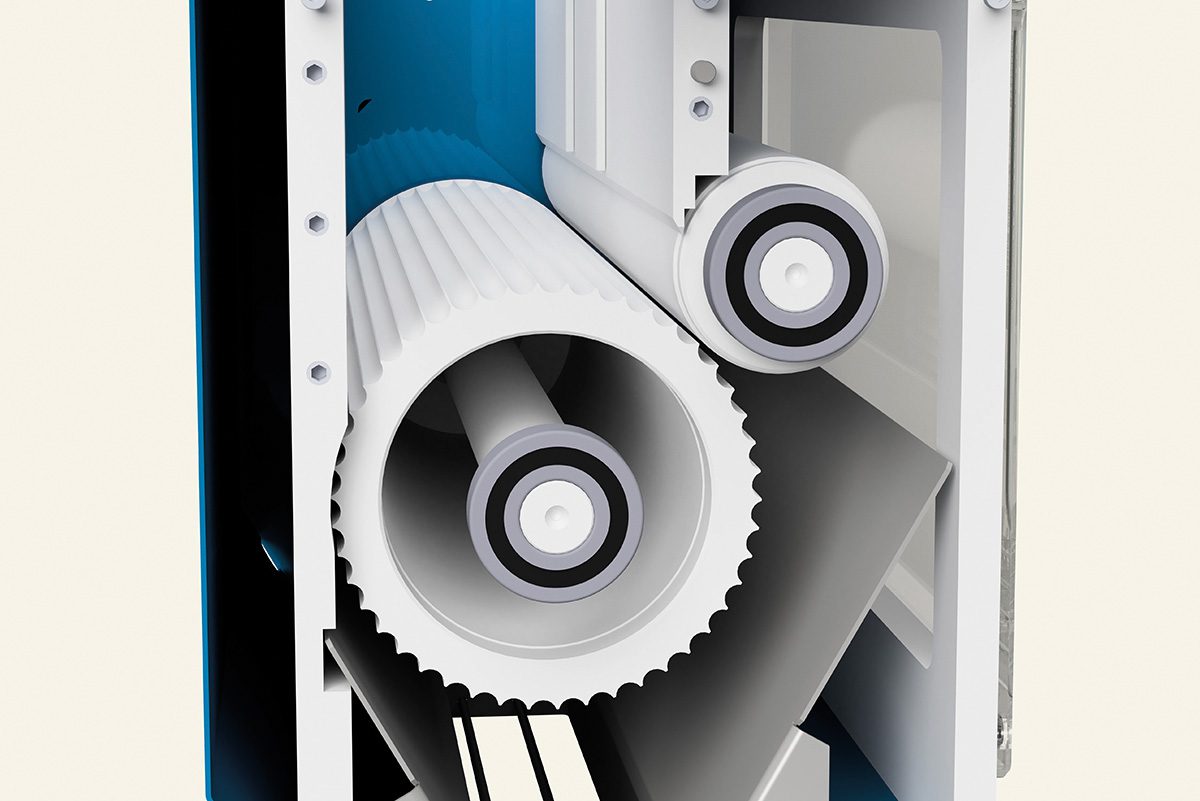
In a significant advancement for the burgeoning electric vehicle (EV) battery sector, Coperion K-Tron has announced the launch of its RF400 Roller Feeder. This innovative feeding system is specifically engineered to bring enhanced consistency and efficiency to dry-electrode processing, particularly for laboratory and pilot-scale battery manufacturing operations. The introduction of the RF400 marks a crucial step in refining a key manufacturing process that is gaining considerable traction within the industry.
The RF400 Roller Feeder aims to address some of the most persistent challenges in dry-electrode production, primarily focusing on achieving uniform deposition of electrode dry blends. By mitigating common issues such as material waste and production variability, the system is poised to optimize early-stage battery development and pave the way for more efficient large-scale production methods.

Revolutionising Dry-Electrode Deposition
The core design principle behind the RF400 is its sophisticated feeding mechanism. It employs a precisely engineered grooved feed roller that works in tandem with a smooth scraper roller. This combination is critical for gently handling and consistently delivering material, a task that has historically proven difficult with dry electrode formulations.
Traditional methods often contend with material bridging at the outlet, leading to uneven distribution. The RF400’s design directly confronts this issue, ensuring a more homogeneous material flow and significantly improving distribution across the calender roller positioned below. This meticulous control over material deposition is vital for the quality and performance of the final battery electrodes.
Enhancing Precision and Reducing Variability
Uniform deposition is not merely about aesthetic consistency; it directly impacts the electrochemical properties and longevity of EV batteries. Inconsistent electrode layers can lead to hotspots, reduced energy density, and premature degradation, all of which are critical concerns for electric vehicle manufacturers and consumers alike. By ensuring a steady and even spread of electrode materials, the RF400 contributes directly to the production of higher-quality, more reliable batteries.
Furthermore, reducing production variability is paramount in a manufacturing environment where repeatability and consistency are key performance indicators. The RF400’s design minimises fluctuations in material feed, allowing researchers and engineers to gather more consistent data during pilot runs and accelerate the optimisation process for new battery chemistries and designs.
Scalability and Smart Integration for Battery Pilot Lines
A significant feature of the RF400 is its adaptability for different production scales. The system supports an adjustable coating width of up to 400 mm, making it exceptionally well-suited for the specific demands of laboratory and pilot-scale battery production setups. This flexibility allows for diverse experimental parameters and ensures that the feeder can accommodate various electrode designs and material types during the research and development phase.
The unit’s compatibility with Coperion K-Tron’s established control architecture further streamlines its integration into existing workflows. The RF400 seamlessly integrates with the company’s KCM-III controls and leverages its Smart Force Transducer weighing technology. This synergistic integration enables real-time monitoring of feed rates, providing operators with immediate feedback and precise control over the deposition process.
Real-time Control and Adaptability
The ability to make real-time adjustments is a critical advantage in battery manufacturing, where material characteristics can sometimes vary slightly between batches. The integrated KCM-III controls, coupled with Smart Force Transducer technology, empower engineers to fine-tune feed rates and adapt to changing material properties on the fly. This level of dynamic control not only enhances process stability but also minimises material waste, a significant economic and environmental benefit.
For pilot lines, where iterative testing and rapid prototyping are common, this precise control system proves invaluable. It allows for quick adjustments to parameters, facilitating faster experimentation and optimisation cycles, ultimately accelerating the development timeline for next-generation battery technologies.
The Strategic Importance of Dry-Electrode Manufacturing
Dry-electrode manufacturing has garnered considerable attention across the battery industry, largely due to its inherent advantages over conventional wet coating techniques. The traditional wet process, which involves dissolving active materials in solvents and then drying the electrode, is energy-intensive and requires extensive solvent handling and recovery systems. These processes contribute significantly to the environmental footprint and operational costs of battery production.
In contrast, dry-electrode manufacturing promises a more sustainable and cost-effective approach. By eliminating the need for solvents and the subsequent drying steps, it offers substantial reductions in energy consumption and simplifies the manufacturing process. However, transitioning to dry methods also introduces a new set of challenges, particularly concerning material handling and achieving the uniform deposition necessary for high-performance electrodes.
Overcoming Material Handling Complexities
The dry nature of the electrode materials, often in powder form, makes them inherently more difficult to handle and uniformly distribute than wet slurries. Issues such as agglomeration, inconsistent flow, and bridging are common, leading to defects in the final electrode structure. The RF400 Roller Feeder is specifically designed to overcome these material handling complexities, providing a robust solution that capitalises on the benefits of dry processing while mitigating its inherent challenges.
This commitment to solving intricate engineering problems underscores Coperion K-Tron’s expertise in feeding systems and its dedication to advancing sustainable manufacturing practices within the battery industry. By making dry-electrode deposition more reliable and consistent, the RF400 directly contributes to the broader adoption of this environmentally friendly and economically advantageous production method.
Industry Impact and Expert Insights
The launch of the RF400 is anticipated to have a notable impact on how battery manufacturers approach the initial stages of dry-electrode production. By providing a dependable and precise feeding system, Coperion K-Tron is enabling greater efficiency and repeatability at the critical lab and pilot scales, which are foundational for scaling up to commercial production.
Jay Daniel, Head of R&D Feeders and Feeding Systems at Coperion K-Tron, highlighted the significance of this development, stating, “The RF400 will set a new standard in the industry.” This endorsement from a leading expert within the company underscores the transformative potential of the new roller feeder, suggesting it will redefine benchmarks for precision and consistency in dry-electrode manufacturing processes.
Coperion K-Tron’s Commitment to EV Battery Innovation
Coperion K-Tron has long been recognised for its expertise in material handling and feeding technologies. The introduction of the RF400 Roller Feeder reinforces its position as a key innovator in the rapidly evolving EV battery sector. By focusing on critical process steps like dry-electrode deposition, the company is directly contributing to the advancement of sustainable and efficient battery production.
As the global demand for electric vehicles continues to surge, the need for more efficient, cost-effective, and environmentally friendly battery manufacturing processes becomes increasingly paramount. Technologies such as the RF400 Roller Feeder play a pivotal role in meeting these demands, helping to accelerate the transition towards a more electrified future.
The RF400 represents not just a product launch, but a strategic step forward in refining the underlying engineering of battery production. Its capabilities in ensuring uniform deposition and reducing waste are critical for fostering innovation and achieving the scalability required for the next generation of high-performance EV batteries.