
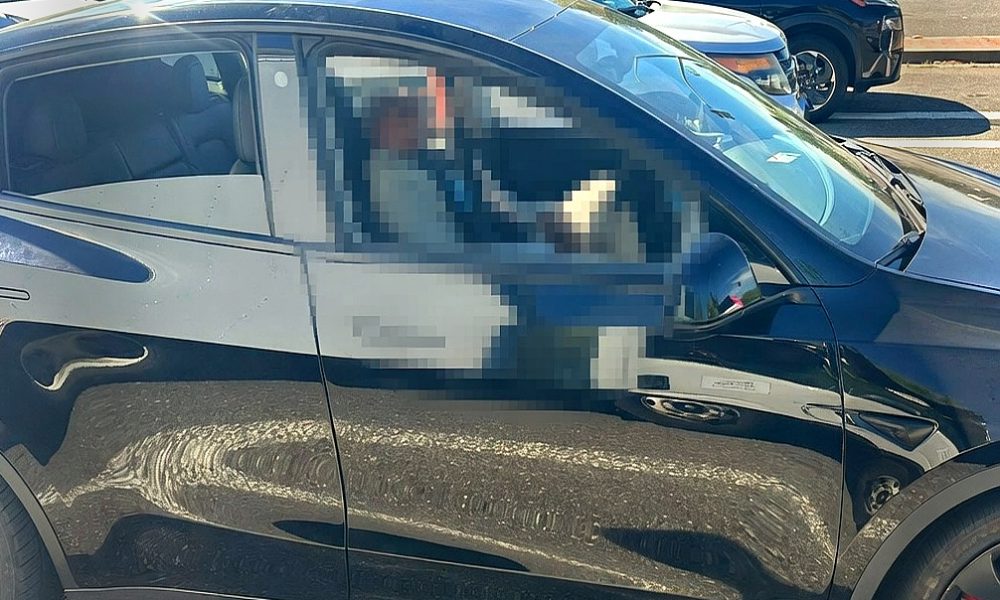
A recent incident in Vacaville, Northern California, has brought into sharp focus the complex interplay between advanced automotive technology and enduring driver responsibility. Police arrested a man on a charge of driving under the influence (DUI) after he was discovered reportedly passed out behind the wheel of his Tesla Model Y, which was actively navigating busy streets using its Full Self-Driving system.
The arrest underscores a critical legal and ethical dilemma facing society as autonomous and semi-autonomous driving capabilities become more prevalent. While vehicles equipped with sophisticated driver-assistance systems offer unprecedented levels of convenience, law enforcement agencies maintain that the ultimate control and accountability remain with the human occupant.

Vacaville Incident: A Drunken Nap and an Automated Drive
The sequence of events leading to the arrest unfolded when a concerned community member contacted dispatch, reporting a driver who appeared to be asleep at the wheel of a Tesla Model Y. The vigilant caller remained on the line, guiding officers from the Vacaville Police Department to the vehicle’s location.
Police successfully intercepted the Tesla Model Y at the intersection of Elmira Road and Shasta Drive. Upon investigation, officers found the driver in a state described as “completely passed out.” The scene inside the vehicle offered further evidence: a four-pack of Sutter Home wine bottles and a box of Round Table pizza were clearly visible on the passenger seat.
Authorities confirmed the presence of both alcohol and marijuana, ruling out any medical emergency as the cause for the driver’s incapacitated state. The incident was characterized by police as an “extremely committed drunken nap” while the vehicle continued to operate under the guidance of its advanced driver-assistance features.

California Law and Driver-Assistance Systems
The Vacaville Police Department, in a public statement released via their Facebook page, reiterated a crucial aspect of California’s Vehicle Code pertaining to advanced driving technologies. The law explicitly permits the use of assistive driving features, such as Tesla’s Full Self-Driving system, but it imposes stringent conditions on the operator.
As the department stated, the law still requires drivers to be “conscious, alert, and not under the influence while operating them.” This legal stipulation draws a clear line, emphasizing that even with the most advanced automation, the vehicle’s human operator bears full legal responsibility for its safe and lawful operation.
This principle is fundamental to the current regulatory framework governing Level 2 driver-assistance systems, of which Tesla’s Full Self-Driving system is an example. These systems are designed to assist, not replace, human drivers, necessitating continuous supervision and readiness to intervene.
Understanding Tesla’s Full Self-Driving System
Tesla’s Full Self-Driving (FSD) system is an advanced suite of driver-assistance features designed to perform various driving tasks, including navigating on highways and city streets, changing lanes, and making turns. Despite its name, FSD is classified as a Level 2 autonomous system, meaning it requires active human supervision at all times.
The technology aims to reduce driver fatigue and enhance safety through automated maneuvers. However, it is not a fully autonomous system where the vehicle can operate independently without any human oversight. Drivers are instructed to remain attentive, with their hands on the wheel and prepared to take control instantly.
This incident, therefore, serves as a stark reminder that even as the Tesla Full Self-Driving system handles navigation, the human driver’s attentiveness and sobriety are non-negotiable legal requirements. The system’s capabilities, while impressive, do not grant immunity from laws designed to ensure public safety on roadways.
Broader Context: Elon Musk’s Stance on FSD and Driver Interaction
The Vacaville arrest occurs within a broader discourse surrounding the capabilities and perceived limitations of Tesla’s Full Self-Driving system, a conversation often shaped by statements from Tesla CEO Elon Musk.
In December 2025, Musk himself addressed a user’s question regarding the permissibility of texting while using FSD v14.2.1. His response, “Depending on context of surrounding traffic, yes,” generated considerable discussion among technology enthusiasts and safety advocates alike.
Earlier remarks by Musk to investors further highlighted his perspective on driver interaction with the system. He had argued that “drivers turning off autopilot to check texts while steering with their knees was ‘significantly less safe’ than simply letting FSD run, which he called ‘kind of the killer app.’” These statements, while not directly addressing impairment, illustrate the delicate balance Tesla navigates in promoting its advanced features while stressing responsible use.
Crucially, neither of Musk’s statements included any provision for being under the influence of alcohol or other substances, nor did they suggest that the Tesla Full Self-Driving system could replace a sober and attentive driver. The legal expectation for human vigilance remains absolute, regardless of the vehicle’s automated capabilities.
Public Reaction and Safety Implications
The incident quickly garnered public attention, with social media comments reflecting a mixture of humor and serious concern. One commenter aptly observed, “That time when his vehicle had more situational awareness than he did,” while another quipped, “Sutter all the way home….”
Beyond the lighter reactions, the Vacaville arrest carries significant implications for public safety and the ongoing evolution of legal frameworks for autonomous vehicles. It emphasizes the substantial challenges faced by law enforcement in monitoring and enforcing laws when drivers misuse advanced technologies.
This case serves as a poignant illustration of the gap that can exist between technological advancement and human responsibility. While systems like the Tesla Full Self-Driving system are designed to enhance driving, they are fundamentally reliant on the driver’s adherence to laws and safe operating practices.
The Unwavering Importance of Driver Responsibility
As automotive technology continues its rapid advancement, with capabilities like the Tesla Full Self-Driving system becoming more sophisticated, incidents such as the one in Vacaville serve as crucial reminders of fundamental driving principles.
The law is unequivocal: even when operating a vehicle equipped with advanced driver-assistance features, the human driver must remain conscious, alert, and entirely free from the influence of impairing substances. These systems are powerful tools intended to assist, not to grant immunity from the responsibilities that come with operating a motor vehicle.
Ensuring road safety for all participants ultimately depends on every driver’s commitment to sobriety, attentiveness, and adherence to traffic laws, irrespective of how technologically advanced their vehicle may be. The Vacaville arrest reinforces that while technology may evolve, the core tenets of responsible driving remain constant.