
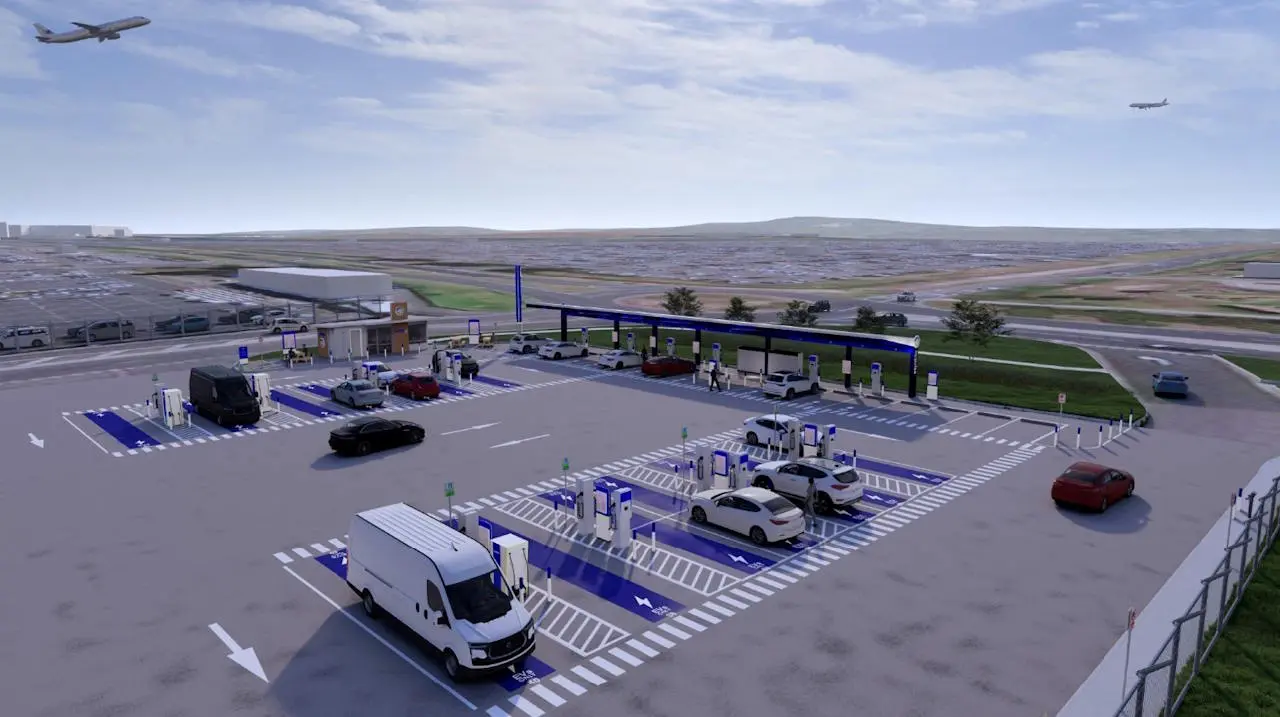
BP Pulse, the dedicated electric vehicle (EV) charging network under the global energy giant BP, has commenced construction on its inaugural large-scale charging hub in Australia. This significant infrastructure project, featuring 24 charging bays, is strategically located within the Melbourne Airport precinct and is slated for completion later this year.
This development marks a pivotal moment in the expansion of Australia’s EV charging infrastructure, particularly at a major transport gateway. The hub is designed to cater to a diverse range of electric vehicle users, from private motorists to commercial fleet operators, providing critical charging capabilities at a high-traffic location.

State-of-the-Art Charging Capabilities
The new BP Pulse facility is engineered to deliver rapid and efficient charging solutions. It will incorporate 24 individual charging bays, equipped with both 150-kilowatt (kW) and 300-kW chargers. These high-power charging units are capable of significantly reducing charging times, making them ideal for busy travellers and professional drivers who require quick turnaround.
Beyond the charging speed, the design prioritises user convenience and accessibility. The hub will include two dedicated accessible bays, ensuring ease of use for all drivers. Additionally, drive-through bays will be available, specifically designed to accommodate larger vehicles such as commercial vans or those towing, enhancing the versatility of the facility.
To further improve the user experience, the charging hub will feature essential amenities, including a bathroom facility. A protective canopy will also be installed, offering shelter from the elements for both vehicles and users during the charging process, underscoring a commitment to comfort and practicality.

Strategic Location and Accessibility
The chosen site for this extensive EV charging hub is within the bustling Melbourne Airport precinct, specifically positioned on the corner of Airport Drive and Francis Briggs Road. This location is nestled between a DHL depot and the Melrose Lounge, placing it in a high-visibility and easily accessible area.
Its proximity to existing airport facilities such as the Value Car Park, the Melbourne Airport Wait Zone, and the Ring & Ride area further amplifies its strategic importance. This central positioning ensures that the charging hub is conveniently reachable for airport staff, arriving and departing passengers, and local residents alike, integrating seamlessly into the airport’s transport ecosystem.
The decision to site the hub at Australia’s second busiest airport reflects a forward-thinking approach to meet the growing demand for electric vehicle charging solutions in areas with high traffic volume. This strategic placement is crucial for building confidence among EV owners regarding long-distance travel and airport accessibility.
Pioneering Renewable Energy Integration
A hallmark of the new BP Pulse charging hub is its commitment to sustainability. The facility will be powered entirely by 100 per cent renewable electricity. This clean energy will be sourced directly from Melbourne Airport’s two onsite solar farms, marking a significant step towards environmentally responsible infrastructure development.
This integration of renewable energy aligns with global efforts to decarbonise the transport sector and reduce the carbon footprint associated with energy consumption. By utilising locally generated solar power, the hub not only provides a vital service but also reinforces Melbourne Airport’s and BP Pulse’s dedication to sustainable practices and the transition to a greener future.
The use of green energy distinguishes this hub as an exemplary model for future EV infrastructure projects, showcasing how major energy players and transport hubs can collaborate to achieve environmental objectives while expanding essential services.
BP Pulse’s Expanding Footprint in Australia
Speaking on the groundbreaking, Antoine Denis, General Manager of BP Pulse Australia, highlighted the network’s ongoing commitment to the Australian market. “Since 2022 we’ve been building a network of EV charging sites around the country to support our customers on the road to electrification,” Mr. Denis stated.
He further elaborated on the strategic advantage of global expertise. “Now, with the backing of over 41,000 BP Pulse charging bays across the world, we’re leveraging our global EV charging expertise to bring bp pulse’s first large-scale charging hub to Australia.”
Mr. Denis emphasised the customer-centric approach of the new facility. “Conveniently positioned in the Melbourne Airport precinct, we want to ensure this charging hub offers a quick and seamless way for drivers to recharge and get back on the road.”
Since its launch in 2022, BP Pulse has rapidly established a significant presence in Australia, deploying over 290 EV charging bays across various locations nationwide. This steady expansion underscores the company’s ambition to be a leading provider of EV charging solutions in the country, supporting the accelerating adoption of electric vehicles.
Impact on Diverse User Groups
With approximately 34,000 vehicles accessing Melbourne Airport daily, the new BP Pulse charging hub is anticipated to serve a broad spectrum of users. This includes professional drivers, such as those in the rideshare and logistics sectors, who rely on efficient charging to maintain their operations.
Businesses operating EV fleets will also benefit significantly from the hub’s scale and strategic location, facilitating seamless recharges for their commercial vehicles. For travellers, the presence of a large-scale charging facility at the airport offers convenience for personal EVs or rental electric cars, mitigating range anxiety for those on longer journeys.
Local residents within the Melbourne metropolitan area will also find the hub a valuable resource, providing an additional, high-capacity charging option. The hub is expected to play a crucial role in enabling EV-owning Uber drivers to charge their vehicles, particularly through the Uber EV charging discount, which offers a base discount of 5-8c/kWh, thereby incentivising sustainable transport choices within the gig economy.
Melbourne Airport Welcomes Sustainable Initiative
The news of the EV hub’s construction has been enthusiastically received by Melbourne Airport authorities. Jai McDermott, Melbourne Airport Chief of Ground Transport, Property, and Retail, highlighted the dual benefits of the project.
“Not only will this be the first of its scale at an Australian airport, but we’re proud that BP Pulse has chosen to power the hub with 100 per cent renewable electricity generated from Melbourne Airport’s two onsite solar farms,” Mr. McDermott stated. His comments underscore the airport’s commitment to fostering sustainable development within its precinct and providing cutting-edge facilities that benefit both the airport community and the wider local population.
This collaboration between BP Pulse and Melbourne Airport exemplifies a growing trend of major infrastructure projects integrating environmental responsibility with modern transport needs, setting a precedent for future developments in the clean energy transition.