
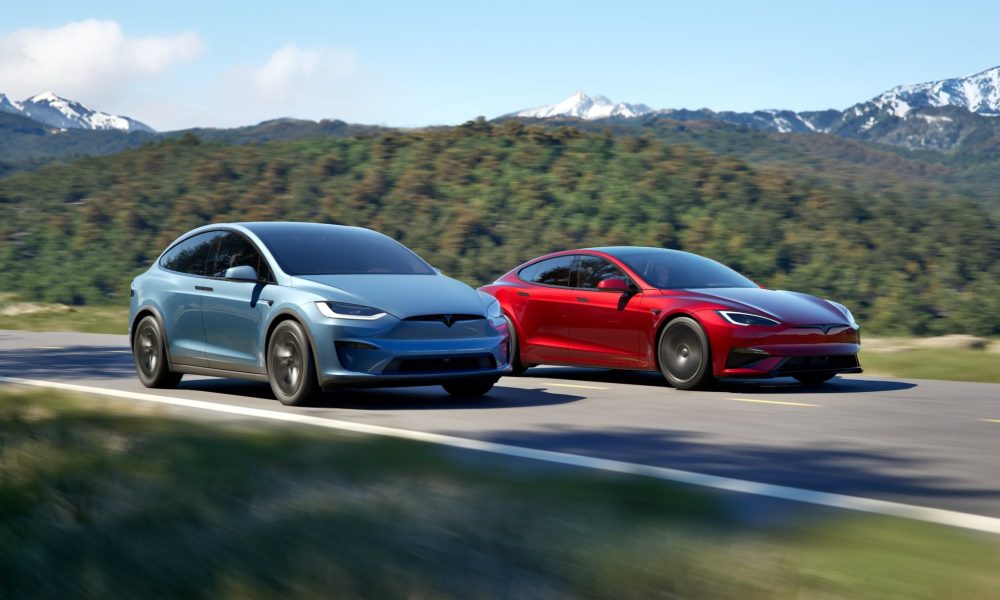
In a significant strategic realignment, Tesla has ceased taking custom orders for its luxury sedan, the Model S, and its SUV, the Model X. This move, which took effect on April 1, 2026, marks the formal beginning of the end for two of the electric vehicle manufacturer’s longest-running and most iconic models.
Prospective buyers are now exclusively directed to a limited inventory of pre-built vehicles. The custom order configurator, which previously allowed customers to select paint, wheels, interior options, and performance upgrades for the Tesla Model S and X, has been removed from Tesla’s official website.
Musk Confirms Strategic Shift for Tesla Model S and X
Tesla CEO Elon Musk publicly confirmed the change, addressing the decision directly on X. “Custom orders of the Tesla Model S & X have come to an end. All that’s left are some in inventory,” Musk posted, signaling the definitive conclusion of an era.
Musk also hinted at a ceremonial farewell, stating, “We will have an official ceremony to mark the ending of an era. I love those cars.” The post was accompanied by a throwback photograph of Musk at the Model S production launch 14 years prior, underscoring the personal and historical significance of these vehicles.
The decision to phase out the custom production of the Tesla Model S and X was initially foreshadowed during the company’s Q4 2025 earnings call in January. During the call, Musk described the move as an “honorable discharge” for the programs, aimed at reallocating valuable resources within the Fremont factory.

This strategic shift is crucial for Tesla as it intensifies its focus on developing and scaling the Optimus humanoid robot production and advancing its ambitious autonomous vehicle initiatives. The company’s long-term vision now heavily leans into AI and robotics, necessitating a redeployment of manufacturing capacity.
A Legacy of Innovation: The Model S and Model X
The Model S, introduced in 2012, and the Model X, which followed in 2015, were foundational to Tesla’s ascent as a leader in the premium electric vehicle market. These vehicles were instrumental in demonstrating that electric cars could offer not just environmental benefits but also exhilarating performance and opulent luxury.
The Model S quickly set benchmarks with its class-leading range and rapid acceleration, challenging the established dominance of traditional luxury sedans. Its sleek design and advanced technology captivated consumers and critics alike, proving the viability of long-distance electric travel.
Subsequently, the Model X made a bold statement with its distinctive falcon-wing doors, which became an iconic design feature. As one of the first all-electric SUVs, it expanded the appeal of EVs to a new segment, combining utility with Tesla’s signature performance and innovation.
Together, the Tesla Model S and X not only established Tesla as a formidable competitor in the luxury vehicle segment but also played a critical role in popularizing electric mobility globally. Their success provided the financial and technological bedrock for the development of more affordable, higher-volume vehicles like the Model 3 and Model Y.
From Flagships to Foundation: Evolving Market Strategy
Despite their historical significance, the sales volumes for the Tesla Model S and X have gradually declined in recent years. As Tesla strategically shifted its focus towards the mass production of the Model 3 sedan and Model Y SUV, the flagship models began to represent a smaller fraction of the company’s overall deliveries.
This decreased demand rendered the continued custom production of the Model S and Model X increasingly inefficient from a manufacturing perspective. The company’s emphasis has firmly transitioned to scaling production for its high-volume offerings and pioneering next-generation platforms, including fully autonomous robotaxis and advanced AI products.
The decision underscores Tesla’s commitment to streamlining its product lineup and optimizing manufacturing capacity. This enables the company to direct its resources more effectively toward its ambitious future projects, which are expected to drive significant growth and technological breakthroughs.
Current Inventory: Last Opportunity for Buyers
For prospective buyers still hoping to acquire a new Tesla Model S or Model X, the window of opportunity is rapidly closing. The remaining inventory in the U.S. market, some of which are nearly new, may come with attractive incentives.
These potential incentives can include sought-after features such as lifetime free Supercharging, access to Full Self-Driving (Supervised) capability, and premium connectivity, depending on the specific configuration and availability of the vehicle. These offerings represent a final chance for consumers to own these acclaimed models with added value.
Leasing options are still available for select Model X units, with prices starting around $1,699 per month. However, both exact pricing and the availability of specific models are subject to fluctuations based on current stock levels. Buyers are encouraged to act swiftly as the supply is finite.
Similar restrictions on custom orders and a shift to inventory-only sales have already been implemented in various international markets, including Europe and China, reflecting a consistent global strategy for the Tesla Model S and X lines.
The Road Ahead: Optimus and Autonomy
This significant product line adjustment aligns with Tesla’s broader corporate strategy to streamline its offerings and reallocate manufacturing prowess towards its ambitious future-oriented initiatives. While some long-time enthusiasts may lament the inability to personalize the Tesla Model S and X, the company views this transition as an indispensable step towards progress.
Tesla has explicitly indicated that once the current inventory of Model S and Model X vehicles is depleted, new units will no longer be offered for sale. The production lines that once meticulously crafted these luxury EVs are now undergoing conversion to support the accelerated ramp-up of the Optimus humanoid robot production.
This fundamental shift underscores Tesla’s commitment to an autonomous and AI-driven future, with Optimus playing a central role in its long-term vision. Existing owners of the Tesla Model S and X can rest assured, as the company has pledged to continue providing comprehensive support, including service, crucial software updates, and necessary parts for the foreseeable future.
As the final units of the Tesla Model S and X find their owners, the upcoming “official ceremony” promised by Elon Musk is anticipated to provide a fitting homage to these pioneering vehicles. In the interim, the evident changes on Tesla’s website serve as a clear and unmistakable signal: the era of bespoke flagship Teslas has quietly concluded, and the company’s full focus has irrevocably shifted toward shaping the future of artificial intelligence and autonomous technology.