
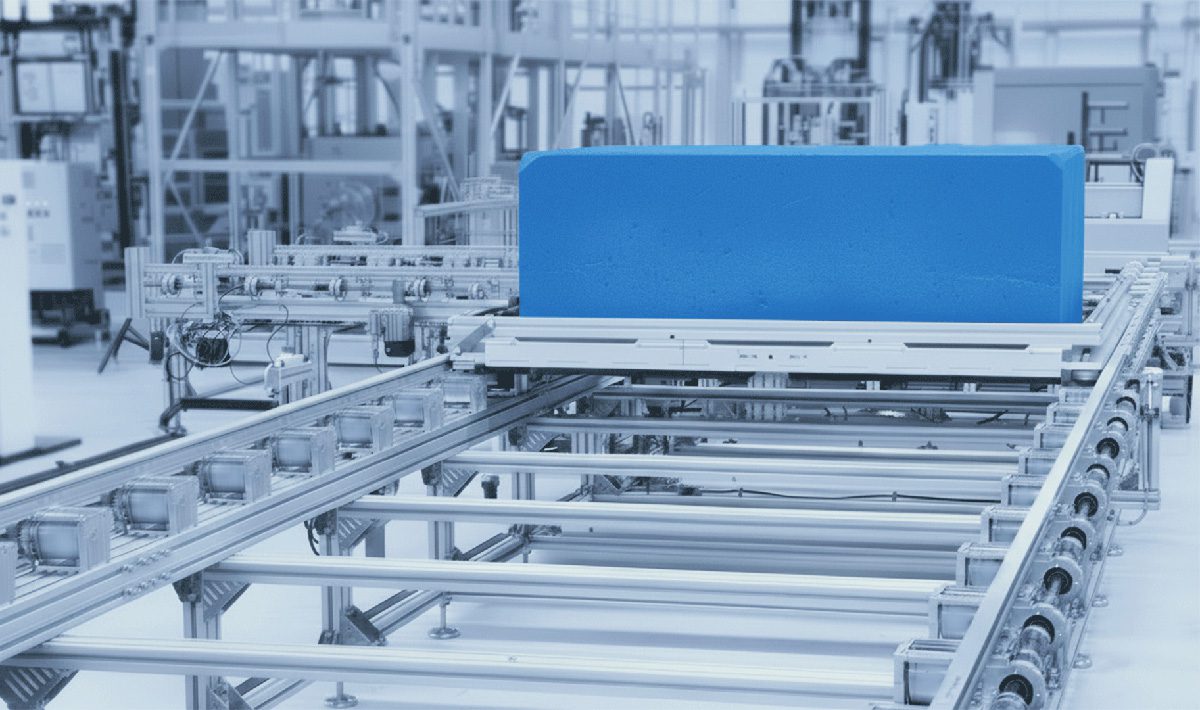
Bosch Rexroth, a global leader in drive and control technologies, has officially launched its groundbreaking TS 7plus, a fully electric roller conveyor system engineered to meet the stringent demands of heavy-payload manufacturing lines. This innovative solution marks a significant leap forward in industrial automation, positioning itself as the world’s first freely configurable, fully electric transfer system capable of handling loads up to an impressive 3,000 kg.
The TS 7plus is strategically aimed at high-growth sectors such as automotive, battery production, and aerospace/defense assembly. Its introduction is particularly timely for the rapidly expanding electric vehicle (EV) industry, where the efficient and reliable movement of heavy components, including battery packs and vehicle subassemblies, is paramount for scalable manufacturing processes. This system promises to enhance productivity and operational efficiency across complex production environments, critical for modern EV engineering and assembly.

Revolutionising Heavy-Duty Material Flow
Designed from the ground up to overcome the limitations of traditional conveyor systems, the TS 7plus incorporates modular sections that feature robust solid or hollow rollers. These rollers are approximately 50% larger than those found in its predecessor, the TS 7 system, a design choice that brings several distinct advantages. The increased roller size inherently reduces the number of moving parts required per meter of conveyor, a critical factor in enhancing system reliability and uptime.
Bosch Rexroth highlights that this reduction in moving components directly translates to improved availability, minimising the potential for mechanical failures and streamlining maintenance protocols. Such advancements are vital for manufacturing facilities operating on tight schedules, particularly within the fast-paced world of electric vehicle production where continuous operation is key to meeting market demand.
Engineered for Performance and Versatility
The TS 7plus is built to accommodate a wide range of heavy components. It supports standard workpiece pallets measuring up to 2,200 x 3,000 mm, offering ample space for large subassemblies characteristic of modern vehicle and aerospace manufacturing. Flexibility in installation is also a core tenet of its design, with a minimum transport height of 350 mm achievable for both longitudinal and transverse conveying configurations.

Furthermore, the system boasts an impressive conveyor speed, capable of reaching up to 24 m/min. This speed is a significant competitive advantage, with Bosch Rexroth noting it is considerably faster than typical Automated Guided Vehicles (AGVs), which often present a bottleneck in high-throughput lines. For manufacturers keen on optimising production cycles in EV engineering and other heavy industries, this speed translates directly into higher output and reduced cycle times.
A focus on maintainability is evident in the redesigned bearing block, which now features two mounting tabs. This thoughtful modification significantly speeds up the assembly process and simplifies subsequent maintenance and replacement tasks. This attention to ease of serviceability ensures that production lines remain operational with minimal downtime, reinforcing the system’s value proposition for high-volume manufacturing.
Innovative Drive System for Enhanced Reliability
At the heart of the TS 7plus’s advanced capabilities is its sophisticated drive mechanism. The system utilises lubrication-free king shafts paired with precision bevel gears. This design choice is a departure from conventional chain drives, which typically demand regular re-tensioning and lubrication, leading to higher operational costs and potential contamination risks.
By eliminating the need for such maintenance, the TS 7plus not only reduces ongoing operational expenses but also enhances the cleanliness of the production environment. The bevel gear path is specifically engineered to keep lubricants entirely away from workpieces, a crucial feature for sensitive manufacturing processes, especially in battery cell production and delicate aerospace component assembly where even minor contamination can compromise product quality. This aspect is particularly beneficial for advanced EV engineering processes involving sensitive electronic components.
Flexible Motor Integration and Power Options
The system’s motors are available in two power variants: 180 W and 250 W, providing manufacturers with options to match specific payload and speed requirements. Crucially, these motors come with a third-party interface, ensuring seamless integration into existing control architectures and offering flexibility for future upgrades. The design allows for motors to be mounted either inside or outside the conveyor section.
Internal mounting is a strategic advantage, as it clears the working area of interfering contours, thereby maximising available space for operators and other equipment. This feature contributes to a safer and more efficient workspace, a key consideration in modern, high-density manufacturing plants focusing on complex products like electric vehicles.
Dual Operating Modes for Optimised Efficiency
The TS 7plus offers two distinct operating modes, providing unparalleled flexibility and efficiency. The first is the conventional accumulation mode, which operates with stop gates, allowing workpieces to queue up as needed. The second, more advanced mode, is a segmented operation where each motor section runs only when actively required.
The segmented operating mode represents a significant stride in energy management. By powering individual sections only when a workpiece is present and needs to be moved, it dramatically cuts energy consumption over the system’s full lifecycle. This not only leads to substantial cost savings but also contributes to a smaller carbon footprint, aligning with global sustainability goals and the inherent environmental objectives of the electric vehicle industry.
Moreover, this intelligent power management allows for the specification of smaller motors in certain applications, which can further extend the service life of components by reducing wear and tear. This dual approach to operation underscores Bosch Rexroth’s commitment to delivering solutions that are both powerful and inherently efficient, a critical factor for competitive EV engineering and manufacturing.
Streamlined Configuration with MTpro Software
To facilitate easy deployment and customisation, the TS 7plus is fully configurable using Bosch Rexroth’s intuitive MTpro planning software. This powerful tool is available either as a local installation for dedicated workstations or as a convenient browser-based MTpro Online Designer, offering flexibility in how engineers access and utilise the planning capabilities.
The software’s advanced functionalities include the automatic generation of detailed CAD models and comprehensive parts lists from standard-component builds. This capability significantly streamlines the design and procurement phases of new production lines or modifications to existing ones. The generated data can be seamlessly exported directly to the Rexroth Store or shared with certified partners, ensuring accuracy and efficiency throughout the project lifecycle. This digital integration is crucial for the rapid prototyping and deployment cycles common in advanced EV engineering environments.
A Strategic Advantage for Future Manufacturing
The introduction of the Bosch Rexroth TS 7plus marks a pivotal moment for industries requiring robust, flexible, and energy-efficient heavy-payload transport solutions. Its fully electric design, combined with intelligent operational modes and user-friendly configuration software, provides a compelling offering for manufacturers aiming to enhance productivity and reduce operational costs.
As the automotive sector increasingly pivots towards electric vehicles, and as battery and aerospace industries continue to scale, solutions like the TS 7plus will be instrumental in building the advanced manufacturing infrastructure required for sustained growth and innovation. Its ability to handle substantial loads with precision and speed, while prioritising energy efficiency and ease of maintenance, positions it as a key enabler for the next generation of high-tech manufacturing, particularly within the demanding realm of EV engineering.