
Key Takeaways (TL;DR)
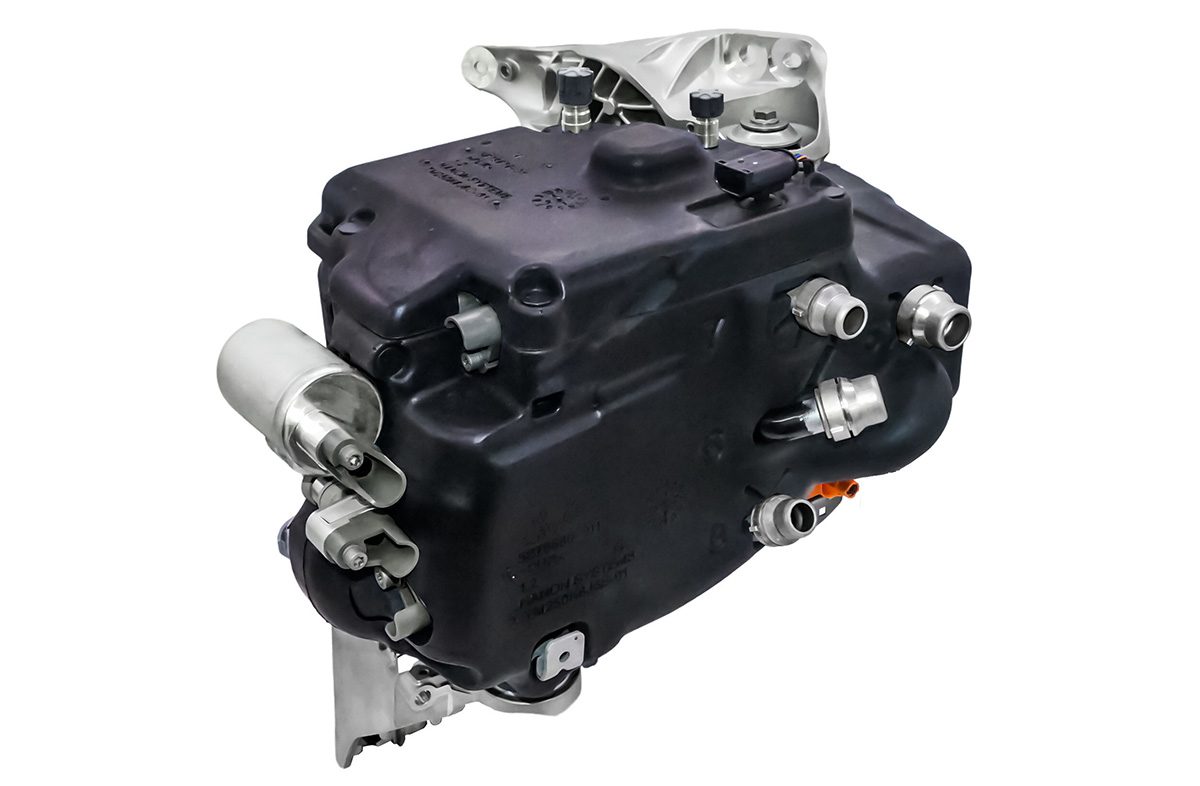
- Hanon Systems has developed a highly integrated 16 kg thermal management module for electric vehicles.
- The HICE module consolidates seven critical refrigerant-circuit components, including an eCompressor, chiller, and condenser, into a single assembly.
- This innovative solution is already deployed in BMW’s fully electric iX3 SUV, addressing complex EV thermal demands.
- It dynamically regulates refrigerant flow and temperature to optimize conditions during fast charging, high-performance driving, and extreme weather.
- Benefits include reduced system complexity, smaller packaging footprint, enhanced thermal performance, improved energy utilization, and extended driving range for EVs.
- The module tackles the unique challenge of managing three interacting thermal systems in EVs: battery, cabin, and powertrain.
As the electric vehicle (EV) market rapidly expands, the sophisticated demands of EV thermal management are coming into sharp focus. Addressing these intricate requirements, Hanon Systems, a global leader in automotive thermal and energy management solutions, has introduced a highly integrated thermal management module that significantly streamlines EV engineering.

This groundbreaking 16 kg assembly, known as the HICE module, consolidates seven crucial refrigerant-circuit components into a single, compact unit. Engineered for peak efficiency and performance, this module has already been adopted by BMW for its fully electric iX3 SUV, signaling a significant advancement in how EVs manage their complex thermal profiles.
Integrated Thermal Management: A New Paradigm for EVs
The core innovation behind Hanon Systems’ module lies in its ability to integrate multiple functions that are traditionally spread across an EV’s architecture. By combining these elements into one cohesive unit, the module represents a paradigm shift in how vehicle manufacturers approach EV thermal management, offering a more efficient and space-saving solution.
Weighing approximately 16 kg (35 lb), this integrated module delivers substantial advantages in both vehicle design and overall operational efficiency. Its deployment in the BMW iX3 underscores its readiness for real-world application in high-performance electric vehicles, demonstrating confidence in its capabilities.

Unpacking the HICE Module’s Core Components
The HICE module’s ingenuity stems from its comprehensive integration of several key components, each playing a vital role in maintaining optimal thermal conditions across the EV. This consolidation is central to enhancing overall system efficiency and reliability.
At its heart, the module features an eCompressor, which is essential for actively driving the refrigeration cycle. This electronically controlled compressor precisely adjusts its output to match the immediate cooling or heating demands, a critical aspect of dynamic EV thermal management.
Alongside the eCompressor is an electronic expansion valve block, a sophisticated component that accurately controls the flow of refrigerant into the evaporator. This precision allows for fine-tuning of cooling performance, preventing energy waste and ensuring stable temperatures.
A water-cooled condenser within the module facilitates the rejection of heat from the refrigerant to a liquid coolant, which then dissipates heat to the ambient air. This design choice contributes to the module’s compact nature and efficient heat exchange capabilities.
The internal heat exchanger plays a crucial role in optimizing the thermodynamic cycle. It improves the efficiency of both the cooling and heating functions by transferring heat between the high-pressure liquid and low-pressure vapor refrigerant lines, thereby enhancing overall system performance.
Further strengthening its capabilities, the module includes a chiller, specifically designed to cool the battery pack and other powertrain components. This dedicated cooling ensures the longevity and performance of high-voltage systems, particularly under strenuous conditions.
Essential A/C lines are also integrated, serving as conduits for the refrigerant throughout the circuit. Their meticulous integration minimizes potential leak points, a common concern in more fragmented thermal systems, and contributes to the module’s robust design.
Finally, pressure and temperature sensors are strategically embedded within the module to provide real-time data on the refrigerant’s state. This constant feedback loop is vital for the dynamic regulation capabilities, ensuring the system responds accurately to changing thermal demands.
Dynamic Regulation for Diverse Driving Conditions
The module’s advanced design allows it to dynamically regulate refrigerant flow and temperature. This intelligent control is crucial for managing the multifaceted thermal demands that arise across various vehicle subsystems simultaneously, ensuring optimal performance and safety for the EV.
Whether the EV is undergoing fast charging, engaged in high-performance driving, or operating in extreme weather conditions—be it scorching heat or freezing cold—the HICE module proactively adjusts its operation. This adaptability safeguards the battery, maintains powertrain efficiency, and ensures cabin comfort without compromise.
During fast charging, significant heat is generated within the battery pack, which the module must efficiently dissipate to prevent degradation and ensure charging safety. Similarly, aggressive driving places substantial thermal loads on both the battery and electric motor, necessitating responsive and powerful cooling.
In cold climates, the module efficiently heats the battery to its optimal operating temperature, which is essential for preserving range and performance. Unlike passive systems, its dynamic nature means it provides precisely the amount of heating or cooling needed, preventing energy waste.
The Complexities of EV Thermal Management
EV thermal management presents a distinctly more demanding challenge compared to traditional internal combustion engine (ICE) vehicles. While ICE vehicles primarily manage powertrain cooling and cabin comfort, EVs introduce a third critical thermal system: the high-voltage battery.
Crucially, these three thermal systems—the battery, the cabin, and the electric powertrain—do not operate in isolation. They interact dynamically, with heat from one system potentially influencing the others. For example, excess heat from the battery during fast charging can impact cabin cooling efficiency, or vice-versa.
Fast charging and aggressive driving scenarios push significant heat into the battery. The refrigerant circuit must effectively handle this thermal load in real time to prevent overheating, which can lead to reduced battery life, diminished performance, and even safety risks.
Conversely, cold weather operation necessitates efficient heating of the battery. An under-cooled battery in freezing temperatures will suffer from reduced range and slower charging speeds. The module’s ability to warm the battery precisely without draining excessive energy from the main battery is therefore critical for extended driving range and user experience.
Strategic Consolidation: Advantages in Design and Performance
Hanon Systems asserts that its integrated design significantly reduces system complexity and packaging requirements. By consolidating multiple components into one compact unit, the module simplifies the overall EV architecture, making assembly more straightforward and reducing manufacturing costs.
The inherent design of the HICE module also leads to improved thermal performance and enhanced energy utilization. A more integrated system can optimize heat transfer paths and refrigerant flow more effectively than disparate components, leading to greater efficiency in both heating and cooling cycles.
These efficiencies directly contribute to an extended driving range for electric vehicles. By managing thermal loads more effectively and reducing parasitic losses associated with inefficient thermal systems, more energy is available for propulsion.
A key advantage of consolidating refrigerant-side components into a single module is the dramatic reduction in the number of connections. Each connection point in a refrigerant circuit represents a potential leak point, which can lead to refrigerant loss, system inefficiency, and environmental concerns. Fewer connections mean greater system reliability and reduced maintenance.
Moreover, the module’s compact footprint liberates valuable space within the vehicle chassis. This allows designers greater flexibility in optimizing other vehicle systems or maximizing passenger and cargo room, addressing a common constraint in EV design.
Industry Impact and Future Outlook
The introduction of Hanon Systems’ HICE module marks a pivotal moment in EV thermal management technology. Its integrated approach sets a new benchmark for efficiency, compactness, and performance in a rapidly evolving automotive landscape.
Soo Il Lee, CEO of Hanon Systems, articulated the significance of this development, stating, “Our solution transforms thermal management into an efficient and intelligent system. By unifying all critical refrigerant thermal management functions into one exceptionally compact module, we achieve savings in both packaging and materials.” This statement underscores the multifaceted benefits for both manufacturers and end-users.
As electric vehicle technology continues to mature, advancements in critical subsystems like thermal management will be crucial for broader adoption. Solutions that enhance range, improve reliability, and optimize performance in diverse conditions will define the next generation of EVs. Hanon Systems’ HICE module positions itself as a key enabler in this progressive journey, offering a smarter, more integrated approach to keeping EVs cool, warm, and efficient.
Conclusion
Hanon Systems’ 16 kg HICE module stands as a testament to the ongoing innovation in the electric vehicle sector. By integrating essential thermal management functions into a single, compact unit, it effectively addresses many of the complexities inherent in modern EV design.
This solution not only enhances vehicle performance and extends driving range but also simplifies manufacturing and bolsters system reliability. As the automotive industry moves towards greater electrification, such integrated approaches to EV thermal management will be instrumental in unlocking the full potential of electric mobility for a sustainable future.
Frequently Asked Questions About EV Thermal Management
What is the primary purpose of EV thermal management?
The main purpose of EV thermal management is to maintain optimal operating temperatures for the battery pack, electric motors, power electronics, and passenger cabin. This ensures safety, maximizes driving range, preserves component lifespan, and enhances overall vehicle performance across varying environmental conditions.
How does EV thermal management differ from ICE vehicle cooling?
EV thermal management is significantly more complex than ICE vehicle cooling because it manages three interconnected thermal systems: the high-voltage battery, the powertrain (motor/inverter), and the passenger cabin. ICE vehicles primarily focus on engine cooling and cabin comfort, making EV systems more integrated and dynamic.
What are the benefits of an integrated thermal management module like Hanon’s HICE?
An integrated module offers several key benefits: it reduces system complexity, shrinks the packaging footprint, improves overall thermal performance and energy efficiency, and contributes to an extended driving range. Additionally, consolidating components minimizes potential refrigerant leak points, enhancing system reliability.
Why is battery thermal management so crucial for electric vehicles?
Battery thermal management is crucial because battery performance, lifespan, and safety are highly dependent on temperature. Overheating can lead to degradation and safety risks, while excessively cold temperatures reduce range and charging efficiency. Optimal temperature regulation ensures peak performance and longevity for the battery pack.
How does the HICE module improve energy utilization and driving range?
By dynamically regulating refrigerant flow and temperature with high precision, the HICE module ensures that only the necessary amount of energy is expended for heating or cooling. This intelligent energy management reduces parasitic losses, allowing more battery power to be directed towards propulsion, thereby extending the EV’s driving range.
Which components are integrated into Hanon Systems’ HICE module?
The HICE module integrates seven key refrigerant-circuit components: an eCompressor, an electronic expansion valve block, a water-cooled condenser, an internal heat exchanger, a chiller, essential A/C lines, and various pressure and temperature sensors. This comprehensive integration ensures efficient and dynamic thermal control.
What role do pressure and temperature sensors play in the module?
Pressure and temperature sensors are vital for providing real-time data on the refrigerant’s state. This continuous feedback loop enables the module’s electronic control unit to make precise adjustments to refrigerant flow and temperature, ensuring that the thermal management system responds optimally to the EV’s evolving demands and conditions.
What is the significance of the module weighing only 16 kg?
The 16 kg weight signifies a remarkable achievement in component integration and lightweight design. A lighter module contributes to the overall weight reduction of the electric vehicle, which positively impacts energy efficiency, driving dynamics, and ultimately, the vehicle’s total driving range, making it more competitive in the market.