
Key Takeaways
- Global Battery Materials Corp. (GBM) has achieved two significant milestones in establishing a domestic North American graphite supply chain: shipping first graphite samples to a U.S. customer and opening a new processing lab in Quebec.
- The samples, sourced from Ontario’s Kearney Mine, are undergoing qualification testing, a crucial step toward commercial supply agreements for lithium-ion battery anodes.
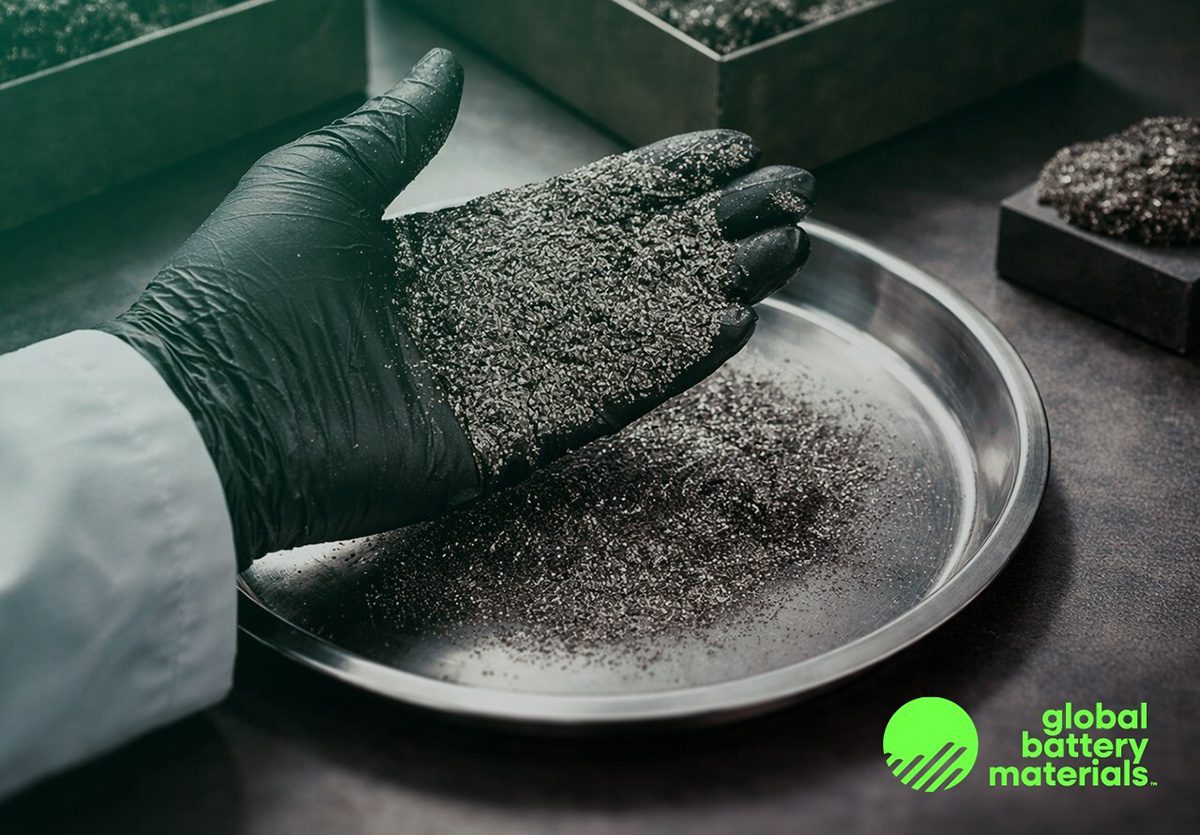
- The new ISO 9001-certified GBM Graphite Lab in Quebec demonstrates capability to purify raw graphite ore to 97% carbon content, simulating full-scale plant operations.
- GBM aims to create a vertically integrated supply chain, combining its mining assets with advanced processing technology to reduce reliance on foreign graphite sources.
- These developments are critical for addressing North America’s limited capacity in processing essential minerals like graphite, vital for electric vehicle (EV) battery manufacturing and energy security.
In a strategic move poised to significantly bolster the nascent North American graphite supply chain, Global Battery Materials Corp. (GBM) has announced two pivotal milestones. The company has successfully shipped its inaugural graphite samples to a U.S. customer for crucial qualification testing, simultaneously unveiling a sophisticated new processing laboratory in Quebec.
These developments underscore GBM’s determined efforts to cultivate an independent and robust domestic supply chain for critical battery minerals, particularly graphite, thereby reducing reliance on predominantly Chinese production. The advancements are seen as vital steps towards securing materials essential for the burgeoning electric vehicle (EV) industry across the continent.

Pioneering a Domestic Graphite Corridor
The graphite samples dispatched by GBM originate from its Kearney Mine, situated in Ontario. This site holds historical significance as one of North America’s only previously producing natural graphite assets, alongside being recognized as one of the continent’s most substantial flake graphite deposits.
The re-establishment of a supply pathway from such a historically significant site marks a crucial moment for regional resource independence. It highlights the potential for North American mines to contribute directly to advanced manufacturing needs, particularly within the battery sector.
From Mine to Market: The Kearney Asset
The Kearney Mine’s unique position as a prior-producing asset offers distinct advantages in rapidly advancing production capabilities. Its substantial flake graphite reserves are particularly valuable, as flake graphite is the preferred form for spherical graphite production, a key component in lithium-ion battery anodes.

Leveraging such a robust domestic resource is central to creating a resilient supply network. This local sourcing mitigates geopolitical risks and reduces the logistical complexities associated with international procurement, fostering greater stability for battery manufacturers.
The Critical Role of Qualification
The graphite samples sent to the unnamed U.S. customer are now undergoing an extensive qualification testing process. This stage is a fundamental requirement in the industry before any commercial supply agreement can be formalized.
Qualification testing rigorously assesses the material’s purity, performance characteristics, and suitability for specific manufacturing applications, ensuring it meets the stringent standards demanded by high-tech industries like EV battery production. Successfully passing these tests is indispensable for securing long-term contracts and integrating into the broader battery ecosystem.
Establishing Advanced Processing Capabilities in Quebec
Further solidifying its foundational role in the North American graphite supply chain, GBM has inaugurated its dedicated Graphite Lab in Quebec. This state-of-the-art facility is engineered to perform critical purification and upgrading processes on raw natural graphite ore.
The establishment of such a lab in North America directly addresses the current deficit in domestic processing infrastructure. It represents a tangible commitment to developing the full spectrum of capabilities needed to transform raw minerals into high-value battery components locally.
State-of-the-Art Processing and Certification
The Quebec lab boasts capabilities to demonstrate carbon content of up to 97% at a lab scale, a crucial metric for high-performance battery anodes. Achieving such high purity levels is paramount for ensuring the efficiency and longevity of lithium-ion batteries.
Significantly, the facility is ISO 9001 certified, affirming its adherence to internationally recognized quality management standards. This certification provides a robust assurance of the lab’s operational excellence and the reliability of its processes, critical for attracting industrial partners.
Furthermore, the lab is equipped to simulate comprehensive graphite plant processes. This simulation capability allows for efficient R&D, process optimization, and scalability assessments, accelerating the transition from lab-scale operations to commercial production without incurring prohibitive costs or delays.
Expert Leadership Driving Innovation
The GBM Graphite Lab is managed by Benoit Briere, an industry veteran bringing nearly three decades of experience in the natural graphite sector. His extensive expertise is invaluable in overseeing the sophisticated operations of the lab and guiding its strategic development.
Mr. Briere’s profound understanding of graphite processing technologies and market dynamics ensures that the lab’s activities are aligned with industry best practices and future demands. His leadership is a cornerstone of GBM’s commitment to excellence and innovation in critical mineral processing.
Strategic Vision: Vertical Integration for Secure Supply
Global Battery Materials Corp. positions itself as a vertically integrated entity, a strategy designed to offer comprehensive control over the entire graphite value chain. This integration spans from raw material extraction at the Ontario mine to advanced material processing.
The company leverages patented anode processing technology, which has been rigorously validated through a pilot plant operation situated in South Korea. This international validation provides a strong foundation for scaling up production domestically.
Integrating Mining with Advanced Anode Technology
The synergy between GBM’s mining assets and its proprietary processing technology creates a compelling proposition for battery manufacturers seeking secure supply lines. This integrated approach minimizes external dependencies and enhances quality control at every stage.
By controlling both the raw material source and the refining process, GBM can ensure a consistent supply of high-quality graphite tailored to specific battery requirements. This end-to-end management is vital for the demanding specifications of the EV industry.
The Path Towards North American Anode Production
Looking ahead, GBM has articulated plans for establishing a mass anode production site within North America. This next phase represents a significant leap towards fully domesticating the critical steps of battery material manufacturing.
A North American anode production facility would close a critical gap in the regional battery supply chain. It would further strengthen the North American graphite supply chain, providing localized manufacturing capabilities for finished anode materials, thereby reducing the need for costly and complex international sourcing.
Addressing the Geopolitical Imperative for Critical Minerals
Graphite plays an indispensable role as the dominant active material within the anodes of lithium-ion batteries, which power everything from electric vehicles to grid-scale energy storage solutions. Its unique electrical conductivity and stability make it irreplaceable in current battery architectures.
The growing global demand for EVs and renewable energy storage has intensified the focus on securing reliable and diverse sources of graphite. This mineral is not merely a commodity; it is a strategic asset integral to the clean energy transition.
Graphite: A Cornerstone of EV Batteries
In a typical lithium-ion battery, the anode — the negative electrode — is predominantly made of graphite. It acts as a host material for lithium ions during charging and discharging cycles, critically influencing the battery’s capacity, power, and lifespan.
The quality and type of graphite, particularly natural flake graphite, directly impact battery performance. Ensuring a stable supply of high-purity, processed graphite is thus a foundational requirement for accelerating EV adoption and battery innovation.
Reducing Reliance on Overseas Supply
Globally, the supply chain for graphite, particularly for refined anode material, is heavily concentrated. China currently exerts control over the vast majority of global graphite mining operations and, even more significantly, over the processing of anode materials.
This high concentration poses considerable risks to global battery manufacturers, including potential supply disruptions, price volatility, and geopolitical leverage. Consequently, there is an urgent and widespread push among battery makers and governments alike to diversify sourcing and build localized processing capabilities.
Policy Momentum for Domestic Sourcing
Both the United States and Canadian governments have explicitly prioritized the development of domestic sources for critical minerals, including graphite. Legislative initiatives and policy frameworks are actively encouraging investments in mining, processing, and manufacturing within North America.
These policies aim to enhance national economic security, support job creation, and ensure the resilience of supply chains essential for strategic industries. GBM’s recent advancements align perfectly with these governmental mandates, positioning the company at the forefront of this national imperative.
CEO’s Perspective on Bridging the Supply Gap
Eric Miller, the Chief Executive Officer of Global Battery Materials, articulated the pressing need for such domestic advancements. His statement underscores the broader strategic importance of GBM’s recent achievements.
“North America has very limited capacity to process critical minerals like graphite, and this announcement marks an important step in urgently closing this gap,” said Eric Miller. “Our lab-scale operations in Quebec are already producing graphite samples for qualifying customers, proving our ability to move quickly and meet urgent local demand.”
Mr. Miller’s comments highlight not only the existing deficit in regional processing infrastructure but also GBM’s proactive role in addressing it. The rapid operationalization of the Quebec lab and the timely dispatch of samples demonstrate a capacity to respond effectively to market demands.
This agility is crucial in a fast-evolving industry where speed to market can be a significant competitive advantage. GBM’s initiatives are therefore not just about production but also about establishing a responsive and reliable North American graphite supply chain.
Outlook for the North American Graphite Sector
The progress made by Global Battery Materials Corp. exemplifies a growing trend towards establishing robust, independent critical mineral supply chains in North America. These efforts are fundamental to supporting the continent’s ambitions in electric vehicle manufacturing and renewable energy technologies.
As governments and industries continue to prioritize localized sourcing and processing, companies like GBM are set to play a pivotal role. Their integrated approach, combining mining expertise with advanced processing capabilities, offers a blueprint for future developments in the sector.
The successful qualification of GBM’s graphite samples and the scaling of processing operations will be key indicators of North America’s capability to secure its own battery material future. This forward momentum is essential for fostering innovation, creating jobs, and ensuring a sustainable energy transition across the region.
Frequently Asked Questions About Graphite Supply Chains
What is the primary role of graphite in lithium-ion batteries?
Graphite serves as the dominant active material in the anode (negative electrode) of lithium-ion batteries. It facilitates the storage and release of lithium ions during the charging and discharging cycles, critically impacting the battery’s energy density, power output, and overall lifespan.
Why is a North American graphite supply chain considered critical?
A North American graphite supply chain is crucial for reducing dependence on foreign sources, particularly China, which dominates global production and processing. Establishing domestic capabilities enhances supply security, mitigates geopolitical risks, and supports the growth of the regional electric vehicle (EV) and clean energy sectors.
What makes GBM’s Kearney Mine significant for graphite production?
GBM’s Kearney Mine in Ontario is notable as one of North America’s only prior-producing natural graphite assets and among the continent’s largest flake graphite deposits. Its historical production and substantial reserves make it a strategic resource for re-establishing domestic graphite supply.
What is the purpose of the new GBM Graphite Lab in Quebec?
The GBM Graphite Lab in Quebec is designed to purify and upgrade raw natural graphite ore, demonstrating carbon content up to 97% at lab scale. This facility is critical for developing and optimizing advanced processing technologies to transform mined graphite into high-quality anode material for batteries.
What does “qualification testing” mean for graphite samples?
Qualification testing is a standard, rigorous process where potential customers evaluate graphite samples to verify their purity, performance, and suitability for specific applications. Successful qualification is a mandatory step before any commercial supply agreement for battery materials can be signed.
How does vertical integration benefit GBM and the supply chain?
Vertical integration allows GBM to control the entire graphite value chain, from mining raw materials to advanced processing and future anode production. This approach ensures consistent quality, reduces external dependencies, enhances supply reliability, and optimizes cost efficiencies for battery manufacturers.