
Key Takeaways (TL;DR)
- Amorim Cork Solutions has introduced ETP058, a pioneering cork-based composite designed to enhance the safety of electric vehicle (EV) and energy storage system (ESS) batteries.
- This innovative material uniquely combines superior thermal insulation, robust flame resistance, and crucial mechanical compressibility.
- ETP058 is engineered to mitigate the risks associated with thermal runaway, a critical safety concern in high-density battery packs.
- Boasting a thermal conductivity of 0.054 W/m·K and a UL94 V-0 flammability rating for thicknesses above 2 mm, the composite effectively slows inter-cell heat transfer during extreme thermal events.
- Its inherent cork properties, including a microcellular structure, offer natural low thermal conductivity, resilience, and light weight, making it a sustainable and effective solution for battery cell separators and module enclosures.
- The development marks a significant step towards safer and more reliable battery technologies in the rapidly evolving EV and ESS sectors.
In a significant advancement for electric vehicle (EV) safety and energy storage technologies, Amorim Cork Solutions has officially introduced ETP058. This innovative, cork-based engineered composite is specifically designed to manage the critical challenge of EV battery thermal runaway, offering a robust solution for enhanced battery safety and reliability in both EVs and stationary energy storage systems (ESS).
The new material represents a crucial step forward in addressing one of the most pressing safety concerns in the rapidly expanding electric mobility sector. By integrating thermal insulation, flame resistance, and mechanical compressibility into a single material, ETP058 aims to significantly bolster the resilience of battery packs against extreme thermal events.

Addressing the Imperative of EV Battery Safety
As the global adoption of electric vehicles accelerates, the focus on battery safety, particularly the prevention and containment of thermal runaway events, has intensified. Thermal runaway is a critical condition where an increase in temperature within a battery cell leads to a self-propagating chain reaction, potentially causing fire or explosion. Effective EV battery thermal runaway management is paramount for passenger safety and the longevity of battery systems.
Traditional battery pack designs often employ various materials to manage thermal issues and provide structural integrity. However, finding a single material that offers a comprehensive suite of protective properties—thermal, flame, and mechanical—is a persistent challenge for engineers. This is precisely where Amorim Cork Solutions’ ETP058 seeks to make a transformative impact, providing an integrated approach to battery cell protection.
ETP058: A Multifaceted Protective Solution
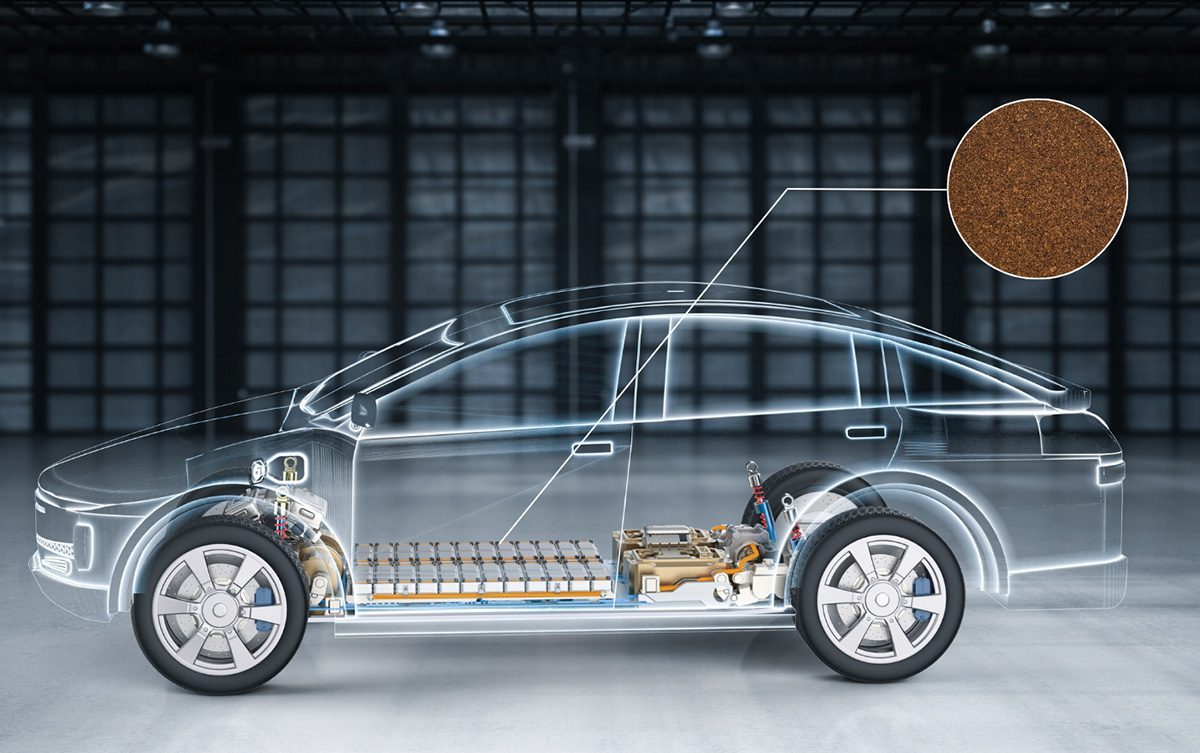
ETP058 is engineered to be strategically placed between and around battery cells within modules. This placement is critical for creating a protective barrier that can isolate and contain thermal events, preventing their propagation throughout the entire battery pack. The composite’s design leverages the natural attributes of cork, enhanced with specialized formulations.

Exceptional Thermal and Flame Resistance
One of the cornerstone features of ETP058 is its impressive thermal insulation capability. The composite exhibits a thermal conductivity of just 0.054 W/m·K. This low conductivity is vital in battery applications, as it effectively slows the transfer of heat between cells, which is a primary mechanism for the spread of thermal runaway.
Beyond insulation, the material also boasts a UL94 V-0 flammability rating for samples thicker than 2 mm. This rating signifies that the material self-extinguishes within 10 seconds on a vertical part and drips of flaming particles are not allowed. Such a high flammability standard underscores its ability to resist ignition and impede flame spread, contributing significantly to EV battery thermal runaway management strategies.
Rigorous flame exposure testing conducted at temperatures nearing 1,000 °C further validated ETP058’s performance. These tests demonstrated a gradual and controlled rise in backside temperature, providing concrete evidence of the material’s efficacy in slowing inter-cell heat transfer during an active thermal runaway event. This controlled response is crucial for providing valuable time for onboard safety systems to react and for emergency services to intervene, greatly reducing the risk of catastrophic failure.
Ensuring Mechanical Integrity in Extreme Conditions
In addition to its thermal and flame properties, ETP058 offers critical mechanical compressibility. Battery packs are subject to various stresses, including vibrations and potential impacts, which can affect the structural integrity and spacing between cells. During high-temperature events like thermal runaway, materials can deform, potentially compromising the contact and stability of the module components.
The ability of ETP058 to compress under mechanical load allows it to maintain consistent contact and structural stability within a battery module, even when subjected to the extreme conditions of a thermal event. This characteristic is vital for ensuring that the protective barrier remains effective and that cell separation is maintained, further enhancing the overall safety architecture for EV battery thermal runaway management.
The Power of Cork: A Sustainable and High-Performance Edge
The foundation of ETP058 lies in its unique composition: a blend of cork granules combined with a specialized fire-retardant formulation. Cork, a naturally occurring material, brings several inherent advantages to this high-tech application.
Inherent Material Advantages
Cork’s distinctive microcellular structure is the key to its naturally low thermal conductivity. This cellular architecture traps air, making it an excellent insulator. Furthermore, cork is known for its resilience, allowing it to recover its shape after compression, and its remarkably low weight. These properties—low thermal conductivity, resilience, and low weight—are highly desirable for applications such as cell separators and module enclosures in battery packs, where both mass reduction and compressibility are critical design considerations.
The combination of these natural attributes with advanced fire-retardant chemistry creates a material that is not only effective in mitigating thermal risks but also contributes to the overall performance and efficiency of the battery system.
Commitment to Sustainability
Beyond its technical merits, ETP058 leverages cork’s significant environmental benefits. Cork is harvested from the bark of the cork oak tree without felling the tree itself, making it a truly renewable raw material. This sustainable harvesting practice ensures the long-term viability of cork forests, which play a vital role in biodiversity and carbon sequestration.
In an era where environmental responsibility is increasingly critical for industries, especially the automotive sector, the use of a renewable and sustainably sourced material like cork provides an additional layer of appeal for manufacturers looking to enhance their green credentials while simultaneously improving product safety. This aligns with broader industry trends towards eco-friendly materials and processes in EV battery thermal runaway management and beyond.
Broader Implications for EV and Energy Storage Sectors
Amorim Cork Solutions explicitly targets thermal runaway containment in both EV battery modules and large-scale stationary energy storage systems (ESS). The increasing deployment of ESS for grid stabilization, renewable energy integration, and backup power applications presents similar, if not greater, safety challenges due to the sheer volume of stored energy.
The introduction of materials like ETP058 is vital for building public trust and ensuring the safe proliferation of these technologies. By providing an advanced, multi-functional material for EV battery thermal runaway management, Amorim Cork Solutions is poised to contribute significantly to the evolution of safer, more efficient, and more sustainable energy solutions across various critical sectors.
Looking Ahead
While Amorim Cork Solutions has not yet announced specific customer programs or a commercial availability date for ETP058, its potential impact on battery design and safety standards is clear. The development signifies a growing trend in the industry towards integrating advanced materials and innovative engineering to address the complex challenges posed by high-energy battery systems.
As the electric vehicle market continues its rapid expansion and energy storage solutions become more widespread, materials like ETP058 will play a pivotal role in ensuring that these technologies are not only powerful and efficient but also inherently safe and reliable for widespread adoption.
Frequently Asked Questions
What is ETP058 and what is its primary function?
ETP058 is a cork-based engineered composite developed by Amorim Cork Solutions. Its primary function is to enhance safety in EV and energy storage systems by managing thermal runaway, combining thermal insulation, flame resistance, and mechanical compressibility to protect battery cells.
How does ETP058 help in preventing thermal runaway?
ETP058 helps by providing excellent thermal insulation (0.054 W/m·K) and flame resistance (UL94 V-0 rating). This slows the inter-cell heat transfer during high-temperature events, preventing the rapid spread of thermal runaway and allowing more time for safety systems to react.
What are the key material properties of ETP058?
The composite features a thermal conductivity of 0.054 W/m·K and meets the UL94 V-0 flammability rating for thicknesses over 2 mm. It also demonstrates mechanical compressibility, maintaining structural stability and contact within modules during extreme temperatures.
Why is cork used in this composite?
Cork’s microcellular structure provides naturally low thermal conductivity, resilience, and low weight. These inherent properties make it ideal for cell-separator and module-enclosure applications where efficient thermal management, durability, and mass reduction are crucial for battery performance and safety.
Is ETP058 a sustainable material?
Yes, ETP058 is considered sustainable because cork is harvested from the bark of the cork oak without felling the tree. This process makes cork a renewable raw material, aligning with environmental responsibility goals in the electric vehicle and energy storage industries.
What are the target applications for ETP058?
ETP058 is specifically designed to target thermal runaway containment in both electric vehicle battery modules and stationary energy storage systems. Its multi-functional properties make it suitable for a wide range of high-energy battery applications requiring enhanced safety features.