
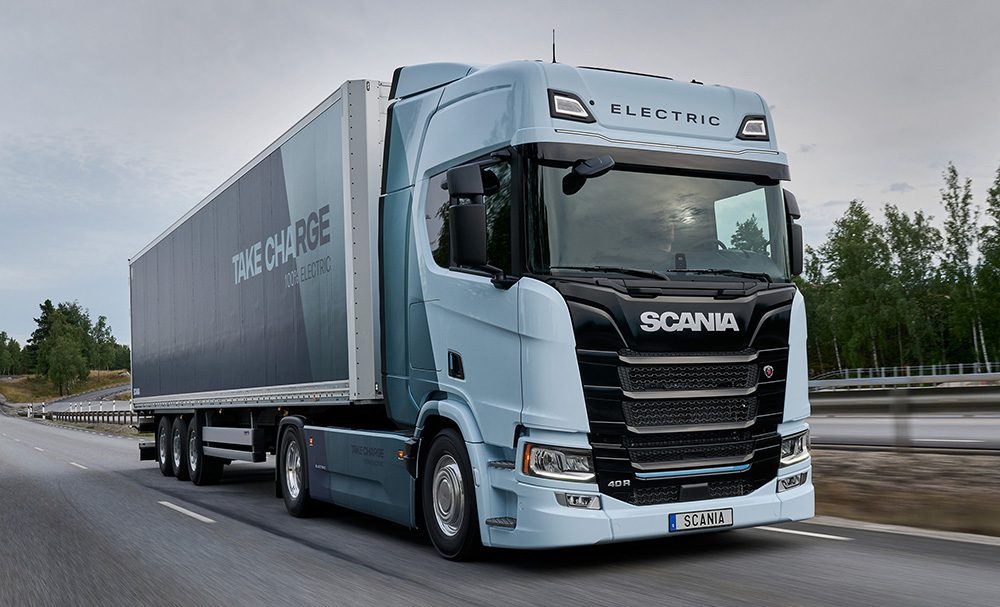
Key Takeaways:
- Scania is investing €70 million to expand its Angers, France, facility for electric truck production.
- The facility will maintain flexibility to assemble both combustion-engine and electric trucks, reflecting a cautious market strategy.
- Scania acknowledges the need for a comprehensive ecosystem approach, encompassing infrastructure and regulatory support, for a successful electric transition.
- Despite electrification investments, Scania’s parent company, Traton, has historically challenged stringent emissions standards.
- The move highlights the complex balance heavy-duty vehicle manufacturers face between decarbonisation goals and market realities.
In a significant strategic move, truck manufacturer Scania is committing €70 million towards bolstering its electric truck production capacity at its long-standing facility in Angers, France. This substantial investment underscores the company’s intent to advance its zero-emission vehicle portfolio while navigating the intricate dynamics of the evolving commercial transport sector across Europe.

The planned expansion, confirmed by Scania, involves both an extension of the existing manufacturing footprint and a comprehensive adaptation of current assembly lines. This dual approach aims to integrate advanced processes necessary for the efficient production of next-generation electric trucks, reinforcing the Angers plant’s pivotal role in serving Scania’s extensive customer base throughout France and the broader European continent for over three decades.
Strategic Investment in European Manufacturing
The €70 million capital injection into the Angers plant is not merely about increasing output; it represents a calculated step in Scania’s long-term industrial strategy. This investment is designed to modernise the facility, equipping it with the necessary infrastructure and expertise to meet future demand for electric commercial vehicles. The Angers site, a cornerstone of Scania’s European operations, will become a key hub for the company’s electric vehicle manufacturing initiatives.
The planned facility extension will create additional space for new production stages and advanced logistics, while the adaptation of assembly lines ensures seamless integration of electric vehicle components, such as battery packs and electric drivetrains, into the existing manufacturing process. This dual-line capability signifies a strategic hedging against market uncertainties, allowing Scania to pivot production in response to fluctuating customer preferences and regulatory shifts within the highly competitive European truck market.

A Measured Approach to Electrification
Despite the considerable investment, Scania has articulated a distinctly cautious stance regarding the pace of the electric transition within the heavy-duty sector. Petrus Sundvall, President of Scania Production Angers, elaborated on this strategic prudence, stating, “We are preparing for the future, but we must remain able to adapt to changing volumes and market dynamics.” This statement highlights the inherent uncertainties faced by original equipment manufacturers (OEMs) in predicting the exact trajectory of electric vehicle adoption.
The decision to maintain the capability for assembling both combustion-engine and electric trucks on the same lines is central to this measured approach. “The site will be capable of assembling both combustion-engine and electric trucks, ensuring [that] we can respond to evolving customer demand,” Sundvall affirmed. This operational flexibility is crucial in a market where the total cost of ownership, charging infrastructure availability, and range anxiety continue to influence purchasing decisions for transport operators.
The Broader Ecosystem Imperative for Electric Trucks
Christian Levin, President and CEO of Scania, underscored that the shift towards electrified transport extends far beyond the vehicles themselves, requiring a holistic transformation of the entire transport ecosystem. “The transition to electrified transport is not only about vehicles,” Levin stated, emphasising that “lasting progress will depend on how quickly the entire transport ecosystem can move forward together.” This perspective acknowledges the complex interplay of various factors essential for successful decarbonisation.
Levin highlighted several critical dependencies: transport operators require confidence to make significant investments in new electric fleets, charging and energy infrastructure must be deployed at an unprecedented scale, and regulatory frameworks need to provide long-term predictability and support. Without coordinated action across these pillars, the ambitious emissions reduction targets set by Europe, for instance, risk being unattainable. Scania’s investment, in this context, is presented as a contribution to this broader transition, demonstrating the company’s commitment to facilitating progress within its sphere of influence.
Overcoming Infrastructure and Regulatory Hurdles
The challenges of deploying robust charging infrastructure for heavy-duty electric trucks are immense. Unlike passenger cars, commercial vehicles require high-power megawatt charging systems at strategic locations along key transport corridors, within logistics hubs, and at depots. This necessitates substantial investment from energy providers, grid operators, and governments, alongside technological advancements in charging solutions.
Furthermore, the regulatory landscape plays a pivotal role in shaping the speed and direction of the transition. Stable, clear, and long-term policies are vital to incentivise investment across the entire value chain, from vehicle manufacturers to fleet operators and infrastructure developers. Uncertainties in policy can deter critical investments, slowing down the overall progress towards decarbonisation goals for the commercial transport sector.
Navigating the Regulatory Landscape: A Complex Stance
Scania’s strategic investments in electric truck production capacity come amidst a backdrop of complex industry engagement with environmental regulations. The company’s parent, Traton, a major commercial vehicle group, has been involved in actions that highlight the industry’s multifaceted approach to environmental policy. Traton, alongside Daimler Truck and Volvo Group, filed a motion to defend the Trump EPA’s repeal of the 2009 endangerment finding and the repeal of all motor vehicle climate standards.
Separately, Scania has also engaged in lobbying efforts within the European Union, seeking to influence emissions rules designed to encourage the production of electric trucks, with a reported aim to ‘water down’ these regulations. This dual posture—investing in electrification while simultaneously challenging certain regulatory stringencies—reflects the intricate balance OEMs often attempt to strike. It suggests a potential concern among manufacturers regarding the feasibility, pace, or cost implications of rapidly accelerating regulatory mandates, even as they commit to long-term decarbonisation goals through product development.
The Industry’s Balancing Act
This dynamic illustrates the complex challenges facing heavy-duty vehicle manufacturers. On one hand, there is an undeniable global push towards sustainability and reduced emissions, driving significant investments in electric and alternative fuel technologies. On the other, OEMs must contend with the immense capital expenditures required for this transition, the readiness of the supply chain, the operational realities for their customers, and the competitive pressures within the global market.
Lobbying efforts, even when seemingly contrary to stated electrification goals, can often be interpreted as attempts to ensure a ‘just’ or ‘feasible’ transition period. Manufacturers may argue for more realistic timelines or alternative compliance pathways that account for technological maturity, economic impacts, and the extensive infrastructure development required, aiming to prevent potentially disruptive or economically unviable mandates.
Outlook for Scania’s Electric Truck Production Capacity
Scania’s €70 million investment in Angers firmly signals its commitment to increasing its electric truck production capacity and being a significant player in the future of commercial transport. By creating a flexible manufacturing environment capable of producing both conventional and electric vehicles, Scania positions itself to adapt to the fluid market demands that characterise the early phases of the electric transition.
The company’s acknowledgement of the broader ecosystem — from infrastructure to regulatory stability — highlights a mature understanding of the challenges ahead. As the heavy-duty transport sector continues its journey towards decarbonisation, Scania’s strategic moves in production and its engagement with policy will be closely watched, offering insights into how established industry leaders navigate this complex and transformative era.
Frequently Asked Questions (FAQ)
Q1: What is the primary purpose of Scania’s €70 million investment?
Scania’s primary purpose is to expand its electric truck production capacity at its Angers, France facility. The investment includes extending the existing factory and adapting assembly lines to efficiently manufacture electric commercial vehicles, preparing the company for future market demands in sustainable transport across Europe.
Q2: Why is Scania adopting a ‘cautious’ approach to electric truck production?
Scania is cautious due to the evolving nature of the electric vehicle market, including uncertain customer demand, infrastructure readiness, and technological advancements. This approach allows the company to adapt to changing volumes and market dynamics, ensuring flexibility by manufacturing both combustion-engine and electric trucks.
Q3: What role does the Angers facility play in Scania’s European operations?
The Angers facility has been operational for over three decades, serving customers across France and Europe. With this new investment, it is poised to become a critical hub for Scania’s electric truck production, underscoring its strategic importance in the company’s long-term plans for regional market supply.
Q4: How does Scania view the broader transition to electrified transport?
Scania views the transition as a comprehensive ecosystem challenge, extending beyond just vehicle production. President and CEO Christian Levin emphasised that lasting progress hinges on coordinated action across the entire transport ecosystem, including infrastructure deployment, operator confidence, and supportive, long-term regulatory frameworks.
Q5: What is Traton’s (Scania’s parent company) stance on environmental regulations?
Traton, along with Daimler Truck and Volvo Group, defended the repeal of the 2009 endangerment finding and motor vehicle climate standards. Scania has also lobbied the European Union to temper emissions rules for electric trucks. This suggests a complex industry stance, balancing electrification investments with concerns over regulatory pace and feasibility.
Q6: Will the Angers plant exclusively produce electric trucks after the expansion?
No, the Angers facility will not exclusively produce electric trucks. Petrus Sundvall confirmed that the site will be capable of assembling both combustion-engine and electric trucks. This dual-production capability ensures operational flexibility, allowing Scania to respond effectively to varying customer demands and market shifts.
Q7: What are Europe’s ambitions for transport emissions reduction, according to Scania?
Christian Levin mentioned that Europe has set ambitious targets for reducing emissions from transport. Achieving these ambitions, he noted, will necessitate concerted action across the entire value chain, including operators’ willingness to invest, widespread infrastructure deployment, and supportive regulatory frameworks that enable long-term planning.