
Key Takeaways (TL;DR):
- Amorim Cork Solutions has introduced ETP058, a pioneering cork-based composite designed to enhance safety in electric vehicle (EV) batteries and energy storage systems.
- ETP058 addresses the critical challenge of thermal runaway by offering a unique combination of thermal insulation, flame resistance, and mechanical compressibility in a single material.
- The composite boasts a low thermal conductivity of 0.054 W/m·K and meets the stringent UL94 V-0 flammability rating for thicknesses above 2 mm.
- Testing at extreme temperatures approaching 1,000 °C demonstrated ETP058’s ability to effectively slow inter-cell heat transfer during a thermal event.
- Leveraging cork’s natural properties, the material is also renewable and contributes to lighter, more resilient battery designs, crucial for effective EV battery thermal runaway management.
In a significant stride towards bolstering electric vehicle (EV) safety and energy storage reliability, Amorim Cork Solutions, a global leader in cork products, has announced the development of ETP058. This innovative cork-based engineered composite is specifically designed to be integrated between and around battery cells within EV and stationary energy storage systems, offering a multi-faceted approach to battery safety.

The introduction of ETP058 represents a novel solution in the ongoing quest to mitigate the risks associated with thermal runaway events in high-energy battery applications. By combining essential properties such as superior thermal insulation, robust flame resistance, and critical mechanical compressibility, the material aims to provide a comprehensive layer of protection for contemporary battery architectures, directly enhancing EV battery thermal runaway management.
Addressing the Critical Challenge of Thermal Runaway in EV Batteries
Thermal runaway stands as one of the most severe safety concerns for high-energy density battery systems, particularly those powering electric vehicles and large-scale energy storage units. It describes a phenomenon where an increase in temperature, often triggered by internal or external factors, leads to a cascading exothermic reaction within a battery cell. This reaction generates more heat, which can then propagate to adjacent cells, potentially resulting in a fire or explosion.
The rapid proliferation of EVs and the expanding deployment of grid-scale energy storage necessitate increasingly robust safety protocols. Effective EV battery thermal runaway management is not merely a design consideration but a paramount requirement to ensure passenger safety, prevent property damage, and foster consumer confidence in electric mobility. Traditional materials often struggle to provide the optimal balance of thermal, mechanical, and safety properties required for such demanding applications.

ETP058: A Multifunctional Cork-Based Solution
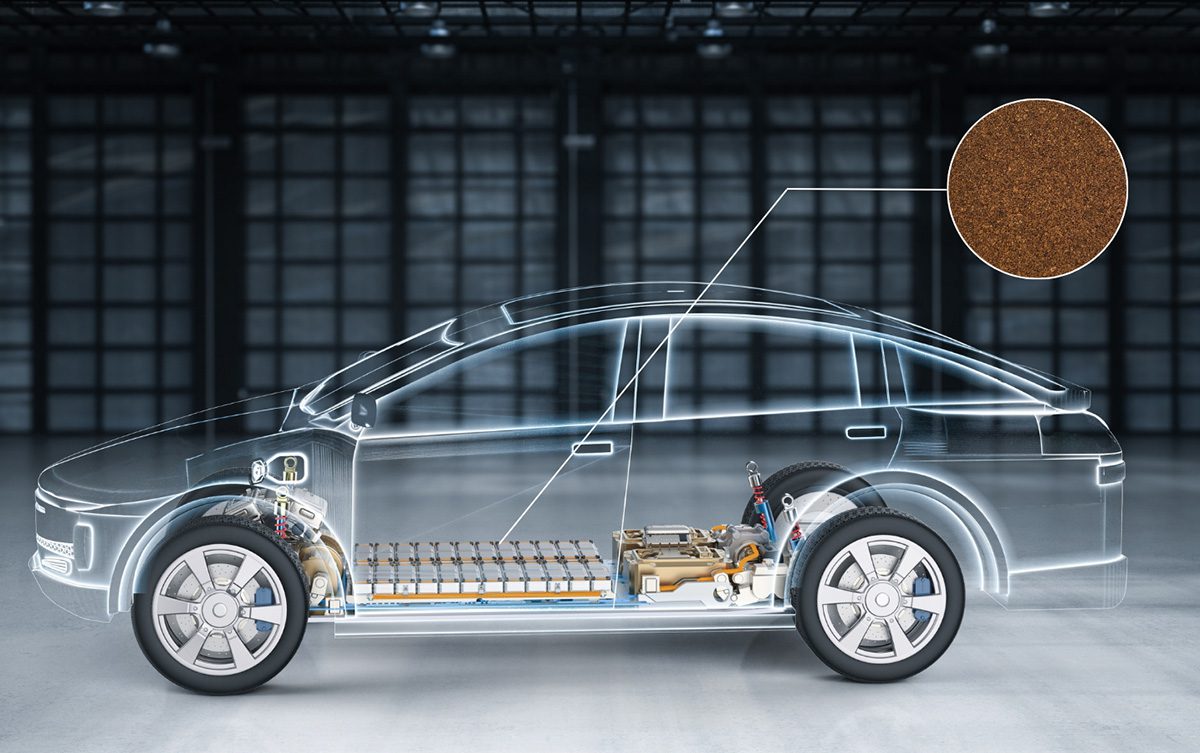
Amorim Cork Solutions’ ETP058 composite emerges as a compelling answer to these complex engineering challenges. The material is formulated from a sophisticated blend of cork granules integrated with a specialized fire-retardant agent. This unique combination harnesses the intrinsic advantages of cork while augmenting its performance with enhanced safety characteristics.
Designed for strategic placement within battery modules – specifically between individual cells and around the module enclosures – ETP058 acts as a critical barrier. Its multifunctional nature means it contributes to several aspects of battery integrity simultaneously, providing a holistic approach to preventing the escalation of thermal events and reinforcing overall system safety.
Unpacking the Performance: Thermal, Flame, and Mechanical Properties
The efficacy of ETP058 in demanding battery environments is underscored by its impressive technical specifications and performance during rigorous testing. Its ability to perform across multiple critical parameters distinguishes it as an innovative material for advanced battery designs.
Exceptional Thermal Insulation Capabilities
A cornerstone of effective EV battery thermal runaway management is superior thermal insulation. ETP058 exhibits a remarkably low thermal conductivity of 0.054 W/m·K. This property is crucial for isolating heat within an originating cell, significantly slowing the rate at which heat can transfer to neighboring cells. By impeding thermal propagation, the material provides valuable time for safety systems to react, or for the thermal event to de-escalate without spreading throughout the entire battery pack.
Advanced Flame Resistance for Enhanced Safety
In addition to its insulating properties, ETP058 meets stringent safety standards for flammability. The composite has achieved the UL94 V-0 flammability rating for samples thicker than 2 mm. The UL94 V-0 rating is a highly recognized standard, indicating that a material will self-extinguish within 10 seconds on a vertical part and not drip flaming particles. This certification highlights the material’s inherent ability to resist ignition and prevent the spread of fire, a critical factor in mitigating the catastrophic consequences of thermal runaway.
Further demonstrating its resilience, flame exposure testing conducted at temperatures approaching 1,000 °C yielded significant results. Amorim reported a “gradual and controlled rise in backside temperature,” indicating the material’s robust capability to manage and slow down inter-cell heat transfer even under extreme thermal stress. This controlled response is vital for containing a potential thermal event within a localized area.
Crucial Mechanical Compressibility and Structural Stability
Beyond thermal and flame resistance, ETP058 also addresses the mechanical demands of battery pack design. The composite compresses effectively under mechanical load, a feature that allows it to maintain consistent contact and structural stability within a module, particularly during high-temperature events. This compressibility is essential for absorbing potential expansion or movement of battery cells, ensuring the integrity of the battery pack and preventing gaps that could compromise thermal barriers or electrical connections.
Maintaining structural stability is paramount not only for safety but also for the long-term reliability and performance of battery systems. The material’s resilience ensures that its protective function remains intact even when subjected to the dynamic stresses present within an operating EV battery or stationary energy storage unit.
The Inherent Advantages of Cork: A Sustainable Edge
The core of ETP058’s innovative design lies in its primary component: cork. Cork is celebrated for its unique microcellular structure, which inherently provides a suite of properties highly beneficial for battery applications. This natural architecture contributes to its low thermal conductivity, resilience, and remarkably low weight – all attributes that are highly desirable for cell-separator and module-enclosure applications where mass and compressibility are critical engineering considerations.
Furthermore, cork offers a compelling sustainability narrative. It is harvested from the bark of the cork oak tree (Quercus suber) without requiring the felling of the tree itself. This makes cork a naturally renewable raw material, aligning with the growing global emphasis on environmentally responsible manufacturing and sustainable material sourcing within the electric mobility sector. Utilizing such a material not only enhances performance but also supports broader environmental objectives.
Targeted Applications: EVs and Stationary Energy Storage Systems
ETP058 is strategically positioned to address the urgent need for enhanced thermal runaway containment in both electric vehicle battery modules and large-scale stationary energy storage systems. While the demands and environments for these two applications differ in scale, the fundamental requirement for robust safety materials remains constant. Both sectors benefit immensely from materials that can prevent or slow the propagation of thermal events, thereby safeguarding valuable assets and human lives.
As the world transitions towards more electric and sustainable energy solutions, the importance of reliable and safe battery technology cannot be overstated. Innovations like ETP058 are crucial enablers for this transition, providing the foundational material science needed for the next generation of energy storage.
As of its announcement, Amorim has indicated that specific customer programs or a definitive commercial availability date for ETP058 have not yet been publicly disclosed. The company continues to advance the development and potential integration of this promising material into future battery safety solutions, highlighting its commitment to innovation in EV battery thermal runaway management.
FAQ Section
What is ETP058?
ETP058 is an engineered cork-based composite developed by Amorim Cork Solutions. It is designed for use between and around battery cells in electric vehicles and energy storage systems to provide thermal insulation, flame resistance, and mechanical compressibility, significantly enhancing EV battery thermal runaway management.
How does ETP058 contribute to battery safety?
ETP058 improves battery safety by offering a thermal conductivity of 0.054 W/m·K to slow heat transfer and meeting the UL94 V-0 flammability rating. Its compressibility also maintains structural stability during high-temperature events, preventing the rapid spread of thermal runaway between cells.
What are the key performance characteristics of ETP058?
Key characteristics include exceptional thermal insulation (0.054 W/m·K), high flame resistance (UL94 V-0 for >2mm samples), and mechanical compressibility. Testing shows it can control backside temperature rise during flame exposure up to 1,000 °C, crucial for effective EV battery thermal runaway management.
Why is cork used in this composite?
Cork’s natural microcellular structure provides inherent advantages like low thermal conductivity, resilience, and low weight. These properties are highly beneficial for battery cell separators and module enclosures. Additionally, cork is a renewable raw material, harvested without felling trees, making it a sustainable choice.
Where will ETP058 be applied?
ETP058 is targeted for applications in both electric vehicle (EV) battery modules and stationary energy storage systems. Its properties make it ideal for any high-energy battery application where robust thermal runaway containment and overall battery integrity are paramount safety concerns.
Has Amorim Cork Solutions announced commercial availability?
As of the current announcement, Amorim Cork Solutions has not yet disclosed specific customer programs or a commercial availability date for ETP058. The company is actively working towards integrating this advanced cork composite into future battery safety solutions for electric vehicles and energy storage.