
Key Takeaways (TL;DR)
- Fraunhofer IISB has developed a 750 kW permanent-magnet traction motor with an unprecedented 8 kW/kg power density for hybrid-electric regional aircraft.
- The motor achieves this high power density through innovative design features including thin-lamination electrical steel (NO15), advanced hairpin windings, and direct oil-spray cooling.
- It features a 4×3 phase hairpin winding arrangement with four electrically decoupled sections, significantly enhancing fault tolerance for aerospace applications.
- This motor is a crucial component of Project AMBER, a Clean Aviation EU initiative targeting a ~2 MW hydrogen fuel cell hybrid-electric propulsion system to achieve a minimum 30% CO₂ reduction in regional aircraft by 2020-era standards.
- The development underscores a significant step towards more sustainable and efficient electric aviation, showcasing rigorous adherence to aerospace engineering standards.
A Landmark in Sustainable Aviation: Fraunhofer IISB’s High-Density Electric Motor

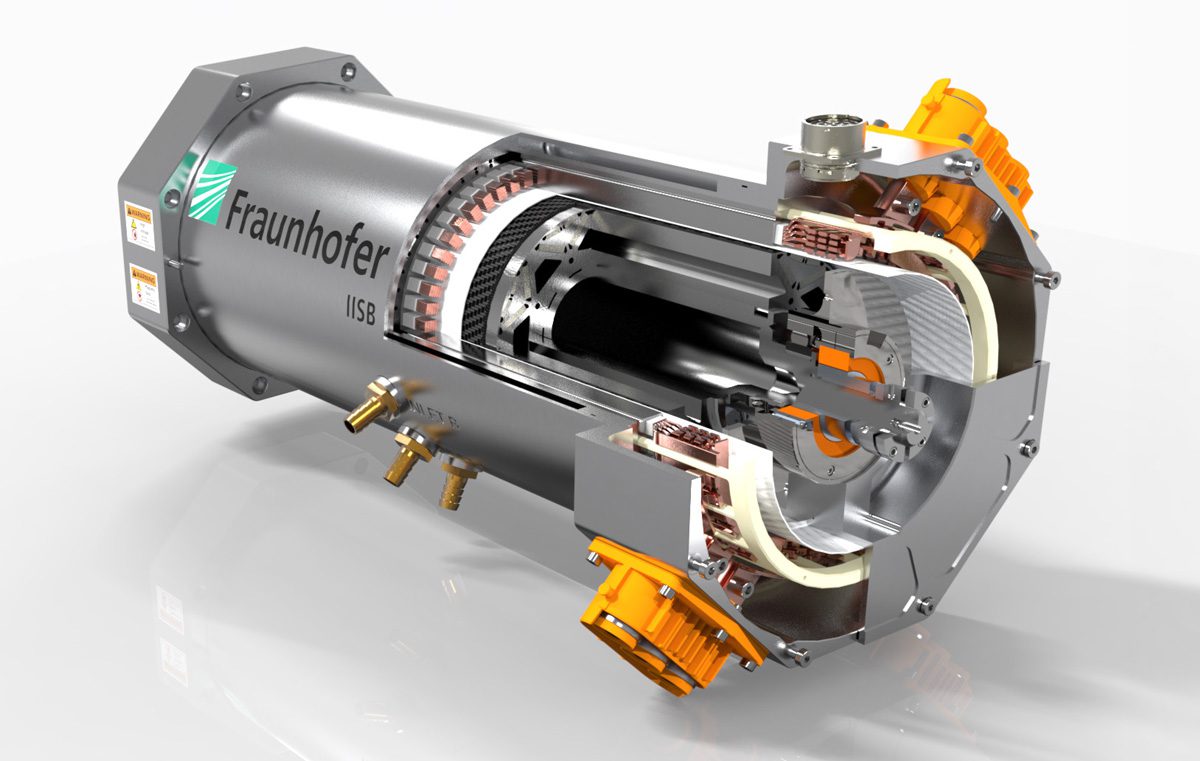
The pursuit of greener skies in the aviation sector has received a significant boost with the announcement from Fraunhofer Institute for Integrated Systems and Device Technology (IISB). The renowned research institution has successfully developed a 750 kW permanent-magnet traction motor specifically engineered for the demanding requirements of hybrid-electric regional aircraft. This pioneering development achieves an impressive power density of 8 kW/kg, setting a new benchmark for electric propulsion systems in aerospace.
This groundbreaking Fraunhofer IISB aircraft traction motor is poised to play a pivotal role in transforming regional air travel, moving it towards a more sustainable and environmentally friendly future. Its design integrates several advanced technologies, meticulously optimized to deliver high performance within stringent weight and size constraints critical for airborne applications. The innovation highlights a collective commitment within the industry to drastically reduce carbon emissions and enhance operational efficiency.
Engineering for Peak Performance: Key Specifications of the 750 kW Motor

The newly developed Fraunhofer IISB aircraft traction motor represents a confluence of cutting-edge materials and sophisticated engineering methodologies. Weighing only 94 kg, the motor delivers a substantial 750 kW of rated power when operating with a 65 °C oil coolant temperature. This remarkable power-to-weight ratio is a testament to the meticulous design and optimization efforts undertaken by the Fraunhofer IISB team.
Operating at a rated speed of 21,000 rpm, the motor generates 350 Nm of torque, encapsulating formidable power within a compact form factor. Its physical dimensions are efficiently managed, with a diameter of 250 mm and a length of 600 mm. These specifications underscore its suitability for integration into the constrained spaces of modern aircraft propulsion systems.
Advanced Design: Thin Laminations and Hairpin Windings
Central to achieving the motor’s exceptional power density and efficiency is the strategic selection of materials and winding technologies. The stator, a critical component, utilizes NO15 electrical steel. This specific grade, characterized by its ultra-thin laminations (0.15 mm), is instrumental in minimizing eddy current losses and AC losses, which are typically exacerbated at the high rotational speeds characteristic of aerospace motors. This material choice directly contributes to maintaining high efficiency and reducing heat generation.
Furthermore, the motor incorporates a sophisticated 4×3 phase hairpin winding arrangement. Hairpin windings are a significant departure from conventional round-wire coils, offering several distinct advantages. Their flat, rectangular cross-section allows for higher current density within the stator slot, directly translating to increased power output from a smaller volume. Additionally, the improved thermal contact between the hairpin windings and the stator core facilitates more efficient heat dissipation, which is crucial for sustaining high performance.
Thermal Management: Direct Oil-Spray Cooling
Effectively managing the substantial heat generated during high-power operation is paramount for the reliability and longevity of any electric motor, especially in aerospace applications. The Fraunhofer IISB aircraft traction motor addresses this challenge through an advanced direct oil-spray cooling system. This innovative cooling method ensures that heat is efficiently removed from the motor’s critical components, enabling it to sustain its rated power even at an elevated coolant temperature of 65 °C.
Direct oil-spray cooling offers superior thermal performance compared to traditional air or indirect liquid cooling methods. By directly applying the coolant to the heat-generating parts, it maximizes heat transfer efficiency. This capability is vital for maintaining optimal operating temperatures, preventing thermal runaway, and ultimately ensuring consistent performance and extended operational life for the electric propulsion unit.
Enhancing Reliability and Safety: Fault Tolerance in Aviation
Safety and reliability are non-negotiable in aerospace engineering. Recognizing this, the Fraunhofer IISB aircraft traction motor features a meticulously designed winding architecture that significantly enhances fault tolerance. The stator’s 4×3 phase hairpin winding is divided into four electrically decoupled sections, each independently driven by its own inverter.
This distributed winding approach provides a critical layer of redundancy. In the event of a failure within one section, the remaining sections can continue to operate, preventing a complete shutdown of the motor. This fault-tolerant design is a crucial aspect for aviation applications, where system integrity and continuous operation are paramount. It ensures that the aircraft’s propulsion system maintains a high degree of operational resilience, contributing directly to passenger safety and mission success.
Propelling Sustainable Aviation: The Project AMBER Context
The development of this high-performance Fraunhofer IISB aircraft traction motor is not an isolated effort; it is a key contribution to Project AMBER (Advanced Hybrid-Electric Propulsion System for Regional Aircraft), an ambitious initiative under the Clean Aviation Joint Undertaking (Clean Aviation EU) program. Clean Aviation is a public-private partnership aimed at accelerating the development and deployment of disruptive clean aviation technologies.
A Vision for Greener Skies: Project AMBER’s Objectives
Project AMBER specifically targets the development of a next-generation ~2 MW hydrogen fuel cell hybrid-electric propulsion system for regional aircraft. This visionary project seeks to revolutionize regional air travel by integrating cutting-edge electric and hydrogen fuel cell technologies with existing turboprop engines. The overall goal is to create a highly efficient and significantly less polluting propulsion solution, aligning with global efforts to decarbonize the aviation industry.
The motor developed by Fraunhofer IISB functions as a motor/generator within this parallel hybrid architecture. This means it can both provide propulsive power and generate electricity, offering versatility and efficiency in different flight phases. The parallel hybrid configuration integrates the electric motor/generator with a conventional thermal engine, allowing for optimized power distribution and fuel consumption reduction.
Collaborative Innovation: Industry Leaders Unite
Project AMBER exemplifies collaborative innovation, bringing together leading entities in aerospace and technology. Fraunhofer IISB, with its expertise in power electronics and electric drives, is a central player. The consortium also includes Avio Aero, contributing its advanced Catalyst turboprop engine, and GE Aerospace, a global leader in aviation engines and systems. This multi-stakeholder approach leverages diverse strengths and accelerates the pace of technological advancement necessary for such complex aerospace endeavors.
Towards a Reduced Carbon Footprint
The ultimate objective of Project AMBER is to achieve a substantial reduction in carbon dioxide (CO₂) emissions. The program targets at least a 30% reduction in CO₂ output at entry into service, compared to regional aircraft models from the 2020 era. This ambitious goal underscores the transformative potential of hybrid-electric and hydrogen fuel cell technologies in mitigating aviation’s environmental impact. Success in Project AMBER will mark a critical milestone in making regional air travel more sustainable and future-proof.
Rigorous Development and Aerospace Standards
The entire development lifecycle of the Fraunhofer IISB aircraft traction motor, from initial concept generation and detailed CAD design to manufacturing, assembly, and rigorous validation, was meticulously executed within Fraunhofer IISB’s facilities. Crucially, all stages of this development adhered strictly to international aerospace standards. This commitment to stringent quality and safety protocols ensures that the motor meets the exacting requirements for airworthiness and reliability, which are paramount in the aviation sector.
The comprehensive in-house development signifies Fraunhofer IISB’s deep expertise and capabilities in advanced electric propulsion systems. By controlling the entire process, the institute can ensure optimal integration of innovative features and maintain unparalleled quality control, preparing the motor for its eventual integration into next-generation regional aircraft.
The Future of Hybrid-Electric Flight
The successful development of this high-power-density Fraunhofer IISB aircraft traction motor represents a pivotal moment in the evolution of electric aviation. It demonstrates the technical feasibility of advanced electric propulsion for larger aircraft categories, moving beyond smaller, fully electric planes. By contributing to Project AMBER and the broader Clean Aviation initiative, Fraunhofer IISB is actively shaping a future where air travel is not only efficient and reliable but also significantly more sustainable.
As the aviation industry continues its journey towards decarbonization, innovations like this 750 kW permanent-magnet motor will be instrumental in achieving ambitious environmental targets. This advancement lays a strong foundation for the widespread adoption of hybrid-electric powertrains in regional aircraft, promising quieter, cleaner, and more economically viable air transport options for generations to come.
Frequently Asked Questions (FAQ)
What is the key innovation of the Fraunhofer IISB motor?
The primary innovation is its unprecedented power density of 8 kW/kg for a 750 kW permanent-magnet traction motor, achieved through advanced materials and cooling techniques, making it ideal for the weight-sensitive aerospace industry.
How does the motor achieve such high power density?
It combines several key technologies: thin-lamination NO15 electrical steel to reduce losses, advanced hairpin windings for higher current density and thermal contact, and efficient direct oil-spray cooling for effective heat management.
What are hairpin windings and why are they important?
Hairpin windings are rectangular conductors that allow for higher current density in the stator slots and better thermal contact with the stator core than traditional round wires. This enhances power output and heat dissipation, crucial for high-performance motors.
How does the motor ensure fault tolerance for aviation?
The motor’s stator features a 4×3 phase hairpin winding divided into four electrically decoupled sections, each with its own inverter. This design prevents a single failure from shutting down the entire motor, ensuring operational continuity.
What is Project AMBER, and what is the motor’s role in it?
Project AMBER is a Clean Aviation EU program aiming for a ~2 MW hydrogen fuel cell hybrid-electric propulsion system for regional aircraft. The Fraunhofer IISB motor acts as a motor/generator within this parallel hybrid architecture, complementing Avio Aero’s turboprop engine.
What is the CO₂ reduction target for Project AMBER?
Project AMBER targets at least a 30% reduction in CO₂ emissions at entry into service for regional aircraft, compared to those from the 2020 era. This contributes significantly to sustainable aviation goals.
Who are the main partners in Project AMBER?
The key partners in the Project AMBER consortium include Fraunhofer IISB, responsible for the traction motor; Avio Aero, contributing its Catalyst advanced turboprop engine; and GE Aerospace, providing broader aerospace system expertise.
Was the motor developed to specific aviation standards?
Yes, the entire development process of the motor, from conceptualization and design to manufacturing, assembly, and validation, was carried out strictly in accordance with rigorous aerospace standards, ensuring its suitability for aircraft applications.