
Key Takeaways
China’s Contemporary Amperex Technology (CATL), the world’s largest battery manufacturer, has launched its third-generation Shenxing LFP (lithium iron phosphate) battery, setting new benchmarks in electric vehicle (EV) charging technology. This innovative battery promises unprecedented ultra-fast charging speeds and enhanced durability, significantly addressing common concerns associated with EV adoption.
- The Shenxing 3rd Gen LFP battery can charge from 10% to 80% in just 3 minutes and 44 seconds.
- It achieves a 10% to 90% charge in a mere 6 minutes and 27 seconds under optimal conditions.
- Remarkably, the battery can charge from 20% to 98% in only 9 minutes, even at an extreme ambient temperature of -22°F (-30°C).
- CATL claims the battery retains over 90% of its original capacity after 1,000 ultra-fast charging cycles.
- Advanced thermal management features, including pulse technology for heating and Cell Shoulder Cooling Technology, optimize performance across varied climates.
- An industry-leading internal resistance of 0.25 milliohms during ultra-fast charging significantly boosts current flow and efficiency.
China’s Contemporary Amperex Technology (CATL), the global leader in battery manufacturing, has unveiled its groundbreaking third-generation Shenxing battery, an advancement poised to redefine the landscape of electric vehicle (EV) energy storage. This latest iteration of the lithium iron phosphate (LFP) battery technology promises an unprecedented combination of ultra-fast charging capabilities, robust performance in extreme temperatures, and impressive longevity.
The introduction of the CATL Shenxing LFP battery marks a significant stride in addressing one of the primary hurdles to widespread EV adoption: charging speed. With claims of achieving substantial charge levels in mere minutes, CATL is setting a new industry standard, directly competing with the convenience of traditional gasoline refuels.
Revolutionary Charging Speeds Unveiled
The core innovation of the third-generation CATL Shenxing LFP battery lies in its blistering charging speeds. The company has published compelling figures that highlight its superior performance across various charging intervals.
According to CATL’s official data, the Shenxing 3rd Gen battery can achieve a charge from 10% to 35% in just one minute. More significantly for daily use, it can reach an 80% state of charge from 10% in a remarkable 3 minutes and 44 seconds.

For those seeking an almost complete charge, the battery transitions from 10% to 90% in a swift 6 minutes and 27 seconds. These figures represent a dramatic reduction in charging times, making electric vehicle ownership more practical and appealing for a broader consumer base.
Cold Weather Performance: A Game Changer
Beyond its rapid charging in standard conditions, the CATL Shenxing LFP battery also demonstrates exceptional performance in challenging climates. A notable feature is its ability to charge from 20% to 98% in just 9 minutes, even when the ambient temperature plummets to a frigid -22°F (-30°C).
This cold-weather capability is particularly crucial as low temperatures typically degrade battery performance and charging efficiency. The Shenxing battery’s resilience in such conditions positions it as a robust solution for global EV markets, especially in regions with harsh winters.
Setting New Industry Benchmarks
The performance metrics of the CATL Shenxing LFP battery demonstrably surpass those of its competitors, signaling a significant leap forward in lithium iron phosphate battery technology. This places CATL at the forefront of the fast-charging race within the EV sector.
Comparing its capabilities to other leading battery technologies, CATL’s offering stands out. For instance, BYD’s Blade 2.0 battery requires 9 minutes to charge from 10% to 97% under ambient conditions.
Similarly, the Geely group’s Shield Gold Brick battery records an 8-minute and 42-second charge time to go from 10% to 97%. The Shenxing 3rd Gen battery’s sub-4-minute 10-to-80% charge significantly outperforms these established benchmarks.
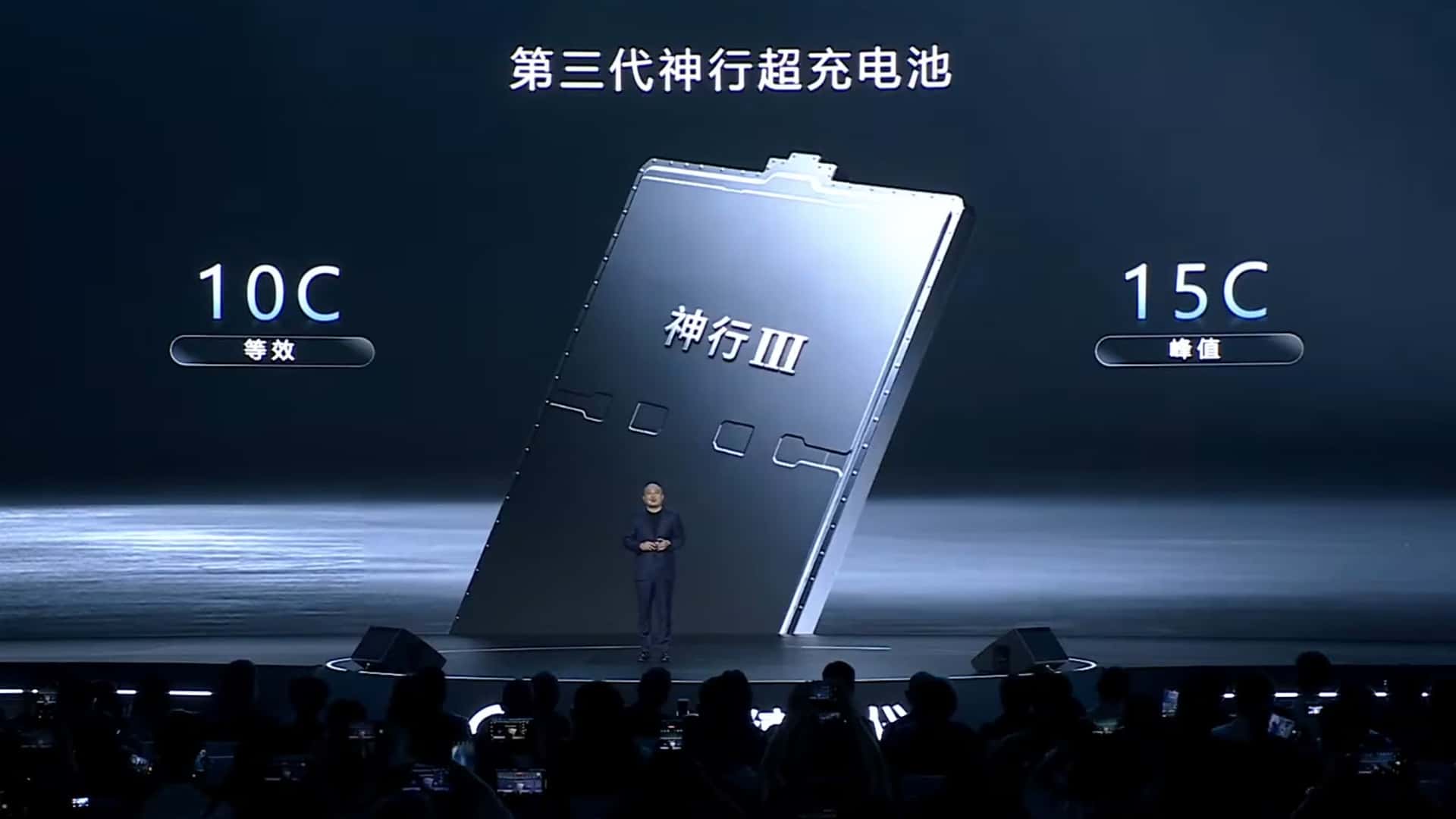
While CATL has not disclosed the nominal voltage or maximum power input of its new LFP battery, the advertised C-rate of a 10C equivalent, with a peak of 15C, offers insight into its high power delivery capabilities. Such C-rates indicate that electric vehicles powered by this CATL Shenxing LFP battery will soon offer recharge times comparable to, or even faster than, traditional internal combustion engine vehicles.
Enhanced Durability and Advanced Thermal Management
Beyond mere speed, the longevity and thermal stability of the CATL Shenxing LFP battery are also key highlights. These features contribute to its overall reliability and appeal for electric vehicle owners.
CATL asserts that its new LFP battery can retain over 90% of its original health even after 1,000 ultra-fast charging cycles. This exceptional capacity retention is critical for the long-term viability and residual value of electric vehicles, assuring owners of consistent performance over the lifespan of the battery.
Innovative Temperature Control Systems
To ensure optimal operation across diverse environmental conditions, the CATL Shenxing LFP battery integrates sophisticated thermal management solutions. These systems are designed to maximize both charging efficiency and battery life.
The battery features an advanced pulse technology that allows it to self-heat. This mechanism brings the battery pack to an ideal operating temperature much faster when connected to a DC charger, surpassing the efficiency of conventional coolant-based solutions found in many electric vehicles.
For cooling, CATL has implemented its proprietary Cell Shoulder Cooling Technology. This innovation is engineered to enhance cooling efficiency by an impressive 20%, preventing overheating during intensive charging or discharge cycles. A comprehensive temperature monitoring system further contributes to the battery’s robust thermal regulation, meticulously tracking the temperature of each individual cell within the pack.
Optimized Internal Resistance for Superior Performance
A crucial factor contributing to the CATL Shenxing LFP battery’s superior fast-charging capability is its remarkably low internal resistance. This technical achievement underpins the battery’s ability to handle high power inputs efficiently.
CATL reports an industry-leading internal resistance of just 0.25 milliohms during ultra-fast charging. The company emphasizes that this figure is 50% lower than the industry average, a substantial improvement that directly translates to enhanced charging performance.
Lower internal resistance enables a higher current flow with minimal energy loss as heat, leading to significantly faster and more efficient charging processes. This engineering marvel effectively mitigates one of the primary challenges in developing high-performance fast-charging batteries.
The Future of LFP Battery Technology
The unveiling of the CATL Shenxing LFP battery underscores the significant advancements being made in lithium iron phosphate technology. Traditionally valued for its safety, lower cost, and longer cycle life, LFP batteries have sometimes lagged behind nickel-manganese-cobalt (NMC) chemistries in energy density and cold-weather performance.
CATL’s third-generation Shenxing battery demonstrates that these traditional limitations are rapidly being overcome. By pushing the boundaries of charging speed, cold-weather resilience, and sustained capacity retention, CATL is effectively leveling the playing field and potentially reshaping future battery chemistry choices for mass-market electric vehicles.
This development is set to intensify competition within the global battery market and accelerate the transition towards more practical and widely adoptable electric vehicles. As these advanced CATL Shenxing LFP batteries integrate into forthcoming EV models, consumers can anticipate a new era of convenience and reliability in electric mobility.
Frequently Asked Questions (FAQ)
What is the CATL Shenxing LFP battery?
The CATL Shenxing LFP battery is the third-generation lithium iron phosphate (LFP) battery developed by China’s Contemporary Amperex Technology. It is designed for electric vehicles, focusing on ultra-fast charging capabilities, improved cold-weather performance, and enhanced durability to make EV ownership more convenient.
How fast can the Shenxing LFP battery charge?
The Shenxing LFP battery boasts impressive charging speeds, capable of charging from 10% to 80% in just 3 minutes and 44 seconds. It can also achieve a 10% to 90% charge in 6 minutes and 27 seconds under optimal ambient conditions, significantly reducing charging times for EV users.
Does the battery perform well in cold weather?
Yes, the CATL Shenxing LFP battery exhibits excellent cold-weather performance. It can charge from 20% to 98% in only 9 minutes, even when subjected to an extreme ambient temperature of -22°F (-30°C). This feature addresses a major concern for electric vehicles in colder climates.
How does CATL’s new LFP battery compare to competitors?
The Shenxing LFP battery’s charging speeds are significantly faster than competing technologies. For example, it outperforms BYD’s Blade 2.0 and Geely’s Shield Gold Brick batteries, which typically require 8-9 minutes to reach high charge levels under ambient conditions. This establishes a new benchmark for fast-charging LFP technology.
What are the key features for battery health and longevity?
CATL claims the Shenxing LFP battery can retain over 90% of its original capacity after 1,000 ultra-fast charging cycles, indicating strong durability. It also incorporates advanced thermal management, including pulse technology for rapid heating and Cell Shoulder Cooling Technology for improved cooling efficiency, ensuring optimal battery health over time.
What is the significance of the low internal resistance?
The CATL Shenxing LFP battery features an industry-leading internal resistance of just 0.25 milliohms during ultra-fast charging, which is 50% lower than the industry average. This low resistance allows for a much higher current flow with minimal energy loss, directly contributing to its remarkably fast and efficient charging capabilities.