
Key Takeaways (TL;DR)
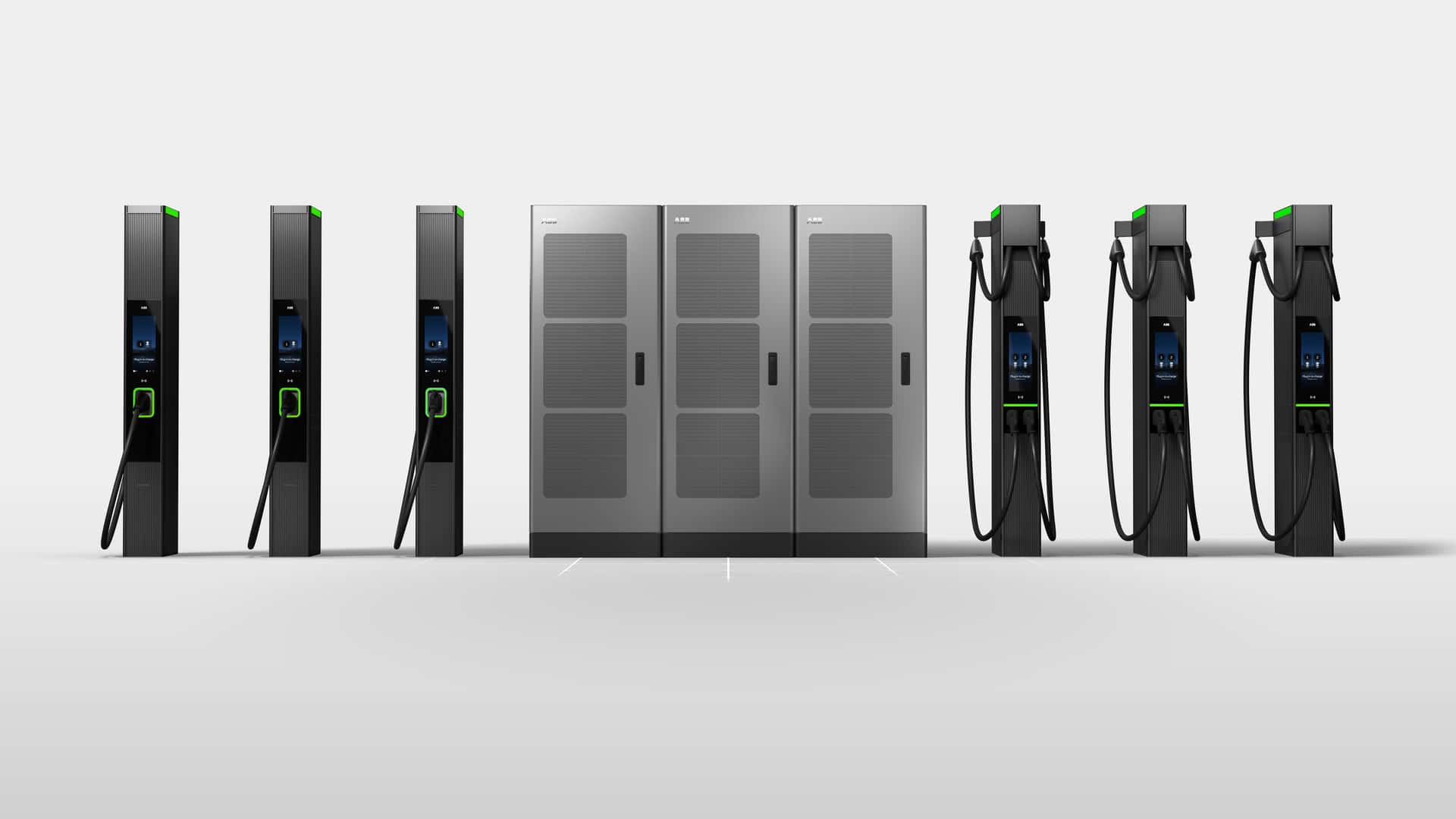
- ABB E-Mobility has introduced the OM M-Series power cabinet, a new DC fast charger system capable of megawatt charging.
- The system can deliver up to 1.2 megawatts (MW) to a single electric vehicle (EV) or dynamically distribute power to as many as 24 EVs simultaneously.
- Boasting an industry-leading power density of 625 kilowatts per square meter, the OM M-Series optimises space utilisation at charging sites.
- Its modular design allows for scalable deployment, starting from 200 kW and expanding to 1.2 MW, catering to diverse charging needs from passenger cars to heavy-duty vehicles.
- The innovation positions ABB as a key player in the race to meet the escalating power demands of modern electric vehicles and large commercial fleets.
Zurich, Switzerland – ABB E-Mobility, a leading Swiss technology provider, has officially unveiled its groundbreaking new direct current (DC) fast charger system, the OM M-Series power cabinet. This innovative solution is engineered to deliver unparalleled power, venturing into the megawatt territory, a critical advancement for the rapidly evolving electric vehicle (EV) charging infrastructure.

The OM M-Series represents a significant leap forward in high-power charging, capable of providing up to 1.2 megawatts (MW) of power. This substantial output can be directed to a single electric vehicle, significantly reducing charging times, or dynamically allocated across a network of up to 24 EVs, offering flexible and efficient energy management for busy charging hubs.
Setting New Benchmarks in Power Density
At the core of the OM M-Series’ innovation is its industry-leading power density. ABB E-Mobility proudly states that the cabinet achieves an impressive 625 kilowatts per square meter. This high-density design is particularly crucial for urban environments and other space-constrained locations where optimising the footprint of charging installations is paramount.
The compact design allows for more charging capacity within a smaller physical space, making it an attractive solution for operators looking to maximise throughput and return on investment at their charging sites. This efficiency in space utilisation ensures that charging networks can be expanded without necessitating extensive land acquisition.

Versatile Dispenser Solutions for Diverse Needs
The modular architecture of the OM M-Series power cabinet allows it to be seamlessly paired with a range of ABB’s advanced dispensers, providing a customisable charging solution tailored to various scenarios and vehicle types. This adaptability ensures that charging network operators can configure systems to meet specific demands, from private passenger cars to commercial heavy-duty trucks.
For applications requiring the highest power output, specifically in megawatt EV charging, the OM Ultra dispenser is the compatible choice. This dispenser is engineered to output a maximum of 1,500 amps at up to 980 volts, making it ideal for large commercial vehicles. It features a single, liquid-cooled MCS (Megawatt Charging System) connector cable, designed to meet the rigorous demands of heavy-duty electric trucks and buses.
Passenger electric vehicles benefit from the OM Solo dispenser, which offers robust charging capabilities. This unit can deliver up to 800 kW to a single EV, facilitated by its 800A peak current. The OM Solo comes equipped with a single, liquid-cooled cable, configurable with either a CCS (Combined Charging System) or a NACS (North American Charging Standard) connector, catering to various global EV models.
Further versatility is provided by the OM Solo dispenser with a phase-cooled CCS cable, which delivers up to 600A, and an air-cooled NACS cable, capable of up to 375A. For sites requiring multiple simultaneous connections, the OM Duo dispenser offers two outlets, each capable of delivering up to 800A, allowing two vehicles to charge concurrently at high speeds.
Scalability and Future-Proofing Charging Infrastructure
Recognising that charging infrastructure needs evolve, ABB E-Mobility has designed the OM M-Series system with inherent modularity. This crucial feature allows site operators to commence with smaller installations and scale up their power capacity as utilisation rates increase and EV adoption grows.
The product line offers various power cabinet options, starting with the base M200 unit, which delivers 200 kW. This can be expanded with the M400 (400 kW) and M800 (800 kW) units, culminating in the full-blown M1200 setup, capable of the maximum 1.2 MW. This stepwise upgrade capability minimises initial investment risks and future-proofs charging sites.
Crucially, the dispensers only need to be connected to the power cabinet, simplifying the upgrade process and keeping associated costs to a minimum. This modular approach is vital for building resilient and adaptable EV charging networks that can respond efficiently to fluctuating energy demands and technological advancements in the electric vehicle sector.
The Growing Demand for Megawatt EV Charging
The introduction of ABB’s OM M-Series comes at a pivotal time when modern electric vehicles are pushing the boundaries of charging speeds. Many contemporary EVs are now capable of charging at rates exceeding 300 kW, necessitating a robust and high-powered charging infrastructure to match these capabilities. The shift towards larger battery capacities, especially in commercial and heavy-duty electric vehicles, further amplifies the demand for megawatt EV charging.
ABB E-Mobility is not alone in recognising this critical need. The race to develop advanced megawatt-capable charging systems is intensifying across the industry. Competitors such as Alpitronic also offer megawatt-capable split DC charging systems, with some providing up to 600 kW to a single EV. Tesla’s latest Supercharger setups are reported to output up to 1.2 MW, indicating a clear industry trend towards higher power outputs.
Furthermore, Chinese automotive giant BYD is actively involved in the megawatt charging business with its 1.5 MW Flash chargers, demonstrating a global push towards accelerating EV charging speeds. These advancements collectively signal a future where ultra-fast charging becomes the norm, significantly reducing downtime for electric vehicle users and supporting the broader transition to electrified transport.
The development of systems like the ABB OM M-Series is instrumental in alleviating range anxiety and making electric vehicles a more practical and convenient option for consumers and commercial operators alike. As battery technology continues to advance, the demand for sophisticated, high-power charging solutions will only grow, solidifying the importance of innovations in megawatt EV charging.
Frequently Asked Questions (FAQ)
What is the ABB OM M-Series power cabinet?
The ABB OM M-Series is a new DC fast charger system from ABB E-Mobility, designed for megawatt-level charging. It features high power output and density, making it suitable for rapidly charging various electric vehicles, from passenger cars to heavy-duty trucks, across diverse charging environments.
How much power can the OM M-Series deliver?
The full M1200 configuration of the OM M-Series can deliver up to 1.2 megawatts (MW) of power. This can be directed to a single EV for ultra-fast charging or dynamically allocated to charge up to 24 electric vehicles simultaneously, optimising efficiency at busy charging stations.
What is unique about its power density?
The OM M-Series boasts an industry-leading power density of 625 kilowatts per square meter. This compact design allows charging network operators to maximise the charging capacity within a smaller physical footprint, which is particularly beneficial for space-constrained urban or commercial sites.
Which types of EVs can be charged with this system?
The system supports a wide range of EVs. With the OM Ultra dispenser and MCS connector, it can charge heavy-duty vehicles like electric trucks and buses. For passenger EVs, dispensers like the OM Solo and OM Duo support CCS and NACS connectors, catering to various car models.
Is the OM M-Series system scalable?
Yes, the system is designed with modularity in mind. Operators can start with smaller units, such as the 200 kW M200, and incrementally add more power cabinets (M400, M800) to scale up to the full 1.2 MW capacity as their charging needs and utilisation rates evolve, minimising initial investment.
How does this technology impact the future of EV charging?
Megawatt EV charging technology like the OM M-Series is critical for the future of electric mobility. It enables significantly faster charging times, supports the growing battery capacities of modern EVs, and facilitates the adoption of electric heavy-duty vehicles, thereby enhancing the overall efficiency and practicality of EV charging infrastructure globally.