
Key Takeaways
- The U.S. installed 3,387 new DC fast charging plugs in Q1, 2024, maintaining a similar growth rate to the same period last year, despite a 27% decline in EV sales.
- This expansion contributes to a national total of 13,708 stations and 73,394 DC fast charging ports, with utilization remaining stable.
- Charging networks are strategically shifting focus from building entirely new stations to expanding existing ones, with a strong preference for high-powered chargers exceeding 250 kilowatts.
- Reliability of the EV charging infrastructure has significantly improved, now ranging from 90-95% on average across the country, up from 85-92% last year.
- While Tesla remains a major player, its deployment rate has slowed, and non-Tesla networks predominantly install CCS1 connectors, though NACS installations are increasing.
- Industry leaders project continued long-term growth for EV sales, driving persistent investment in charging infrastructure to meet future demand and serve existing electric vehicles.
Despite a noticeable deceleration in electric vehicle (EV) sales across the United States, the nation’s public EV charging infrastructure continues to expand at a robust pace. The first quarter of the year saw the addition of over 3,000 new fast-charging plugs, signaling a steadfast commitment from charging companies to fortify the backbone of electric mobility.
This sustained growth underscores a critical paradox in the rapidly evolving EV market: while consumer adoption rates may be experiencing short-term fluctuations, the underlying investment in essential infrastructure remains undeterred. Industry stakeholders are keenly aware that a reliable and expansive EV charging infrastructure is paramount for the long-term success and widespread acceptance of electric vehicles.

Sustained Growth in Fast Charging Infrastructure
The first three months of the current year witnessed significant additions to the nation’s direct current (DC) fast charging capabilities. A total of 3,387 new DC ports were commissioned across the United States, alongside the activation of 617 new charging stations.
These figures bring the cumulative national tally to 13,708 stations and an impressive 73,394 DC fast charging ports. The rate of deployment in Q1 2024 is largely consistent with the previous year’s performance, which saw 3,331 new ports powered on during the same period.
The Data from Paren: Real-Time Monitoring and Insights
These crucial insights are drawn from the latest report by Paren, an authoritative EV charging data platform. Paren meticulously monitors over 95% of the country’s DC fast charging infrastructure in real time, providing an unparalleled view into the sector’s health and trajectory.
The platform’s comprehensive data collection and analysis offer a vital barometer for understanding the dynamics of EV charging infrastructure development and its responsiveness to market conditions.
Utilization Trends and Demand Absorption
A key indicator of a healthy and growing charging network is its utilization rate. According to Paren’s analysis, the utilization of these new and existing charging ports has remained stable. This stability is a positive signal, indicating that “demand continues to absorb new capacity.”
Such a trend suggests that while the sheer volume of new EV sales might have tempered, the increasing number of electric vehicles already on the roads is actively utilizing the expanding EV charging infrastructure. This consistent demand validates ongoing investments in new charging points.
Evolving Landscape of Charging Networks
The strategic approach to expanding EV charging infrastructure is undergoing significant transformations. Operators are increasingly adopting refined deployment strategies, moving away from simply building new sites to optimizing and enhancing existing ones.
These shifts are vital for creating a more efficient, reliable, and user-friendly charging experience, addressing common concerns among current and prospective EV owners.
Strategic Expansion: Focusing on Existing Sites
Paren’s report highlights a notable shift in the growth strategy of charging companies in 2026. Rather than prioritizing the establishment of entirely new charging stations, the focus has pivoted towards augmenting the capacity of already operational sites.
This approach involves adding more charging stalls to existing locations, which can be a more cost-effective and efficient method to expand capacity where demand is already proven. It also allows for a quicker scale-up of available charging points without the complexities associated with entirely new site development.
Enhancing Reliability and User Experience
One of the most encouraging developments in the EV charging infrastructure sector is the significant improvement in reliability. Lessons gleaned from earlier deployments are being actively applied, leading to tangible enhancements in operational uptime.
Across the nation, the average reliability of DC fast chargers has risen to an impressive 90-95%, marking a substantial improvement from the 85-92% range observed just last year. This boost in reliability is critical for mitigating range anxiety and fostering greater consumer confidence in electric vehicles.
The Dominance of High-Power Chargers
Another prominent trend in the evolving EV charging landscape is the overwhelming preference for high-power charging technology in new installations. The majority of the recently activated stalls are capable of delivering over 250 kilowatts (kW).
These ultra-fast chargers drastically reduce charging times, making the experience for EV drivers more akin to refueling a traditional gasoline vehicle. This focus on higher power output is crucial for supporting next-generation EVs with larger battery capacities and faster charging capabilities.
Market Dynamics and Connector Standards
The competitive landscape of the EV charging infrastructure market continues to be shaped by key players, evolving connector standards, and consistent pricing structures. Understanding these dynamics is essential for grasping the future direction of the industry.
Stable Pricing in a Volatile Market
Amidst the broader economic landscape and fluctuating energy costs, the pricing for EV charging has demonstrated remarkable stability. Most fast-charging stations across the country have maintained rates between $0.45 and $0.55 per kilowatt-hour year-over-year.
This pricing consistency is particularly relevant given the persistently high gasoline prices, making the cost-effectiveness of electric vehicle operation a more compelling proposition for many consumers.
Key Players in the Charging Ecosystem
Tesla continues to hold a significant, albeit diminishing, share in the domestic DC fast-charging industry. In the first quarter, Tesla installed 880 new ports, accounting for 26% of the total. This represents a noticeable decrease from peak levels, which often exceeded 40% last year.
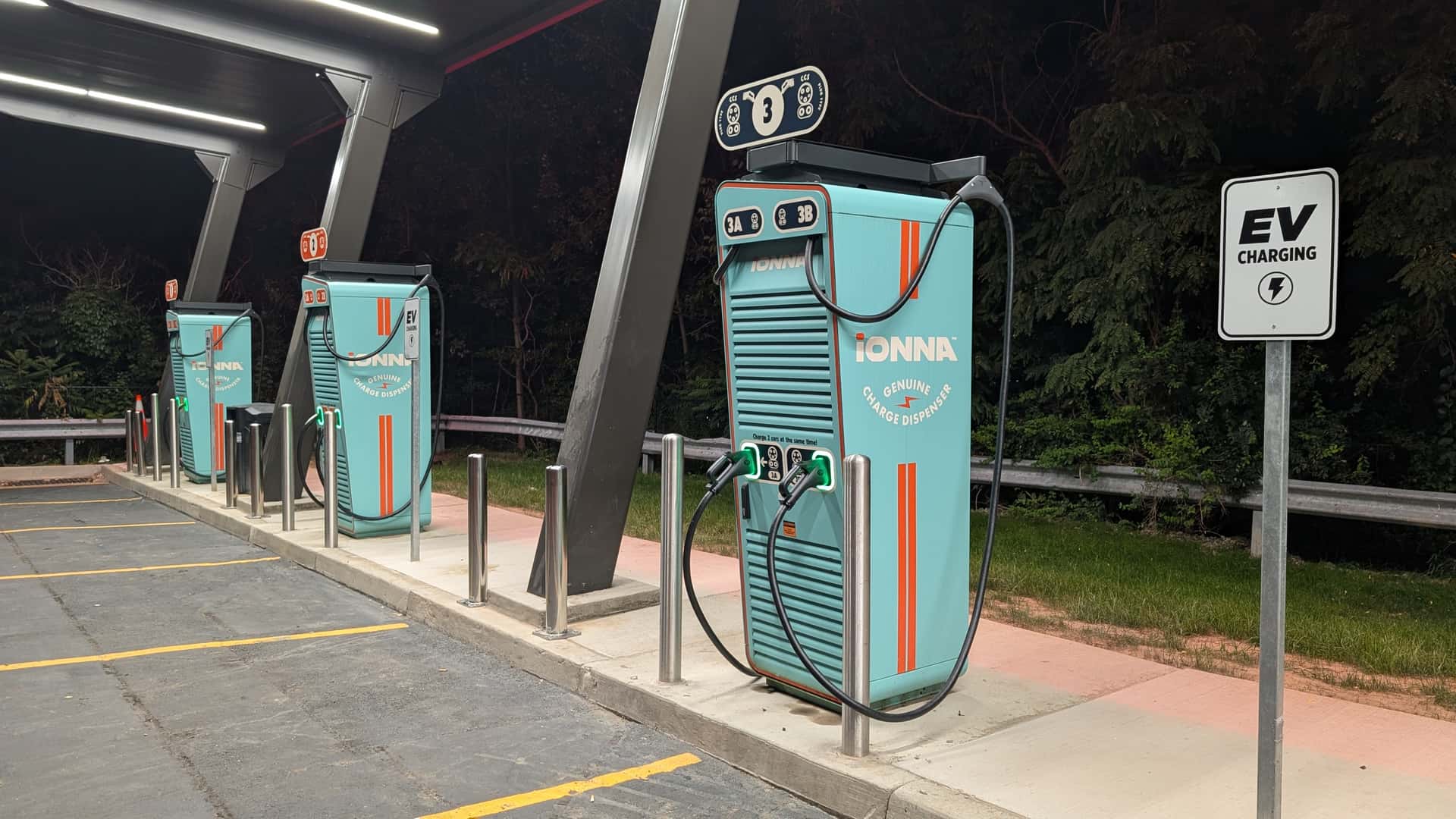
Emerging as a strong contender, Ionna, the charging consortium backed by several major automakers, secured the second position with 278 new ports. Red E followed closely, claiming third place with 264 new port installations, indicating a diversifying competitive field.
Connector Type Preferences and the NACS Transition
When it comes to connector types, American charging operators still predominantly favor CCS1 connectors. In Q1, non-Tesla charging networks opened 2,102 CCS1 connectors, vastly outnumbering the 606 NACS (North American Charging Standard) ports commissioned.
While CCS1 remains the preferred standard for many non-Tesla networks, there has been a noticeable acceleration in NACS installations over the previous two quarters. This trend is significant as more automakers transition to the NACS standard, making cross-compatibility a growing priority for the EV charging infrastructure.
Interestingly, 154 CHAdeMO ports were also commissioned during the quarter. This older standard, primarily associated with earlier models like the Nissan Leaf, has largely fallen out of favor. However, the existing infrastructure still includes more CHAdeMO ports at non-Tesla sites than NACS connectors, despite the increasing number of NACS-equipped vehicles reaching dealerships. This highlights the ongoing, complex transition in charging standards.
Navigating the EV Sales Slowdown
The reported 27% drop in EV sales during the first quarter, when compared to the same period last year, presents a noteworthy challenge for the electric vehicle market. However, charging companies are demonstrating resilience and a forward-looking perspective, forging ahead with their expansion plans.
Long-Term Vision Amidst Short-Term Fluctuations
The continued investment in EV charging infrastructure, despite a temporary dip in sales, is largely attributable to the inherently long-term nature of these development projects. Constructing and commissioning charging stations involves extensive planning, permits, and construction, often taking months or even years to complete.
Charge-point operators, therefore, cannot simply halt or reverse their infrastructure rollout in response to short-term market fluctuations. Their strategies are predicated on the understanding that EV sales are projected to rebound and grow significantly over the long term.
Moreover, the existing fleet of electric vehicles already on the roads necessitates a robust and expanding charging network. As the number of EVs continues to climb, albeit at a slower pace currently, the demand for accessible and reliable charging options remains high. Charging companies are positioning themselves to be fully prepared for future surges in EV adoption, ensuring that infrastructure availability does not become a bottleneck for wider electrification.
The Road Ahead for EV Charging Infrastructure
The continued and strategic expansion of the EV charging infrastructure, even in the face of decelerating EV sales, underscores a foundational belief in the inevitable shift towards electric mobility. The significant improvements in reliability, the strategic focus on high-power chargers, and the gradual adaptation to new connector standards collectively paint a picture of an industry maturing and becoming more robust.
As the electric vehicle market navigates its current dynamics, the unwavering commitment to building a resilient and accessible EV charging infrastructure is a crucial determinant of long-term success. These ongoing investments are not merely about accommodating current demand but about proactively laying the groundwork for a fully electrified transportation future.
Frequently Asked Questions About EV Charging Growth
How many new DC fast charging plugs were installed in the U.S. in Q1 2024?
According to Paren’s latest report, the United States saw the addition of 3,387 new DC fast charging plugs during the first quarter of 2024. This installation rate is consistent with the growth observed in the same period last year, highlighting continuous expansion in the EV charging infrastructure.
Has the reliability of U.S. EV charging stations improved?
Yes, the reliability of public EV fast charging stations in the U.S. has significantly improved. Data from Paren indicates that average reliability now stands at an impressive 90-95% across the country, a notable increase from the 85-92% range reported last year, enhancing the overall user experience.
What is the current strategy of charging networks for expansion?
Charging networks are increasingly shifting their expansion strategy. Instead of primarily building entirely new stations, they are focusing on adding more charging stalls to existing operational sites. This approach often involves installing high-powered chargers, with the majority exceeding 250 kilowatts, to meet evolving demand and provide faster charging times.
Which connector types are most prevalent in new installations?
In the first quarter, non-Tesla charging networks predominantly installed CCS1 connectors, accounting for 2,102 new ports. While NACS (North American Charging Standard) installations are increasing, with 606 new ports, CCS1 remains the most common choice for new deployments by these operators. CHAdeMO also saw 154 new ports, though it’s an older standard.
Why are EV charging companies continuing to expand despite slowing EV sales?
EV charging companies continue their expansion due to the long-term nature of infrastructure projects and the existing demand from electric vehicles already on the road. These projects have lengthy development timelines, and operators are preparing for the anticipated long-term growth in EV sales, ensuring a robust EV charging infrastructure for future adoption.
Has the cost of EV charging changed recently?
The cost of DC fast charging has remained relatively stable year over year. Most stations typically charge between $0.45 and $0.55 per kilowatt-hour. This pricing consistency provides predictability for EV owners and helps maintain the economic competitiveness of electric vehicles compared to gasoline-powered cars.