
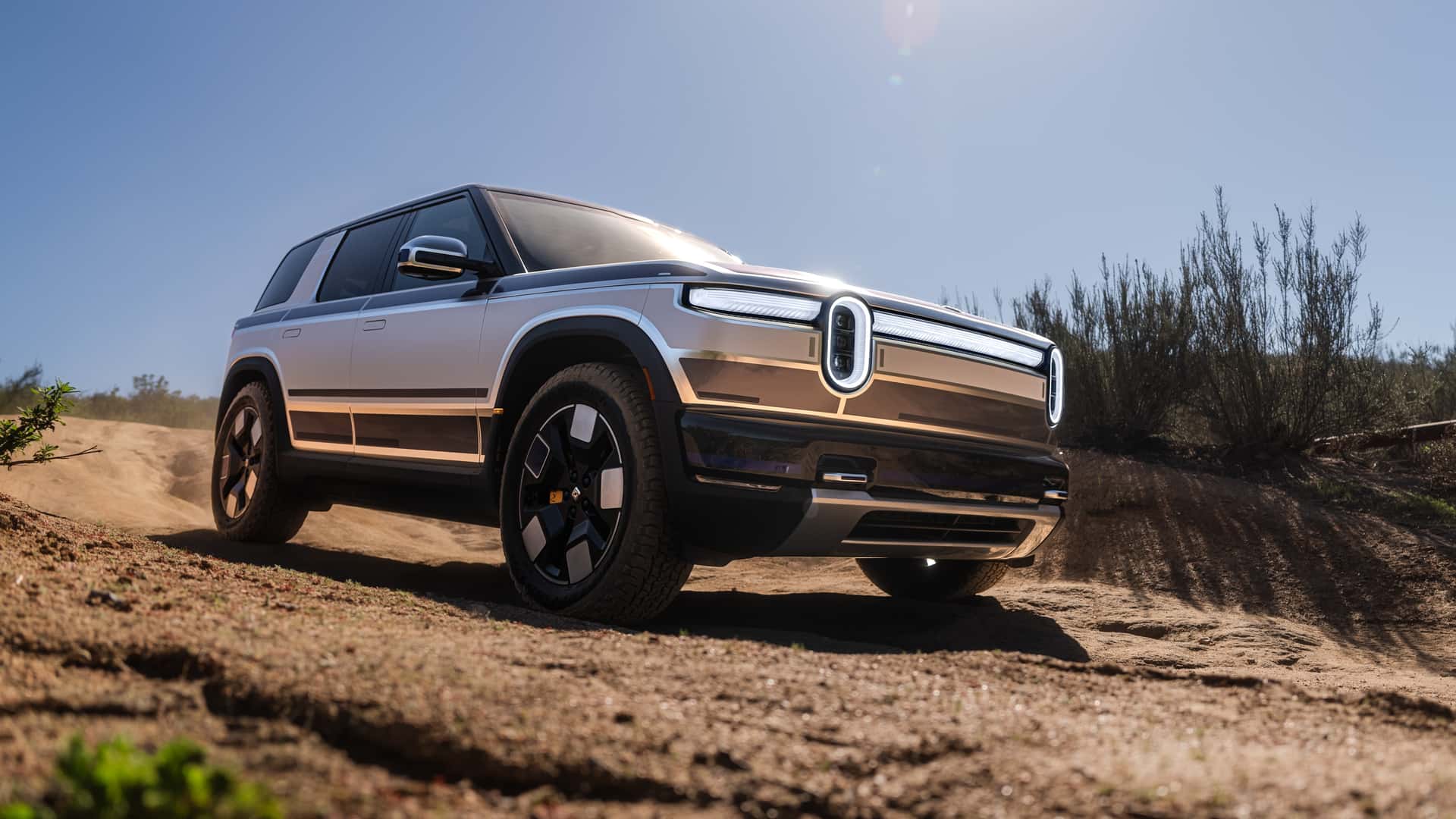
Key Takeaways:
- Volkswagen Group has become Rivian’s largest shareholder, holding a 15.9% stake, effectively displacing Amazon.
- The German automotive giant has committed a substantial $5.8 billion investment in Rivian, structured in phased disbursements tied to strategic milestones.
- A joint venture between the two companies is focused on co-developing advanced electrical architecture and software for next-generation electric vehicles.
- Amazon, previously the leading investor, now holds a 12.28% stake and continues as a significant customer for Rivian’s electric delivery vans.
In a significant realignment within the global electric vehicle (EV) industry, Volkswagen Group has officially ascended to become the largest shareholder in Rivian, the innovative California-based EV manufacturer. This strategic investment marks a pivotal moment, shifting the balance of ownership that had seen e-commerce behemoth Amazon as Rivian’s primary backer for over five years.

The German automotive conglomerate’s growing influence underscores a broader trend of collaboration and strategic partnerships crucial for navigating the complex and capital-intensive EV market. This development is expected to provide Rivian with crucial financial backing and technological synergy as it continues to expand its product line, including the highly anticipated R2 SUV.
Volkswagen’s Strategic Ascent to Top Investor
Recent filings with the U.S. Securities and Exchange Commission (SEC) by Rivian confirm that Volkswagen Group now commands a substantial 15.9% stake in the American EV startup. This translates to an ownership of approximately 209.7 million shares of Rivian stock, as initially reported by TechCrunch following the disclosures earlier this week.
This significant accumulation of shares positions Volkswagen ahead of Amazon, which now holds a 12.28% stake. The German automaker’s initial share in Rivian commenced at 8.6% less than two years ago, signaling a calculated and steady increase in its investment and strategic interest.

A Multi-Billion Dollar Commitment to Fuel Innovation
Volkswagen Group’s overarching commitment to Rivian is a substantial $5.8 billion. This considerable sum is not a lump-sum payment but rather a phased investment, contingent on the successful achievement of various operational and developmental milestones agreed upon by both companies.
The partnership was initially cemented with an upfront investment of $1 billion. This was subsequently followed by another $1 billion injection last year, indicating sustained confidence and progress in their collaborative efforts. Most recently, an additional $1 billion tranche was unlocked after the Volkswagen ID. Every1 city EV successfully completed its winter testing protocols.
This structured investment approach ensures that capital is deployed strategically, aligning financial support with tangible progress and shared objectives. The remaining $2.8 billion of the committed funds are slated for future release as further conditions and milestones are met, reinforcing the long-term nature of this alliance.
Forging a Strategic Joint Venture for EV Technology
Beyond the direct equity investment, a cornerstone of this partnership is the joint venture established in November 2024 between Rivian and Volkswagen Group Technologies. This collaboration is specifically designed to pool expertise and resources for the development of advanced electrical architecture and software systems tailored for electric vehicles.
Such a joint venture is critical in an industry where software and underlying electrical systems are becoming increasingly vital differentiators for EV performance, range, and user experience. By collaborating, both companies aim to accelerate the development cycle and share the considerable research and development costs associated with these complex technologies.
The Volkswagen ID. Every1, an upcoming compact EV from the German marque, is slated to be the first production vehicle to incorporate the innovative software and electrical architecture emerging from this joint development effort. This signifies a tangible and immediate application of the partnership’s technological output.
Implications for Rivian’s Growth and Market Position
The influx of capital and strategic partnership with an automotive giant like Volkswagen Group carries significant implications for Rivian. The financial backing provides essential liquidity, supporting Rivian’s ambitious production ramp-up for its popular R1S SUV and R1T pickup, as well as the development and future launch of its more affordable R2 SUV line.
Furthermore, sharing technological development through the joint venture could streamline Rivian’s R&D processes, potentially reducing costs and accelerating the time-to-market for future innovations. Access to Volkswagen’s vast engineering expertise and global supply chain networks could also offer strategic advantages in manufacturing and distribution.
This partnership also lends substantial credibility to Rivian in the highly competitive EV market, validating its technology and vision with an endorsement from one of the world’s largest automakers. It could also bolster investor confidence and provide a more stable foundation for the company’s long-term growth objectives.
Amazon’s Enduring Relationship with Rivian
While Volkswagen has surpassed Amazon as the largest shareholder, the e-commerce giant remains a significant and strategic stakeholder in Rivian. Amazon now holds a 12.28% stake, a reduction from the approximately 20% it disclosed in 2021.
This decrease in Amazon’s percentage ownership is a natural occurrence through various factors, including subsequent equity raises by Rivian where Amazon did not participate proportionally, or through controlled sales of shares over time. Despite the shift in majority ownership, Amazon’s role transcends that of a mere investor.
Amazon continues to be a crucial commercial customer for Rivian, having placed a substantial order for 100,000 electric delivery vans back in 2019. This ongoing contractual relationship solidifies Amazon’s vested interest in Rivian’s success, both as an equity holder and as a key user of its electric fleet technology for its logistics operations.
Broader Industry Context and Future Outlook
The strategic alliance between Volkswagen and Rivian highlights a growing trend within the automotive industry: established legacy automakers are increasingly seeking collaborations with agile EV startups to accelerate their transition to electric mobility. These partnerships allow incumbents to gain access to cutting-edge EV technology and software expertise, while startups benefit from substantial capital injections and manufacturing scale.
For Rivian, securing a partner like Volkswagen helps de-risk its ambitious plans, providing a financial safety net and a pathway to share the immense costs associated with developing next-generation EV platforms. For Volkswagen, the joint venture offers a fast track to integrate advanced electrical and software solutions into its diverse range of electric vehicles, potentially enhancing its competitive edge.
As the EV market continues its rapid expansion, such collaborations are expected to become more prevalent, driving innovation, streamlining production, and ultimately shaping the future of sustainable transportation globally.
Frequently Asked Questions (FAQ)
What is Volkswagen Group’s current stake in Rivian?
Volkswagen Group currently holds a 15.9% stake in Rivian, making it the largest shareholder. This ownership translates to approximately 209.7 million shares of Rivian stock, based on recent SEC filings. This significant investment underscores a deep strategic partnership between the two automotive entities.
How much has Volkswagen committed to invest in Rivian?
Volkswagen Group has committed a total of $5.8 billion in investments in Rivian. This substantial sum is being disbursed in stages, contingent on the achievement of specific development and operational milestones. The phased approach ensures that funds are aligned with tangible progress.
What is the purpose of the joint venture between Rivian and Volkswagen?
The joint venture, established in November 2024, focuses on developing advanced electrical architecture and software for electric vehicles. This collaboration aims to accelerate technological innovation, share development costs, and create cutting-edge systems that will be integrated into future EV models for both companies.
How has Amazon’s stake in Rivian changed?
Amazon, previously Rivian’s largest shareholder for over five years, now holds a 12.28% stake. This percentage has decreased from approximately 20% reported in 2021, likely due to subsequent funding rounds where Amazon did not maintain its pro-rata investment or through divestitures of some shares.
What are the benefits of this partnership for Rivian?
For Rivian, the partnership brings crucial financial capital ($5.8 billion commitment) to support production scaling and R&D. It also provides access to Volkswagen’s extensive automotive engineering expertise and potentially its global supply chain, bolstering Rivian’s operational capabilities and market credibility in the competitive EV sector.
Which Volkswagen vehicle will first use the joint venture’s technology?
The Volkswagen ID. Every1, an upcoming compact electric city vehicle, is slated to be the first production car to be equipped with the innovative software and electrical architecture developed by the joint venture. Its successful winter testing recently unlocked a $1 billion investment tranche for Rivian.