

The Beijing Auto Show has firmly established itself as a pivotal event in the global automotive calendar, underscoring China’s undeniable influence on the industry’s future. The recent exhibition showcased a remarkable confluence of indigenous innovation and strategic adaptations by international automakers, particularly within the burgeoning electric vehicle (EV) sector.
Insights from industry observers, including automotive journalist Kevin Williams, who attended and extensively reviewed the offerings, reveal a dynamic landscape. The event highlighted everything from high-performance track-ready models to cost-effective urban commuters and China-exclusive designs from global brands. This year’s show served as a clear indicator of evolving market demands and technological advancements shaping the worldwide automotive narrative.
Key Takeaways
- The Beijing Auto Show continues to be a crucial platform for both Chinese and international automotive innovations.
- Chinese automakers are pushing boundaries with high-tech, high-performance EVs like the Xiaomi SU7 Ultra.
- Affordable EVs, exemplified by the Geely EX2, are dominating sales in the Chinese market, surpassing rivals like the BYD Seagull.
- Nio’s Firefly compact EV demonstrated unique features such as Nintendo Switch integration, emphasizing evolving consumer demands for in-car entertainment.
- Global brands like Hyundai and Ford are introducing China-specific models, including the Hyundai Ioniq V and the Ford Bronco New Energy, highlighting the market’s strategic importance.
- The show reinforced China’s role as a leader in EV adoption and manufacturing, prompting non-Chinese brands to elevate their market strategies.
The Beijing Auto Show: A Global Automotive Nexus
Once primarily a regional event, the Beijing Auto Show has ascended to global prominence, reflecting China’s status as the world’s largest automotive market and a leading force in electric vehicle development. The sheer scale of innovation and competition witnessed at the show provides invaluable insights into future trends, technological directions, and consumer preferences.
China’s rapid adoption and aggressive investment in electric mobility have created a fiercely competitive environment. This scenario challenges both domestic and international manufacturers to continuously innovate, offering advanced solutions that cater to a tech-savvy and environmentally conscious consumer base. The Beijing Auto Show is where these advancements are unveiled to the world.
Chinese Innovation Takes Center Stage
The 2024 Beijing Auto Show was particularly notable for the breadth and depth of products from Chinese manufacturers. From groundbreaking performance vehicles to mass-market bestsellers, local brands demonstrated their ability to meet diverse consumer needs with cutting-edge technology and competitive pricing.
Xiaomi SU7 Ultra: Redefining Performance EVs
Among the most discussed vehicles was the Xiaomi SU7 Ultra. This high-tech, high-performance electric sedan captured significant attention, with reports highlighting its track-ready capabilities. The SU7 Ultra signifies Xiaomi’s ambitious entry into the automotive sector, leveraging its vast technological ecosystem to deliver a compelling product that combines speed, advanced features, and a premium experience. Its debut at the Beijing Auto Show underscored China’s growing prowess in producing sophisticated, performance-oriented EVs.
Geely EX2: Dominance in the Entry-Level Segment
At the other end of the spectrum, the Geely EX2 emerged as a quiet but significant disruptor. Described as a ‘cheap Chinese grocery-getter,’ this compact electric vehicle has remarkably become the country’s best-selling vehicle. Its success, even surpassing popular models like the BYD Seagull, can be attributed to its affordability, practicality, and efficient design, which resonate deeply with a broad segment of Chinese consumers seeking accessible electric mobility. This trend observed at the Beijing Auto Show points to the strong demand for entry-level EVs.
Nio Firefly: Smart Mobility and Entertainment
Positioned somewhat in the middle, the Nio Firefly, a compact and ‘cutesy EV,’ showcased the integration of smart technology with lifestyle features. While the model has been available for some time, its latest iteration at the Beijing Auto Show featured innovative Nintendo Switch integration. This addition exemplifies the trend of automakers incorporating advanced entertainment and connectivity options into vehicles, transforming them into mobile hubs for work and leisure, a growing expectation in the Chinese market.
Global Manufacturers Adapt to the Chinese Market
The Beijing Auto Show also served as a critical platform for non-Chinese brands to demonstrate their commitment and strategic vision for the Chinese market. Recognising China’s unique consumer preferences and its rapid EV transition, many international players unveiled models specifically tailored for this audience.
Hyundai Ioniq V: Tailored for China
Hyundai made a strong statement with the introduction of the Ioniq V. This ‘wedge-shaped beauty’ was explicitly ‘made specifically for the world’s biggest car market,’ as noted by Kevin Williams. The Ioniq V represents a targeted effort by Hyundai to capture market share by designing a vehicle that aligns with local aesthetic preferences and technological expectations. Its debut at the Beijing Auto Show signals a deeper understanding and appreciation of Chinese consumer needs by a major global automaker.
Ford Bronco New Energy: A Rugged, China-Exclusive Offering
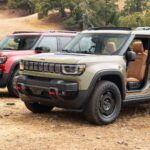
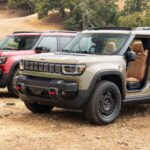
Ford also showcased its strategic approach with the Ford Bronco New Energy. This ‘rugged, China-only extended-range SUV’ garnered significant attention. The vehicle’s unique design and extended-range capabilities cater to a segment of the Chinese market that values robust utility combined with electrified powertrains. The sentiment that ‘Americans are missing out on this one’ highlights the unique and desirable products being developed exclusively for the Chinese consumer, further emphasizing the distinct nature of this influential market.
Broader Implications for the Automotive Industry
The Beijing Auto Show consistently underscores a significant shift in the global automotive power balance. The exhibition not only highlights China’s manufacturing might but also its technological leadership in areas like battery technology, smart cockpits, and autonomous driving. The presence of both established giants and nimble startups creates an incredibly competitive landscape.
The commitment of non-Chinese brands to bring their ‘A-game’ to Beijing is a testament to the market’s strategic importance. It forces global manufacturers to innovate faster, adapt more quickly, and often develop unique products that might eventually influence their offerings in other markets. The insights gained from the Beijing Auto Show are therefore crucial for understanding the future trajectory of the entire automotive industry, with electric vehicles at its core.
Conclusion
The 2024 Beijing Auto Show delivered a compelling narrative of a rapidly evolving global automotive landscape, heavily influenced by Chinese innovation and market dynamics. From the high-performance Xiaomi SU7 Ultra to the utilitarian Geely EX2 and the feature-rich Nio Firefly, Chinese brands continue to push boundaries. Simultaneously, global players like Hyundai and Ford are adapting their strategies with China-specific models, acknowledging the market’s unparalleled importance.
The event reaffirmed China’s position as a crucial incubator for automotive technology and a bellwether for global trends, especially in the electric vehicle segment. The developments showcased at the Beijing Auto Show provide a clear roadmap for the challenges and opportunities facing the industry worldwide.
FAQ Section
Q1: Why is the Beijing Auto Show considered so important globally?
A1: The Beijing Auto Show is crucial because China is the world’s largest automotive market and a global leader in electric vehicle adoption and manufacturing. The show provides a unique platform to observe cutting-edge innovations, strategic moves by both Chinese and international brands, and emerging consumer trends that influence the global industry.
Q2: What was notable about Chinese EVs at this year’s show?
A2: Chinese EVs showcased a wide range, from high-performance models like the track-ready Xiaomi SU7 Ultra to best-selling affordable options such as the Geely EX2. Brands like Nio also integrated innovative features like Nintendo Switch compatibility, highlighting a focus on technology, performance, and user experience at various price points.
Q3: How are non-Chinese brands adapting to the Chinese market?
A3: Global automakers are increasingly developing vehicles specifically for the Chinese market. Examples from the show include the Hyundai Ioniq V, designed for local preferences, and the Ford Bronco New Energy, a China-exclusive extended-range SUV. This strategy underscores the market’s strategic importance and unique consumer demands.
Q4: Which Chinese EV was reported as the best-selling vehicle?
A4: The Geely EX2, described as a ‘cheap Chinese grocery-getter,’ has recently become the country’s best-selling vehicle. Its success is attributed to its affordability and practical design, allowing it to outperform other popular models like the BYD Seagull in the highly competitive entry-level EV segment.
Q5: What unique feature did the Nio Firefly debut at the show?
A5: The Nio Firefly, a compact electric vehicle, debuted with innovative Nintendo Switch integration. This feature highlights a growing trend in the automotive industry to incorporate advanced entertainment and connectivity options directly into vehicles, catering to a desire for integrated lifestyle technology on the go.