
Key Takeaways
Ford is undertaking a radical overhaul of its EV development strategy at its new Electric Vehicle Design Center (EVDC) in Long Beach, California. This move directly addresses CEO Jim Farley’s concerns about the competitive threat posed by agile, cost-effective Chinese automakers. The EVDC aims to bypass traditional bureaucratic processes, focusing on a ‘software-defined’ approach and modular vehicle architecture to achieve faster iteration, lower costs, and accelerated production cycles. While promising, the facility is still under construction, and its first major product, a midsize electric truck, was largely developed outside its walls. The true test of this ambitious transformation will be the market reception of future Ford EV development models emerging from the EVDC, expected to debut next year.
In October of last year, Ford CEO Jim Farley issued a stark warning to the global automotive industry. With escalating production capacities, advanced technological integration, and highly competitive pricing, Chinese automakers, he asserted, possessed the capability to “put us all out of business.” This candid assessment underscored a critical challenge facing legacy automakers worldwide: adapting to the rapid pace and cost efficiencies of new market entrants, particularly from China, in the burgeoning electric vehicle (EV) sector.

Recognizing that conventional vehicle development methodologies would not suffice, Ford embarked on a bold initiative. The company established a distinct campus, designed to operate independently of its longstanding bureaucratic structures and processes. This new facility is dedicated to fostering the creation of its next generation of electric vehicles, a pivotal step in Ford’s aggressive EV development strategy.
This innovative hub, known as the Ford Electric Vehicle Design Center (EVDC), is strategically located just outside Long Beach Airport in Long Beach, California. A recent media tour offered a rare glimpse into the operations of this facility, revealing the intricate strategies Ford is deploying to navigate this unprecedented competitive landscape. While the insights gained shed considerable light on Ford’s proactive approach, the ultimate efficacy of these solutions remains an unfolding narrative.
The Global EV Landscape: A Pressing Challenge for Legacy Automakers
The global electric vehicle market is witnessing a profound transformation, largely driven by the ascendancy of Chinese automakers and innovative disruptors like Tesla. These companies have fundamentally reshaped the paradigms of vehicle design, manufacturing, and cost management. Their success stems from a ‘ground-up, software-defined’ approach to EV development.

Unlike traditional car manufacturers, these players exert comprehensive control over every aspect of their vehicle’s software ecosystem. This holistic design philosophy allows for minimal wiring, reduced reliance on external computer systems, and a streamlined supplier network. The cumulative effect is a drastic reduction in production costs and significantly shorter development cycles, as the iterative process is not hampered by constant communication and negotiation with numerous external vendors for even minor modifications.
In stark contrast, established automakers in America, Europe, Japan, and Korea have historically functioned more as sophisticated project managers. Their operational model involves coordinating an extensive web of suppliers responsible for developing and implementing software, as well as advanced driver-assistance systems (ADAS). These components are then integrated into the final product, a process that, while robust, often lacks the agility and cost efficiency of a fully integrated, software-first approach. The imperative for enhanced Ford EV development became undeniable.
The Imperative for Transformation
The chasm between these two operational models is profound. Transitioning a large, deeply entrenched organisation like Ford, accustomed to a supplier-centric framework, into a software-first entity is an arduous undertaking. As evidenced by the rapid growth and market penetration of Chinese automakers, initiating a new enterprise with a software-defined philosophy from inception is often considerably simpler than attempting to pivot a massive, legacy organisation. This fundamental realization propelled Ford to seek an alternative solution to accelerate its Ford EV development efforts.
Birth of a New Paradigm: Ford’s EV Development Center (EVDC)
In response to this pressing need, Ford established the EVDC, an autonomous operational unit comprising 350 dedicated employees. This center functions outside the conventional hierarchical and procedural structures typically associated with Ford’s global headquarters in Dearborn, Michigan. This strategic detachment is crucial, allowing the EVDC team the flexibility and speed necessary to innovate without being encumbered by the inertia of a large corporation.
Andrew Reimer, senior director of vehicle integration and engineering at EVDC, highlighted the collaborative nature of this new setup. “We’re also able to collaborate with another—about—480 employees between Dearborn and Palo Alto that help us with program management, manufacturing, engineering, body engineering, and software,” Reimer stated. “We collaborate every day.” This hybrid approach leverages the vast resources and expertise of the wider Ford ecosystem while maintaining the agility of a focused ‘skunkworks’ team for critical Ford EV development projects.
Reimagining the Development Process
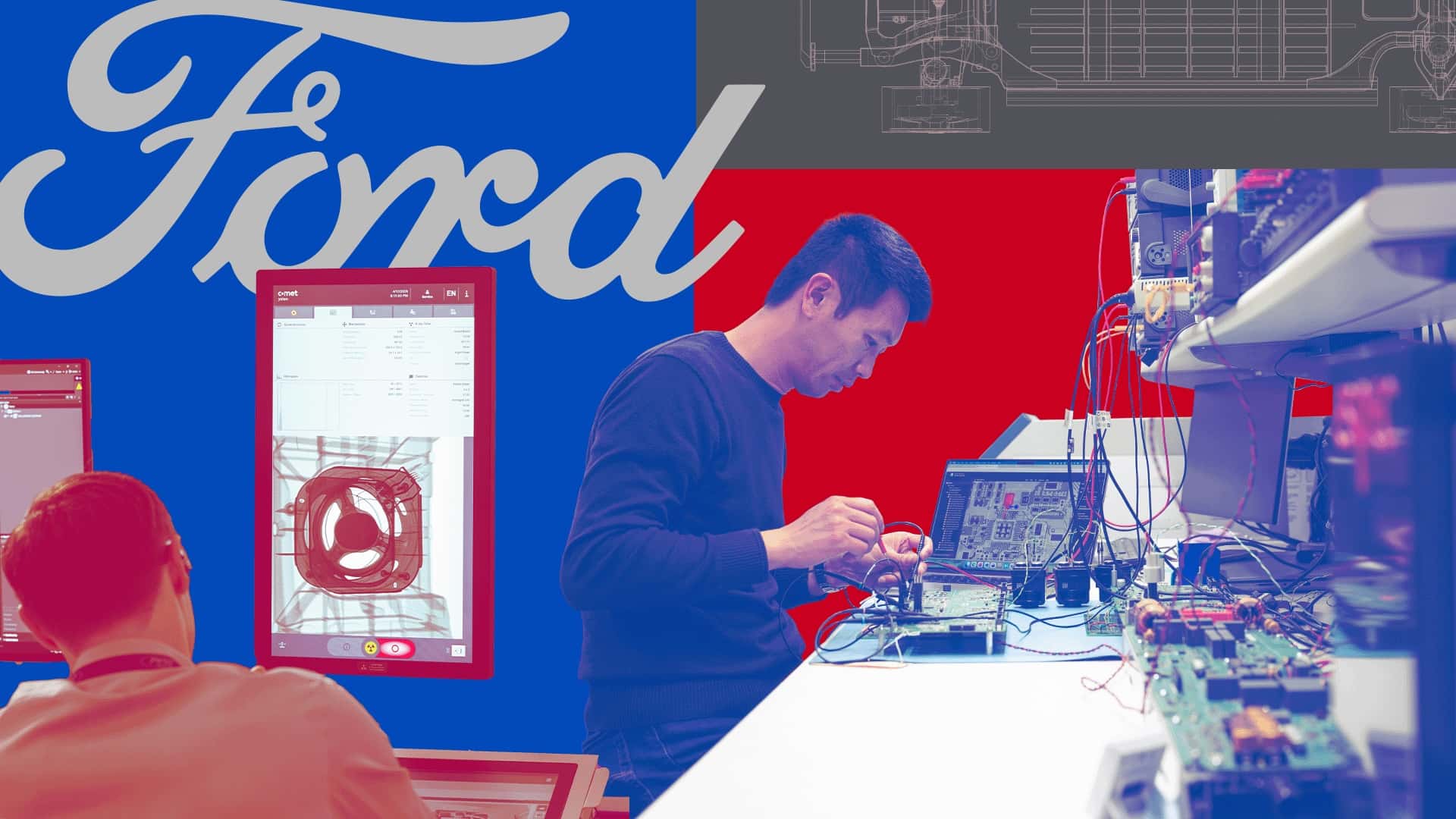
A core tenet of the EVDC’s operational philosophy is the co-location of critical teams under a single roof. This includes vehicle engineering, design, prototype production, field validation, software engineering, and manufacturing engineering. This integrated environment is meticulously designed to foster rapid, cross-domain collaboration, mimicking the ‘fast-failing, fast-adapting’ design processes observed at industry leaders like BYD and Tesla. The comparison to Tesla is particularly pertinent, given that Alan Clarke, Ford’s vice president for advanced development projects and the de facto head of the EVDC, is a former Tesla veteran. Clarke played a pivotal role in the design of the Model S, Model 3, Model Y, and Cybertruck, bringing invaluable experience in cutting-edge EV development.
Pioneering ‘China Speed’ in American Manufacturing
Under Alan Clarke’s leadership, the advanced EV team at EVDC has undertaken a comprehensive re-evaluation of vehicle assembly processes. This rethinking is set to culminate in the introduction of Ford’s upcoming Universal Electric Vehicle (UEV) platform. The inaugural vehicle on this platform is slated to be an ambitious $30,000 electric truck, a direct challenge to competitors on both price and capability within the crucial Ford EV development landscape.
A Modular Future: The Universal Electric Vehicle (UEV) Platform
A cornerstone of the UEV platform’s manufacturing innovation is the abandonment of the traditional linear assembly line. Instead, the vehicle’s front, rear, and floor modules will be independently assembled. Only at the final stages will these distinct modules be brought together for integration. This modular approach significantly alters the manufacturing workflow.
Crucially, manufacturing workers will no longer need to contort themselves to install key interior components through narrow openings. Instead, elements such as seats, the center console, and other cabin accoutrements will be installed directly onto the battery module, which forms the vehicle’s floor. Similarly, the front clip, housing power electronics, the HVAC system, cooling systems, and the front motor, will be built as a separate unit, as will the entire rear structure. Ford asserts that this system dramatically reduces the physical strain on line workers, minimising bending, twisting, and maneuvering around obstacles. The anticipated benefits include faster production times and substantial cost savings, bolstering the efficiency of Ford EV development.
Kevin Young, Ford Advanced Manufacturing Program Chief, emphasised the quality implications of this streamlined process. “We’ve now shrunk the time from when we start to the end, which is going to increase the ability for quality loops,” Young explained. This shortening of the overall process theoretically simplifies quality control and allows for more frequent and effective improvements throughout the manufacturing cycle.
Accelerating Iteration and Quality
Beyond the physical assembly process, the co-location of key teams at EVDC is a powerful catalyst for faster problem-solving. Unlike the decentralised structure in Dearborn, where extensive coordination with suppliers is often necessary during the design phase, the EVDC fosters an environment of immediate collaboration. Ford employees on the tour consistently reported a significant acceleration in their issue-finding and remediation processes due to the proximity of all relevant teams.
Scott Anderson, a senior manager on the seating team, articulated the core philosophy guiding their work. “What we’re really trying to do is develop the best possible product in the most cost efficient fashion,” Anderson told reporters. “And to help those processes come together, what we’re trying to do here at EVDC is develop the mindset of fast iteration. You know, fail fast, learn, repeat, and hopefully at the end of the day you have a much better product coming to market.” This agile methodology is designed to infuse ‘China speed’ into every aspect of Ford EV development.
Anderson provided a concrete example from his own experience in optimising seating designs for material efficiency. He claimed that the ability to iterate internally, without needing constant external supplier input, has dramatically reduced iteration time. A design review and improvement process that would typically take 12 weeks using the traditional Dearborn method can now be completed in a mere 2-3 weeks at the EVDC. This acceleration is critical for staying competitive in the fast-evolving EV market.
The Road Ahead: Promise Amidst Ongoing Development
Despite the ambitious vision and evident progress at the EVDC, a critical observation during the tour highlighted that the facility is still very much a work in progress. The state-of-the-art hot- and cold-weather full vehicle dynamometer, a crucial testing apparatus, was still under construction. Similarly, the team responsible for battery cell validation and design was in the process of transitioning from temporary accommodations to a more permanent, purpose-built space. Large plastic sheets partitioned sections of the facility, and the ubiquitous presence of construction equipment and debris underscored the ongoing nature of its development.
While CEO Jim Farley has frequently referenced this ‘skunkworks’ team in earnings calls over recent years, and Ford has consistently touted the facility’s role in accelerating development, the company conceded a significant point: the majority of the upcoming UEV truck’s development occurred outside the walls of the EVDC. Alan Clarke openly acknowledged this reality, stating, “With the midsize pickup truck, we’ve had to use outside test labs. We’ve had to use all the labs in Dearborn. We flexed every muscle possible and pulled every resource Ford has to offer to develop the mid-size pickup truck. What you saw today was about continuing that, but being able to do it at a higher velocity with the team that’s here.” This frank admission underscores that the EVDC is less about the current launch and more about establishing a sustainable future for Ford EV development.
Essentially, the EVDC is not primarily intended for Ford’s inaugural software-defined EV. Its true purpose lies in catalysing the development of the company’s second, third, and subsequent generations of electric vehicles. This strategic investment, costing millions, represents Ford’s candid acknowledgment of its starting position behind agile competitors like BYD and Geely. The substantial payoff from this extensive investment in reshaping its operational model is yet to materialise, but the foundations are being laid for a significant shift in Ford EV development capabilities.
From Process to Product: The Ultimate Test
Throughout the media tour, Ford representatives consistently articulated their confidence that the new facilities and streamlined processes at EVDC would unlock unprecedented levels of innovation, reduce costs, enhance efficiency, and ultimately lead to the creation of world-beating electric vehicles. These claims, grounded in a clear strategic shift towards a leaner and more modern approach to vehicle design, were largely convincing.
However, the ultimate arbiter of success for any automaker is not its internal processes, but the products it delivers to consumers. Since the final product, the UEV truck, has not yet been unveiled, the validity of Ford’s ambitious claims regarding its capabilities remains untested in the real world. Logically and on merit, the EVDC approach appears to represent a smarter, faster methodology for building cars. The crucial next step, for Ford to truly validate its investment and strategy, is to bring these vehicles to market.
The wheels of progress are already in motion. Ford representatives confirmed that hundreds of prototypes are currently in production, indicating a tangible movement from concept to tangible hardware. Furthermore, the Louisville, Kentucky factory, designated for the production of the midsize electric truck, is undergoing significant renovations to accommodate the new manufacturing processes. This concerted effort demonstrates Ford’s profound commitment to this new direction, openly challenging and re-evaluating many of its core assumptions about car-building. The company is decidedly not static in its response to market pressures.
The critical question that remains is whether the end product of this monumental venture will indeed possess the universal appeal and competitive edge required to challenge the established leaders and emerging disruptors in the EV space. Ford expresses strong confidence in a positive outcome. The broader market and discerning consumers, however, will have to reserve their judgment until the vehicle’s official unveiling next year, when the true impact of this ambitious Ford EV development strategy can be fully assessed.
FAQ Section
What is the Ford Electric Vehicle Design Center (EVDC)?
The EVDC is a dedicated facility in Long Beach, California, established by Ford to accelerate its electric vehicle development. It operates independently of Ford’s traditional bureaucracy, focusing on a ‘software-defined’ approach and rapid iteration to create next-generation EVs, directly addressing the need for agile Ford EV development.
Why did Ford create the EVDC?
Ford created the EVDC to compete effectively with agile Chinese automakers and companies like Tesla, which build EVs from the ground up with integrated software. This dedicated center allows Ford to bypass traditional, slower development processes and reduce costs and development times.
How is Ford’s EV development at EVDC different from its traditional approach?
Unlike Ford’s traditional reliance on numerous external suppliers for software and systems, the EVDC integrates vehicle engineering, design, software, and manufacturing teams under one roof. This fosters cross-domain collaboration, enabling faster decision-making and a ‘fail-fast, learn-fast’ design philosophy for Ford EV development.
What is the Universal Electric Vehicle (UEV) platform?
The UEV platform is Ford’s upcoming modular EV architecture, spearheaded by a planned $30,000 electric truck. It moves away from linear assembly, allowing front, rear, and floor modules to be built separately before final joining. This innovative manufacturing process is a cornerstone of advanced Ford EV development.
Who leads the EVDC, and what is their background?
The EVDC is effectively led by Alan Clarke, Ford’s Vice President for Advanced Development Projects. Clarke brings significant experience from Tesla, where he played a key role in designing models like the Model S, Model 3, Model Y, and Cybertruck, making him a crucial asset in Ford EV development.
When can consumers expect to see products from the EVDC?
While the first UEV truck was largely developed outside EVDC, the facility is geared towards future models. Ford representatives indicate that hundreds of prototypes are in production, and the first major products resulting from EVDC’s full capabilities are expected to be judged by consumers starting next year.
Is the EVDC fully operational?
The EVDC is still undergoing construction and expansion. Key facilities, such as the full vehicle dynamometer, are being built, and some teams are still in temporary locations. While operational, it is continuously evolving to reach its full potential for future Ford EV development projects.