
Key Takeaways:
- Hanyang University researchers have pinpointed 2.5 nanometers as the essential minimum thickness for lithium niobium oxide (LNO) coatings on sulfide solid-state battery cathodes.
- This precise quantitative finding provides a critical benchmark for safeguarding cathode materials against reactive degradation caused by sulfide-based solid electrolytes.
- A 2.5 nm LNO coating significantly extends battery cycle life by 43% and slashes interfacial resistance by more than half compared to uncoated cells.
- The study addresses a long-standing gap in the field, offering a practical guideline for optimizing next-generation solid-state battery design and performance.
SEO Keyword: sulfide solid-state battery cathodes

Breakthrough in Solid-State Battery Protection
In a significant development for next-generation energy storage, researchers at Hanyang University have established a quantitative lower bound for the protective coating thickness crucial to the longevity and efficiency of sulfide-based all-solid-state batteries. Their study identifies 2.5 nanometers as the minimum required thickness for lithium niobium oxide (LNO) coatings to effectively shield cathode materials, a critical insight that has previously been missing from the field.
This pioneering research addresses a fundamental challenge hindering the widespread adoption of all-solid-state batteries: the chemical reactivity at the cathode interface. By providing a precise metric, the Hanyang team offers a clear pathway to designing more stable and reliable battery systems, moving closer to the widespread commercialisation of advanced electric vehicle (EV) technology.
The Promise and Challenges of Sulfide Solid-State Batteries
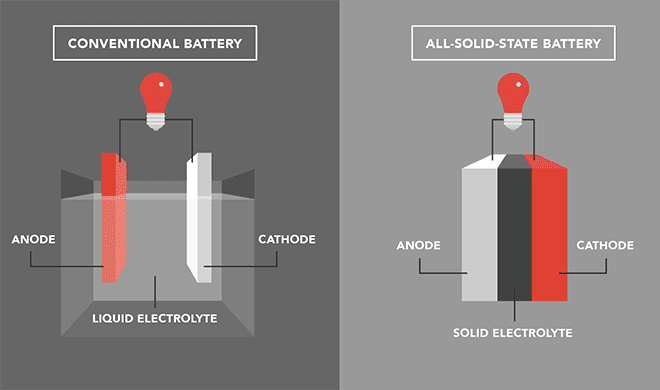
All-solid-state batteries (ASSBs) are widely regarded as a promising successor to conventional lithium-ion batteries due to their potential for higher energy density, enhanced safety, and extended lifespan. Among various solid electrolyte types, sulfide-based solid electrolytes offer excellent ionic conductivity, making them particularly attractive for high-performance applications, including future electric vehicles.

However, the inherent chemical reactivity of these sulfide solid electrolytes with cathode active materials presents a significant hurdle. Upon contact, they tend to generate resistive degradation products at the cathode interface. This unwanted chemical interaction forms an insulating layer, leading to increased interfacial resistance, reduced ion transport, and ultimately, a shortened battery cycle life and diminished overall performance.
Unveiling the Critical Coating Threshold
The Hanyang University study specifically investigated how thin LNO coatings could serve as an effective diffusion barrier to mitigate these problematic side reactions. While the concept of using protective coatings has been explored, the exact minimum thickness required to genuinely suppress these degradation processes remained an unknown variable, leading to inefficiencies in material use and design.
By precisely determining this critical threshold, the research not only enhances the understanding of interface stability in ASSBs but also provides practical guidelines for engineers and manufacturers. This clarity allows for more optimized material usage, potentially reducing costs and streamlining production processes for sulfide solid-state battery cathodes.
Precision Engineering with Atomic Layer Deposition
The Hanyang team employed rotary powder atomic layer deposition (ALD) to apply the LNO coatings onto NCM811 cathode powders. ALD is a sophisticated thin-film deposition technique renowned for its ability to create highly uniform and conformal coatings with atomic-level precision. This method is particularly suitable for complex powder geometries, ensuring comprehensive coverage of the cathode particles.
The researchers utilized a supercycle ALD method, meticulously alternating lithium and niobium deposition steps with ozone. This precise control over the deposition process allowed for exceptional compositional accuracy and uniform thickness, which was critical for evaluating the performance differences across varying coating layers. Such an approach underscores the high level of technical expertise and detailed methodology characteristic of cutting-edge battery research.
Performance Analysis: The 2.5 nm Advantage
To identify the optimal coating thickness, the Hanyang team deposited LNO layers at three distinct thicknesses: 1.0 nm, 2.5 nm, and 5.0 nm. The performance of cells constructed with these different coatings revealed a clear trade-off between initial discharge capacity and long-term cycle stability, providing valuable data for the development of sulfide solid-state battery cathodes.
The cells with a 1.0 nm coating initially delivered the highest discharge capacity at 229 mAh g⁻¹. However, this apparent advantage was short-lived. These cells exhibited a cycle life that was 28% shorter than those with a 2.5 nm coating, alongside a significantly higher interfacial resistance, measuring 59% greater. Spectroscopic analysis confirmed that at 1.0 nm, the coating was simply too thin to effectively prevent electrolyte contact and suppress side reactions, leading to rapid degradation.
Quantifying Cycle Life and Resistance Improvements
In stark contrast, the 2.5 nm coated cells demonstrated a more balanced and superior performance, achieving an initial capacity of 216 mAh g⁻¹. Crucially, this thickness proved to be the minimum effective barrier. When compared against an uncoated cell, the 2.5 nm LNO coating extended the cycle life by an impressive 43% and reduced interfacial resistance to less than half. This reduction in resistance is vital for efficient charge and discharge processes, enhancing overall battery power and thermal management.
Conversely, increasing the coating thickness further to 5.0 nm resulted in a slight drop in initial capacity to 207 mAh g⁻¹. Moreover, this thicker layer offered no meaningful additional gain in cycle life compared to the 2.5 nm coating. This finding highlights the efficiency of the 2.5 nm layer, indicating that going thicker provides diminishing returns while potentially adding unnecessary material and slightly compromising energy density due to inactive material volume.
Implications for Next-Generation Battery Development
The quantitative data provided by Hanyang University is more than just a scientific curiosity; it serves as a critical practical guideline for the design and optimization of sulfide solid-state battery cathodes. Understanding the precise minimum effective thickness allows researchers and engineers to develop protective layers that are both robust and energy-efficient. This avoids over-coating, which can add unnecessary weight, volume, and material cost without providing additional performance benefits.
Professor Tae Joo Park, who spearheaded this pivotal research, emphasized the significance of their findings. He stated, “Our results show that the minimum effective thickness of the LNO protective layer to suppress side reactions in sulfide-based ASSBs is 2.5 nm. This provides a practical guideline for cathode–electrolyte interface optimization in next-generation solid-state batteries.” This statement underscores the direct applicability of the research to future battery advancements.
Path to Scalable Manufacturing and Future Outlook
The methodology employed, rotary powder ALD, holds considerable promise for scalable manufacturing processes. ALD’s ability to deposit ultra-thin, uniform films on large quantities of powder makes it an attractive candidate for industrial applications. As the demand for high-performance batteries for electric vehicles and grid storage continues to surge, manufacturing scalability becomes paramount.
However, the transition from lab-scale success to gigafactory integration remains a significant challenge. This involves optimizing the ALD process for continuous, high-volume production, ensuring cost-effectiveness, and maintaining quality control on a massive scale. Addressing these manufacturing hurdles will be key to unlocking the full potential of protected sulfide solid-state battery cathodes in the global energy market.
Expert Insights and Industry Impact
This research marks a substantial step forward in overcoming one of the most persistent issues facing sulfide solid-state batteries. By mitigating the problematic interfacial reactions, Hanyang University’s work contributes directly to improving the safety, durability, and overall performance of these advanced energy storage devices. The insights gained will undoubtedly influence future material selection, interface engineering strategies, and manufacturing protocols within the battery industry.
The publication of these findings in the reputable journal Energy Storage Materials further solidifies its importance and credibility within the scientific community. As electric vehicle technology continues its rapid evolution, fundamental research like this forms the bedrock for innovation, driving the industry towards more sustainable, efficient, and reliable energy solutions.
FAQ Section
Q1: What is the primary problem that Hanyang University’s research addresses?
A1: The research addresses the chemical reactivity between sulfide-based solid electrolytes and cathode materials in all-solid-state batteries. This reaction leads to resistive degradation products at the interface, increasing resistance, and significantly shortening the battery’s cycle life, which is a major barrier to widespread adoption.
Q2: What is LNO and how does it protect the battery cathode?
A2: LNO stands for lithium niobium oxide. It acts as a protective diffusion barrier layer when coated onto cathode powders. This barrier prevents direct contact between the highly reactive sulfide electrolyte and the cathode material, thereby suppressing detrimental side reactions that cause degradation and performance loss.
Q3: Why is 2.5 nm identified as the minimum effective coating thickness?
A3: Hanyang University’s study found that a 1.0 nm coating was too thin to suppress side reactions effectively, leading to poor cycle life. While a 5.0 nm coating showed no significant additional performance benefits over 2.5 nm, the 2.5 nm layer effectively suppressed degradation, extended cycle life, and significantly reduced interfacial resistance without sacrificing too much initial capacity.
Q4: How does the 2.5 nm LNO coating improve battery performance?
A4: Compared to an uncoated cell, the 2.5 nm LNO coating demonstrated a 43% improvement in cycle life and reduced interfacial resistance by over half. This ensures the battery maintains its capacity for longer periods and operates more efficiently, crucial for the longevity and reliability of sulfide solid-state battery cathodes.
Q5: What is Atomic Layer Deposition (ALD) and its role in this research?
A5: Atomic Layer Deposition (ALD) is a precise thin-film deposition technique used to apply uniform, conformal coatings with atomic-level control. In this research, rotary powder ALD was used to apply LNO coatings of exact thicknesses (1.0, 2.5, 5.0 nm) onto cathode powders, enabling accurate evaluation of their protective capabilities.
Q6: What are the implications of this finding for future solid-state battery manufacturing?
A6: The finding provides a practical guideline for optimizing cathode–electrolyte interfaces, helping battery developers design more efficient and durable next-generation solid-state batteries. While powder ALD is promising for scalability, its integration into gigafactory production lines still presents challenges that need to be addressed for mass manufacturing.
Source: Hanyang University / Energy Storage Materials