
Key Takeaways
- Anthro Energy has received crucial authorization from the U.S. Department of Energy (DOE) to commence construction of its advanced lithium-ion battery electrolyte manufacturing facility in Louisville, Kentucky.
- This project marks a significant step towards establishing the first large-scale, US-owned advanced electrolyte production hub, bolstering domestic battery supply chains.
- The initiative is backed by approximately $43 million in federal support, combining a $24.9 million DOE grant from the Infrastructure Investment and Jobs Act with $18.4 million in IRA Section 48C investment tax credits.
- The Louisville facility will have an annual production capacity of approximately 12,000 metric tons of polymer electrolytes, equivalent to 25 GWh capacity, utilizing existing infrastructure.
- Anthro Energy’s ‘Proteus’ platform will produce advanced polymer electrolytes designed for enhanced performance, safety, and design flexibility, targeting diverse sectors including defense, consumer electronics, mobility, and energy storage.
- A key strategic focus is the use of Foreign Entity of Concern-free (FEOC-free) inputs, directly addressing the growing demand for supply chain independence from dominant foreign producers.
- Groundbreaking for the facility is slated for mid-2026, with a focus on rapid transition from technology development to full-scale manufacturing.
Anthro Energy, an innovative Stanford University spinout, has achieved a critical milestone, receiving full authorization from the U.S. Department of Energy (DOE) to proceed with the construction phase of its advanced lithium-ion battery electrolyte manufacturing facility in Louisville, Kentucky. This development is poised to establish what the company describes as the United States’ inaugural large-scale, domestically-owned production hub for cutting-edge battery electrolytes, a crucial component in the burgeoning electric vehicle (EV) and energy storage sectors.
The DOE’s approval signals the progression of a substantial federal commitment, unlocking the next stage of a $24.9 million grant. This grant was awarded under the landmark Infrastructure Investment and Jobs Act, a legislative effort aimed at modernizing American infrastructure and boosting domestic manufacturing capabilities. Coupled with an additional $18.4 million secured through IRA Section 48C investment tax credits, the project benefits from a total federal backing of approximately $43 million.

Strengthening Domestic Battery Supply Chains
The establishment of such a facility is a strategic imperative for the United States, as it seeks to reduce its reliance on foreign supply chains for critical battery components. Electrolytes, though often overlooked, are fundamental to the performance and safety of lithium-ion batteries, impacting everything from energy density to charging cycles and thermal stability. Securing a domestic source for advanced electrolytes is vital for national economic security and technological independence.
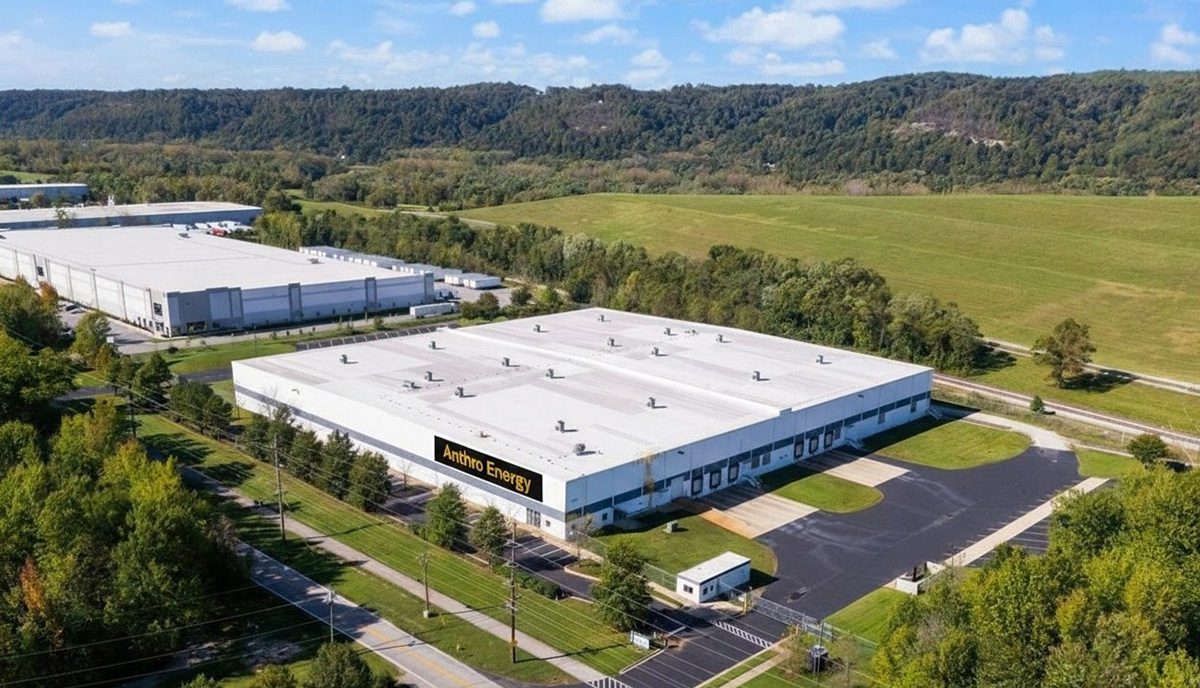
The new Louisville site represents a significant investment in US battery manufacturing infrastructure. Plans involve the conversion of an existing building into a state-of-the-art production facility, equipped to meet the growing demands of the clean energy transition. This adaptive reuse approach underscores an efficient deployment strategy, minimizing lead times and leveraging existing industrial assets.
The facility is projected to achieve an impressive annual production capacity of approximately 12,000 metric tons of polymer electrolytes. This volume translates to a capacity equivalent of 25 Gigawatt-hours (GWh) of lithium-ion battery cells, marking a substantial contribution to the nation’s overall battery manufacturing ecosystem. Such capacity is crucial for scaling up EV production and grid-scale energy storage solutions across the country.

Strategic Independence: FEOC-Free Inputs
A cornerstone of Anthro Energy’s strategy, and a key differentiator, is its commitment to utilizing Foreign Entity of Concern-free (FEOC-free) inputs from the outset. This commitment directly addresses a growing mandate from federal regulations and customer preferences to disentangle from complex and often politically sensitive global supply chains, particularly those dominated by Chinese producers. China currently holds a significant share of global electrolyte production, making FEOC-free sourcing a critical factor for many US-based manufacturers.
The move to FEOC-free materials is not merely a compliance measure; it is a strategic pitch to customers across various sectors who prioritize supply chain resilience and security. It ensures that the electrolytes produced in Louisville will contribute to batteries that are fully compliant with stringent domestic content requirements, thereby opening doors to government contracts and commercial partnerships seeking secure, American-made components.
Introducing the Proteus Platform: Advanced Polymer Electrolytes
At the heart of Anthro Energy’s offering is its proprietary Proteus platform. This advanced technology focuses on polymer electrolytes, which are designed to significantly improve the overall performance, safety, and design flexibility of lithium-ion cells. Unlike traditional liquid electrolytes, polymer alternatives can offer enhanced structural integrity, reduced flammability risks, and greater adaptability in cell form factors.
These advanced polymer electrolytes hold immense promise for a diverse array of target markets. This includes critical applications in defense, where reliability and safety are paramount; consumer electronics, demanding compact and high-performance batteries; mobility platforms, spanning electric vehicles and aerial drones; and large-scale energy storage systems essential for grid stability and renewable energy integration. The versatility of the Proteus platform positions Anthro Energy as a pivotal player across multiple high-growth industries.
Accelerated Path to Commercialisation and Production
With the planning milestones successfully completed and DOE approval secured, Anthro Energy is now poised to enter the next critical phase of the project. This encompasses a comprehensive rollout plan, including the initiation of construction activities, the meticulous installation of specialized manufacturing equipment, the recruitment and training of a skilled workforce, and the seamless integration of various suppliers into the production ecosystem.
Groundbreaking for the advanced electrolyte production facility is currently anticipated for mid-2026. This timeline reflects an ambitious yet calculated approach to rapidly transition from technological innovation to full-scale commercial manufacturing. The company’s leadership underscores the urgency and strategic importance of this accelerated deployment.
David Mackanic, CEO and co-founder of Anthro Energy, articulated the company’s forward momentum, stating, “We are moving quickly—from technology development to full-scale manufacturing — to ensure that next-generation battery materials are produced here in the United States.” His remarks highlight the firm’s commitment to expediting the availability of critical battery components within the US domestic market.
The successful development and operation of this Louisville facility will not only bolster Anthro Energy’s position as a leader in advanced battery materials but will also contribute significantly to the broader national objective of securing a robust, resilient, and independent supply chain for lithium-ion battery manufacturing, thereby accelerating the transition to a sustainable energy future.
FAQ Section
What is the significance of the DOE approval for Anthro Energy?
The U.S. Department of Energy’s approval allows Anthro Energy to advance its Louisville electrolyte manufacturing facility into the construction phase. This is a crucial step towards establishing the first large-scale, US-owned advanced electrolyte production facility, pivotal for domestic battery manufacturing independence.
How much federal funding has Anthro Energy secured for this project?
Anthro Energy has secured approximately $43 million in total federal support. This includes a $24.9 million grant under the Infrastructure Investment and Jobs Act and an additional $18.4 million in IRA Section 48C investment tax credits.
What will be the production capacity of the Louisville plant?
The Louisville facility will be capable of producing approximately 12,000 metric tons of polymer electrolytes annually. This capacity is equivalent to supplying 25 GWh of lithium-ion battery cells, significantly boosting US domestic battery component production.
What does ‘FEOC-free’ mean and why is it important?
‘FEOC-free’ means Foreign Entity of Concern-free. It signifies that the inputs used in production are sourced without ties to foreign entities of concern, primarily aimed at reducing reliance on Chinese supply chains and enhancing the security and resilience of the US battery manufacturing ecosystem.
What types of markets will Anthro Energy’s electrolytes target?
Anthro Energy’s Proteus platform, featuring advanced polymer electrolytes, is designed to serve a broad range of critical markets. These include defense applications, consumer electronics, various mobility platforms (like electric vehicles), and large-scale energy storage systems.
What are the benefits of Anthro Energy’s Proteus platform electrolytes?
The Proteus platform’s advanced polymer electrolytes are engineered to enhance several key aspects of lithium-ion cells. They aim to improve overall performance, increase battery safety by potentially reducing flammability, and offer greater design flexibility for diverse battery applications and form factors.
When is the groundbreaking for the Louisville facility expected?
Following the completion of planning milestones and receipt of DOE authorization, groundbreaking for Anthro Energy’s Louisville electrolyte manufacturing facility is anticipated for mid-2026. This timeline reflects a rapid progression towards full-scale manufacturing.