
Key Takeaways
- Anthro Energy has received crucial authorization from the US Department of Energy to proceed with the construction phase of its advanced electrolyte manufacturing facility in Louisville, Kentucky.
- This plant is poised to become the first large-scale, US-owned production hub for advanced battery electrolytes, a critical component for lithium-ion batteries.
- The project benefits from substantial federal support, including a $24.9 million grant from the Infrastructure Investment and Jobs Act and $18.4 million in IRA Section 48C investment tax credits, totaling approximately $43 million.
- The Louisville facility will have an annual production capacity of approximately 12,000 metric tons of polymer electrolytes, equivalent to 25 GWh of battery capacity.
- Crucially, Anthro Energy commits to using Foreign Entity of Concern-free (FEOC-free) inputs from inception, directly addressing national efforts to secure domestic supply chains and reduce reliance on foreign-dominated battery material production.
- The plant will produce Anthro’s Proteus platform, advanced polymer electrolytes designed for enhanced performance, safety, and flexibility across various applications, including defense, consumer electronics, mobility, and energy storage systems.
Anthro Energy, a Stanford University spinout, has secured a pivotal authorization from the US Department of Energy (DOE) to advance its state-of-the-art electrolyte manufacturing facility in Louisville, Kentucky, into the construction phase. This approval marks a significant step towards establishing what Anthro Energy describes as the nation’s inaugural large-scale, US-owned production hub for advanced battery electrolytes, a crucial component in modern lithium-ion batteries.
The green light from the DOE unlocks the subsequent phase of a substantial $24.9 million grant. This funding was awarded under the Infrastructure Investment and Jobs Act, a landmark legislative initiative designed to bolster American infrastructure and foster domestic manufacturing capabilities.

Complementing this significant grant, the project has also secured an additional $18.4 million through the Inflation Reduction Act’s (IRA) Section 48C investment tax credits. In total, the Louisville electrolyte manufacturing facility has garnered approximately $43 million in federal backing, underscoring the strategic importance of this venture for the nation’s energy independence and technological advancement.
Building Domestic Capacity: The Strategic Imperative
The establishment of this advanced electrolyte production facility in Louisville represents a critical move towards strengthening the domestic supply chain for lithium-ion batteries. Electrolytes are fundamental to battery performance, facilitating the movement of ions between the anode and cathode, thereby enabling the battery to charge and discharge.
Currently, global electrolyte production is heavily concentrated in specific regions, leading to vulnerabilities in supply chains for countries seeking to expand their electric vehicle (EV) and energy storage sectors. Anthro Energy’s initiative directly addresses these geopolitical and economic challenges by localizing a vital part of battery manufacturing.

This strategic move is expected not only to create new jobs and stimulate economic growth in Kentucky but also to provide a secure and reliable source of advanced battery materials for various industries within the United States. It aligns with broader national efforts to re-shore critical manufacturing processes and reduce reliance on external suppliers.
Federal Investment Fuels Innovation and Security
The federal government’s substantial financial commitment to Anthro Energy’s project is a clear indication of its dedication to fostering a robust domestic battery ecosystem. The Infrastructure Investment and Jobs Act, passed with bipartisan support, allocates significant funds to projects that enhance infrastructure, including those critical for the clean energy transition.
Similarly, the IRA Section 48C investment tax credits are specifically designed to support advanced energy projects, offering tax incentives for manufacturing facilities that produce renewable energy components, energy storage systems, and materials crucial for these technologies. These incentives play a vital role in de-risking private investments and accelerating the deployment of innovative solutions.
By channeling approximately $43 million into this facility, the US government is actively cultivating an environment where cutting-edge battery technology can scale from research and development to full-scale commercial production within national borders. This financial backing is instrumental in establishing the necessary infrastructure for future clean energy technologies.
The Proteus Platform: Advancing Battery Performance and Safety
At the heart of Anthro Energy’s Louisville operation is its innovative Proteus platform. This advanced technology centers on polymer electrolytes, which offer significant advantages over traditional liquid electrolytes used in many lithium-ion cells.
Polymer electrolytes are engineered to enhance multiple aspects of battery performance, including improved safety characteristics by reducing the risk of thermal runaway and fire. They also contribute to greater design flexibility, allowing for more versatile battery shapes and sizes, which is particularly beneficial for compact consumer electronics and novel mobility platforms.
Furthermore, these advanced materials are designed to boost the overall performance of lithium-ion cells, potentially leading to higher energy density, faster charging capabilities, and extended cycle life. The deployment of the Proteus platform underscores Anthro Energy’s commitment to pushing the boundaries of battery technology.
Ensuring Supply Chain Integrity: FEOC-Free Production
A cornerstone of Anthro Energy’s strategy in Louisville is the commitment to utilizing Foreign Entity of Concern-free (FEOC-free) inputs from the very beginning of its operations. This commitment is a direct response to growing concerns over the geopolitical implications of battery supply chains, which are currently dominated by entities in certain foreign nations.
By ensuring that its materials are FEOC-free, Anthro Energy directly appeals to customers, particularly those in defense, who are actively seeking to disentangle their product lines from potentially vulnerable or problematic supply networks. This approach enhances national security and provides American manufacturers with a secure and reliable source of critical battery components.
The move towards FEOC-free production sets a new standard for domestic battery material manufacturing, reinforcing the goal of establishing a resilient and independent supply chain for advanced energy technologies within the United States.
Scaling Production: Facility Conversion and Capacity
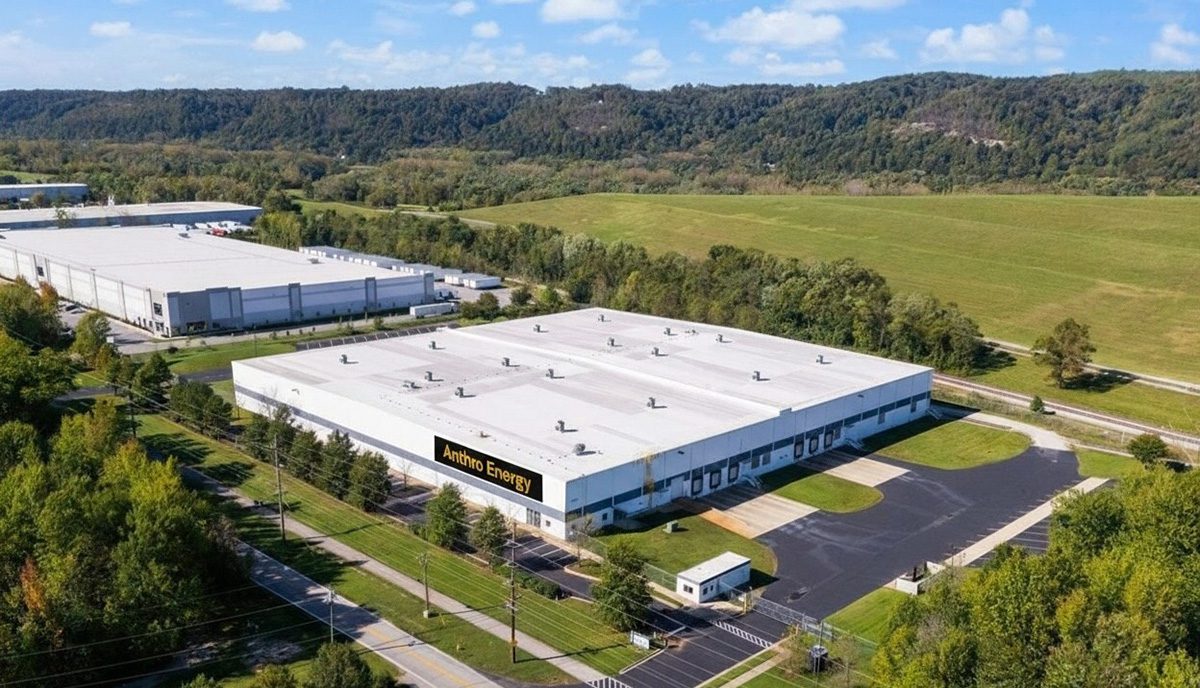
The Louisville site will see the conversion of an existing building into a high-capacity production hub. This facility is projected to achieve an impressive annual capacity of approximately 12,000 metric tons of polymer electrolytes, which translates to the capacity needed for 25 GWh of lithium-ion batteries.
This substantial capacity will allow Anthro Energy to serve multiple target markets simultaneously. The scale of production is crucial for meeting the increasing demand from sectors such as defense for robust and reliable power sources, consumer electronics requiring compact and safe batteries, advanced mobility platforms like electric vehicles and drones, and large-scale energy storage systems essential for grid stability and renewable energy integration.
With all necessary planning milestones now successfully completed, the project is poised to enter its critical next phase. This will encompass comprehensive construction activities, the installation of specialized manufacturing equipment, the commencement of significant hiring efforts, and the seamless integration of various suppliers into the operational framework.
Leadership Vision: A Commitment to US Manufacturing
Groundbreaking for the advanced electrolyte facility is anticipated by mid-2026, marking a tangible beginning to this ambitious project. The rapid progression from technological development to full-scale manufacturing highlights the urgency and strategic importance Anthro Energy places on domestic production.
David Mackanic, CEO and co-founder of Anthro Energy, articulated the company’s vision and commitment. “We are moving quickly—from technology development to full-scale manufacturing — to ensure that next-generation battery materials are produced here in the United States,” he stated. This emphasizes the company’s proactive stance in securing the future of American battery innovation and production.
Anthro Energy’s swift trajectory underscores a broader industry trend towards localizing critical manufacturing capabilities. The Louisville plant is not merely a facility; it represents a commitment to innovation, supply chain resilience, and the economic future of advanced manufacturing in the United States.
Diverse Market Applications for Advanced Electrolytes
The Proteus polymer electrolytes produced at the Louisville facility are designed for a wide array of high-demand applications. In the defense sector, superior battery safety and performance are paramount for mission-critical equipment, from portable devices to unmanned systems.
For consumer electronics, the enhanced safety and design flexibility offered by these electrolytes can lead to slimmer devices, longer battery life, and reduced risks. The mobility sector, encompassing electric vehicles, electric aircraft, and other transportation platforms, will benefit from improved range, faster charging, and greater durability.
Moreover, the burgeoning energy storage systems market, crucial for grid modernization and integrating intermittent renewable energy sources, requires high-performance, long-lasting, and safe battery components. Anthro Energy’s advanced electrolytes are positioned to meet these diverse and critical industrial needs, driving innovation across multiple sectors.