
Key Takeaways:
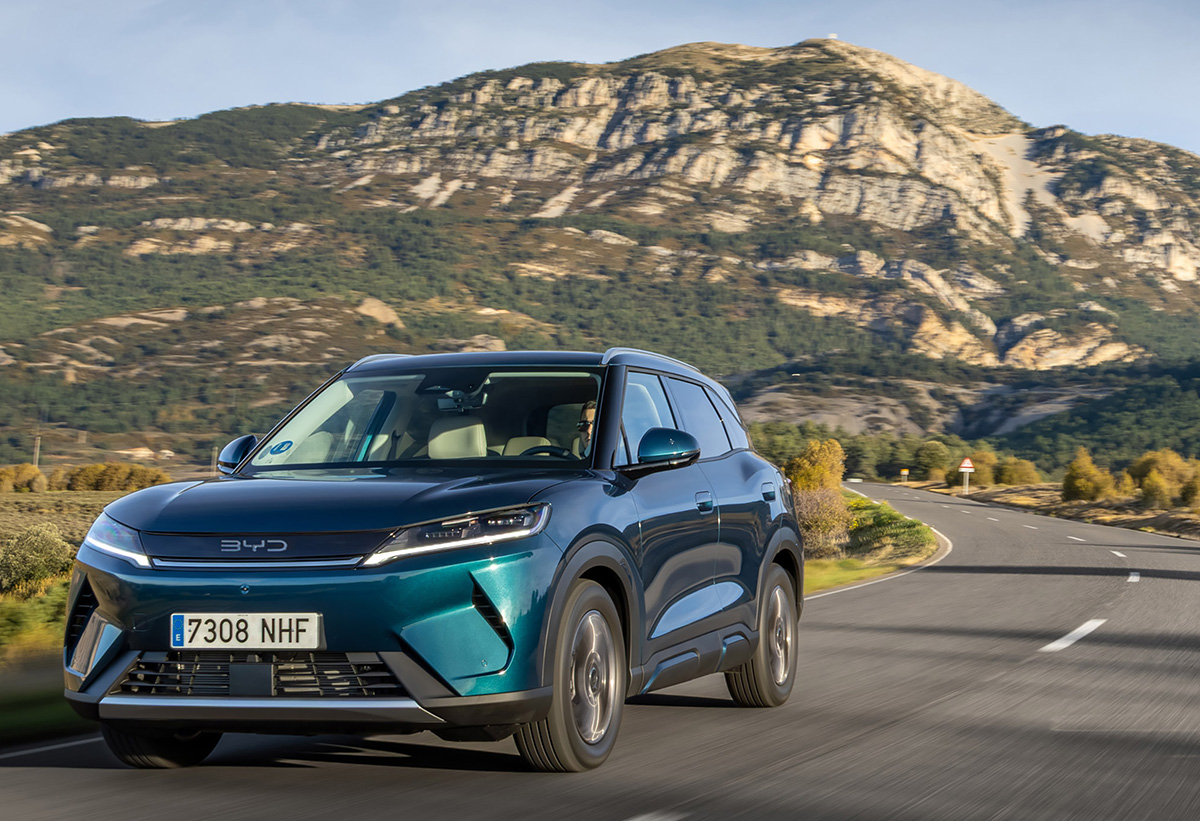
- Chinese EV giant BYD, the world’s largest electric vehicle producer, is not actively pursuing entry into the US passenger car market.
- BYD Executive VP Stella Li affirmed the company’s robust growth and success globally, even without a significant US market presence.
- The company’s primary challenge is currently meeting soaring demand across regions like Brazil, the UK, and Europe.
- BYD continues to expand its brand recognition and dealership networks in international markets, including plans for Canada.
- Technological innovations like the Blade Battery 2.0, offering over 1,000 km range, and rapid Flash charging are being rolled out, particularly in European markets.
- This strategic focus contrasts sharply with some US and European automakers scaling back their EV programmes amidst accelerating global adoption.
China’s EV Dominance and BYD’s Global Ascent
China has firmly established itself as the undisputed global epicentre of electric vehicle (EV) manufacturing. At the forefront of this industrial prowess stands BYD, which has ascended to become the world’s largest producer of electric vehicles, underscoring the nation’s leadership in sustainable mobility.

Despite its global stature, BYD, along with many other Chinese automakers, largely operates outside the vast and lucrative United States automotive market. This exclusion is a direct consequence of a combination of elevated tariffs and prohibitions on specific foreign-made technologies, creating significant trade barriers.
However, select workarounds do exist within certain segments of the US market. For instance, BYD successfully manufactures electric buses in California, demonstrating a presence in the commercial vehicle sector. Similarly, Windrose has recently initiated sales of its electric trucks within the United States, illustrating niche opportunities.
A Strategic Stance: “No Dependence on US Market”
Addressing the press at the recent Beijing Auto Show, BYD Executive VP Stella Li articulated the company’s clear strategic direction. Widely recognised as the public face driving BYD’s aggressive global expansion, Ms. Li conveyed a firm message regarding the US passenger car market.
She unequivocally stated that BYD’s sustained growth trajectory does not hinge on penetrating the American market at this juncture. “We survive and are successful without the US market today,” Ms. Li informed the BBC, highlighting the company’s self-sufficiency and robust performance across other international territories.
Li further elaborated on the immediate operational realities faced by the global EV powerhouse. She indicated that the company’s foremost challenge is not market access, but rather the immense task of fulfilling burgeoning consumer demand in various regions worldwide.
“Actually, we are now suffering [insufficient] capacity. Our demand is much higher than what we can supply,” she candidly remarked, pointing to a healthy backlog and strong order books that are straining production capabilities.
Navigating US Trade Barriers
The landscape for Chinese passenger vehicle manufacturers entering the US market remains complex and heavily regulated. High import tariffs, designed to protect domestic industries, significantly increase the cost of Chinese-made cars, diminishing their competitive edge.
Beyond tariffs, specific bans on foreign technologies, often citing national security concerns, further complicate market entry. These measures collectively create a formidable barrier, effectively limiting direct competition from Chinese passenger EVs in the American consumer market.
Despite these extensive restrictions, BYD has demonstrated its ability to operate within certain commercial vehicle sectors. The company’s electric bus manufacturing facility in California serves as a notable example, showcasing a localised production strategy to circumvent some trade obstacles.
Powering Growth: International Expansion and Brand Building
BYD’s strategic pivot away from an immediate US passenger car market entry underscores its confidence in other burgeoning global territories. The company is actively channelling resources and focus towards meeting the escalating demand in diverse international regions.
Key markets experiencing significant growth for BYD include Brazil, where EV adoption rates are accelerating rapidly. The United Kingdom and the broader European continent also represent critical areas of expansion, with substantial investments in sales and infrastructure.
Ms. Li underscored the company’s concentrated efforts on enhancing brand recognition and market penetration in these new territories. Such initiatives are crucial for establishing long-term consumer trust and loyalty in fiercely competitive automotive landscapes.
Looking North, BYD has also outlined ambitious plans for the Canadian market, signalling a strong intent to establish a robust presence. The company is reportedly working towards opening up to 20 EV dealerships across Canada, further cementing its commitment to continental expansion beyond the US.
Technological Edge: Innovation Driving Market Leadership
A cornerstone of BYD’s global success and competitive advantage lies in its relentless pursuit of technological innovation. The company consistently pushes the boundaries of EV engineering, particularly in battery development, a critical component of electric mobility.
In March, BYD unveiled its latest advancement, the Blade Battery 2.0. This new iteration promises an impressive range of over 1,000 km on a single charge, a significant leap forward that addresses a key concern for many potential EV buyers: range anxiety.
Accompanying this battery breakthrough is a revolutionary new Flash charging system. This technology is engineered to rapidly replenish the Blade Battery, allowing for a charge from 10% to 70% in an astonishingly brief five minutes. Such rapid charging capabilities represent a paradigm shift in EV convenience.
The integration of this Flash charging technology is already underway, with at least one EV model destined for the European market featuring this cutting-edge capability. This strategic deployment highlights BYD’s intent to equip its international offerings with leading-edge performance and utility.
Shifting Tides: Global EV Adoption vs. Western Hesitation
A notable disparity is emerging between the rapid pace of EV adoption in many international markets and the more cautious, sometimes regressive, approaches seen in Western nations. In numerous smaller automotive markets, often grouped as the “Rest of World,” EV uptake is experiencing an unprecedented surge.
Within these dynamic markets, Chinese automakers, with BYD frequently leading the charge, have quickly established a dominant position. Their ability to offer competitive, technologically advanced, and often more affordable EVs has resonated strongly with local consumers and governments.
Conversely, automakers in the United States, and to a lesser degree in Europe, appear to be caught in what some analysts describe as a “self-defeating spiral.” There is a discernible trend of cancelling or significantly scaling back their ambitious EV programmes.
This strategic retreat is occurring precisely as the global EV market is entering a phase of exponential growth and heightened competition. Bill Pierce of EVinfo.net highlighted the criticality of this timing, stating, “The United States is making a strategic error by slowing momentum on electric vehicles at the federal level, and the timing could not be worse.”
This divergence in strategy could have profound implications, potentially ceding significant market share and technological leadership to companies and nations that remain committed to aggressive EV expansion.
Implications for the Global Automotive Landscape
The strategic decisions made by global automotive players, particularly BYD’s focus on non-US markets and Western automakers’ hesitancy, are reshaping the industry. This divergence could lead to a multi-speed global EV transition, where some regions accelerate rapidly while others lag.
Chinese automakers are consolidating their lead in emerging and established non-Western markets, building extensive brand recognition and supply chains. This could make it increasingly difficult for Western brands to compete effectively in these regions in the future.
Ultimately, the global automotive landscape is undergoing a significant transformation. BYD’s deliberate choice to prioritise other markets, coupled with its advanced battery and charging technologies, positions it as a formidable global force irrespective of its immediate US passenger car market presence.
Frequently Asked Questions
Why is BYD not actively entering the US passenger car market?
BYD’s Executive VP Stella Li indicated that the company does not need the US market for its growth and success. High tariffs and bans on certain foreign technologies pose significant barriers, and BYD is currently focused on meeting soaring demand in other global regions, where it has found robust growth.</p
What are the primary challenges BYD currently faces?
BYD’s main challenge is insufficient production capacity to meet the overwhelming demand for its electric vehicles globally. The company is actively working to scale up production to address the high volume of orders coming from markets outside the United States.
Which international markets are key to BYD’s current expansion?
BYD is concentrating its expansion efforts on regions experiencing rapid EV adoption and strong demand. Key markets include Brazil, the United Kingdom, and the broader European continent. The company is also planning to significantly expand its dealership network in Canada.
What recent technological advancements has BYD introduced?
BYD recently unveiled its Blade Battery 2.0, which boasts an impressive range of over 1,000 km on a single charge. Additionally, it introduced a new Flash charging system capable of charging the Blade Battery from 10% to 70% in just five minutes, enhancing user convenience.
How does BYD’s strategy contrast with US automakers?
BYD’s strategy focuses on aggressive global expansion and technological innovation, capitalising on surging EV demand worldwide. In contrast, some US automakers are reportedly scaling back or cancelling their EV programmes, a move criticised by experts as a strategic error amidst a global EV acceleration.
Does BYD have any presence in the US market at all?
While BYD is not pursuing the US passenger car market, it does have a presence in the commercial vehicle sector. BYD builds electric buses in California, demonstrating a targeted approach to operating within specific segments of the American market despite broader trade barriers.