
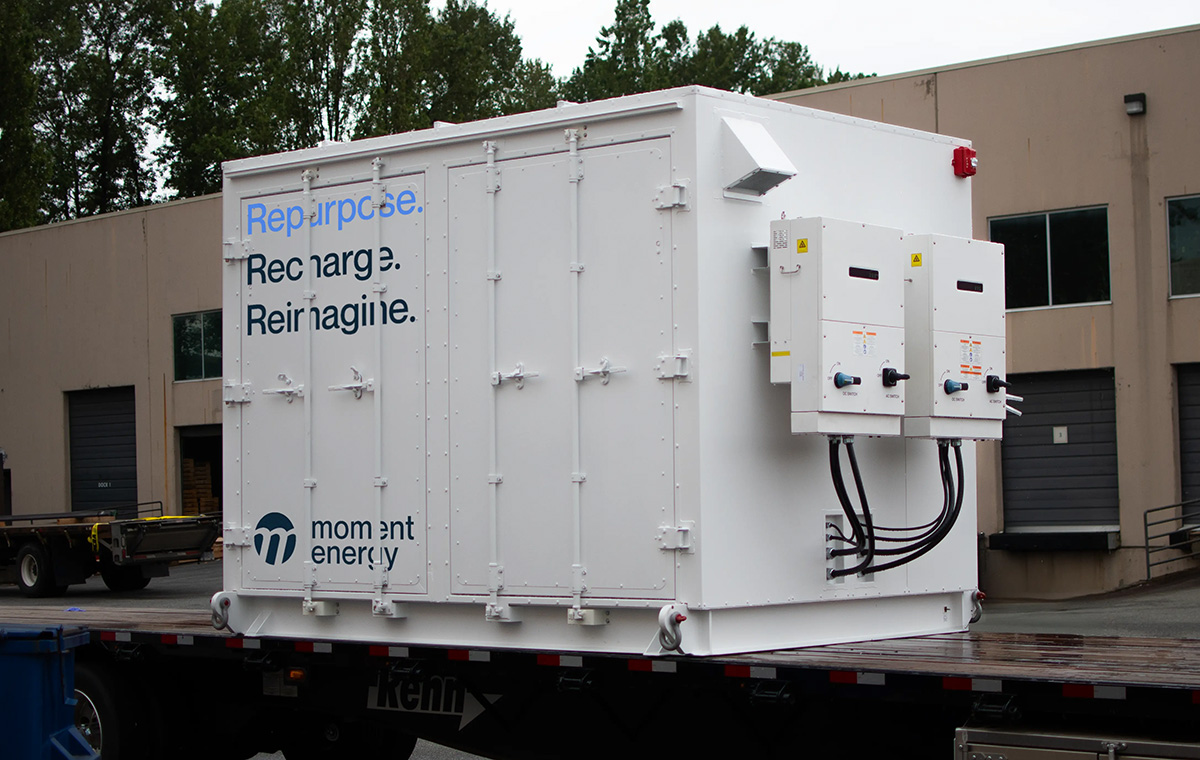
In a significant development for the sustainable energy sector, Moment Energy, an Austin-based innovator, has secured UL 60730-1 functional safety certification for its advanced battery management system (BMS). This specialized BMS is engineered explicitly for repurposed electric vehicle (EV) batteries, completing what the company describes as the comprehensive UL safety stack for second-life energy storage applications. This achievement marks a pivotal moment for the deployment of used EV batteries in critical infrastructure across North America.
The certification addresses a long-standing challenge that has historically impeded the widespread adoption of second-life battery deployments, particularly in demanding commercial and industrial environments. It provides crucial validation for insurers, permitting authorities, and utilities, confirming that systems constructed from retired EV batteries meet the same rigorous, independently verified safety standards as newly manufactured, purpose-built storage solutions.

Key Takeaways
- Moment Energy has earned UL 60730-1 functional safety certification for its second-life EV battery BMS, completing a full safety validation stack.
- This certification directly tackles regulatory and trust barriers, enabling broader adoption of repurposed EV batteries in commercial and industrial settings.
- The proprietary BMS is purpose-built for stationary performance, distinguishing it from reverse-engineered automotive systems and respecting OEM intellectual property.
- The company previously held UL 1974, UL 1973, and UL 9540, with UL 60730-1 now providing critical functional safety validation at the control layer.
- Moment Energy’s systems are already deployed in vital infrastructure like data centers, hospitals, and microgrids across North America, enhancing their reliability and safety.
Overcoming Hurdles in Second-Life Battery Deployment
The repurposing of EV batteries for stationary energy storage has emerged as a crucial component of the circular economy and a sustainable approach to managing the increasing volume of retired automotive power units. However, the path to widespread adoption has been fraught with challenges. A primary concern has been the ability to definitively prove that these second-life units, though sourced from vehicles, can consistently meet the stringent safety and performance requirements expected of stationary energy storage systems.
The UL 60730-1 standard, which covers functional safety for automatic electrical controls, represents a critical missing link in this validation process. By applying this standard specifically to a second-life EV battery BMS, Moment Energy provides the necessary assurance that the intricate control systems governing these repurposed batteries operate safely and reliably. This level of certification is paramount for building trust among key stakeholders who demand uncompromising safety in energy infrastructure.
The Significance of UL Functional Safety Standards
Moment Energy’s latest certification is not an isolated achievement but the culmination of a comprehensive safety validation strategy. The company had already secured a suite of other essential UL certifications, each addressing a specific aspect of battery safety and performance:
UL 1974: Evaluation for Repurposed Batteries
This standard provides guidelines for evaluating retired EV battery packs or modules for their suitability for repurposing. It ensures that the initial assessment and selection of batteries for second-life applications adhere to strict criteria, identifying packs that retain sufficient capacity and health for continued use.
UL 1973: Stationary Battery Applications
Dedicated to batteries used in stationary applications such as utility grid support, uninterruptible power supplies (UPS), and residential energy storage, UL 1973 sets safety requirements for these systems. It covers aspects like battery pack construction, protective circuits, and overall system design to prevent hazards during operation.
UL 9540: Energy Storage Systems
This is a comprehensive standard for energy storage systems (ESS) that encompasses various battery technologies and applications. UL 9540 addresses the safety of the entire system, including battery modules, power conversion systems, and control electronics, ensuring they work together safely and effectively under diverse conditions.
UL 60730-1: Functional Safety for BMS Controls
The newly acquired UL 60730-1 certification specifically targets the functional safety of the automatic electrical controls within the battery management system. For a second-life EV battery BMS, this means the software and hardware that monitor, control, and protect the battery cells are independently verified to perform their safety functions correctly, even under fault conditions. This certification closes the loop by ensuring that the critical control layer—the BMS—operates with the highest level of functional integrity.
Moment Energy’s Innovative BMS Approach
A key differentiator for Moment Energy lies in its unique engineering philosophy. Unlike many industry approaches that involve reverse-engineering the original automotive BMS, Moment Energy has developed a proprietary battery management system that is purpose-built from the ground up. This innovative BMS is designed specifically to manage repurposed cells for optimal stationary performance and safety.
Crucially, this approach also ensures that the intellectual property (IP) of automotive partners, such as Mercedes-Benz Energy, is respected. This technical and commercial distinction is vital for fostering strong relationships with original equipment manufacturers (OEMs), enabling a more streamlined and collaborative ecosystem for second-life battery utilization. Such partnerships are instrumental in scaling the market for repurposed batteries.
Gabe Soares, Co-Founder and CTO at Moment Energy, emphasized the profound impact of this certification. He stated, “This certification proves that with the right technology, repurposed batteries can match purpose-built storage on safety, reliability, and performance.” He further added, “It gives customers, battery OEMs, automakers, utilities, and regulators the confidence to deploy repurposed EV batteries in critical infrastructure without compromise.”
Real-World Deployments and Future Implications
Moment Energy’s certified systems are already making a tangible difference across North America. Their second-life EV battery BMS solutions are deployed in a variety of critical applications, including data centers, hospitals, factories, and microgrids. These installations underscore the robust reliability and safety of their technology, providing resilient and sustainable power solutions where they are most needed.
The company manufactures its advanced systems in Texas and British Columbia, establishing a localized production footprint that supports regional energy initiatives. Furthermore, this latest functional safety certification provides a verified safety boundary for Moment Energy’s advanced artificial intelligence (AI) and machine-learning optimization capabilities. This ensures that as their systems become smarter and more efficient, their fundamental safety integrity remains uncompromised.
This landmark achievement by Moment Energy is expected to accelerate the broader acceptance and deployment of second-life EV batteries. By establishing clear, independently verified safety benchmarks, the company is not only enhancing the credibility of repurposed energy storage but also contributing significantly to a more sustainable and resilient energy future. The ability to give retired EV batteries a second life is a win for environmental sustainability, resource efficiency, and grid stability.
FAQs on Second-Life EV Battery BMS Certification
What is UL 60730-1 functional safety certification?
UL 60730-1 is a standard for the functional safety of automatic electrical controls. For a battery management system (BMS), it certifies that the system’s critical safety functions—such as preventing overcharging or overheating—will operate correctly and reliably, even if internal faults occur. This ensures the safe control of the battery’s operations.
Why is this certification important for second-life EV batteries?
This certification is crucial because it provides independent validation that repurposed EV batteries, managed by Moment Energy’s BMS, meet the same rigorous safety standards as new energy storage systems. This assurance is vital for gaining acceptance from insurers, regulators, and utilities, which have historically been hesitant to deploy used batteries due to safety concerns.
How does Moment Energy’s BMS differ from others?
Moment Energy’s BMS is proprietary and purpose-built for the unique demands of stationary second-life battery applications. Unlike common industry practices of reverse-engineering existing automotive BMS, Moment Energy’s solution respects automotive OEM intellectual property and is specifically optimized for long-term, reliable stationary performance and enhanced safety.
What other UL certifications does Moment Energy hold?
Moment Energy previously secured UL 1974 for the evaluation of repurposed batteries, UL 1973 for stationary battery applications, and UL 9540 for energy storage systems. The addition of UL 60730-1 completes their comprehensive safety validation, ensuring safety across evaluation, application, system integration, and core control functionalities.
Where are Moment Energy’s second-life battery systems deployed?
Moment Energy’s certified second-life battery systems are currently deployed across various critical infrastructure sites in North America. These include data centers, hospitals, manufacturing facilities, and microgrids, demonstrating their versatility and reliability in demanding commercial and industrial environments that require robust and sustainable energy solutions.
What impact will this certification have on the energy storage market?
This certification is expected to significantly boost confidence in the safety and reliability of second-life EV battery systems. It will likely accelerate their adoption in mainstream energy storage projects, contributing to a more sustainable circular economy for batteries, enhancing grid resilience, and reducing the environmental footprint of energy production and consumption.