
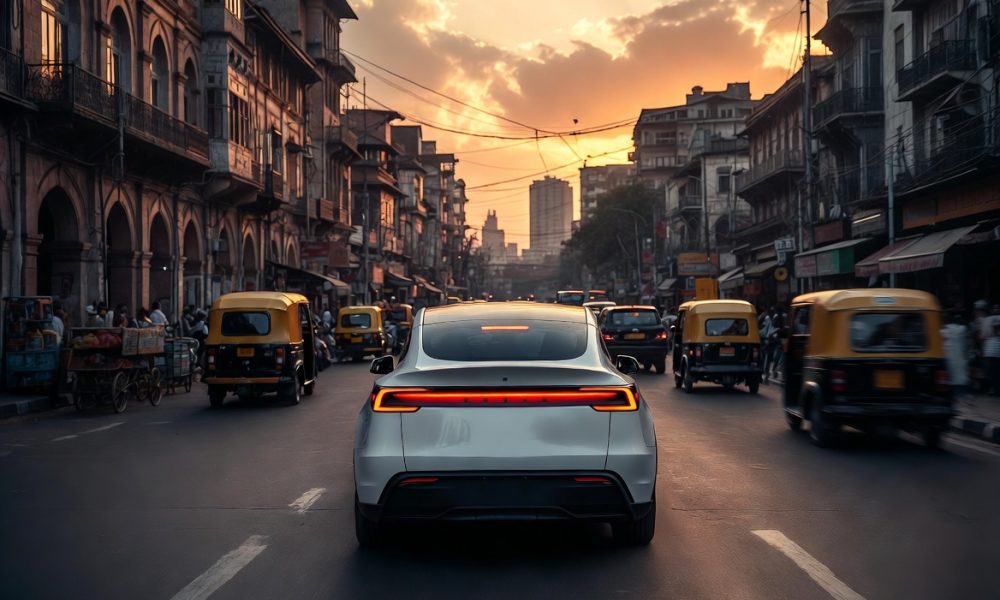
NEW DELHI – Tesla has officially decided to discontinue its long-standing ambition to establish a manufacturing facility in India, drawing a close to years of complex negotiations and policy disagreements. The confirmation came on May 19, 2026, from India’s Minister of Heavy Industries, H.D. Kumaraswamy, who stated that the electric vehicle giant had informed authorities of its decision to not proceed with the proposed plant.
Key Takeaways
- Tesla has officially withdrawn plans for a manufacturing facility in India, confirmed by Minister H.D. Kumaraswamy on May 19, 2026.
- Negotiations stalled primarily over import tariffs, with India demanding local manufacturing investment first, while Tesla sought tariff reductions to test the market with imported vehicles.
- India offered a policy reducing import duties to 15% (from 110%) for EVs over $35,000, contingent on a $500 million local manufacturing investment within three years; Tesla declined this offer.
- Additional factors contributing to the withdrawal included gaps in India’s local supply chain, inadequate industrial infrastructure, and a mismatch between Tesla’s premium pricing and the Indian automotive market’s purchasing power.
- Signs of the unraveling relationship emerged in April 2024 with Elon Musk’s cancelled trip to India and by July 2024, communication with Indian officials had ceased.
- Tesla’s existing global factories operating at approximately 60% capacity made a new, significant investment in a new market difficult to justify to investors.
- The company will continue to sell imported Model Y vehicles through its showrooms in major Indian cities.
A Long Road: Tesla’s Pursuit of the Indian Market
The journey for a Tesla India factory began in earnest around 2021 when the American automaker first showed significant interest in establishing a foothold in the rapidly growing Indian market. This initial phase involved strategic hiring of local staff and aggressive lobbying of the Indian government to secure more favorable market entry conditions.

The core of Tesla’s request was a substantial reduction in import tariffs on electric vehicles (EVs). The company aimed to first introduce its fully built cars to gauge market reception and establish brand presence before committing significant capital to a local manufacturing facility. This approach sought to de-risk a major investment by understanding the market dynamics firsthand.
The Tariff Standoff: A Policy Impasse
India, keen on promoting domestic manufacturing under its ‘Make in India’ initiative, held an equally firm stance. The government’s position was clear: any substantial tariff relief would be contingent upon Tesla making a firm commitment to local production. This fundamental divergence in market entry strategies became the primary sticking point in the protracted discussions.
At the time, India imposed high import duties, reaching up to 110% on fully imported electric vehicles. Tesla’s proposal was to see these duties slashed significantly, enabling it to offer its premium vehicles at more competitive prices. However, Indian policymakers were wary of creating a precedent that might benefit other foreign manufacturers without reciprocal investment in the country’s industrial base.

India’s Policy Offer and Tesla’s Refusal
In an effort to bridge the gap, the Indian government eventually put forth a policy framework designed to attract EV manufacturers. This policy offered to reduce import duties from the steep 110% down to a more palatable 15% for electric vehicles priced above $35,000. Crucially, this tariff reduction was conditional upon companies committing at least $500 million towards local manufacturing investment within a three-year timeframe.
Despite this significant offer, Tesla ultimately declined to participate in the scheme. This refusal underscored the depth of the disagreement over market entry priorities and the perceived economic viability of the proposed conditions. The company seemingly found the terms still not aligned with its immediate global strategic objectives or its desired risk profile for market expansion.
Broader Challenges Beyond Tariffs
While the tariff standoff was a significant hurdle, analysts and industry observers also pointed to several underlying issues that complicated the prospect of a Tesla India factory. These challenges painted a picture of a more complex investment landscape beyond just import duties.
One critical concern was the significant gaps in India’s nascent local supply chain for advanced electric vehicle components. Establishing a comprehensive manufacturing ecosystem for premium EVs would require substantial development of local vendors and infrastructure, a task that could entail considerable time and investment from Tesla.
Furthermore, inadequate industrial infrastructure, particularly in terms of high-quality logistics, reliable power supply, and skilled labor for specialized EV manufacturing, was cited as another deterrent. While India has made strides in infrastructure development, meeting the stringent requirements of a global auto giant like Tesla posed unique challenges.
Another crucial factor was the mismatch between Tesla’s premium pricing strategy and the prevailing purchasing power within India’s automotive market. The vast majority of vehicle sales in India occur in the budget and mid-range segments. Introducing high-end electric vehicles with a premium price tag, even with some tariff relief, presented a formidable challenge in achieving significant sales volumes necessary to justify a large-scale manufacturing investment.
Signs of an Unraveling Relationship
The first concrete indicators that the ambitious plans for a Tesla India factory were faltering emerged in early 2024. In April of that year, Elon Musk, CEO of Tesla, abruptly cancelled a much-anticipated trip to India. The visit was expected to culminate in a high-profile meeting with Prime Minister Narendra Modi and a public announcement regarding Tesla’s market entry and investment plans.
The cancellation sent clear signals of trouble in the negotiations. By July 2024, reports surfaced in prominent financial publications, including Fortune, indicating that Tesla executives had ceased all contact with Indian government officials. At this juncture, the Indian government reportedly came to understand that Tesla was facing capital constraints and had no immediate plans to commit to a significant manufacturing investment.
Tesla’s Global Production Capacity: An Internal Constraint
Beyond the specific challenges of the Indian market, Tesla’s global production strategy also played a pivotal role in the decision. The company’s existing factories worldwide were, at the time of the decision, operating at approximately 60% capacity. This underutilization presented a significant challenge for Tesla to justify to its investors the commitment of substantial capital to build new manufacturing capacity in an unproven and complex market like India.
Investing billions in a new Tesla India factory while existing facilities were not running at full tilt would be difficult to defend, especially in an environment where the company might be prioritizing efficiency and maximizing output from its established Gigafactories.
What This Means for India’s EV Ambitions and Tesla’s Presence
The decision by Tesla marks a significant development for India’s ambitious electric vehicle sector. While the country continues to attract investments from other global and domestic players, the absence of a Tesla manufacturing hub means India will miss out on the potential technology transfer, job creation, and ecosystem development that such a high-profile investment could have brought.
For now, Tesla’s presence in India will remain limited to sales of imported vehicles. The company plans to continue offering its Model Y through existing showrooms located in major metropolitan areas such as Mumbai, Delhi, Gurugram, and Bengaluru. However, the prospect of local production, which was once a key driver of the extensive negotiations, is no longer part of Tesla’s immediate strategy for the subcontinent.
This outcome underscores the complexities and inherent challenges in aligning the strategic interests of a global technology behemoth with the economic and industrial policy objectives of a large, developing nation. While the door for a Tesla India factory may not be permanently shut, the recent announcement signifies a definitive pause in these high-stakes discussions.
FAQ Section
Q1: Why did Tesla decide not to build a factory in India?
Tesla’s decision was primarily due to a prolonged tariff standoff, where India insisted on local manufacturing investment before offering significant import duty reductions. Additional factors included concerns over India’s nascent EV supply chain, inadequate industrial infrastructure, and the high price point of Tesla vehicles relative to the local market’s purchasing power.
Q2: When did Tesla’s plans for an India factory first emerge?
Tesla first signaled serious interest in establishing a presence in India around 2021. This included hiring local staff and engaging in lobbying efforts with the Indian government for lower import tariffs to facilitate market entry with imported vehicles before committing to a local manufacturing plant.
Q3: What was India’s policy offer to attract EV manufacturers?
India offered to reduce import duties on EVs priced above $35,000 from 110% to 15%. This significant reduction was conditional on companies committing to an investment of at least $500 million towards local manufacturing within three years. Tesla, however, declined this specific policy offer.
Q4: Will Tesla still sell cars in India?
Yes, Tesla will continue its sales operations in India. The company plans to sell imported Model Y vehicles through its established showrooms in major cities such as Mumbai, Delhi, Gurugram, and Bengaluru. The discontinuation of factory plans only affects local production, not vehicle sales.
Q5: What were the other challenges, besides tariffs, for a Tesla factory in India?
Beyond the tariff dispute, challenges included gaps in India’s local supply chain for EV components, concerns about industrial infrastructure, and a mismatch between Tesla’s premium vehicle pricing and the price sensitivity of the broader Indian automotive market. These factors made a large-scale investment difficult to justify.
Q6: How did Tesla’s global production capacity impact this decision?
Tesla’s existing global manufacturing facilities were reportedly operating at approximately 60% capacity at the time of the decision. This underutilization made it challenging for the company to justify a substantial new investment in a new market like India to its investors, as optimizing existing assets was likely a higher priority.