
Key Takeaways:
- Einride is deploying SAE Level 4 autonomous electric trucks in a proof-of-concept service in Marysville, Ohio.
- The initiative is a collaboration with Ohio logistics provider EASE Logistics, operating between its warehouses.
- Part of the Ohio Department of Transportation and DriveOhio’s Truck Automation Corridor Project, the pilot aims to assess operational efficiency, safety, and freight impact.
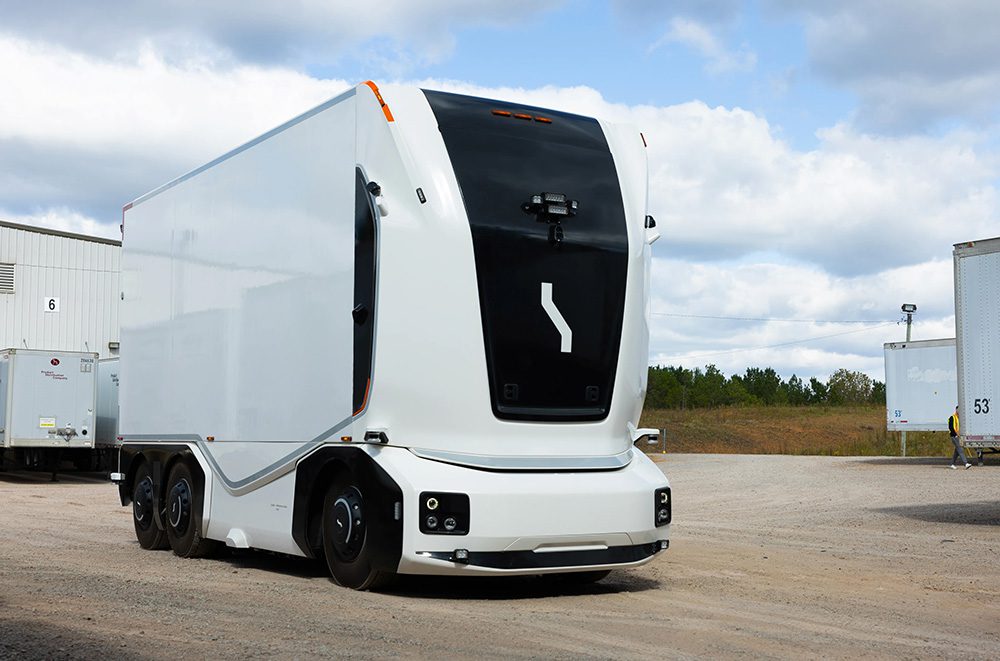
- Two cab-less electric trucks, monitored by remote operators, will traverse EASE property and local public roads starting this summer.
- The project will generate critical data to facilitate the transition of autonomous trucking from controlled tests to daily logistics operations.
Pioneering Autonomous Freight in Ohio
In a significant stride towards the future of logistics, Einride, a leader in electric and autonomous freight solutions, is set to deploy its SAE Level 4 autonomous electric trucks on public roads in Ohio. This pioneering proof-of-concept service is a collaborative effort with EASE Logistics, a prominent Ohio-based logistics provider.

The strategic deployment will see advanced autonomous electric trucks transport goods between EASE Logistics’ warehouses situated in Marysville, Ohio. This initiative is a core component of the broader Ohio Department of Transportation (ODOT) and DriveOhio’s Truck Automation Corridor Project, underscoring the state’s commitment to exploring cutting-edge transportation technologies.
The Ohio Truck Automation Corridor Project
The Truck Automation Corridor Project, spearheaded by ODOT and DriveOhio, is designed to evaluate the multifaceted impact of autonomous technology on critical aspects such as daily operations, overall safety parameters, and the efficiency of freight movement within the state. Ohio is strategically positioning itself as a hub for testing and integrating advanced mobility solutions.
This particular pilot with Einride and EASE Logistics represents a crucial phase in this statewide project. It moves beyond controlled environments, bringing autonomous electric trucks into real-world operational scenarios to gather tangible data and insights.

Unpacking Einride’s Autonomous Electric Truck Technology
Einride specializes in developing and operating comprehensive electric and autonomous freight solutions. Their portfolio includes robust electric heavy-duty trucks and the essential charging infrastructure required to support these advanced fleets. The company currently extends its services across North America, Europe, and the Middle East, establishing a global footprint in sustainable and intelligent logistics.
The vehicles slated for deployment in Ohio are Einride’s L4 autonomous electric trucks. These units are distinguished by their self-driving capabilities and a unique cab-less design. The absence of a traditional cab signifies a fundamental shift in truck design, optimized purely for autonomous operation.
Defining SAE Level 4 Autonomy
SAE Level 4 autonomy, as defined by the Society of Automotive Engineers, denotes high automation. At this level, the autonomous driving system can perform all driving tasks and monitor the driving environment under specific conditions, without requiring human intervention. In this particular deployment, while the trucks are designed to operate autonomously, a remote operator continuously monitors their progress off-site.
This remote oversight ensures an additional layer of safety and allows for human intervention if extraordinary circumstances necessitate it. This hybrid approach leverages the efficiency of autonomous driving while retaining human oversight for critical decision-making or unexpected events.
Operational Details and Data Collection
The pilot program, scheduled to commence this summer, will involve two of Einride’s L4 autonomous electric trucks. These vehicles will primarily transport goods between the designated EASE warehouses. Their routes will encompass both private EASE property and segments of local public roads in Marysville, Ohio.
A key objective of this deployment is the systematic generation of comprehensive data. This data will provide invaluable insights into how autonomous technology influences various facets of logistics, including warehousing processes, distribution networks, and overall transportation operations. The findings are expected to inform future scalable deployments of autonomous electric trucks.
Industry Impact and Future Outlook
The partnership between Einride and EASE Logistics, supported by Ohio’s state initiatives, marks a pivotal moment in the evolution of freight transportation. It represents a tangible step towards integrating autonomous technology into the daily fabric of commercial logistics, moving beyond mere theoretical or laboratory-based testing.
Peter Coratola Jr., President and CEO of EASE Logistics, emphasized the broader implications of such pilots. He stated, “Deployments like this help move autonomous trucking from controlled pilots into daily freight operations, where safety, reliability and efficiency can be evaluated at scale.” This perspective highlights the industry’s need to validate autonomous systems under real-world pressures and volumes.
Roozbeh Charli, CEO of Einride, reiterated the company’s foundational commitment to safety and meticulous development. “Deploying these autonomous trucks in daily logistics operations with EASE is a milestone that reflects years of rigorous development and real-world validation. Safety is not a feature we add to our technology—it is the foundation everything is built on,” Charli affirmed.
This rigorous approach to development and testing, particularly in a public road environment, is crucial for building trust in autonomous electric trucks. The data collected from the Ohio pilot will be instrumental in demonstrating the practical benefits of these technologies, including enhanced operational efficiencies, reduced emissions through electrification, and improved safety records compared to traditional trucking methods.
The long-term success of such initiatives could fundamentally reshape supply chains, optimize delivery routes, and address critical challenges facing the freight industry, such as driver shortages and environmental sustainability goals. Ohio’s proactive stance in fostering such innovation positions it at the forefront of the autonomous transportation revolution.
FAQs about Autonomous Electric Trucks in Ohio
What is Einride’s role in this project?
Einride develops and operates electric and autonomous freight solutions, including the L4 autonomous electric trucks and charging infrastructure. For this project, Einride is providing its advanced self-driving, cab-less trucks for testing in a proof-of-concept service with EASE Logistics in Ohio.
What is SAE Level 4 autonomy?
SAE Level 4 refers to high automation, where the vehicle can perform all driving tasks and monitor its environment under specific conditions without human intervention. In this pilot, while the Einride trucks operate autonomously, a remote operator provides off-site monitoring and can intervene if necessary.
Where will the autonomous trucks operate?
The autonomous electric trucks will operate between EASE Logistics warehouses in Marysville, Ohio. Their routes will include both private property belonging to EASE and designated local public roads, allowing for real-world data collection in varied environments.
What is the purpose of the Truck Automation Corridor Project?
The Ohio Department of Transportation and DriveOhio’s Truck Automation Corridor Project aims to evaluate how autonomous technology impacts daily freight operations, safety protocols, and overall transportation efficiency. This pilot is crucial for gathering data to scale autonomous trucking solutions.
When will this pilot program begin?
The deployment of Einride’s L4 autonomous electric trucks in Marysville, Ohio, is scheduled to commence this summer. This will mark the beginning of data collection and operational evaluation for the proof-of-concept service.
How is safety ensured with cab-less autonomous trucks?
Safety is paramount for Einride, which designs its technology with safety as a core foundation. While the trucks are cab-less and self-driving, they are continuously monitored by a remote operator off-site. This operator can intervene if any unexpected situations arise, providing a critical human oversight layer.