
Key Takeaways (TL;DR)
- Freudenberg Sealing Technologies has launched DIAvent maxFlow, a cutting-edge degassing element for lithium-ion vehicle batteries.
- The system offers an exceptional flow rate of over 190 liters per second, significantly enhancing safety during EV battery thermal runaway events.
- Its unique metal spring mechanism ensures instantaneous opening, preventing cascade failures, and autonomously recloses to seal the battery post-event.
- DIAvent maxFlow provides precise, adjustable trigger pressures, outperforming conventional burst disks in reliability and offering non-destructive testing capabilities.
- The compact, robust design meets stringent automotive standards, including IPX9K, IP6KX, and UL94 V0 flame retardancy, promising enhanced safety and quality control for electric vehicles.
As the global automotive industry accelerates its transition towards electric vehicles (EVs), the paramount importance of battery safety continues to drive innovation. A critical concern within this domain is the prevention and containment of EV battery thermal runaway events, a phenomenon where internal battery cell temperatures rise uncontrollably, potentially leading to fire or explosion. In a significant development for electric vehicle engineering, Freudenberg Sealing Technologies has unveiled its latest advancement, the DIAvent maxFlow, a thermal runaway degassing element designed to set new benchmarks in battery safety.

Released with full specifications, the DIAvent maxFlow represents a substantial leap forward in managing the volatile conditions that can arise during a thermal runaway. This sophisticated component is engineered specifically for lithium-ion vehicle batteries, offering a robust solution to mitigate the severe risks associated with rapid gas expulsion.
Addressing the Critical Challenge of EV Battery Thermal Runaway Events
Thermal runaway in lithium-ion batteries is a complex and dangerous event, characterized by a rapid, self-sustaining increase in temperature and pressure. If uncontrolled, it can lead to a cascade failure, where one cell’s thermal runaway triggers adjacent cells, escalating the severity of the incident. This poses significant safety challenges for vehicle occupants and emergency responders.
Effective thermal management and rapid degassing solutions are therefore indispensable for the widespread adoption and safety of electric vehicles. Components like the DIAvent maxFlow play a crucial role in managing these high-pressure, high-temperature events by quickly releasing accumulating gases, thereby reducing internal pressure and preventing catastrophic outcomes.
Introducing the DIAvent maxFlow: A New Benchmark in Degassing Technology
The DIAvent maxFlow emerges as Freudenberg Sealing Technologies’ answer to the demand for more effective and reliable thermal runaway protection. The company’s new degassing element delivers an impressive performance, capable of venting over 190 liters per second at a differential pressure of 300 mbar. This represents a substantial improvement, boasting a 2.5 times higher flow rate compared to its predecessor, the DIAvent HighFlow.
This remarkable capacity ensures that hot gases generated during an EV battery thermal runaway event are expelled swiftly and efficiently. Such rapid evacuation is critical in minimizing the build-up of dangerous pressure within the battery pack, a key factor in preventing the spread of thermal incidents.
Unprecedented Flow Rate and Instantaneous Response
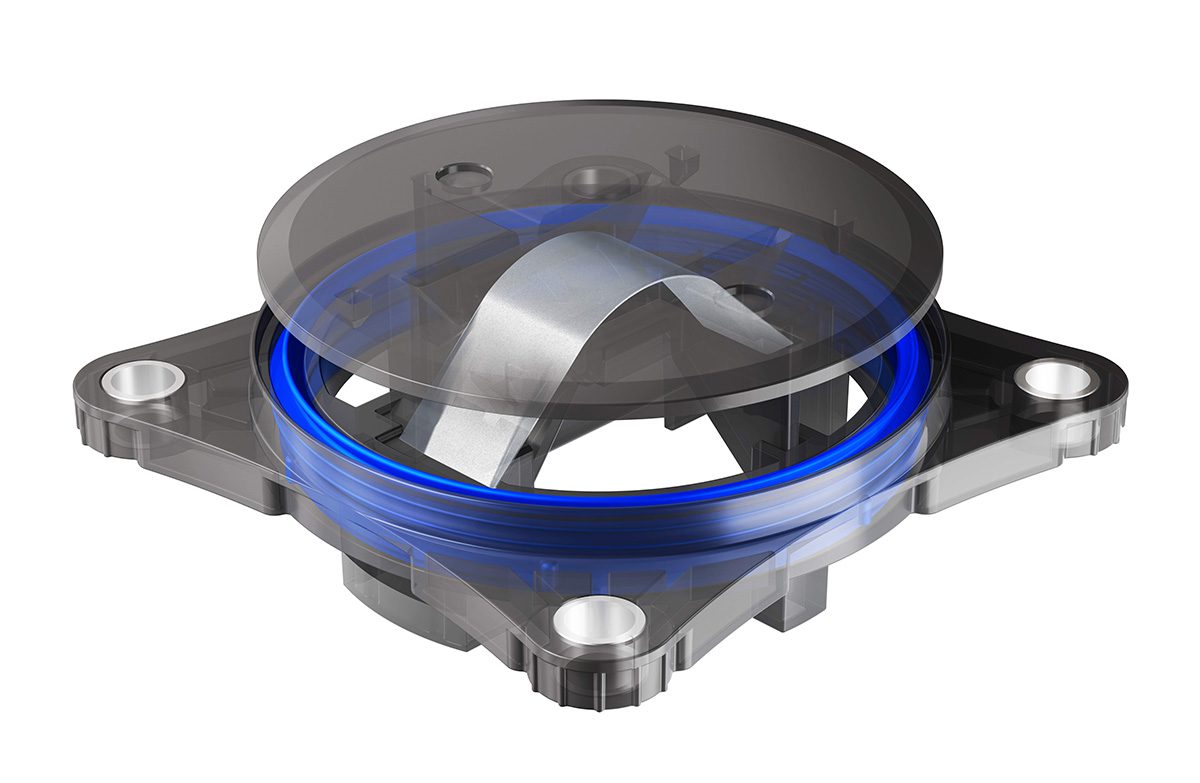
At the heart of the DIAvent maxFlow’s enhanced performance is a re-engineered design that moves away from the rubber umbrella mechanism used in earlier DIAvent generations. Instead, it incorporates a precisely profiled metal spring. This design choice is not merely an incremental upgrade but a fundamental shift with profound implications for safety during a thermal runaway scenario.
Unlike previous designs that opened gradually as pressure accumulated, the metal spring in the DIAvent maxFlow snaps fully open the instant the predetermined trigger threshold is met. This instantaneous activation is paramount, allowing hot gases to escape significantly faster. By ensuring rapid gas egress, the risk of cascade failures—where the thermal event propagates from one cell to another—is substantially reduced, effectively containing the potential danger within the battery pack.
The Crucial Role of Autonomous Reclosure
Beyond its rapid opening, another critical feature of the DIAvent maxFlow is its ability to autonomously reclose once the internal battery pressure drops. This reclosing mechanism serves a dual purpose, significantly enhancing both operational safety and post-incident management.
Firstly, the reclosure seals the battery against the ingress of oxygen. This is vital for limiting further combustion within the battery pack, should a thermal event occur, and helps to starve any lingering flames. Secondly, this sealing capability is indispensable for the safety of first responders arriving on the scene after an incident. By preventing oxygen from re-entering the battery enclosure, it reduces the risk of reignition or further escalation of the thermal event, providing a safer environment for emergency personnel.
Precision, Reliability, and Manufacturing Advantages
The engineering sophistication of the DIAvent maxFlow extends to its operational precision and significant manufacturing benefits. Its trigger pressure can be adjusted with remarkable accuracy, ranging between 50 and 200 mbar, and boasts a low tolerance. This level of precision is critical for tailoring the venting response to specific battery pack designs and operational parameters.
Superiority Over Conventional Burst Disks
This adjustability and precision offer a marked advantage over conventional alternatives such as burst disks. Burst disks are one-time-use devices that rupture at a set pressure but cannot reclose. Moreover, their trigger pressure is often less precise, and critically, they cannot be tested non-destructively once installed in a battery pack. This means that a functional check of a burst disk effectively destroys it, making quality control a challenge in high-volume production.
In contrast, the DIAvent maxFlow’s reversible mechanism allows for end-of-line testing of fully assembled battery packs without destroying the valve. This capability represents a meaningful quality control advantage in the manufacturing process, ensuring every installed unit meets stringent performance and safety standards before leaving the factory.
Robust Design and Certified Performance
The physical attributes of the DIAvent maxFlow further underscore its suitability for demanding automotive environments. It boasts a compact form factor, measuring 86 × 86 × 12.1 mm overall, with an installation height of just 12.1 mm, allowing for seamless integration into various battery pack designs.
Its protection ratings are equally impressive, reaching IPX9K and IP6KX. IPX9K signifies protection against close-range, high-pressure, and high-temperature spray liquids, crucial for challenging operating conditions. IP6KX indicates complete protection against dust ingress. Furthermore, the valve carries UL94 V0 flame-retardancy certification, confirming its material’s ability to self-extinguish within ten seconds, adding another layer of safety.
Every DIAvent maxFlow unit undergoes 100% testing before delivery, reinforcing Freudenberg’s commitment to quality and reliability. Installation flexibility is also a key consideration, with standard fastening handled by an M6 bolt, alongside available clip and bayonet mounting options. An integrated PIP (Particle In Place) seal tolerates up to 0.2 mm of housing unevenness, accommodating minor manufacturing variances and ensuring a consistent, secure seal.
Industry Perspective on Enhanced Safety
The introduction of such a sophisticated degassing element marks a significant step forward in EV battery thermal management. Daniel Uhl, Head of Product Management at Freudenberg Sealing Technologies, encapsulated the innovation’s impact by stating, “With the DIAvent maxFlow, we have addressed the disadvantages of previous venting solutions with a single product.” This statement highlights the comprehensive approach taken by Freudenberg to consolidate multiple safety requirements into one advanced solution.
The DIAvent maxFlow not only enhances the safety profile of electric vehicles by significantly mitigating the risks associated with EV battery thermal runaway events but also streamlines the manufacturing process through its non-destructive testing capabilities. This innovation is poised to play a crucial role in advancing the safety and reliability of next-generation electric vehicle battery systems, fostering greater consumer confidence and accelerating the transition to sustainable mobility.
Frequently Asked Questions (FAQ)
Q1: What is the primary function of Freudenberg’s DIAvent maxFlow?
The DIAvent maxFlow is a thermal runaway degassing element for lithium-ion vehicle batteries. Its primary function is to rapidly and safely vent hot gases that accumulate during an EV battery thermal runaway event, preventing pressure buildup and mitigating the risk of cascade failures and explosions.
Q2: How does the DIAvent maxFlow improve upon previous degassing solutions?
It significantly improves by offering more than 190 liters per second flow rate, 2.5 times higher than its predecessor. Its unique metal spring design ensures instantaneous opening at the trigger threshold, providing faster gas expulsion and autonomous reclosure for post-event sealing against oxygen ingress.
Q3: What are the key advantages of its snap-open and reclosure mechanism?
The snap-open mechanism ensures immediate gas release, drastically reducing the risk of thermal propagation (cascade failures). Autonomous reclosure seals the battery after venting, preventing oxygen ingress to limit further combustion and enhancing safety for first responders by reducing reignition risks.
Q4: How does DIAvent maxFlow compare to traditional burst disks?
Unlike burst disks, the DIAvent maxFlow offers precise, adjustable trigger pressure (50-200 mbar) and a reversible mechanism. This allows for non-destructive end-of-line testing of fully assembled battery packs, providing a significant quality control advantage that burst disks cannot match.
Q5: What safety and design certifications does the DIAvent maxFlow hold?
The DIAvent maxFlow is designed for robustness, featuring protection ratings of IPX9K (high-pressure, high-temperature water spray) and IP6KX (dust-tightness). It also holds UL94 V0 flame-retardancy certification, confirming its material’s self-extinguishing properties, and is 100% tested before delivery.