
Key Takeaways:
- Bidirectional Onboard Chargers (BOBCs) are crucial for electric vehicles, enabling both battery charging and energy export through Vehicle-to-Grid (V2G) and Vehicle-to-Load (V2L) functionalities.
- V2L technology transforms EVs into mobile power sources, capable of powering appliances and supporting renewable energy integration, marking a significant step towards a low-carbon energy transition.
- Testing V2L systems presents unique challenges, including replicating diverse and dynamic load conditions, ensuring safety, and validating performance across various scenarios.
- Programmable AC load simulation emerges as a robust solution to these testing complexities, offering accuracy, repeatability, and efficiency in validating BOBC performance.
- Comprehensive and rigorous testing of BOBCs with V2L capabilities is essential for ensuring vehicle reliability, accelerating market adoption, and fostering innovation in EV energy architecture.
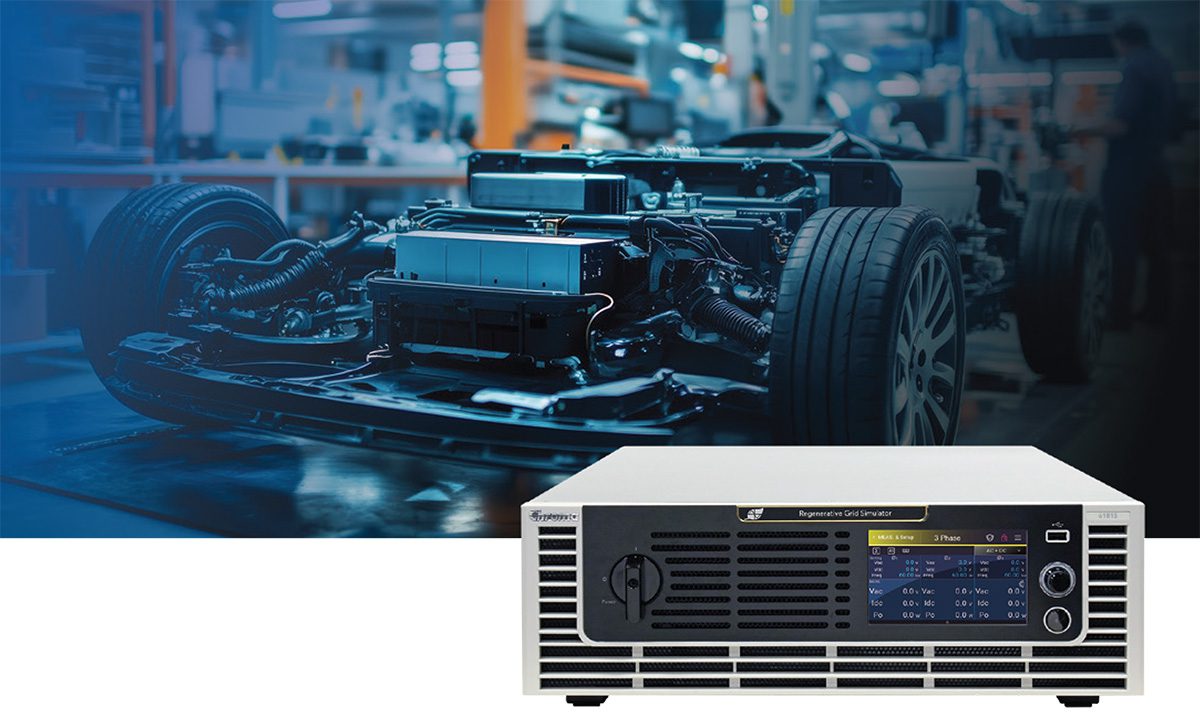
The landscape of electric vehicles (EVs) is rapidly evolving, moving beyond mere transportation to embrace sophisticated energy management roles. At the core of this transformation lies the bidirectional onboard charger (BOBC), a pivotal component that redefines an EV’s utility. Far from being a simple charging unit, the BOBC facilitates a dynamic, two-way energy exchange between the vehicle’s battery and external systems, opening new avenues for energy flexibility and sustainability.
This advanced capability extends electric vehicles into critical roles within the broader energy ecosystem. Among its most impactful features is the Vehicle-to-Load (V2L) functionality, which allows EVs to power a wide array of electrical devices and equipment directly from their high-capacity batteries. However, ensuring the reliable and safe operation of these intricate bidirectional systems, particularly their V2L capabilities, introduces a new set of complex testing challenges that require innovative solutions.
The Rise of Bidirectional Onboard Chargers
Bidirectional onboard chargers are the sophisticated power electronics responsible for managing the flow of electrical energy in and out of an electric vehicle’s battery. Traditionally, onboard chargers convert alternating current (AC) from the grid into direct current (DC) to replenish the EV battery. BOBCs, however, elevate this functionality by enabling the reverse process: converting the DC power stored in the battery back into AC for external use.
This dual functionality empowers electric vehicles with unprecedented versatility. Beyond their primary role in transportation, EVs equipped with BOBCs become valuable assets in energy management. They can contribute to grid stability through Vehicle-to-Grid (V2G) applications, feeding excess energy back to the utility grid during peak demand or charging during off-peak hours. Equally significant is the Vehicle-to-Load (V2L) capability, which positions the EV as a mobile power bank.

Vehicle-to-Load (V2L): A Game-Changer for EVs
Vehicle-to-Load (V2L) technology is rapidly gaining traction for its immediate and tangible benefits, significantly broadening the everyday utility of electric vehicles. This innovative feature allows an EV to directly supply AC power to various external loads, effectively transforming the vehicle into a powerful, portable generator. Whether it is powering household appliances during an outage, running tools at a remote job site, or supplying electricity for outdoor activities like camping, V2L greatly expands the practical use cases of an EV.
The strategic importance of V2L extends beyond convenience, playing a crucial role in advancing energy flexibility and supporting the global low-carbon transition. By enabling EVs to act as distributed energy storage units, V2L technology can integrate seamlessly with renewable energy systems, such as solar panels. In scenarios where renewable generation exceeds immediate consumption, an EV can store surplus energy, and later, through V2L, discharge it to meet local demands, thereby reducing reliance on conventional fossil fuel-based power sources.
The Intricacies of V2L Functionality
The seamless operation of V2L relies on sophisticated power conversion and control mechanisms within the BOBC. When activated, the BOBC converts the high-voltage DC power from the EV battery into standard AC electricity, matching the voltage and frequency requirements of connected appliances or equipment. This process demands precise control over voltage, current, and waveform to ensure stable and safe power delivery to diverse loads.
Moreover, V2L systems must incorporate robust safety features, including overload protection, short-circuit protection, and anti-islanding capabilities. Anti-islanding is particularly critical to prevent the EV from continuing to feed power into a grid segment that has been disconnected from the main utility, safeguarding utility workers during power outages. The complexity of these interactions underscores the necessity for rigorous and comprehensive testing protocols.
Navigating the Complexities of V2L Testing
Thorough testing of V2L functionality in bidirectional onboard chargers is paramount to ensure not only the efficiency and reliability of electric vehicles but also the safety of users and the stability of connected grids. The dynamic and varied nature of potential V2L applications introduces significant challenges for traditional testing methodologies.
One primary challenge involves accurately simulating the diverse range of electrical loads an EV might encounter in real-world scenarios. These loads can vary significantly in terms of power consumption, impedance characteristics, and operational patterns. From simple resistive loads like heaters to complex inductive loads found in motor-driven tools, or capacitive loads present in certain electronic devices, the BOBC must perform optimally under all conditions. Replicating these dynamic changes, including sudden load shifts, power surges, and transient behaviors, requires highly adaptable and precise testing environments.
Furthermore, V2L systems must undergo stringent safety validation. This includes verifying protection mechanisms against overcurrents, overvoltage, undervoltage, and short circuits, alongside ensuring proper thermal management during prolonged operation at various power levels. Compliance with international electrical safety standards and grid codes, such as those related to anti-islanding, adds another layer of complexity to the testing process, demanding meticulous verification under simulated fault conditions.
Traditional fixed-load testing often falls short in replicating these intricate and dynamic conditions, leading to incomplete validation and potential reliability issues in deployed vehicles. The absence of comprehensive testing can result in unexpected failures, compromised safety, or sub-optimal performance, hindering the broader acceptance and integration of EVs as mobile energy solutions. Therefore, an advanced testing approach capable of emulating real-world unpredictability with high fidelity is indispensable.
Programmable AC Load Simulation: The Comprehensive Solution
To overcome the inherent complexities of V2L testing, sophisticated solutions based on programmable AC load capability have emerged as a cornerstone for thorough validation. This advanced testing methodology offers an efficient and comprehensive approach by enabling engineers to precisely emulate a vast spectrum of real-world load conditions that a BOBC might encounter.
A programmable AC load simulator acts as a highly versatile electronic load that can dynamically draw specific amounts of AC power from the EV’s V2L output. Unlike fixed loads, these simulators can be programmed to mimic varying load types—resistive, inductive, and capacitive—and to change these loads dynamically over time. This includes simulating sudden drops or increases in power demand, rapid on/off cycling of appliances, or the complex, non-linear current waveforms drawn by certain electronic devices.
The benefits of employing programmable AC load simulation are substantial. Firstly, it ensures high accuracy and repeatability in testing, allowing manufacturers to consistently validate BOBC performance under identical, precisely controlled conditions. This precision is critical for identifying potential design flaws, optimizing performance parameters, and ensuring compliance with stringent regulatory standards. Secondly, it significantly enhances testing efficiency by automating complex test sequences, reducing manual intervention, and accelerating the development cycle.
Moreover, programmable loads are crucial for validating critical safety functions. Engineers can simulate fault conditions, such as overcurrent events or short circuits, to verify that the BOBC’s protection mechanisms activate correctly and swiftly, preventing damage to the vehicle or connected equipment. They can also test anti-islanding functionality rigorously by simulating grid disconnections, ensuring the V2L output safely shuts down when the main utility power is lost. This level of comprehensive simulation is vital for building trust in the safety and robustness of V2L-enabled electric vehicles.
Ensuring Reliability and Advancing EV Adoption
The integration of advanced testing solutions, particularly programmable AC load simulation, is pivotal for the successful deployment and widespread adoption of bidirectional onboard chargers with V2L capabilities. By providing a robust framework for verifying performance, safety, and reliability across an extensive range of operational scenarios, these testing methodologies instill confidence in both manufacturers and consumers.
Reliable V2L functionality not only enhances the value proposition of electric vehicles but also accelerates their role in transforming our energy infrastructure. As EVs become more deeply integrated into homes and grids, their capacity to serve as flexible, mobile energy storage systems becomes indispensable for balancing renewable energy fluctuations and providing backup power. Investing in state-of-the-art testing ensures that these critical components are ready for the demanding challenges of a sustainable energy future, fostering innovation and driving forward the global transition to electric mobility.
Frequently Asked Questions (FAQ)
What is a Bidirectional Onboard Charger (BOBC)?
A BOBC is an advanced power electronic system in an electric vehicle that enables two-way energy flow. It charges the EV battery from the grid and can convert the battery’s DC power back into AC to supply external loads or return to the grid, supporting functionalities like V2L and V2G.
How does Vehicle-to-Load (V2L) technology work?
V2L technology utilizes the BOBC to convert the EV battery’s DC energy into standard AC electricity. This AC power is then made available through outlets on the vehicle, allowing users to plug in and power various household appliances, tools, or outdoor equipment directly from their electric vehicle.
Why is V2L testing challenging?
V2L testing is challenging because it requires simulating a wide range of real-world electrical loads, which vary dynamically in power, impedance, and behavior. Ensuring safety, validating performance under diverse operating conditions, and complying with complex regulatory standards, such as anti-islanding, adds further layers of complexity.
What is programmable AC load simulation?
Programmable AC load simulation is a sophisticated testing method that uses an electronic load device capable of emulating different types of AC loads (resistive, inductive, capacitive) and dynamically changing them. This allows for precise and repeatable testing of V2L systems under various real-world and fault conditions.
What are the benefits of using programmable AC load simulation for V2L testing?
The primary benefits include high accuracy, repeatability, and efficiency in testing. It enables thorough validation of V2L performance across diverse loads, verification of critical safety features like overload protection and anti-islanding, and significantly accelerates the development and deployment of reliable bidirectional EV charging systems.
How does V2L contribute to the low-carbon transition?
V2L contributes by transforming EVs into mobile energy storage systems. This enhances energy flexibility, allows for better integration of intermittent renewable energy sources (e.g., storing solar power), and provides a cleaner alternative to fossil fuel generators for portable power needs, thereby reducing carbon emissions.
Are there specific safety standards for V2L functionality?
Yes, V2L systems must adhere to rigorous electrical safety standards, which often include provisions for overload protection, short-circuit protection, and critical anti-islanding capabilities. These standards ensure that the EV’s power output is safe for connected devices and does not endanger utility grids or personnel during outages.