
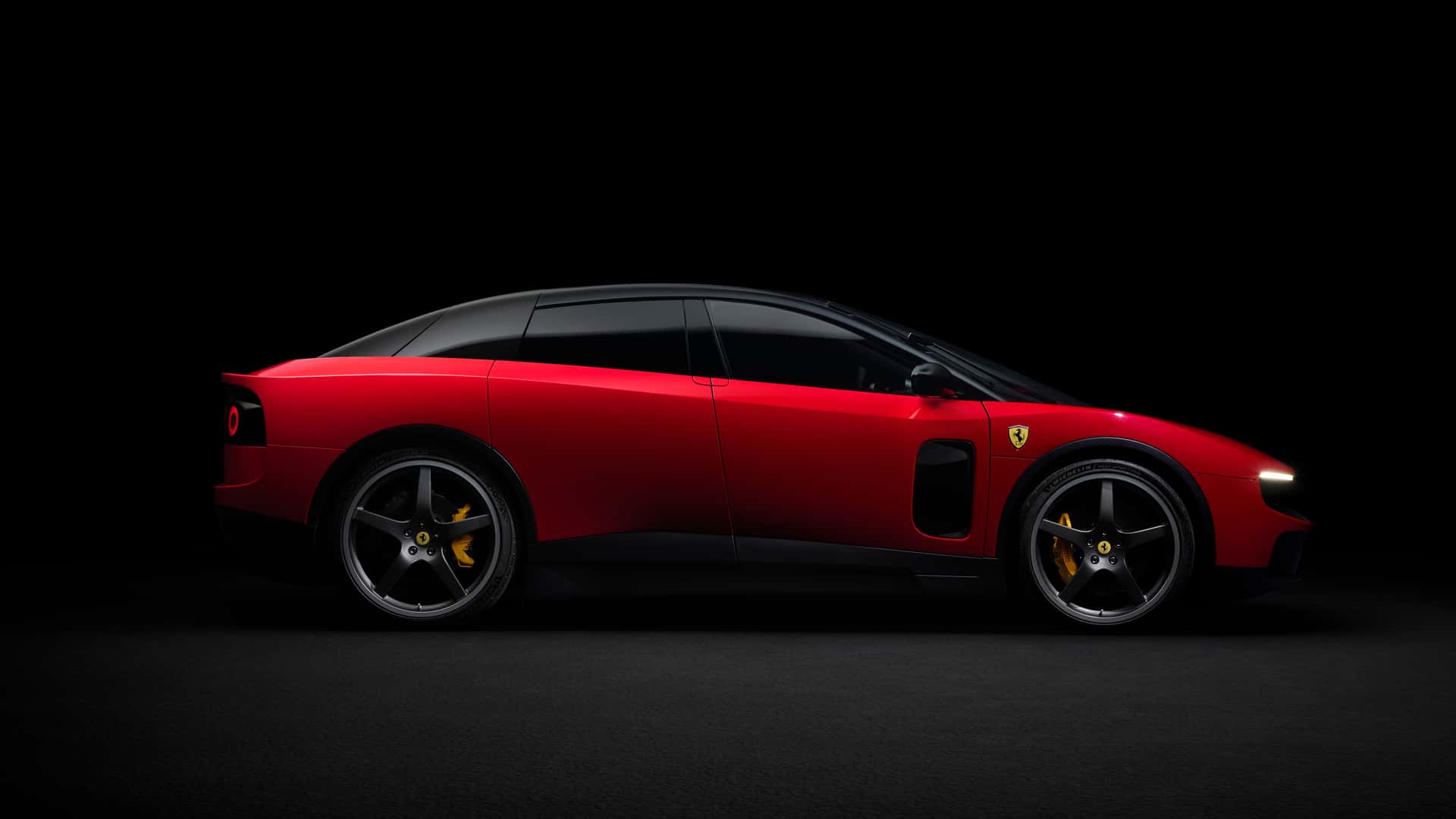
Ferrari Luce Unveiled: A Design Departure Stirs Global Debate
Rarely does a new vehicle from an iconic marque trigger such instant, coordinated rejection across the automotive landscape as the Ferrari Luce. Maranello’s first all-electric vehicle has ignited a fervent discussion, with criticism primarily centered not on its electric powertrain, but on its design. Observers note a stark departure from the low-slung, overtly expressive aesthetic that has long defined the Prancing Horse, prompting many to question its visual identity.
The initial glimpses of the Luce’s interior, characterized by a distinct ‘Jony Ive iPhone feel,’ hinted at a new design philosophy. While this minimalist cabin garnered mixed reactions, an underlying appreciation for its premium technological appeal was evident. However, few anticipated that this restrained, Apple-like approach would extend so profoundly to the exterior, eschewing the expected aggressive lines in favour of a much more subdued form factor.

Ferrari’s decision to embrace this design represents a significant pivot, diverging from a potential electric Purosangue aesthetic that many enthusiasts might have envisioned. The company consciously opted for a design that, for some, borders on anonymity, lacking the immediate visual cues traditionally associated with a Ferrari, particularly when divested of its iconic badges.
The ‘Designed Object’ Aesthetic: Influence of LoveFrom and Jony Ive
A closer examination of the Ferrari Luce reveals a sophisticated, almost understated elegance, particularly from a top-down perspective. From this angle, the vehicle transcends the conventional definition of a Ferrari, morphing into a meticulously ‘designed object’ — an exercise in industrial product design. It evokes the essence of an expensive, high-tech gadget on wheels, a deliberate outcome aligned with its strategic conception.
This aesthetic direction is no accident. Ferrari’s collaboration with Jony Ive and Marc Newson’s design firm, LoveFrom, underscores a clear intention. Ive, renowned for his transformative work at Apple, is synonymous with defining modern premium technology through clean surfaces, minimal ornamentation, and a sense of inherent completeness. Newson, with a career spanning diverse consumer products, further reinforces this product-centric approach to automotive design.

The integration of LoveFrom’s philosophy into the Ferrari Luce’s development signifies a move towards an architecture where form follows a refined, technological function, rather than overt automotive drama. This methodology champions an unostentatious yet sophisticated presence, aiming for a timeless appeal that prioritizes user experience and subtle innovation over flamboyant visual declarations.
Shifting Design Paradigms: Beyond Pininfarina
Ferrari’s design trajectory has experienced periods of division since the brand began to move away from its long-standing reliance on Pininfarina, bringing more design work in-house. While this shift has not inherently resulted in ‘poorly designed’ cars, it has led to modern Ferraris often being perceived as less overtly romantic or passionate than the classic models that continue to serve as the mental template for the brand.
Models such as the F80, 849 Testarossa, or the SC40 have each had their share of admirers and detractors, demonstrating a varied reception for Maranello’s recent creations. However, the reaction to the Ferrari Luce appears to be markedly different. The widespread, almost unilateral criticism, with a noticeable scarcity of proponents, suggests a unique level of discord that warrants deeper analysis beyond a simple design failure.
This collective outcry, coupled with Ferrari’s acute awareness of its brand power, makes it improbable that the Luce’s distinct appearance is an accidental misstep. It strongly suggests that extensive market research and positive feedback from a specific segment of prospective buyers likely informed and validated this bold design direction. The company may have anticipated a degree of controversy, but the sheer volume of negative public sentiment might have surpassed initial expectations.
Targeting a Niche: Who is the Ferrari Luce For?
The intense online criticism surrounding the Ferrari Luce often originates from individuals who, despite their passion for the brand, are not its primary target demographic. Ferrari, it appears, did not design this electric offering for the traditional enthusiast seeking a direct electric equivalent of their beloved V12 or V8 supercar. Instead, the Luce is strategically positioned for a very specific, ultra-affluent clientele.
This segment likely consists of individuals who already possess a collection of luxury vehicles, including several combustion-engine Ferraris. For these discerning buyers, the Luce fulfills a previously unmet need: a quiet, eminently usable, and technologically advanced five-seater family car that, crucially, carries the revered Ferrari badge. It is not intended to replace a 296, an 812, or even a Purosangue in their garage, but rather to complement it as a distinct, understated yet powerful proposition.
The design, with its minimalist and monolithic presence, might resonate with buyers who value discretion and cutting-edge technology over flamboyant displays of speed and heritage in their everyday luxury vehicle. This approach allows Ferrari to cater to a burgeoning market for luxury EVs that prioritizes comfort, utility, and advanced features without compromising brand exclusivity.
Proportions and Market Expectations: A Point of Contention
While the minimalist aesthetic of the Ferrari Luce finds its proponents, a significant portion of the online backlash stems from its perceived proportions. Many critics argue that the vehicle lacks the commanding presence typically associated with a performance or luxury car, suggesting it would benefit from a more extended front section or a longer hood, regardless of the powertrain beneath.
The comparison has even been drawn to vehicles with more conventional, utilitarian proportions, underscoring a perceived departure from established luxury automotive design norms. In contrast, competitors like Mercedes-AMG, despite offering electric performance models with controversial front or rear styling, have generally maintained proportions that unequivocally convey a performance orientation.
Jaguar’s Type 00 Concept serves as another interesting benchmark. This all-electric concept, also from a manufacturer steeped in tradition, initially received a mixed reception. However, its classic luxury-car proportions, featuring a distinctively long nose, are believed to be a key factor in its growing acceptance among enthusiasts as initial skepticism wanes. This highlights the enduring significance of traditional automotive proportions, even in the era of electrification.
Investor Reaction and the Challenge of Electrification
The market’s reaction to the Ferrari Luce extended beyond online forums, significantly impacting investor confidence. Reuters reported that Ferrari’s Milan-listed shares experienced an 8.4% decline following the Luce’s reveal. Concurrently, its New York-listed shares also dropped by 5.1%, indicating widespread concern among investors.
This immediate financial setback compounded pressure already built after a negative investor response to Ferrari’s 2030 strategic plan, which saw shares tumble 31% the previous October. Investors expressed disappointment over what they perceived as conservative growth targets and a slower-than-anticipated rollout of electric vehicles. This scenario underscores a critical challenge for luxury automakers: successfully integrating electrification while carefully preserving the unique pillars of scarcity, brand identity, heritage, and premium pricing.
For Ferrari, the imperative to develop an EV like the Luce is driven by both regulatory emissions requirements and the need to diversify its product portfolio without diluting its core appeal. The balance involves offering cutting-edge electric models while continuing to produce revered V-12 sports cars. For the Luce to make a meaningful impact, its sales performance is crucial, and the current perception regarding its price point, even by Ferrari standards, suggests a complex journey ahead for this innovative offering.
A Strategic Sidestep: Redefining Ferrari’s Electric Future
The Ferrari Luce may not embody the electric supercar that many enthusiasts clamoured for, but this very divergence might be its core strategic intent. Crafting a direct electric analogue to its legendary supercars would have presented Ferrari with an immediate and challenging comparison against its celebrated combustion models, as well as against other established electric hypercars. If Ferrari’s leadership believes the underlying technology is not yet fully mature for such a head-on confrontation, then pursuing an alternative direction becomes a logical and astute maneuver.
By choosing to build ‘something else entirely,’ Ferrari effectively sidesteps this immediate battle for supremacy in the electric supercar arena. While the design is not immune to criticism—its anonymity, clinical precision, and perceived detachment from Ferrari’s hallmark visual drama are valid points—it is crucial to evaluate the Luce within its intended context. Judging it as a conventional, albeit ‘failed,’ supercar risks entirely missing its strategic purpose as a sophisticated, understated, and family-oriented luxury electric vehicle designed for a distinct segment of the global market.