
Key Takeaways
- Graphite One has secured a prime site in Conneaut, Ohio, for its Active Anode Materials facility, set to commence operations in Q4 2027.
- The facility aims for an initial Phase One production of 10,000 tonnes per year of specialized anode materials for lithium-ion EV and grid storage batteries, with a Phase Two expansion targeting 25,000 tonnes per year of graphitization capacity by Q3 2028.
- The project is a cornerstone of Graphite One’s vertically integrated strategy, linking Alaska’s Graphite Creek deposit – the largest in the U.S. – to Ohio processing, addressing the nation’s 100% import dependence on natural graphite.
- Commercial-grade anode material samples have been delivered to major EV manufacturers and battery companies, signaling strong market interest and ongoing product validation.
- This initiative is crucial for establishing a resilient, domestic supply chain for critical battery minerals, bolstering U.S. economic security and clean energy independence.
Graphite One Secures Ohio Site for Critical Battery Anode Production
Graphite One Inc., a prominent player in the critical minerals sector, has announced a significant milestone in its ambitious plan to establish a domestic supply chain for lithium-ion battery anode materials. The company has officially secured a strategic site in Conneaut, Ohio, designated for its Active Anode Materials facility. This move marks a pivotal step towards bolstering the United States’ capabilities in electric vehicle (EV) battery manufacturing and grid storage solutions.
The selection of Conneaut is underpinned by its exceptional logistical advantages. The site boasts direct access to Lake Erie and the broader Great Lakes shipping corridor, offering efficient and cost-effective transportation routes. Furthermore, it benefits from multi-line CN rail connectivity and features an existing on-site substation, which provides reliable power infrastructure essential for large-scale industrial operations. These integrated infrastructure assets are critical for the efficient and sustainable operation of the planned Graphite One battery anode facility.

Phased Production Targets for Advanced Anode Materials
Graphite One’s development timeline outlines an aggressive schedule, with the completion of construction for the Ohio facility projected for the fourth quarter of 2027. This timeline underscores the urgency and strategic importance of localizing anode material production in North America.
The initial operational phase, termed Phase One, is designed to achieve an annual production capacity of 10,000 tonnes of active anode materials. This output will be strategically diversified to meet various high-performance battery requirements. The plan allocates 4,000 tonnes per year for energy storage material, 3,000 tonnes per year for fast-charging material, and another 3,000 tonnes per year for high-energy-density material. These specialized materials are indispensable components for advanced lithium-ion battery applications, catering to both the burgeoning electric vehicle market and vital grid storage systems.
Looking ahead, Graphite One has already laid out plans for a substantial Phase Two expansion. This subsequent stage, slated for the third quarter of 2028, aims to significantly scale up the facility’s capabilities by targeting 25,000 tonnes per year of graphitization capacity. Graphitization is a crucial high-temperature thermal treatment process that converts graphite into the highly crystalline form required for high-performance battery anodes, further enhancing the project’s self-sufficiency and technological sophistication.

Advancing Commercial Engagements and Market Validation
The company has actively engaged with key industry players, a testament to the commercial viability and advanced stage of its product development. Graphite One confirms it has successfully delivered commercial-grade anode material samples, in quantities reaching up to 20 kilograms, to three major electric vehicle manufacturers and three leading battery companies. This proactive approach to sample distribution is vital for industry acceptance and integration.
These recipients are currently undertaking rigorous specification testing of the provided samples. This testing phase is critical as it validates the material’s performance against stringent industry standards for factors such as energy density, cycle life, charge rates, and safety. Positive outcomes from these tests are essential for securing future supply agreements and demonstrating the quality and reliability of Graphite One’s anode materials.
In parallel with product validation, Graphite One has initiated binding offtake discussions with participants from this group of EV manufacturers and battery companies. While no definitive agreements have been formally signed yet, the existence of binding discussions signifies a high level of mutual interest and a strong potential for long-term supply partnerships. Such commitments are crucial for derisking large-scale projects and ensuring market demand for the produced materials from the Graphite One battery anode facility.
Addressing US Graphite Import Dependence: A Vertically Integrated Solution
A critical driver behind Graphite One’s strategic initiatives is the stark reality of the United States’ complete reliance on imported natural graphite. The U.S. is currently 100% import-dependent for this essential mineral, making the nation vulnerable to supply chain disruptions and geopolitical influences. Natural graphite is classified as a critical mineral due to its indispensable role in lithium-ion battery anodes, where it typically constitutes a significant portion of the cell’s active material.
Graphite One’s innovative solution to this national security and economic challenge is its unique vertically integrated model. This comprehensive approach seamlessly connects the upstream mining operations with downstream processing capabilities. At the core of this model is the Graphite Creek deposit located in Alaska, which has been identified by the U.S. Geological Survey (USGS) as the largest natural graphite deposit in the United States. This vast domestic resource provides a secure and ethical source of raw material.
The logistics of this integrated system involve transporting the graphite concentrate from the Graphite Creek deposit via the Port of Nome in Alaska. From there, it will be shipped to the newly secured processing facilities in Ohio. This end-to-end domestic supply chain not only mitigates reliance on foreign sources but also significantly reduces the environmental footprint associated with global shipping and multiple processing stages often found in current supply routes. The integration ensures control over quality, ethical sourcing, and environmental standards throughout the entire value chain.
The Broader Impact on Domestic EV Supply Chain and National Security
The establishment of the Graphite One battery anode facility in Ohio represents more than just a corporate expansion; it is a strategic national endeavor. This project directly contributes to the broader goal of building a robust and resilient domestic supply chain for electric vehicle batteries in the United States. By localizing the production of critical anode materials, the U.S. can reduce its dependence on foreign adversaries and enhance its economic security.
Furthermore, this initiative is expected to generate significant economic benefits, including the creation of numerous high-skilled jobs in both Ohio and Alaska. It aligns with government efforts to reshore manufacturing and strengthen American industrial capabilities. The secure, domestic sourcing of graphite also supports the nation’s clean energy transition goals, ensuring that the growth of the EV sector is not hampered by vulnerabilities in the critical minerals supply.
The Indispensable Role of Anode Materials in EV Batteries
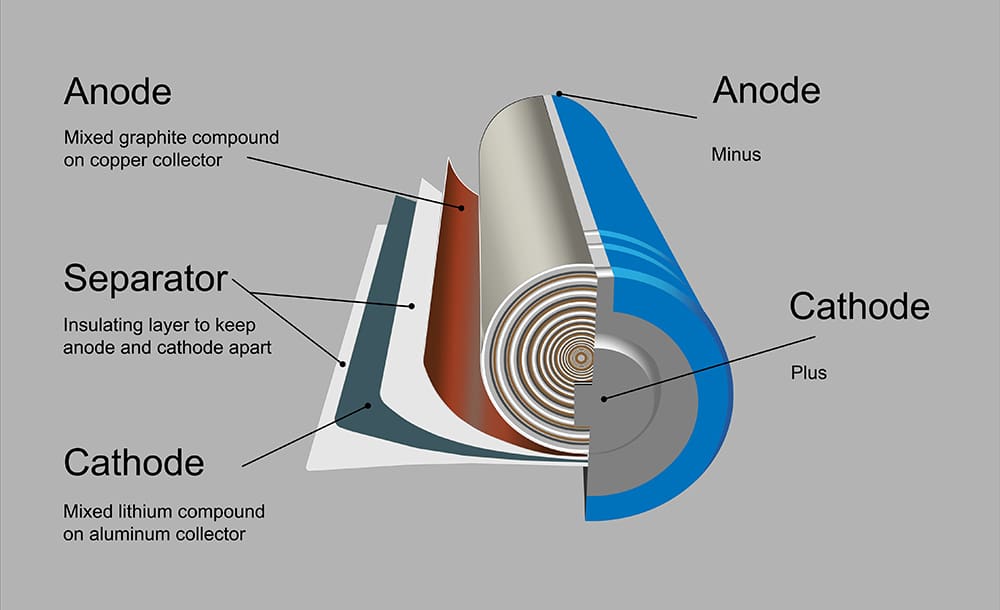
Anode materials are foundational components of lithium-ion batteries, which power the vast majority of electric vehicles and grid storage systems. The anode acts as the host material that stores lithium ions when the battery is charged and releases them during discharge. Graphite is predominantly used for anodes due to its excellent electrochemical properties, including high conductivity, stability, and abundant intercalation sites for lithium ions.
The quality and specific characteristics of the anode material directly impact a battery’s performance metrics, such as its energy density (determining vehicle range), power density (affecting acceleration and fast-charging capabilities), cycle life (the number of charge-discharge cycles before degradation), and overall safety. Graphite One’s focus on diverse anode material types—energy storage, fast-charging, and high-energy-density—underscores the need to tailor materials for optimal performance across different applications in the rapidly evolving EV and energy storage markets.
FAQ Section
What is the primary purpose of Graphite One’s new Ohio facility?
The facility aims to produce active anode materials for lithium-ion batteries, crucial components for electric vehicles and grid energy storage. It’s a key part of Graphite One’s strategy to establish a domestic, vertically integrated supply chain for critical graphite minerals, reducing US reliance on imports.
What are the key logistical advantages of the Conneaut, Ohio site?
The Conneaut site offers direct access to Lake Erie and the Great Lakes shipping corridor, multi-line CN rail connectivity, and an existing on-site substation. These features ensure efficient transportation of raw materials and finished products, as well as reliable power supply for operations.
When is Phase One production expected to begin, and what will be its capacity?
Phase One construction is projected for completion in Q4 2027. It will have an initial annual production capacity of 10,000 tonnes of active anode materials, including specialized variants for energy storage, fast-charging, and high-energy-density applications.
How does Graphite One address the US’s reliance on imported graphite?
Graphite One’s vertically integrated model links the Graphite Creek deposit in Alaska, identified as the largest in the US, to its Ohio processing facilities via the Port of Nome. This domestic sourcing and processing strategy aims to eliminate the US’s 100% import dependence on natural graphite.
Has Graphite One engaged with potential customers for its anode materials?
Yes, Graphite One has delivered commercial-grade anode material samples to three major EV manufacturers and three battery companies. These companies are currently conducting specification testing, and binding offtake discussions are underway, indicating strong market interest.
What is the significance of the planned Phase Two expansion?
The Phase Two expansion, targeting Q3 2028, will increase graphitization capacity to 25,000 tonnes per year. This significant scale-up demonstrates Graphite One’s long-term vision to meet growing demand and further enhance its self-sufficiency in high-performance anode material production.