
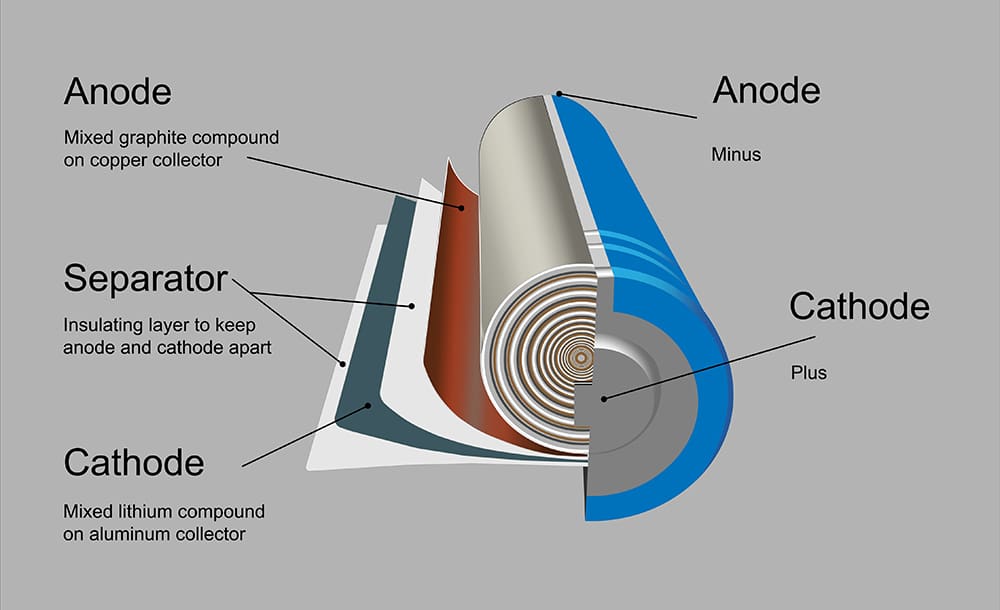
Key Takeaways:
- Graphite One has secured a pivotal site in Conneaut, Ohio, for its Active Anode Materials facility, enhancing domestic US battery anode production.
- The facility, targeted for Q4 2027 completion, will initiate Phase One production at 10,000 tonnes per year for diverse lithium-ion battery applications.
- Strategically located, the Ohio site offers critical logistical advantages, including direct access to Lake Erie and multi-line CN rail connectivity.
- This project is integral to mitigating the US’s 100% import dependency on natural graphite by establishing a vertically integrated domestic supply chain.
- Graphite One is actively engaged in binding offtake discussions with major EV manufacturers and battery companies, following successful sample testing.
- A Phase Two expansion, planned for Q3 2028, aims to scale graphitization capacity significantly to 25,000 tonnes per year.
Graphite One Inc. has announced the securing of a strategic site in Conneaut, Ohio, marking a significant step forward for the development of its Active Anode Materials facility. This crucial development underscores a broader national effort to bolster domestic US battery anode production, a vital component for electric vehicle (EV) batteries and grid-scale energy storage solutions.

The selection of Conneaut, Ohio, is a calculated move, leveraging its prime logistical advantages to establish a robust and efficient processing hub. The site boasts direct access to Lake Erie and the expansive Great Lakes shipping corridor, facilitating streamlined raw material and finished product transport.
Complementing its maritime access, the location benefits from multi-line CN rail connectivity, offering extensive rail logistics capabilities. Furthermore, the presence of an existing on-site substation ensures a ready and reliable power supply, minimizing infrastructure development timelines and costs for the complex manufacturing process required for US battery anode production.
Strategic Development Milestones and Production Targets
The company has outlined an ambitious timeline for the facility’s construction and operational launch. Graphite One aims to complete construction of the initial phase by the fourth quarter of 2027, setting the stage for domestic processing capabilities.
Following construction, Phase One production is planned to commence at an impressive annual capacity of 10,000 tonnes of active anode materials. This output will be strategically diversified to meet various demands within the rapidly expanding lithium-ion battery market.
Specifically, this initial phase will allocate 4,000 tonnes per year to energy storage material, catering to large-scale grid applications crucial for renewable energy integration. An additional 3,000 tonnes per year will focus on fast-charging material, designed to meet the growing consumer demand for quicker charging times in modern electric vehicles.
The remaining 3,000 tonnes per year will be dedicated to high-energy-density material, essential for maximizing the range and performance of electric vehicles and other advanced battery systems. These varied outputs highlight Graphite One’s commitment to comprehensive US battery anode production.
Future Expansion and Capacity Growth
Looking beyond its initial launch, Graphite One has already planned for a substantial Phase Two expansion. This subsequent stage is projected to reach a graphitization capacity of 25,000 tonnes per year, a significant increase that will further solidify the nation’s capabilities in advanced materials processing.
The second phase is targeted for completion and operational readiness by the third quarter of 2028. This phased approach allows the company to scale its operations efficiently, respond to market demands, and continuously enhance its contribution to the critical domestic US battery anode production supply chain.
Market Engagement and Commercial Traction
Before committing to full-scale production, Graphite One has actively engaged with prospective clients to validate its product quality and market readiness. The company reports having delivered commercial-grade anode material samples, in quantities of up to 20 kilograms, to three major electric vehicle manufacturers.
Concurrently, samples have also been provided to three prominent battery companies, all of whom are currently undertaking rigorous specification testing of the material. This extensive testing phase is critical for ensuring the anode materials meet stringent performance, safety, and reliability standards required for demanding EV and energy storage applications.
Encouragingly, Graphite One has confirmed that it has entered into binding offtake discussions with participants from this group of testing partners. While no definitive agreements have yet been signed, these discussions signal strong market interest and potential future commercial partnerships, paving the way for substantial sales once the Ohio facility is operational for US battery anode production.
Addressing US Import Dependency for Critical Minerals
A cornerstone of Graphite One’s strategic importance lies in its direct response to a critical national vulnerability: the United States’ 100% import dependency for natural graphite. This reliance on foreign sources for a fundamental component of lithium-ion batteries poses significant economic and national security risks.
Natural graphite is categorized as a critical mineral by the U.S. government, indispensable for manufacturing EV batteries, consumer electronics, and renewable energy storage systems. Establishing a secure, domestic supply chain for this vital material is paramount for the nation’s energy independence and technological leadership, directly bolstering US battery anode production.
A Vertically Integrated Domestic Supply Chain
Graphite One’s business model is designed as a fully vertically integrated operation, aiming to create a robust “mine-to-market” domestic supply chain. This integrated approach connects the company’s vast Graphite Creek deposit in Alaska directly to its advanced processing facilities in Ohio.
The Graphite Creek deposit, notably identified by the U.S. Geological Survey (USGS) as the largest graphite deposit in the United States, represents a foundational strategic resource. Raw graphite material from Alaska will be transported efficiently via the Port of Nome, establishing a secure and entirely domestic logistical pathway to the Ohio processing plant.
This comprehensive strategy not only addresses the nation’s import dependency but also fosters significant economic growth and job creation within the United States. By linking Alaskan natural resources with Ohio’s industrial processing capabilities, Graphite One is positioned to play a pivotal role in strengthening US battery anode production and the broader clean energy economy.
Source: Graphite One
Frequently Asked Questions (FAQ)
What is the primary purpose of Graphite One’s new Ohio facility?
The Ohio facility is designed to become a crucial hub for active anode materials production for lithium-ion batteries. It aims to establish a robust domestic supply chain, reducing the U.S.’s reliance on imported graphite for critical energy storage and electric vehicle applications.
Where is Graphite One’s natural graphite source located?
Graphite One’s primary source of natural graphite is the Graphite Creek deposit in Alaska. This deposit has been identified by the U.S. Geological Survey as the largest graphite resource in the United States, providing a substantial domestic raw material supply.
What are the planned production capacities for the Ohio facility?
Phase One production, expected by Q4 2027, will yield 10,000 tonnes per year of active anode materials, split across energy storage, fast-charging, and high-energy-density applications. A Phase Two expansion, slated for Q3 2028, targets a significant increase to 25,000 tonnes per year of graphitization capacity.
How will the Ohio facility contribute to the US economy and supply chain?
By establishing a vertically integrated domestic supply chain—from mining in Alaska to processing in Ohio—the facility will reduce import dependency for natural graphite, create American jobs, and strengthen national security for critical minerals. It significantly boosts US battery anode production capabilities.
Has Graphite One secured any commercial agreements for its anode materials?
Graphite One has delivered commercial-grade anode material samples to three major EV manufacturers and three battery companies for testing. While binding offtake discussions are underway with some of these partners, formal agreements have not yet been signed, indicating strong interest but ongoing negotiations.
What logistical advantages does the Conneaut, Ohio site offer?
The Conneaut site provides strategic logistical benefits, including direct access to Lake Erie and the Great Lakes shipping corridor, enabling efficient waterborne transport. It also features multi-line CN rail connectivity for comprehensive rail logistics and an existing on-site substation for reliable power supply.