
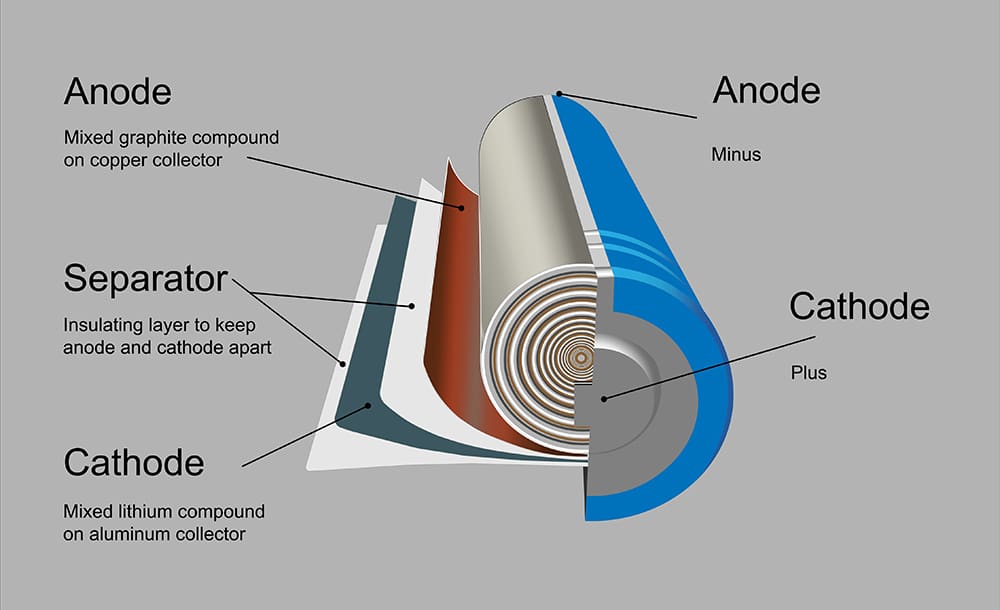
Key Takeaways:
- Graphite One has secured a pivotal site in Conneaut, Ohio, for its new active battery anode materials facility.
- The facility, leveraging strategic Great Lakes access and robust rail infrastructure, aims to commence Phase One production of 10,000 tonnes per year by late 2027.
- This significant development is designed to address the United States’ complete import dependency for natural graphite, utilizing the nation’s largest known graphite deposit in Alaska.
- A Phase Two expansion is planned to boost graphitization capacity to 25,000 tonnes per year by Q3 2028.
- Graphite One is currently engaged in binding offtake discussions with major electric vehicle and battery manufacturers, following successful sample deliveries and specification testing.
Graphite One Forges Ahead with Ohio Battery Anode Production Hub
Graphite One Inc., a leading American graphite exploration and development company, has announced the successful securing of a strategic site in Conneaut, Ohio, for its planned Active Anode Materials facility. This critical infrastructure project is poised to significantly bolster the domestic supply chain for lithium-ion battery components, vital for the burgeoning electric vehicle (EV) and grid storage sectors.

The selection of Conneaut, Ohio, underscores a deliberate strategy to capitalize on unparalleled logistical advantages. The site offers direct access to Lake Erie and the broader Great Lakes shipping corridor, providing a cost-effective and environmentally efficient means of transport for raw materials and finished products. Furthermore, the facility benefits from multi-line CN rail connectivity, ensuring robust overland transportation options. An existing on-site substation also streamlines power access, crucial for energy-intensive industrial operations.
Phased Production Rollout and Capacity Expansion
The company projects an ambitious timeline, with construction of the initial phase targeted for completion by the fourth quarter of 2027. This first phase of production is slated to achieve an annual capacity of 10,000 tonnes of active anode material.
This output will be strategically diversified to meet varied market demands within the lithium-ion battery landscape. Specifically, Phase One production will be allocated as follows: 4,000 tonnes per year dedicated to energy storage materials, 3,000 tonnes for fast-charging materials, and an additional 3,000 tonnes for high-energy-density materials. All these outputs are essential for advanced lithium-ion battery applications, driving innovation in electric vehicles and large-scale grid storage solutions.
Looking beyond the initial rollout, Graphite One has outlined plans for a substantial Phase Two expansion. This subsequent phase, targeting completion by the third quarter of 2028, aims to escalate the facility’s graphitization capacity to an impressive 25,000 tonnes per year. This planned expansion signals Graphite One’s long-term commitment to becoming a dominant player in the domestic battery anode materials market, meeting the rapidly growing demand for these critical components.
Key Industry Engagements and Offtake Discussions
In a testament to the quality and potential of its products, Graphite One has already delivered commercial-grade anode material samples to several key industry players. These samples, provided in quantities of up to 20 kilograms, have been supplied to three major electric vehicle manufacturers and three prominent battery companies. These entities are currently conducting rigorous specification testing, evaluating the performance and suitability of Graphite One’s materials for their respective applications.
Building on these positive engagements, Graphite One has progressed to binding offtake discussions with participants from this esteemed group. While the company confirms that no definitive agreements have been signed at this juncture, the initiation of such advanced negotiations highlights significant commercial interest and the potential for future partnerships that would solidify the market position of its active battery anode materials.
Addressing US Graphite Import Dependency
The establishment of this Ohio facility holds profound national significance, directly confronting a critical vulnerability in the United States’ industrial supply chain. Currently, the US is 100% import-dependent for natural graphite, a situation that poses economic and national security risks given the material’s indispensable role in modern technologies, particularly electric vehicle batteries.
Graphite One’s vertically integrated business model offers a robust solution to this dependency. The company’s strategy links the vast Graphite Creek deposit in Alaska, identified by the United States Geological Survey (USGS) as the largest graphite deposit in the country, with sophisticated processing facilities in Ohio. This integrated approach ensures a secure, domestic supply chain from mine to finished product, minimizing reliance on foreign sources.
Integrated Supply Chain: Alaska to Ohio
The ambitious plan envisions raw graphite ore being extracted from the Graphite Creek deposit in Alaska, a crucial national asset. From there, the material will be transported via the Port of Nome, leveraging existing infrastructure to ensure efficient logistics. This raw material will then journey to the Conneaut, Ohio, facility for advanced processing into active battery anode materials.
This ‘mine-to-market’ approach, entirely within US borders, is designed not only to secure a domestic supply of high-grade graphite but also to create numerous jobs and foster economic development in both Alaska and Ohio. The strategic partnership between these two geographically diverse regions exemplifies a concerted effort to build a resilient and self-sufficient supply chain for critical minerals.
Future Outlook for US EV Battery Supply Chain
The development by Graphite One represents a crucial step towards establishing a comprehensive and secure domestic supply chain for active battery anode materials. As global demand for electric vehicles continues to accelerate, the need for reliable, ethically sourced, and domestically processed battery components becomes paramount.
By bringing significant graphite processing capacity online, Graphite One is positioned to play a pivotal role in the future of American manufacturing, energy independence, and environmental sustainability. The Conneaut facility will not only produce essential materials for lithium-ion batteries but also contribute to the broader ecosystem of advanced manufacturing and technological innovation within the United States.
Frequently Asked Questions (FAQ)
What is Graphite One’s new Ohio facility?
Graphite One is establishing an Active Anode Materials facility in Conneaut, Ohio, designed to process natural graphite into advanced materials crucial for lithium-ion batteries used in electric vehicles and grid storage.
Where is the facility located and why is it strategic?
The facility is located in Conneaut, Ohio, strategically chosen for its direct access to Lake Erie and the Great Lakes shipping corridor, multi-line CN rail connectivity, and an existing on-site substation, all of which provide significant logistical and operational advantages.
What will the Ohio facility produce?
The facility will produce commercial-grade active anode materials, specifically categorised into energy storage material, fast-charging material, and high-energy-density material, all tailored for lithium-ion battery applications.
What is the timeline for production at the facility?
Phase One construction is expected to conclude in Q4 2027, with initial production of 10,000 tonnes per year. A Phase Two expansion, targeting 25,000 tonnes per year graphitization capacity, is planned for Q3 2028.
How will this facility impact the US graphite supply chain?
This facility is critical for reducing the US’s 100% import dependency for natural graphite, establishing a secure domestic supply chain that links the Graphite Creek deposit in Alaska to US processing capabilities.
What is the significance of the Graphite Creek deposit?
The Graphite Creek deposit in Alaska has been identified by the USGS as the largest graphite deposit in the United States, providing a foundational domestic source for Graphite One’s vertically integrated supply model.
Has Graphite One secured customers for its materials?
Graphite One has delivered commercial-grade anode material samples to three major EV manufacturers and three battery companies for testing, and is currently engaged in binding offtake discussions with some of these parties.
What are active anode materials used for?
Active anode materials are a critical component of lithium-ion batteries, which power electric vehicles, provide energy storage for grid applications, and are essential for various other high-tech industries requiring advanced battery solutions.