
Key Takeaways
- Scania has successfully demonstrated Vehicle-to-Grid (V2G) technology for heavy commercial electric vehicles using the Megawatt Charging System (MCS).
- This bidirectional charging allows electric truck fleets to support the power grid by offering flexibility services like peak shaving, grid balancing, and energy storage.
- The system facilitates real-time communication between the truck, charger, and energy management systems, enabling dynamic control over charging and discharging processes.
- Initial applications are expected to be most beneficial in depot charging environments, optimizing energy use and integrating local renewable sources.
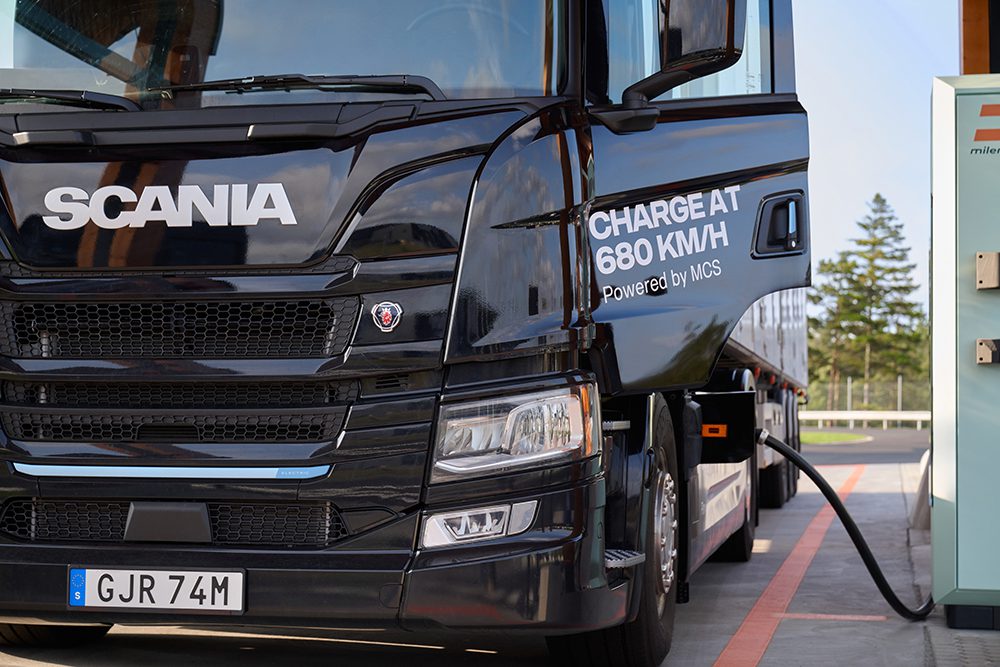
- The demonstration showcased charging rates up to 750 kW (1,000 A), highlighting the immense potential for heavy electric vehicles to become active assets in the energy system.
In a significant advancement for sustainable transportation and energy management, truck manufacturing giant Scania has successfully demonstrated a cutting-edge Vehicle-to-Grid (V2G) implementation for its heavy commercial electric vehicles. The groundbreaking initiative leverages the high-power capabilities of the Megawatt Charging System (MCS), signaling a transformative shift in how electric truck fleets interact with the broader energy infrastructure.
This development positions electric trucks not merely as consumers of electricity but as active participants capable of providing crucial support to the power grid. The bidirectional charging capability, at the heart of this innovation, opens new avenues for energy flexibility, promising benefits for both fleet operators and national grids.
Revolutionizing Grid Support with Bidirectional Charging
Bidirectional charging, often referred to as V2G technology, allows electric vehicles to not only draw power from the grid but also to feed electricity back into it. This capability is poised to be a game-changer for grid stability and efficiency, particularly with the increasing penetration of intermittent renewable energy sources.
Electric truck fleets, with their substantial battery capacities, can now function as mobile energy storage units. During periods of high demand, these vehicles can discharge stored energy back into the grid, effectively reducing strain and preventing blackouts. Conversely, they can absorb excess renewable energy when production outpaces demand, storing it for later use.
Enhancing Grid Resilience Through Flexibility Services
The flexibility services offered by Scania’s V2G implementation are diverse and impactful. One key benefit is peak shaving, where fleets can discharge power during peak electricity demand hours, thereby flattening the demand curve and alleviating pressure on power generation infrastructure. This can lead to reduced operational costs for utilities and more stable energy prices for consumers.
Grid balancing is another critical application. As renewable energy sources like solar and wind inherently fluctuate, maintaining a stable grid frequency and voltage becomes challenging. Electric truck fleets, through V2G, can provide rapid response services, adjusting their charging or discharging rates in real time to stabilize the grid, ensuring a consistent and reliable power supply.
Furthermore, these heavy electric vehicles can serve as formidable energy storage solutions. Their combined battery capacity within a fleet could rival that of stationary grid-scale batteries, offering a decentralized and flexible approach to energy storage that can be deployed precisely where and when needed.
Megawatt Charging System: The Backbone of High-Power V2G
The successful demonstration hinges on the Megawatt Charging System (MCS), an emerging standard designed to deliver significantly higher power levels than existing charging solutions. MCS is specifically tailored for heavy-duty electric vehicles, which require massive amounts of energy to quickly recharge their large battery packs and maintain operational uptime.
In the Scania demonstration, heavy commercial vehicles were charged at impressive rates of up to 750 kW (1,000 A). This high-power capability is not just crucial for rapid charging but also for enabling substantial energy transfer back to the grid during V2G operations, ensuring that trucks can provide meaningful support to the power infrastructure.
The integration of MCS with V2G technology marks a pivotal moment, as it enables the bidirectional flow of energy at a scale previously unimaginable for individual vehicles. This robust power transfer mechanism is essential for unlocking the full potential of electric truck fleets as active components of the energy ecosystem.
Intelligent Energy Management and Real-Time Communication
A core component of Scania’s V2G system is its sophisticated energy management capability, underpinned by secure real-time communication. This system allows for seamless interaction between the electric truck, the charging infrastructure, and the overarching energy management platforms.
The dynamic control enabled by this communication ensures that charging and discharging operations are precisely coordinated. Decisions are made based on a confluence of factors, including the truck’s operational schedule, its transport needs, the available energy within the grid, and current grid conditions. This intelligent orchestration maximizes efficiency and grid benefit without compromising fleet readiness.
Tobias Ejderhamn, Global Manager of Transformation & New Business at Scania, articulated the broader vision: “Electric trucks will not only consume electricity, they can also become an active resource in the energy system.” He further added, “This shift transforms the fleet operator’s role from solely providing transport services to also offering energy flexibility.”
Yorben Muller, Product Manager of Charging at Scania’s parent company TRATON, underscored the technological synergy: “What makes this significant is not only the bidirectional energy flow itself, but the ability to combine megawatt charging with intelligent energy management.” He elaborated, “The truck, charger and energy system can communicate with each other in real time, creating the foundation for heavy electric vehicles to become active and controllable assets in the energy system.”
Optimizing Depot Operations and Renewable Energy Integration
While the long-term potential of V2G is expansive, the initial and most immediate applications are anticipated within depot charging environments. In these controlled settings, heavy electric vehicles are typically parked for extended periods, providing ample opportunity for their batteries to participate in bidirectional energy transfer.
Depot charging operations are ideal for coordinating charging and discharging activities with energy demand patterns and fluctuating grid conditions. This allows fleet managers to optimize their energy usage, potentially reducing electricity costs by charging during off-peak hours and discharging during peak rates, or by leveraging electricity price arbitrage opportunities.
Moreover, bidirectional power transfer within depots significantly enhances the utilization of local renewable energy generation, such as solar power installations. Excess solar energy generated during the day can be stored in truck batteries and then either used by other vehicles in the depot during the evening or fed back into the grid, maximizing the value of renewable assets and promoting energy self-sufficiency.
This integration also allows for more flexible grid connections and advanced energy management strategies within a fleet’s operational footprint. It mitigates the need for massive grid upgrades to support large-scale electric truck charging, as the vehicles themselves become part of the solution for grid stability and resilience.
The Future Role of Electric Fleets in the Energy System
Scania’s successful demonstration of V2G via the Megawatt Charging System is more than just a technological feat; it represents a paradigm shift in the role of heavy electric vehicles. As the global transition to electric mobility accelerates, the ability of these vehicles to support, rather than simply consume from, the energy grid will become increasingly vital.
This innovation lays the groundwork for a future where electric truck fleets are integral to national energy strategies, offering a scalable and distributed network of energy resources. Their capacity for flexibility, rapid response, and intelligent management positions them as key players in building a more robust, sustainable, and decentralized energy system.
The collaboration between vehicle manufacturers, charging infrastructure providers, and energy management systems will be crucial in scaling these solutions. Scania’s pioneering work sets a precedent for how heavy-duty transportation can contribute meaningfully to both environmental sustainability and energy security worldwide.
Source: Scania
Frequently Asked Questions (FAQ)
What is Vehicle-to-Grid (V2G) technology?
V2G technology enables electric vehicles (EVs) to send electricity stored in their batteries back to the power grid. This bidirectional flow allows EVs to support grid stability by providing services like peak shaving, demand response, and energy storage, enhancing the overall resilience of the electrical system.
How does the Megawatt Charging System (MCS) relate to V2G?
The Megawatt Charging System (MCS) provides the high-power interface necessary for heavy-duty electric vehicles to charge rapidly and to discharge significant amounts of energy back to the grid. It is the crucial physical and communication link that facilitates efficient bidirectional energy transfer for V2G applications in large commercial vehicles.
What benefits do fleet operators gain from V2G with MCS?
Fleet operators can gain significant benefits, including potential revenue generation by selling electricity back to the grid, reduced electricity costs through optimized charging and discharging, and improved utilization of local renewable energy sources like solar. It transforms their fleet into an energy asset.
What kind of vehicles can utilize this Scania V2G system?
Scania’s V2G system is demonstrated for heavy commercial electric vehicles, specifically electric trucks. These vehicles have large battery capacities, making them ideal candidates for providing substantial energy flexibility and grid support through bidirectional charging with the Megawatt Charging System.
Where will V2G technology be most useful initially?
Initially, V2G technology is expected to be most beneficial in depot charging environments. In these controlled settings, vehicles are parked for longer durations, allowing for effective coordination of charging and discharging activities with grid conditions and energy demands, optimizing both fleet operations and grid support.
What is the charging rate demonstrated by Scania’s system?
Scania’s demonstration showcased charging rates for heavy commercial vehicles of up to 750 kW (1,000 A). This high-power capability of the Megawatt Charging System ensures both rapid charging and efficient energy transfer back to the grid for V2G operations, making these trucks powerful energy contributors.
How does V2G with MCS improve renewable energy utilization?
V2G with MCS helps integrate local renewable energy sources by allowing excess generated power (e.g., from solar panels at a depot) to be stored in truck batteries. This stored energy can then be used later by the fleet or fed back into the grid, maximizing the value and use of clean energy.