
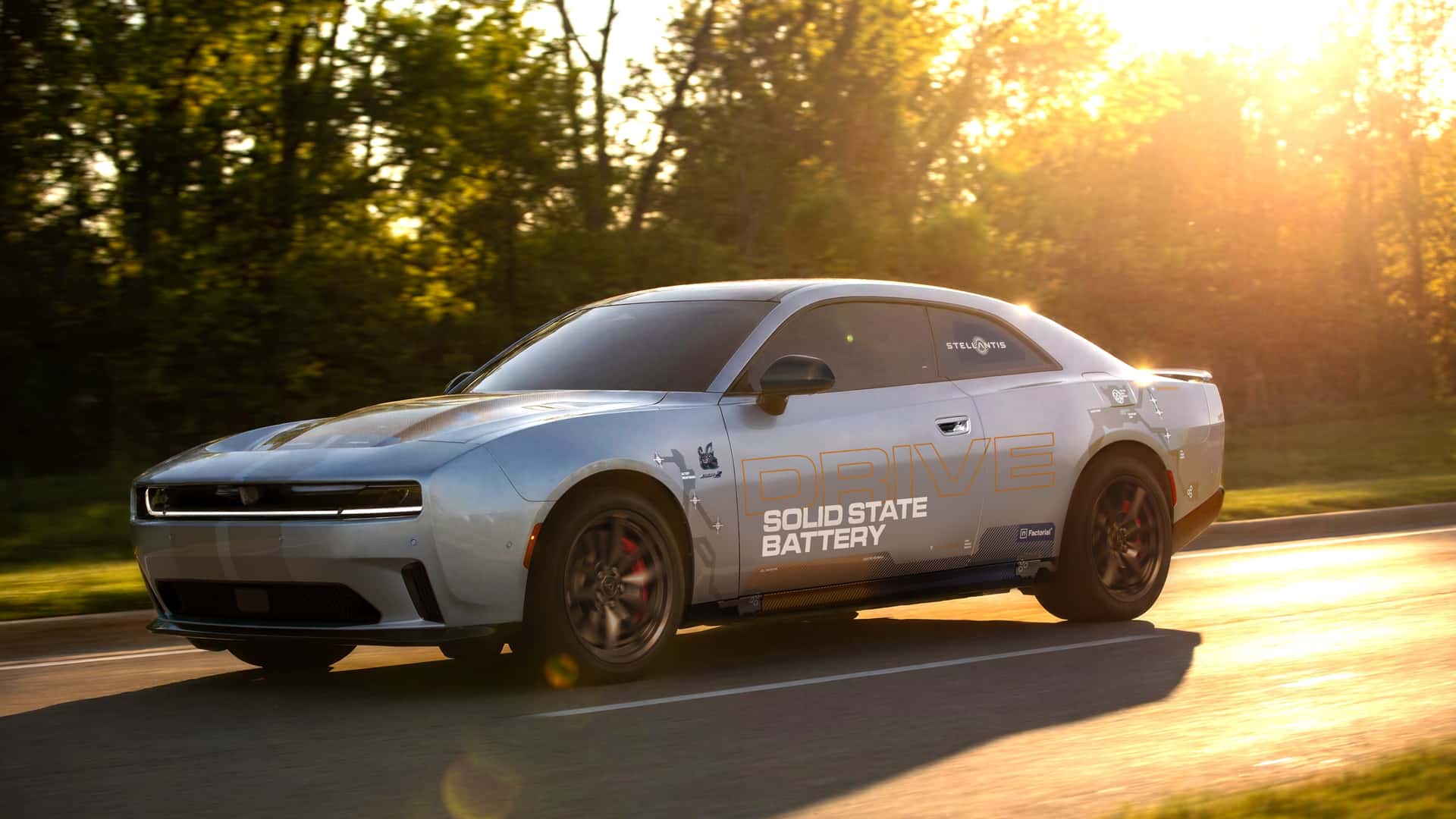
In a significant stride towards advanced electric vehicle (EV) technology, Stellantis, the global automotive conglomerate, has announced the commencement of real-world testing for semi-solid-state batteries. The pioneering initiative sees a Dodge Charger Daytona EV prototype outfitted with this cutting-edge battery pack, signaling a pivotal moment in the quest for more efficient and sustainable automotive power.
This ambitious program underscores Stellantis’ commitment to exploring viable alternatives to conventional lithium-ion batteries, which, despite ongoing improvements, face limitations in energy density, charging speed, and cost-effectiveness for future EV demands. The rigorous testing aims to validate the new battery’s performance under authentic driving and charging conditions, bringing a potentially transformative technology closer to commercial reality.
Key Takeaways
- A Dodge Charger Daytona EV prototype is currently undergoing real-world testing with an experimental semi-solid-state battery.
- The initiative is a collaborative effort between Stellantis and Massachusetts-based battery startup Factorial Energy.
- Stellantis projects that this advanced battery technology could significantly extend EV range, accelerate charging times, and reduce overall costs.
- The Factorial FEST cell boasts an impressive energy density of 375 Wh/kg and can charge from 15-90% in just 18 minutes.
- This development places Stellantis alongside other major automakers like Mercedes-Benz, BMW, Toyota, and Chinese manufacturers in the global race for advanced battery solutions.
Stellantis Accelerates Next-Gen Battery Development
Stellantis, the formidable parent company overseeing brands like Jeep, Ram, and Dodge, alongside 11 other automakers, confirmed on Thursday that it has initiated real-world evaluations of semi-solid-state battery technology. This move marks a critical step in the automotive industry’s pursuit of more powerful and efficient energy storage solutions for electric vehicles.
Developing solid-state batteries has historically presented formidable challenges, with scalability proving particularly difficult. Nevertheless, a growing contingent of automakers continues to invest heavily in this frontier technology, even as existing lithium-ion systems benefit from robust supply chains and continuous advancements. Stellantis’ foray into semi-solid-state battery testing positions it at the forefront of this innovation.
The Dodge Charger EV: A High-Performance Testbed
At the heart of Stellantis’s testing efforts is a specially modified Dodge Charger Daytona EV. This high-performance electric vehicle has been equipped with a semi-solid-state battery pack sourced from Factorial Energy, a pioneering startup based in Massachusetts. The chosen vehicle highlights the potential for this semi-solid-state battery technology to power performance-oriented electric models.

The development vehicle’s primary role is to facilitate the fine-tuning and comprehensive validation of the battery pack’s safety protocols, overall performance characteristics, and long-term reliability. These assessments are being conducted under a diverse array of actual charging cycles and dynamic driving scenarios, mimicking real-world consumer use.
Ned Curic, Stellantis’ Chief Engineering and Technology Officer, articulated the significance of this milestone. In a statement, he affirmed, “This milestone shows we are bringing solid-state batteries closer to our customers with the potential for longer range, faster charging, and lower costs.” This outlook underscores the strategic importance of this advanced semi-solid-state battery technology for the company’s future EV portfolio.
Unpacking Semi-Solid-State Battery Performance
The core of this groundbreaking test program lies in Factorial’s FEST cell, which employs a semi-solid-state chemistry. This particular cell boasts an impressive energy density of 375 watt-hours per kilogram (Wh/kg). To put this into perspective, typical conventional lithium-ion batteries commonly range between 200-300 Wh/kg, illustrating a substantial theoretical leap in energy storage capability.
Beyond its energy density, Stellantis indicates that the experimental pack demonstrates remarkable charging efficiency. It is capable of charging from a 15% state of charge to 90% in a mere 18 minutes. This represents a significant improvement over the current production Dodge Charger Daytona’s lithium-ion pack, which typically requires approximately 30 minutes to achieve a 10-80% charge.
Furthermore, the semi-solid-state battery is engineered to operate across a wide temperature spectrum, from extreme cold at -22 degrees Fahrenheit (-30 degrees Celsius) to intense heat at 113 degrees Fahrenheit (45 degrees Celsius). Such versatility ensures robustness and reliability in diverse climatic conditions, addressing a key concern for global EV adoption.
Siyu Huang, CEO of Factorial, emphasized the collaborative nature of this venture. “Real-world road testing is exactly the kind of deep full-stack collaboration that solid-state has always required,” Huang stated, highlighting the necessity of integrated development to bring such sophisticated technology to fruition.
Factorial’s Innovative Approach and Future Roadmap
Stellantis’s integration of the semi-solid-state battery involved a new, patented mechanical architecture. This design was specifically engineered to maximize the performance potential of the Factorial cells within the existing battery pack structure. This innovative approach is crucial for optimizing the efficiency and safety of the advanced battery system.
Factorial Energy has previously clarified that its semi-solid-state cells utilize a gel-like electrolyte, a distinct advantage over fully solid electrolytes, offering a practical bridge towards full solid-state solutions. The knowledge and data gleaned from these real-world tests are invaluable not only for Stellantis but also for Factorial, as they will directly inform the ongoing development of its ultimate all-solid-state Solstice battery.
This collaboration with Stellantis is not the first instance of Factorial’s batteries moving beyond laboratory environments. Last year, Factorial’s semi-solid-state cells were notably integrated into a Mercedes-Benz EQS prototype. This vehicle undertook an extensive cross-country road trip across Europe, achieving an extraordinary 749 miles on a single charge, with 85 miles of residual range still available at the journey’s conclusion. This demonstration underscored the transformative potential of Factorial’s semi-solid-state battery technology for extended driving range.
The Global Race for Solid-State Battery Dominance
The pursuit of advanced battery technology is a global phenomenon, with major automotive players worldwide investing significantly in solid-state and semi-solid-state battery research and development. The promise of higher energy density, faster charging, improved safety, and potentially lower costs makes solid-state battery technology a highly coveted goal for the industry.
Last year, BMW initiated its own testing program for all-solid-state cells, partnering with Colorado-based startup Solid Power. The German automaker has also enlisted Samsung SDI to assist in the development and validation of Solid Power’s advanced cells, showcasing a multi-faceted approach to this complex challenge. Toyota, a long-standing pioneer in automotive innovation, also maintains its dedicated solid-state program, having invested in its research for years.
In Asia, several prominent Chinese automakers, including industry giants like BYD, Nio, and MG Motor, are actively engaged in solid-state battery development. This widespread global commitment highlights the intense competition and the collective ambition to unlock the next generation of EV performance and efficiency. The ongoing real-world tests by Stellantis with the Dodge Charger EV prototype are a critical part of this larger, international effort to revolutionize electric mobility.
Challenges and Outlook for Semi-Solid-State Technology
While the prospects of semi-solid-state battery technology are incredibly promising, the journey from prototype to mass production is fraught with challenges. The “notoriously difficult to develop and scale” nature of solid-state technologies, as mentioned by industry experts, includes hurdles related to manufacturing complexity, material costs, and long-term durability under varied conditions.
However, the active real-world testing by Stellantis, in collaboration with Factorial Energy, represents a crucial phase in overcoming these obstacles. Validating safety, performance, and reliability under actual driving scenarios provides invaluable data that can accelerate development cycles and inform design improvements. Success in these tests could pave the way for a new era of electric vehicles characterized by superior range, reduced charging times, and greater affordability, thereby democratizing EV ownership and accelerating the global transition to sustainable transportation.
FAQ
What is a semi-solid-state battery?
A semi-solid-state battery is an advanced type of electric vehicle battery that uses a gel-like electrolyte instead of the liquid electrolyte found in conventional lithium-ion batteries or the fully solid electrolyte in true solid-state batteries. This design aims to offer a balance of higher energy density, faster charging, and improved safety compared to traditional lithium-ion technology.
What are the key advantages of this new battery technology?
Stellantis indicates that the semi-solid-state battery technology being tested could lead to significantly longer driving ranges for electric vehicles. Additionally, it promises substantially faster charging times, reducing the inconvenience of lengthy stops. The technology also holds the potential for lower production costs, making EVs more accessible to a wider consumer base.
How does the Factorial FEST cell perform compared to existing EV batteries?
The Factorial FEST cell boasts an energy density of 375 watt-hours per kilogram (Wh/kg), which is considerably higher than the 200-300 Wh/kg typical of conventional lithium-ion batteries. It can also charge from 15% to 90% in approximately 18 minutes, a notable improvement over the 30 minutes required for a 10-80% charge on the current Dodge Charger Daytona EV.
Which companies are involved in this real-world testing program?
The primary companies involved are Stellantis, the parent company of Dodge, and Factorial Energy, a Massachusetts-based startup specializing in advanced battery technology. Stellantis is providing the Dodge Charger Daytona EV prototype, while Factorial Energy is supplying the innovative semi-solid-state battery pack for testing and validation.
Are other automakers also developing solid-state batteries?
Yes, the development of solid-state and semi-solid-state batteries is a global endeavor involving many major automakers. Mercedes-Benz, BMW (partnering with Solid Power), and Toyota are actively pursuing their own solid-state programs. Additionally, Chinese automakers such as BYD, Nio, and MG Motor are also investing heavily in this next-generation battery technology.
What is the significance of testing in a Dodge Charger EV prototype?
Testing this advanced battery technology in a high-performance vehicle like the Dodge Charger EV prototype is crucial for several reasons. It allows Stellantis to assess the battery’s capability to meet the demanding power and range requirements of performance EVs, validating its safety and durability under rigorous conditions specific to such vehicles.