
Key Takeaways (TL;DR)
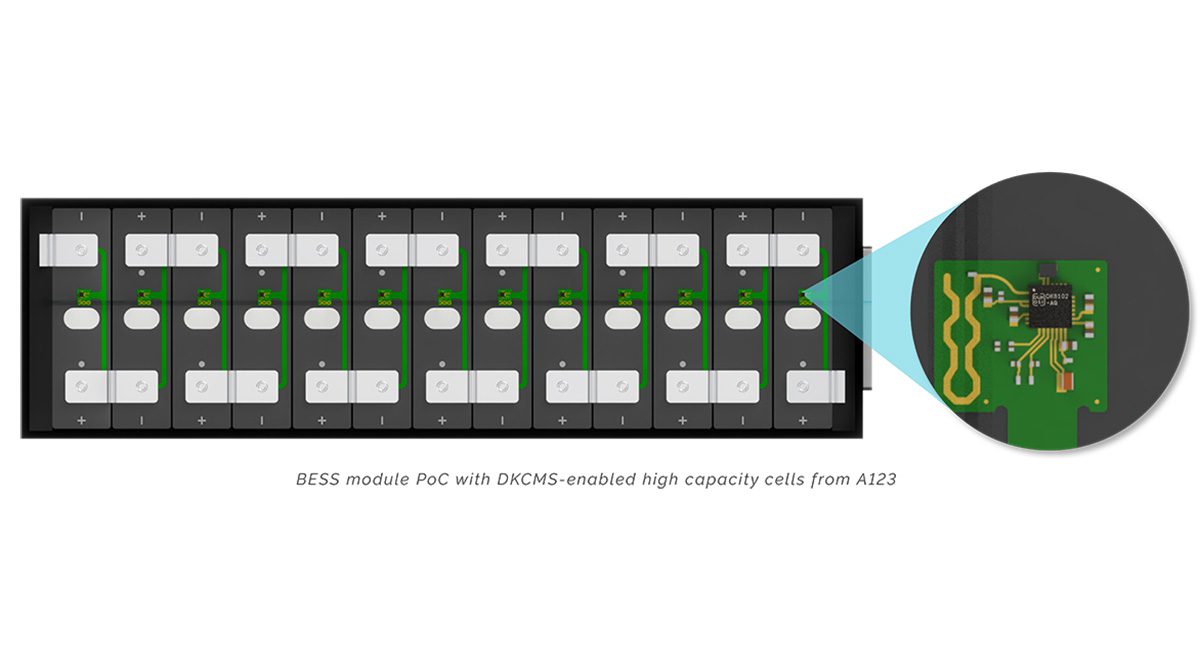
- A collaborative proof of concept integrates Dukosi’s contactless cell monitoring with A123’s 587 Ah LFP prismatic cells and Nuvation’s utility-grade Battery Management System (BMS).
- The platform, configured as a 1P13S module at 41.6 V, is designed as a pre-validated, regulatory-compliant building block for North American battery energy storage system (BESS) project developers.
- Dukosi’s chip-on-cell monitors eliminate traditional wiring harnesses, reducing failure points and enhancing scalability.
- A123’s US-developed LFP chemistry ensures long cycle life and thermal stability, crucial for grid-scale applications.
- Nuvation’s UL 1973-recognized BMS provides critical functional safety and control for stacks up to 1,500 V DC.
- This end-to-end solution aims to accelerate the deployment of reliable, efficient, and safe energy storage infrastructure.
In a significant development for the North American energy storage market, a tripartite collaboration between Dukosi, A123 Systems, and Nuvation Energy has culminated in the unveiling of a joint design brief. This initiative presents an end-to-end battery energy storage system (BESS) proof of concept, integrating advanced contactless cell monitoring with high-performance lithium iron phosphate (LFP) cells and a robust utility-grade battery management system.

This pioneering reference platform is specifically engineered to cater to the stringent demands of BESS project developers and system integrators across North America. It offers a pre-validated, regulatory-compliant module stack, streamlining the deployment process for large-scale energy storage solutions.
Pioneering Contactless Cell Monitoring for Enhanced Reliability
At the core of this innovative BESS solution is Dukosi’s advanced contactless cell monitoring system. Each 587 Ah LFP prismatic cell from A123 Systems is equipped with a Dukosi DK8102 chip-on-cell monitor. This groundbreaking technology leverages the company’s proprietary C-SynQ contactless protocol to communicate seamlessly with a DK8202 system hub.
The primary advantage of this contactless architecture is the complete elimination of the traditional wiring harness. Conventionally, a complex network of wires connects individual battery cells to the Battery Management System (BMS), introducing numerous potential failure points due to vibration, corrosion, or installation errors. By removing these physical connections, Dukosi’s system significantly enhances the reliability and operational longevity of the battery module.

Moreover, the inherent flexibility of the contactless system allows the monitoring layer to be retrofitted or scaled efficiently without the need for extensive rewiring of the entire module. This modularity is a critical factor for system integrators looking for adaptable and future-proof energy storage components, as it simplifies maintenance and upgrades while reducing system downtime.
A123 Systems’ High-Performance LFP Cells
Central to the energy storage capabilities of this proof of concept are A123 Systems’ 587 Ah large-format LFP prismatic cells. These cells are distinguished by their proprietary US-developed LFP chemistry, a formulation known for its exceptional performance characteristics vital for grid-scale energy storage applications.
A key benefit of LFP chemistry, particularly A123’s formulation, is its inherently long cycle life. This attribute is crucial for battery energy storage systems, which are often subjected to frequent charge and discharge cycles in grid services, renewable energy integration, and peak shaving applications. A longer cycle life translates directly into a lower total cost of ownership and extended operational periods for BESS projects.
Furthermore, these LFP cells exhibit superior thermal stability, a paramount safety consideration in high-power battery deployments. The robust thermal characteristics of the cells contribute significantly to the overall safety profile of the BESS, minimizing risks associated with thermal runaway and ensuring stable operation under diverse environmental conditions. This focus on thermal management is critical for utility-scale applications where reliability and safety are non-negotiable.
Nuvation Energy’s Utility-Grade Battery Management System
Complementing the advanced cell technology and monitoring capabilities is Nuvation Energy’s L2 Battery Management System. This utility-grade BMS is engineered to provide comprehensive cell- and stack-level control, efficiently managing battery stacks up to 1,500 V DC. The ability to handle high voltage levels is essential for utility and large-scale commercial applications, enabling the creation of compact and powerful energy storage units.
A critical feature of Nuvation’s BMS platform is its UL 1973 recognition for functional safety. This certification is not merely a regulatory compliance badge; it is a prerequisite for securing warranties on utility and commercial installations, underscoring the system’s adherence to rigorous safety standards. The UL 1973 recognition provides a strong assurance of the BMS’s reliability and safety, which is vital for project developers navigating complex regulatory landscapes.
Nuvation Energy brings extensive experience to this collaboration, drawing on its successful deployments across hundreds of commercial, industrial, and utility-scale sites since 2015. This proven track record reinforces the credibility and robustness of their BMS technology, making it a trusted component in the integrated energy storage solution.
An Integrated Solution for North American BESS Developers
The proof of concept module utilizes a 1P13S configuration, meaning thirteen cells are connected in series within a single parallel string, resulting in a nominal voltage of 41.6 V. This specific configuration is a widely accepted and standard building block for various utility BESS rack architectures, facilitating seamless integration into existing and future large-scale deployments.
This comprehensive integration of leading-edge components—Dukosi’s contactless cell monitoring BESS technology, A123’s high-performance LFP cells, and Nuvation’s robust BMS—offers a significant advantage to North American BESS project developers. By providing a pre-validated and regulatory-compliant module stack, the collaboration aims to significantly reduce development cycles, mitigate integration risks, and accelerate market entry for advanced energy storage solutions.
The emphasis on a pre-validated system reduces the burden of individual component testing and certification for integrators, allowing them to focus on overall system design and deployment. Furthermore, the inherent compliance with relevant North American regulations ensures that these modules can be deployed with greater confidence and efficiency, crucial for expanding the region’s energy storage infrastructure.
Addressing the Growing Demand for Energy Storage
The global energy landscape is rapidly evolving, driven by the increasing penetration of renewable energy sources, the need for enhanced grid stability, and the growing demand for sustainable power solutions. Battery energy storage systems are pivotal in this transition, offering capabilities for grid balancing, frequency regulation, peak demand management, and backup power.
However, the complexity of BESS deployments, particularly concerning battery health monitoring, safety, and long-term operational efficiency, poses significant challenges. The collaboration between Dukosi, A123 Systems, and Nuvation Energy directly addresses these hurdles by offering a sophisticated, integrated solution that prioritizes reliability, safety, and ease of deployment. The ability of contactless cell monitoring to streamline maintenance and enhance diagnostic capabilities is a game-changer for long-term BESS operations.
By bringing together expertise in advanced battery chemistry, innovative monitoring technology, and robust management systems, this partnership sets a new benchmark for energy storage solutions. It promises to deliver more resilient, efficient, and cost-effective battery systems, supporting the widespread adoption of clean energy technologies and the modernization of energy grids.
FAQs about the Contactless Cell Monitoring BESS Proof of Concept
What is the primary innovation in this BESS proof of concept?
The main innovation is the integration of Dukosi’s contactless cell monitoring system, which eliminates traditional wiring harnesses between battery cells and the BMS. This enhances reliability, reduces failure points, and simplifies scalability and maintenance for battery energy storage systems.
Which companies are involved in this collaboration?
The collaboration involves three key players: Dukosi, which provides the contactless cell monitoring technology; A123 Systems, supplying the large-format LFP prismatic cells; and Nuvation Energy, contributing its utility-grade Battery Management System (BMS).
What are the benefits of using LFP cells in this system?
A123 Systems’ LFP (lithium iron phosphate) cells, with their proprietary US-developed chemistry, offer a long cycle life and excellent thermal stability. These characteristics are crucial for the safety, durability, and cost-effectiveness of battery energy storage systems, especially in demanding utility applications.
What is UL 1973 recognition, and why is it important for the BMS?
UL 1973 is a safety standard for stationary batteries, including those used in utility and commercial energy storage applications. Nuvation Energy’s BMS having UL 1973 recognition is vital because it signifies functional safety compliance, which is often a mandatory prerequisite for warranties and regulatory approval in North American installations.
Who is the target audience for this integrated BESS solution?
The integrated battery energy storage system solution is primarily targeted at North American BESS project developers and system integrators. It offers a pre-validated, regulatory-compliant module stack designed to accelerate the deployment of large-scale energy storage projects efficiently.
How does contactless cell monitoring improve battery system maintenance?
By removing physical wiring, contactless cell monitoring significantly reduces the complexity of the battery module. This design allows for easier retrofitting, scaling, and diagnostic checks without extensive rewiring, thereby simplifying maintenance procedures, reducing downtime, and improving the overall serviceability of the BESS.
What is a 1P13S configuration in a battery module?
A 1P13S configuration means that one parallel string of thirteen battery cells is connected in series. This arrangement creates a specific voltage output (41.6 V in this case) and is a standard building block commonly used in utility-scale battery energy storage system rack architectures for optimal performance and integration.