
Key Takeaways
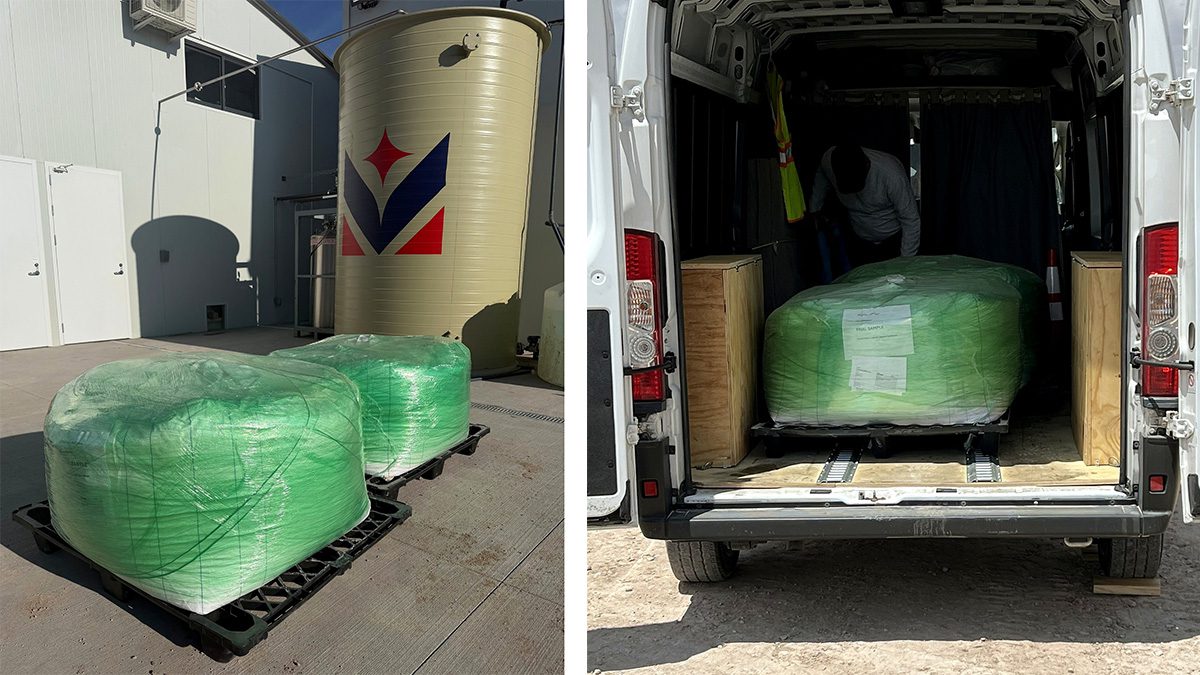
- LibertyStream Infrastructure Partners has successfully delivered its first tonne of lithium carbonate from its new direct lithium extraction (DLE) unit and refining facility in Howard County, Texas, to a US industrial customer.
- This delivery signifies a crucial step from on-site production to commercial distribution, validating the facility’s operational capabilities.
- The Texas facility is engineered to produce both battery-grade and technical-grade lithium carbonate, meeting diverse industrial requirements.
- LibertyStream aims to scale its annual production capacity at the Select Water Solutions site to 1,000 tonnes by the end of 2026.
- The company plans to replicate this DLE model across other high-volume US oilfield basins, including the Permian and Bakken, bolstering domestic critical mineral supply.
In a significant stride towards bolstering the United States’ domestic critical minerals supply chain, LibertyStream Infrastructure Partners announced the successful delivery of its first tonne of lithium carbonate. This milestone marks a crucial advancement in securing essential materials for the burgeoning electric vehicle (EV) battery manufacturing sector and various technical-grade applications within the nation.
The landmark shipment originated from the company’s pioneering direct lithium extraction (DLE) unit and refining facility. This state-of-the-art operation is strategically located at Select Water Solutions’ site in Howard County, Texas, underscoring a pivotal transition from initial on-site production to full commercial distribution.

The successful delivery of lithium carbonate to a US industrial customer not only fulfills LibertyStream’s previously announced first US order but also confirms the efficacy and reliability of their advanced extraction and refining processes. This development is poised to have a substantial impact on the domestic availability of lithium, a material critical for the global energy transition.
A Pivotal Milestone in Domestic Lithium Production
The completion of this first commercial delivery represents more than just a logistical achievement; it signifies a validation of LibertyStream’s innovative approach to lithium production. The company’s facility, nestled within the resource-rich landscape of West Texas, is now actively contributing to the nation’s strategic mineral independence.
The lithium carbonate produced at the Howard County facility met the customer’s stringent technical specifications, a testament to the advanced engineering and operational precision deployed by LibertyStream. This capability allows for the provision of high-quality lithium critical for diverse industrial applications, from high-performance batteries to specialized ceramics and glass.

According to company statements, the refining unit, which commenced installation in March 2026, is specifically engineered for versatility. It can efficiently produce both battery-grade and technical-grade lithium carbonate simultaneously, addressing a broad spectrum of market demands.
Production Capacity and Future Expansion
With initial production now firmly underway, LibertyStream is actively engaged in qualifying its material with multiple battery-grade and technical-grade customers. This critical phase ensures that the produced lithium carbonate meets the exacting standards required for various high-tech applications, facilitating broader market integration.
The company has ambitious yet clearly defined goals for scaling its operations at the Texas site. LibertyStream anticipates reaching an annual production capacity of up to 1,000 tonnes of lithium carbonate by the close of 2026. This scaling plan is vital for meeting the escalating demand for this crucial element.
Beyond its current Texas operations, LibertyStream envisions a broader strategy for domestic resource utilization. The company plans to replicate its successful DLE model across other high-volume US oilfield basins, specifically identifying the Permian and Bakken as prime targets. This expansion strategy aims to establish a robust network of domestic lithium production facilities.
The Strategic Importance of Direct Lithium Extraction (DLE)
The deployment of direct lithium extraction technology by LibertyStream is a significant factor in its potential impact on the critical minerals landscape. DLE represents a paradigm shift from traditional lithium mining methods, offering a more sustainable and efficient pathway to resource recovery.
Traditional methods, such as evaporation ponds used for brine extraction, can be time-consuming, water-intensive, and often require vast land areas. Hard rock mining, while effective, also carries its own set of environmental and logistical challenges. DLE, by contrast, typically involves selectively extracting lithium from brine solutions, often from geothermal or oilfield sources, with a smaller environmental footprint and faster processing times.
DLE technologies hold the promise of higher recovery rates and reduced chemical usage compared to conventional techniques. This innovative approach is particularly well-suited for extracting lithium from unconventional sources like oilfield brines, which have historically been overlooked as viable critical mineral reservoirs. The ability to utilize existing infrastructure and waste streams from oil and gas operations also presents unique economic and environmental advantages.
Leveraging US Oilfield Basins for Critical Minerals
LibertyStream’s strategy to tap into high-volume US oilfield basins, including the Permian and Bakken, is a testament to the evolving understanding of domestic resource potential. These geological formations, long recognized for their hydrocarbon reserves, also harbor significant brine resources rich in dissolved minerals, including lithium.
The co-production of critical minerals from existing oil and gas operations presents a synergistic opportunity. It allows for the diversification of revenue streams for energy companies while simultaneously enhancing the nation’s supply of vital materials needed for the energy transition. This integrated approach can reduce the need for entirely new mining operations, potentially mitigating land use and infrastructure development challenges.
By leveraging these vast, previously untapped sources, the United States can significantly reduce its reliance on foreign imports for lithium. This move is crucial for enhancing national economic security and resilience in the face of fluctuating global supply chains and geopolitical complexities surrounding critical mineral sourcing.
Reinforcing the US EV Supply Chain
The rapid growth of the electric vehicle market worldwide has placed unprecedented demand on lithium-ion batteries, making lithium a cornerstone of the global energy transition. For the United States, establishing a secure and robust domestic supply chain for battery materials is a strategic imperative.
Developments like LibertyStream’s Texas operation directly contribute to this national goal. By producing lithium carbonate within the US borders, the nation moves closer to creating an end-to-end domestic ecosystem for EV battery manufacturing, from raw material extraction to finished product assembly. This strengthens the overall resilience of the supply chain against external disruptions.
A localized supply of critical minerals also translates to reduced transportation costs, potentially lower carbon footprints for battery production, and greater control over material quality and ethical sourcing standards. It empowers US manufacturers with more predictable access to essential inputs, fostering innovation and investment in advanced battery technologies.
The Road Ahead: Scaling Production and Market Impact
The journey from initial production to meeting substantial market demand is complex, involving continuous optimization and strategic expansion. LibertyStream’s focus on customer qualification is a critical step, ensuring that its lithium carbonate meets the rigorous specifications demanded by battery manufacturers and other industrial users.
Achieving the targeted 1,000 tonnes of annual production by the end of 2026 at the Texas facility will position LibertyStream as a key emerging player in the domestic lithium market. This output, while a starting point, signifies substantial capacity being brought online, contributing to the broader pool of available critical minerals.
Alex Wylie, President and CEO of LibertyStream, underscored the significance of this achievement. He stated, “Delivery of our first tonne of lithium carbonate achieving the required technical specifications is another successful significant milestone by the entire LibertyStream team. With production now underway, we are positioned to reach an annualized production capability of up to 1,000 tonnes of lithium carbonate by the end of 2026.”
This statement highlights both the current success and the clear trajectory for growth, emphasizing the collaborative effort behind this technological and operational feat. The company’s vision for replicating this model across other US oilfield basins further solidifies its commitment to becoming a major contributor to America’s critical mineral self-sufficiency.
Frequently Asked Questions (FAQ)
What is direct lithium extraction (DLE)?
Direct lithium extraction (DLE) is an advanced technology designed to selectively extract lithium from brine solutions. Unlike traditional methods that rely on large evaporation ponds or hard rock mining, DLE processes can be faster, more environmentally friendly, and require a smaller physical footprint. It aims to efficiently recover lithium with high purity.
Where is LibertyStream’s DLE facility located?
LibertyStream Infrastructure Partners’ DLE unit and refining facility are located at Select Water Solutions’ site in Howard County, Texas. This strategic location places it within a region known for its extensive oilfield basins, providing access to rich brine resources for lithium extraction.
What types of lithium carbonate does the facility produce?
The refining facility is engineered to produce both battery-grade and technical-grade lithium carbonate. Battery-grade lithium carbonate is essential for electric vehicle (EV) batteries, while technical-grade is used in various industrial applications like ceramics, glass, and lubricants.
What is LibertyStream’s production target for the Texas facility?
LibertyStream aims to achieve an annual production capability of up to 1,000 tonnes of lithium carbonate from its Howard County, Texas, facility by the end of 2026. This target represents a significant contribution to domestic lithium supply.
How will this impact the US critical mineral supply chain?
The successful operation and scaling of LibertyStream’s direct lithium extraction facility in Texas, along with plans for replication in other oilfield basins like the Permian and Bakken, are crucial for enhancing US critical mineral independence. It diversifies lithium sources, strengthens the domestic EV battery supply chain, and reduces reliance on foreign imports.
What are the environmental benefits of DLE?
DLE technologies generally offer several environmental advantages over traditional lithium extraction. These can include reduced water usage, minimized land disturbance, and a smaller overall carbon footprint. By selectively extracting lithium, DLE aims to make the process more sustainable and resource-efficient.
What is the significance of extracting lithium from oilfield basins?
Extracting lithium from oilfield brines in basins like the Permian and Bakken allows for the co-production of critical minerals from existing infrastructure. This approach can be more cost-effective and environmentally advantageous than developing entirely new mining sites, leveraging established industrial activity for a new resource stream.