
Key Takeaways:
- Seoul Semiconductor has initiated mass production of its 12V High Voltage (HV) opto-semiconductor technology.
- The innovation addresses a significant voltage mismatch challenge prevalent in modern electric and hybrid vehicles.
- By reducing the voltage conversion ratio from 1/100 to 1/10, the technology simplifies system design and drastically cuts energy losses.
- Automotive manufacturers can expect up to a 20% reduction in driver costs, a 10% decrease in power consumption, and a 10% reduction in driver-related component count.
- Currently deployed by four major automotive brands across global markets, this high-voltage opto-semiconductor is projected to be integrated into 10 vehicle models by the close of the year.
- This technological advancement positions Seoul Semiconductor to capitalise on the rapidly expanding global electrified vehicle market.
Seoul Semiconductor, a global innovator in LED technology, has announced a significant milestone: the mass production launch of its 12-volt High Voltage (HV) opto-semiconductor technology. This groundbreaking solution is already being adopted by four prominent automotive brands spanning the Americas, Europe, and Asia. The company aims to integrate this advanced technology into a total of 10 vehicle models before the end of the year, marking a pivotal moment for EV engineering and automotive lighting systems.

This development is particularly critical for the burgeoning electric vehicle (EV) and hybrid vehicle sectors, where conventional lighting systems have long faced an inherent voltage mismatch challenge. Addressing this core issue, Seoul Semiconductor’s new high-voltage opto-semiconductor promises enhanced efficiency, simplified design, and improved durability for automotive lighting components.
Addressing the EV Voltage Mismatch Challenge
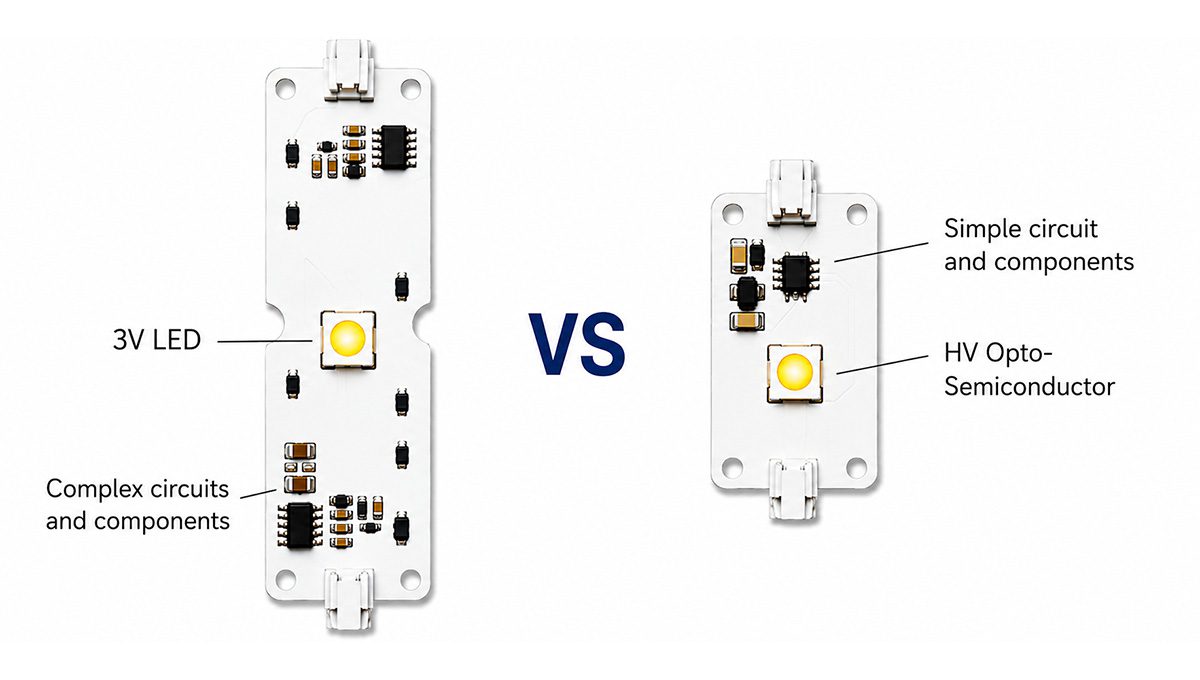
The rise of electric and hybrid vehicles has brought about numerous engineering challenges, particularly in power management and component integration. One such challenge involves the discrepancy between the operating voltages of traditional automotive LED systems and the high-voltage battery packs that power modern electrified vehicles. Conventional automotive LED systems typically operate at a low 3 volts.
In stark contrast, EV battery packs commonly operate at significantly higher voltages, often around 300 volts. This creates a substantial voltage step-down ratio of approximately 1/100. To bridge this gap, considerable conversion circuitry is required. Such extensive power conversion systems add complexity, introduce additional components, generate excessive heat, and inevitably lead to substantial energy losses during the voltage reduction process.

These inefficiencies directly impact a vehicle’s overall power consumption, potentially reducing range in EVs and contributing to thermal management challenges within the compact confines of a vehicle’s electrical architecture. The reliance on complex conversion circuits also increases the bill of materials and complicates the manufacturing process for automotive lighting units.
The Seoul Semiconductor Solution: A Paradigm Shift in EV Engineering
Seoul Semiconductor’s innovative approach directly tackles this fundamental problem with its 12V HV opto-semiconductor technology. The core of this advancement lies in its proprietary Multi-Junction P-N structure. This sophisticated design allows a single-chip solution to operate efficiently within a much higher voltage range of 12-30 volts, significantly closer to the vehicle’s main power supply or intermediate voltage rails.
By enabling operation at these higher voltages, the technology drastically reduces the required voltage conversion ratio to a more manageable 1/10. This substantial reduction in conversion steps translates into a multitude of benefits for automotive manufacturers and, ultimately, for consumers.
Enhanced Efficiency and Reduced Costs
The diminished voltage conversion ratio means less energy is lost during the power transformation process. This improvement in power efficiency is crucial for electric vehicles, where every watt-hour of battery energy directly contributes to driving range and performance. The company’s claims highlight tangible advantages:
- 20% Reduction in Driver Costs: By simplifying the power delivery system, the need for complex and costly driver components is minimised.
- 10% Reduction in Power Consumption: Lower conversion losses directly translate into more energy-efficient lighting, freeing up power for other critical vehicle functions.
- 10% Reduction in Overall Driver-Related Component Count: Fewer components mean a simpler Printed Circuit Board (PCB) design, reduced manufacturing complexity, and potentially higher reliability.
Furthermore, a simpler PCB design contributes to less heat generation, which is a critical factor for the longevity and reliability of electronic components in automotive applications. Reduced thermal stress enhances the overall durability of the lighting system, leading to fewer maintenance issues and extended product life cycles.
Pioneering Innovation and Market Leadership
Seoul Semiconductor’s commitment to innovation in high-voltage opto-semiconductor technology is underscored by its extensive patent portfolio. The company holds hundreds of patents specifically related to HV chips and more than 50 patents for its HV driver technology. This intellectual property foundation reinforces its position as a leader in the field and provides a strong competitive edge.
The integration of these HV opto-semiconductor chips with the company’s own high-voltage driver technology ensures a cohesive and optimised system solution. This holistic approach guarantees maximum performance, reliability, and compatibility, streamlining the adoption process for automotive OEMs.
Booming Market and Future Prospects for Opto-Semiconductors
The launch of this technology comes at a time of unprecedented growth in the electrified vehicle market. The transition towards sustainable mobility solutions is accelerating globally, with electric and hybrid vehicles becoming increasingly prevalent on roads worldwide. Matthew Fras, COO of North America Sales at Seoul Semiconductor, highlighted the scale of this expansion.
“Global electrified vehicle sales—including hybrids—are set to surpass 20 million units this year, and that number is expected to double to 40 million units in five years,” Fras stated. This explosive growth signals a massive opportunity for component suppliers that can offer innovative, efficient, and cost-effective solutions tailored to the unique demands of electrified powertrains.
Fras further elaborated on the expanding role of advanced electronic components within these vehicles. “As vehicles become more functionally advanced, the value of opto-semiconductors per vehicle is also projected to grow from $100 to $200, meaning the overall opto-semiconductor market will expand fourfold.” This projection underscores the increasing sophistication of automotive systems, where opto-semiconductors are vital not only for lighting but also for sensor applications, in-cabin displays, and other critical functions that enhance vehicle safety, convenience, and performance.
The mass production of Seoul Semiconductor’s 12V HV opto-semiconductor technology is not merely a product launch; it represents a strategic advancement in EV engineering. By tackling a fundamental efficiency problem, the company is enabling automotive manufacturers to design more robust, energy-efficient, and cost-effective vehicles, aligning perfectly with the industry’s trajectory towards a fully electrified future. This technology is poised to become a standard component in the next generation of electric and hybrid vehicles, contributing significantly to their performance and environmental credentials.
FAQ Section
What is Seoul Semiconductor’s new high-voltage opto-semiconductor technology?
Seoul Semiconductor has launched a 12V High Voltage (HV) opto-semiconductor technology into mass production. This innovative single-chip solution is designed to operate efficiently at higher voltages (12-30V), specifically addressing the voltage mismatch problem prevalent in electric and hybrid vehicles, thereby enhancing the overall efficiency of automotive lighting systems.
How does this technology improve EV efficiency and reduce costs?
The technology significantly improves efficiency by reducing the voltage conversion ratio from 1/100 (for traditional 3V LEDs in a 300V EV system) to a more efficient 1/10. This leads to a 20% reduction in driver costs, a 10% decrease in power consumption, and a 10% reduction in driver-related component count, simplifying PCB design and reducing heat generation.
Which automotive brands are adopting this high-voltage opto-semiconductor technology?
While specific names have not been disclosed, Seoul Semiconductor has confirmed that its 12V HV opto-semiconductor technology has entered mass production with four unnamed automotive brands across key markets including the Americas, Europe, and Asia. The company aims for deployment in 10 vehicle models by the end of the current year.
What is the significance of the Multi-Junction P-N structure in this technology?
The Multi-Junction P-N structure is the core innovation enabling the opto-semiconductor to operate effectively at higher voltages (12-30V) within a single chip. This structural design is crucial for achieving the reduced voltage conversion ratio, which in turn minimises energy loss, simplifies circuitry, and improves the overall durability and efficiency of the automotive lighting system.
What is the projected market growth for opto-semiconductors in electrified vehicles?
According to Matthew Fras, COO of North America Sales, global electrified vehicle sales are expected to double from 20 million units this year to 40 million units in five years. Concurrently, the value of opto-semiconductors per vehicle is projected to grow from $100 to $200, leading to an estimated fourfold expansion of the overall opto-semiconductor market.