
Key Takeaways
- Swiss firm H55 has delivered critical Adagio propulsion battery modules to Pratt & Whitney Canada for the RTX Hybrid-Electric Flight Demonstrator.
- This marks H55’s first delivery of production-conforming battery systems for an active aerospace integration and flight-test program.
- The modules were manufactured in a regulator-approved facility, signifying a move beyond prototypes to systems ready for certified flight.
- H55 is pioneering in completing regulator-required propulsion battery certification testing, establishing a new industry benchmark.
- Their battery architecture is designed with redundant safety features and stringent testing protocols to meet aerospace certification demands.
- The company boasts over 2,000 flight hours across multiple aircraft programs with zero battery-related incidents, underscoring its commitment to aviation safety.
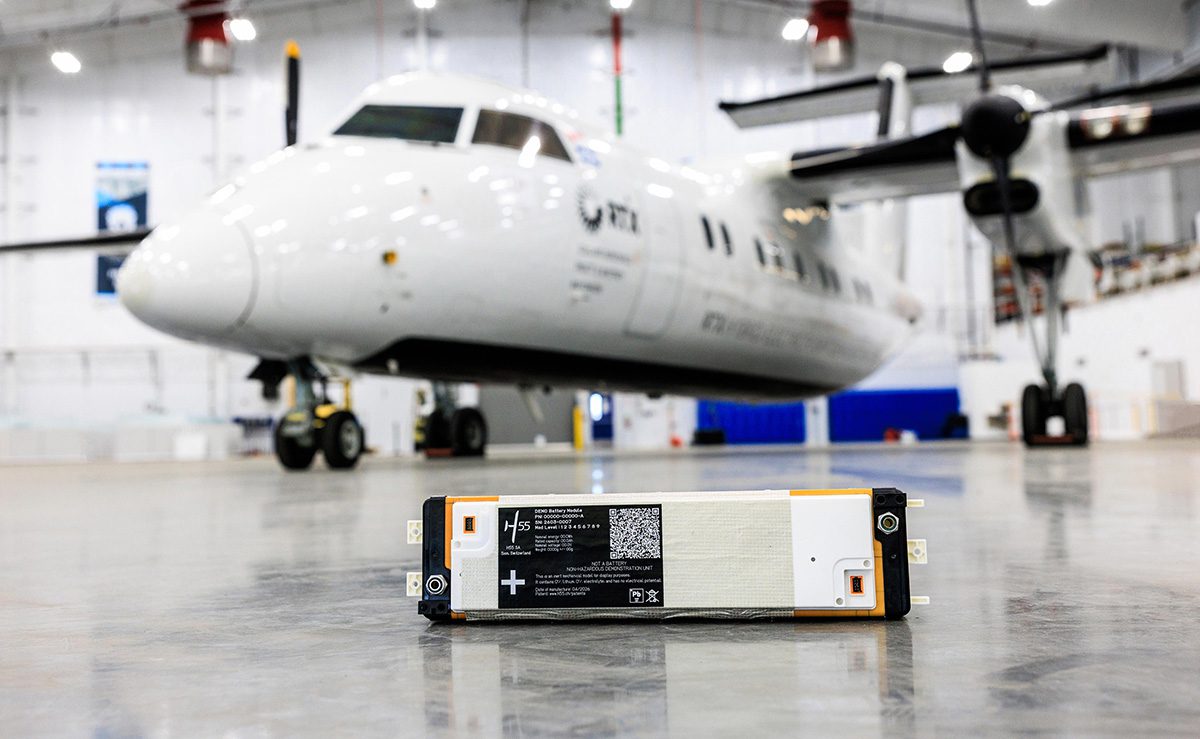
In a significant stride towards advancing sustainable aviation, Swiss aerospace battery specialist H55 has officially delivered its Adagio propulsion battery modules to Pratt & Whitney Canada. These cutting-edge modules are earmarked for integration into the groundbreaking RTX Hybrid-Electric Flight Demonstrator, a collaborative initiative poised to redefine the future of aerial mobility. This delivery marks a pivotal moment for H55, representing its inaugural provision of production-conforming systems to an active aerospace integration and flight-test program.
The aerospace industry operates under incredibly stringent safety and reliability standards, making the transition from conceptual design to operational hardware a formidable challenge. H55’s achievement in delivering these modules, not as engineering prototypes but as fully production-conforming systems, signifies a crucial advancement. This distinction is paramount for Original Equipment Manufacturers (OEMs) within the aviation sector, who demand this level of maturity before incorporating supplier hardware into any flight program intended for certification.

Setting New Standards in Aerospace Battery Certification
A cornerstone of H55’s commercial standing and a testament to its technological prowess lies in its pioneering efforts in aerospace battery certification. The company asserts its position as the first in the industry to successfully complete regulator-required propulsion battery certification testing. This rigorous evaluation process, a prerequisite for any battery system intended for aerial applications, precedes the current delivery and establishes a robust foundation for H55’s offerings in the rapidly evolving electric aviation market.
The successful navigation of such complex regulatory hurdles underscores the company’s deep understanding of the unique demands placed on electric propulsion systems in flight. It also provides a significant advantage in a nascent sector where regulatory clarity and certified solutions are highly sought after by aircraft manufacturers and integrators.
Engineered for Aviation Safety and Performance
The core of H55’s innovation resides in its meticulously designed battery architecture, developed specifically to address the stringent certification constraints inherent in electric and hybrid-electric propulsion systems. Aviation applications demand an unparalleled level of safety, far exceeding that of ground-based electric vehicles, necessitating specialized engineering approaches.

To meet these formidable requirements, H55’s battery systems incorporate several critical design philosophies. These include redundant safety architectures, which ensure that in the event of a component failure, backup systems are in place to maintain operational integrity and prevent hazardous situations. This multi-layered approach to safety is fundamental to aviation design principles.
Furthermore, the design integrates independent cell characterization, a process where each individual battery cell is thoroughly tested and analyzed to ensure consistent performance and reliability. This granular level of scrutiny is complemented by incoming screening procedures for all raw materials and components, guaranteeing that only the highest quality elements are integrated into the final product. Such rigorous checks are vital for ensuring the longevity and predictable behavior of battery packs in demanding flight conditions.
Crucially, H55’s development process includes comprehensive worst-case failure scenario testing. This involves subjecting the battery modules to extreme conditions and simulated malfunctions to understand and mitigate potential risks. This proactive approach to safety is meticulously aligned with regulator requirements, ensuring that the systems can safely manage unforeseen circumstances during flight operations, a paramount concern for aerospace battery certification.
A Proven Track Record: Unmatched Safety in Electric Flight
H55 has not only focused on innovative design and rigorous testing but has also demonstrated its commitment to safety through practical application. The company proudly reports accumulating over 2,000 flight hours across multiple aircraft programs, all achieved with an exemplary record of zero battery-related incidents. This extensive flight experience, coupled with an impeccable safety record, stands as a core competitive asset for H55.
In the highly risk-averse aerospace sector, a proven safety record is invaluable, forming a critical basis for discussions with OEMs regarding qualification for future programs. It instills confidence in potential partners and regulatory bodies, showcasing the real-world reliability and robustness of H55’s propulsion battery modules. This operational validation reinforces the theoretical strength of their design and manufacturing processes.
Jean Thomassin, Executive Director, New Product and Service Introduction at Pratt & Whitney Canada, underscored the significance of this collaboration, stating, “H55’s ability to deliver aviation-grade battery systems within a rigorous certification and production framework plays a crucial role in demonstrating hybrid-electric technology in flight.” His statement highlights the critical partnership between advanced battery developers and established aerospace giants in pushing the boundaries of electric aviation.
The Future of Hybrid-Electric Flight Technology
The collaboration between H55 and Pratt & Whitney Canada, particularly for the RTX Hybrid-Electric Flight Demonstrator, represents a significant step forward for the entire industry. Hybrid-electric propulsion systems offer a promising pathway to reduce aviation’s carbon footprint, improve fuel efficiency, and potentially lower operational costs. However, their widespread adoption hinges on the development and certification of reliable, high-performance battery systems.
H55’s validated production-conforming propulsion battery modules contribute directly to accelerating this transition. By providing components that meet the rigorous demands of aerospace battery certification, they enable companies like Pratt & Whitney Canada and RTX to advance their flight demonstration programs with a higher degree of confidence and a clearer path towards commercial viability. This synergy between specialized suppliers and leading aerospace integrators is essential for the maturation of electric aviation technology.
As the global aviation sector continues to grapple with environmental imperatives and the pursuit of more sustainable operational models, the role of advanced battery technology becomes increasingly central. The ongoing flight testing with H55’s modules on the RTX demonstrator will provide invaluable data, further refining the understanding and application of electric propulsion in real-world flight scenarios. This progress is not just about new technology; it is about building the foundation for a greener, more efficient future in air travel.
Frequently Asked Questions (FAQ)
What is the significance of H55’s delivery to Pratt & Whitney Canada?
This delivery marks H55’s first provision of production-conforming battery systems for an active aerospace flight-test program. It’s crucial because these are not prototypes but systems ready for integration into a certified flight demonstrator, signifying a major step towards commercial viability for electric propulsion in aviation.
Why are “production-conforming systems” important in aerospace?
Aerospace OEMs require production-conforming systems, rather than engineering prototypes, before integrating hardware into certified flight programs. This ensures the components meet all design specifications, manufacturing quality, and safety standards necessary for the extreme demands and regulatory scrutiny of flight operations, paving the way for aerospace battery certification.
What makes H55’s battery architecture suitable for aviation?
H55’s battery architecture is specifically engineered to meet aviation’s stringent certification constraints. It features redundant safety architectures, independent cell characterization, rigorous incoming screening, and extensive worst-case failure scenario testing, all aligned with regulator requirements to ensure unparalleled safety and reliability in flight.
What is H55’s safety record with its battery modules?
H55 has accumulated more than 2,000 flight hours across various aircraft programs with an impeccable record of zero battery-related incidents. This proven safety track record is a critical asset, instilling confidence in OEMs and regulators, and demonstrating the real-world reliability of their electric propulsion battery technology.
What is the RTX Hybrid-Electric Flight Demonstrator?
The RTX Hybrid-Electric Flight Demonstrator is a pioneering program by RTX (parent company of Pratt & Whitney Canada) aimed at advancing hybrid-electric propulsion technology for aircraft. It serves as a testbed for integrating and evaluating next-generation electric and hybrid systems, with the goal of developing more sustainable and efficient future aircraft.
How does this development contribute to the future of aviation?
This milestone directly supports the advancement of hybrid-electric flight, a key pathway for reducing aviation’s environmental impact. By providing certified, reliable battery technology, H55 enables faster progress in developing fuel-efficient, lower-emission aircraft, bringing the industry closer to its sustainability goals through robust aerospace battery certification.