
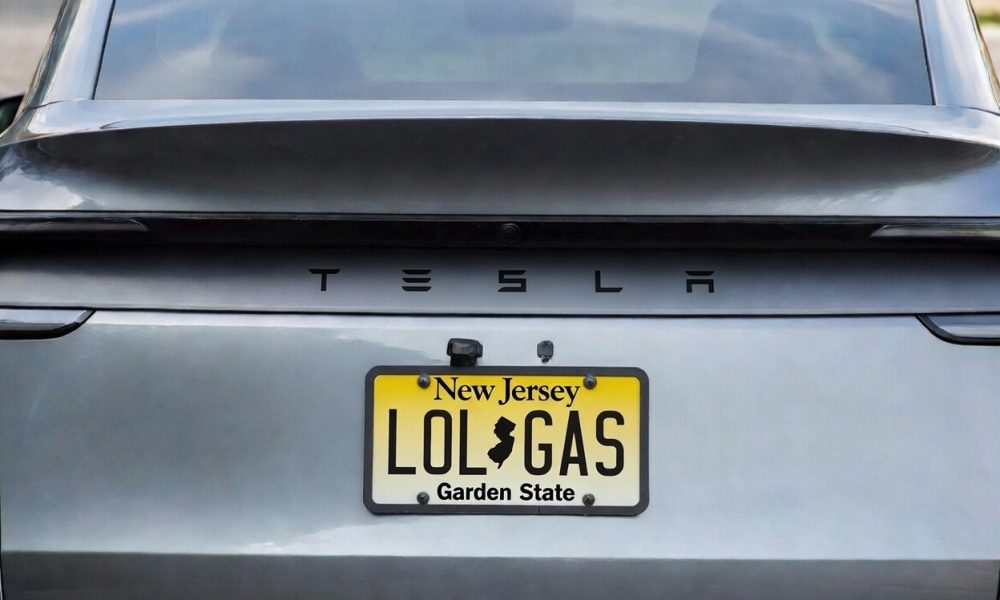
Key Takeaways
- Tesla has launched a direct campaign, urging New Jersey owners to oppose Senate Bill S.1677 and Assembly Bill A.3968, which it argues could effectively halt the deployment of true driverless technology in the state.
- The proposed legislation aims to establish a three-year autonomous vehicle pilot program but includes stringent requirements, such as mandatory human safety drivers, a $5 million insurance minimum, and 100,000 miles of demonstrated safe autonomous driving, which Tesla deems insurmountable barriers for unsupervised Robotaxi operations.
- Tesla asserts that these restrictions are arbitrary, ignore real-world performance data from its Full Self-Driving (FSD) system, and could cause New Jersey to lag behind states like Texas, where Robotaxi services are already operational.
- The company highlights the safety benefits of Robotaxis, citing that over 94% of serious crashes are due to human error, and projects significant improvements in mobility, reduced congestion, and economic growth if the technology is embraced.
- Legislative supporters, including Senator Andrew Zwicker, defend the bills as a cautious framework prioritizing public safety, while Tesla and pro-AV advocates argue the legislation lacks technology neutrality and acts as a de facto ban on innovative services.
In a significant move impacting the future of autonomous transportation, electric vehicle giant Tesla has initiated a targeted campaign, appealing directly to its New Jersey customer base. The company is warning owners about impending legislation, Senate Bill S.1677 and Assembly Bill A.3968, which it contends would effectively impede the widespread deployment of true driverless technology, specifically its Robotaxi services, across the state.
The legislative efforts aim to establish a three-year pilot program for autonomous vehicles. However, Tesla argues that the bills are laden with prohibitive requirements that would render unsupervised Robotaxi operations economically unfeasible and technically challenging, placing New Jersey at a distinct disadvantage in the burgeoning autonomous vehicle sector.
The Proposed New Jersey Robotaxi Bill: A Deep Dive into Restrictions
At the heart of Tesla’s concern are specific mandates within Senate Bill S.1677 and Assembly Bill A.3968. The company’s communication to its New Jersey owners unequivocally states that the proposed legislation moving through Trenton “would impose restrictions so severe that true driverless deployment would remain illegal.” This direct quote underscores the gravity of the situation as perceived by the electric vehicle pioneer.
Mandatory Human Safety Drivers
One of the most contentious provisions requires a human safety driver to be present during autonomous vehicle operations, even within a pilot program designed to test driverless capabilities. Tesla argues that this requirement fundamentally undermines the concept of a ‘driverless’ system, necessitating a human presence that negates the core purpose and efficiency of autonomous mobility solutions.
Exorbitant Insurance Minimums
The bills also propose a multi-million dollar insurance minimum, reportedly set at $5 million. Tesla views this as an arbitrary and excessively high barrier to entry, particularly for companies seeking to scale driverless services. Such steep financial prerequisites, the company suggests, could disproportionately burden innovators and favor established players with deeper pockets, hindering fair competition in the autonomous vehicle market.

Unrealistic Mileage Thresholds
Furthermore, the legislation demands a threshold of 100,000 miles of demonstrated safe autonomous driving before any full driverless approval can be granted. Tesla contends that this requirement is not only arbitrary but also disregards the extensive real-world performance data already accumulated by advanced systems like its Full Self-Driving (FSD) technology. The company believes such a mandate fails to acknowledge the rapid advancements and proven safety records in controlled and supervised environments.
Tesla’s Counter-Argument: Safety, Innovation, and Economic Growth
Tesla’s campaign is not merely a critique of the New Jersey Robotaxi bill but also a robust defense of autonomous technology’s potential to revolutionize transportation, emphasizing safety, efficiency, and economic benefits.
Addressing Public Safety Concerns
A cornerstone of Tesla’s argument centers on enhanced safety. The company highlights compelling statistics, noting that more than 94 percent of serious crashes are attributable to human error, encompassing factors such as impairment, distraction, or fatigue. Robotaxis, designed to operate without human intervention, are presented as a definitive solution to these pervasive issues, promising a significant reduction in road accidents and fatalities.
The urgency of this safety imperative is underscored by local data: New Jersey recorded 582 traffic deaths in 2025. Tesla argues that delayed adoption of autonomous vehicles translates directly into a continued human cost that could otherwise be mitigated by reliable, driverless transportation systems.
Transformative Mobility Solutions
Beyond safety, Tesla articulates the profound societal benefits of Robotaxis. For families, these vehicles could offer a safer alternative for school runs, eliminating concerns about drowsy or distracted drivers. For seniors and individuals with disabilities, Robotaxis promise an unprecedented level of independence and reliable mobility, overcoming traditional transportation barriers.
In regions with limited public transit options, the company suggests that Robotaxis could deliver affordable, on-demand transportation. This would not only enhance accessibility but also contribute to reducing traffic congestion, mitigating carbon emissions, and lowering overall transportation costs for communities.
Economic Impact and Competitive Disadvantage
Tesla also issues a stark economic warning. The company posits that overly restrictive regulations could significantly cost New Jersey in terms of job creation, innovation investment, and billions in potential economic growth. As autonomous ride-hailing services scale rapidly in more permissive states, New Jersey risks being left behind, losing out on a pivotal technological and economic frontier.
Legislative Stance and Industry Response
The debate surrounding the New Jersey Robotaxi bill involves a careful balancing act between fostering innovation and ensuring public protection, with legislators and technology advocates holding differing views.
Advocates for Caution and Oversight
Supporters of the legislation, including Senator Andrew Zwicker, frame the pilot program as a necessary and cautious framework. They emphasize the inclusion of robust safety oversight mechanisms, such as mandatory incident reporting, the establishment of expert task forces, and restrictions on autonomous vehicle operations in sensitive zones like school areas. From this perspective, the bills represent a responsible approach to integrating emerging technology while prioritizing the safety and well-being of New Jersey residents.
Tesla’s Critique: A De Facto Ban
Conversely, Tesla and other pro-autonomous vehicle advocates argue that the proposed New Jersey Robotaxi bill lacks fundamental technology neutrality. They contend that the stringent requirements effectively create insurmountable entry barriers for commercial deployment, favoring established transportation models over innovative, disruptive technologies. For these proponents, the legislation prioritizes process over outcomes, ultimately functioning as a de facto ban on advanced services like Robotaxi, rather than enabling safe and controlled testing.
Historical Context and Future Implications
This isn’t the first time Tesla has found itself embroiled in legislative skirmishes in New Jersey. The current battle over autonomous vehicle regulations echoes past conflicts the company faced in the state regarding its direct-to-consumer sales model for electric vehicles. These recurring challenges highlight a pattern of regulatory hurdles that Tesla often encounters when attempting to introduce disruptive business models or technologies.
As the legislative hearings for Senate Bill S.1677 and Assembly Bill A.3968 draw nearer, Tesla’s campaign frames the issue as a critical choice for New Jersey. The state must decide whether to protect the existing transportation status quo or embrace what the company describes as life-saving technological progress. With Robotaxi technology already demonstrating its capabilities in states with more permissive regulatory environments, Tesla is urging its New Jersey owners to actively engage with their legislators to ensure their state does not inadvertently lock itself out of the future of transportation.
The outcome of this legislative debate could set a significant precedent, influencing how autonomous vehicle technology is regulated and adopted not just within New Jersey but potentially across other states contemplating similar frameworks. It represents a crucial moment for balancing innovation with public policy, with far-reaching implications for urban planning, economic development, and personal mobility.
FAQ
What is the core issue with the New Jersey Robotaxi bill (S.1677/A.3968) from Tesla’s perspective?
Tesla argues that the proposed bills, while establishing an autonomous vehicle pilot program, include such severe restrictions – like mandatory human safety drivers, a $5 million insurance minimum, and 100,000 miles of testing – that they effectively make true, unsupervised driverless Robotaxi deployment impossible and economically unfeasible in New Jersey.
Why does Tesla believe these restrictions are arbitrary?
Tesla contends that the requirements are arbitrary because they ignore real-world performance data from advanced systems like its Full Self-Driving (FSD). The company suggests these barriers do not reflect the current capabilities or safety records of autonomous technology and may inadvertently favor less innovative competitors or established industries.
What are the key benefits of Robotaxis, according to Tesla?
Tesla emphasizes Robotaxis’ potential to significantly enhance safety by eliminating human error, which is responsible for over 94% of serious crashes. Additionally, they promise greater independence for seniors and people with disabilities, safer school transport, reduced urban congestion and emissions, and more affordable, on-demand public transportation options.
How does New Jersey’s stance compare to other states?
Tesla highlights that New Jersey risks falling behind states like Texas, where unsupervised Robotaxi operations are already active and providing rides in several cities. The company warns that New Jersey’s restrictive rules could stifle innovation, deter investment, and hinder job creation compared to more permissive environments.
What is the counter-argument from supporters of the legislation?
Supporters, including Senator Andrew Zwicker, describe the bills as a cautious framework designed with strong safety oversight. They point to provisions like incident reporting, expert task forces, and restrictions in sensitive areas such as school zones, viewing these measures as essential for balancing technological innovation with public protection and safety.
What action is Tesla encouraging its New Jersey owners to take?
Tesla is directing its New Jersey owners to its advocacy platform, where they can send customized messages to their legislators. The company urges them to advocate for amendments that promote outcome-based safety standards, encourage open competition, and establish clear pathways for fully driverless commercial operations within the state.