
Key Takeaways:
- The Telo MT1 electric truck, an ultra-compact pickup from a California-based startup, is set to enter production later this year.
- Telo has confirmed a remarkable 400-kilowatt (kW) peak charging power for the MT1, a capability rarely seen outside high-end luxury electric SUVs.
- This impressive charging speed is facilitated by an advanced 800-volt battery architecture, complemented by a unique split-pack design that ensures robust performance even on prevalent 400-volt charging infrastructure.
- Designed specifically for urban environments, the Telo MT1 electric truck combines a minimal footprint with substantial utility, aiming to serve a niche market with its versatile features and competitive pricing.
- The company is progressing towards its production target, having recently secured a manufacturing partner for the vehicle’s body-in-white structure.
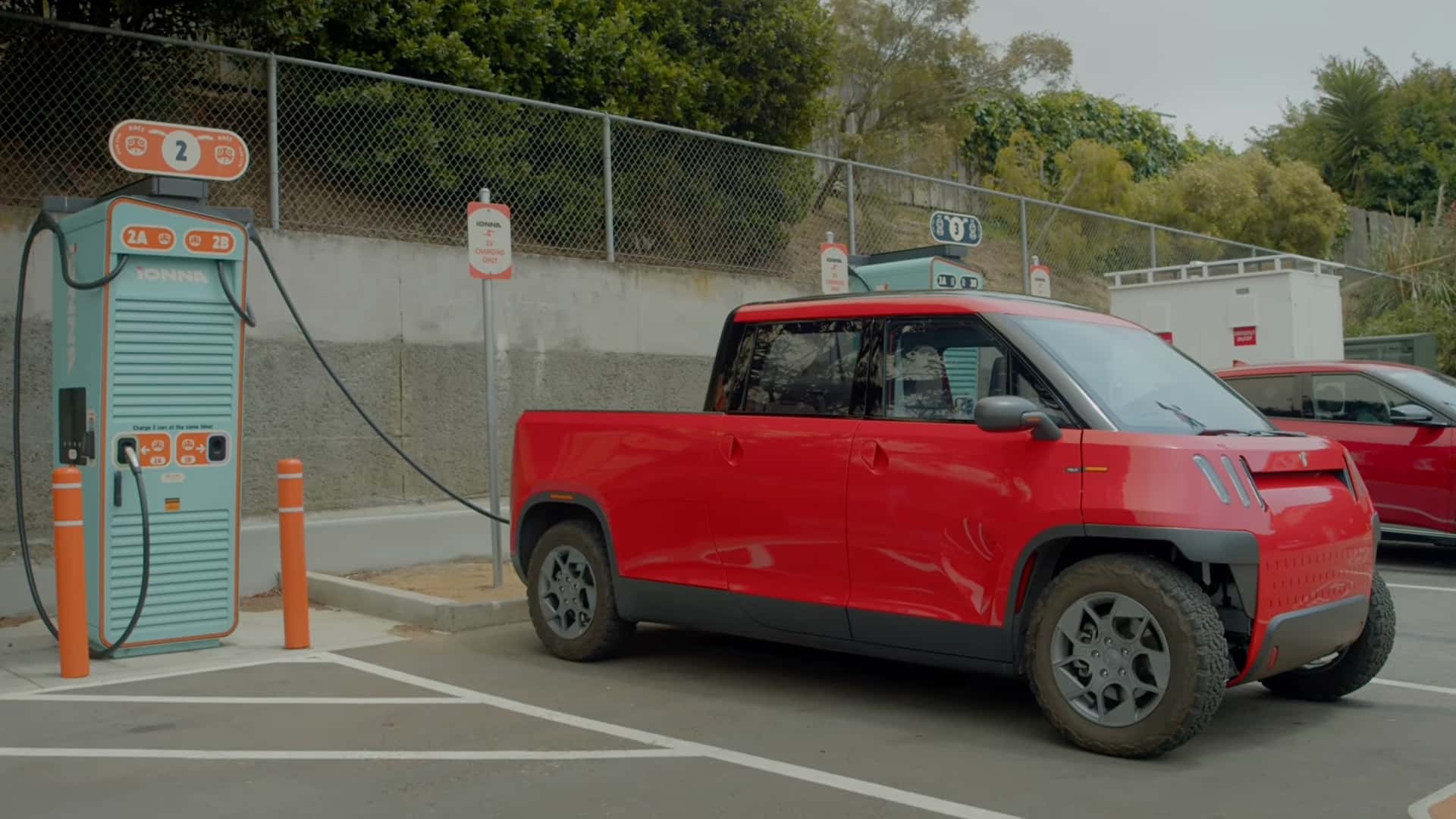
In a significant announcement for the burgeoning electric vehicle market, Telo, a California-based startup, has revealed that its much-anticipated MT1 electric truck will feature an exceptionally high-powered charging capability of 400 kilowatts (kW). This specification positions the compact utility vehicle at the forefront of charging technology, surpassing many mainstream and even some premium electric models currently available.

The Telo MT1 electric truck, first introduced in 2023, is engineered to merge the practicality of a pickup with the agility required for congested urban settings. Its design ethos prioritizes a small footprint without compromising on utility, a proposition that resonates strongly with city dwellers and businesses seeking efficient and versatile electric transport solutions.
Setting a New Benchmark in EV Charging
The disclosed 400 kW charging rate for the Telo MT1 electric truck represents a substantial leap in the compact electric vehicle segment. Such a high power output is typically found in a select few luxury electric SUVs, including models like the BMW iX3, Volvo EX60, and Lucid Gravity. For comparison, widely adopted electric vehicles such as the Tesla Model Y generally peak at 250 kW.
This advanced charging capacity is particularly crucial for urban consumers, who often lack dedicated home charging infrastructure and rely heavily on public charging stations. Faster charging times translate directly into greater convenience and reduced downtime, addressing a primary concern for many potential electric truck owners.

Innovations in Battery Architecture
The impressive charging speed of the Telo MT1 electric truck is underpinned by its sophisticated 800-volt battery system. This high-voltage architecture is instrumental in achieving rapid charging by allowing less current to deliver the same power, thereby reducing heat generation and improving efficiency during the charging process. Forrest North, Telo’s Chief Technology Officer, emphasized the strategic thinking behind this choice:
“This is all part of tring to get as much capability into a small footprint as possible, and also trying to optimize for the infrastructure that exists today.”
A key innovation in the MT1’s battery design is its split-pack architecture. While 800-volt systems offer superior charging potential, a significant portion of the current charging infrastructure operates at 400 volts. To ensure broad compatibility and optimal performance across various charging stations, Telo has engineered its battery to effectively function as two 400-volt packs in parallel, or a single 800-volt pack when these sections are connected in series.
North elaborated on the necessity of this adaptable design: “Most 800V EVs end up being compromised at 400-volt chargers. And because there are more 400-volt chargers out there than there are 800-volt chargers, that’s too big of a limitation for our customers.” This approach contrasts with other solutions, such as the DC-DC converters used by the Porsche Taycan, which steps up voltage for 150 kW charging at 400V stations, or the clever rear-motor design in Hyundai’s E-GMP cars, which achieve around 135 kW at similar chargers, peaking over 200 kW at dedicated 800V-capable stations.
While Telo has yet to specify the maximum charging power of the MT1 at 400V stations, it is generally anticipated to be approximately half of the peak rate in split-pack electric vehicles. The company also intends to release official charging time estimates in the near future. Crucially, Telo assures that the 400 kW peak will not be a fleeting moment at the start of a charging session, but a sustained capability.
“We know it’s about sustained charge, that’s what brings the actual charge time down, what people care about is charging time,” North stated. “We will be able to charge at 400 kilowatts, sustained.”
Designed for Urban Utility and Versatility
The Telo MT1 electric truck is remarkably compact, measuring just 152 inches (approximately 386 cm) in length, making it comparable in size to a Mini Cooper. Despite its diminutive dimensions, the vehicle is engineered for practicality, offering seating for five occupants and a 60-inch (approximately 152 cm) bed.
The design incorporates innovative features reminiscent of larger utility vehicles, such as a Rivian-style gear tunnel and a collapsing midgate, enhancing its versatility for carrying longer items. These elements underscore Telo’s commitment to delivering a highly functional vehicle tailored for urban lifestyles, where space and adaptability are paramount.
Performance, Range, and Market Positioning
The Telo MT1 electric truck will offer a flexible range, estimated between 260 miles and 350 miles, depending on the chosen configuration and whether customers opt for a single- or dual-motor setup. The base model is projected to retail at an accessible price point of $41,520, positioning it competitively within the emerging electric truck segment.
Telo’s strategy is to carve out a niche in the electric vehicle market, rather than directly challenging mass-market leaders. The company aims for an annual production of approximately 5,000 units, leveraging a contract manufacturer to streamline its manufacturing process.
Navigating the Path to Production
Bringing a new electric vehicle to market is an endeavor fraught with challenges, as many EV startups have discovered. It requires substantial capital, robust manufacturing capabilities, and meticulous planning. Telo has raised approximately $30 million to date, a modest sum when compared to the hundreds of millions or billions secured by other startups attempting large-scale production.
Despite these inherent hurdles, Telo continues to make steady progress towards its production goals. The company recently announced the selection of a partner for manufacturing the body-in-white – the fundamental structural component of a vehicle. This marks a critical step towards commencing production of the Telo MT1 electric truck, with the company targeting the end of this year for its initial rollout.
As the electric vehicle landscape continues to evolve, the Telo MT1 electric truck stands out as a promising contender, blending innovative charging technology with a practical, urban-focused design. Its journey from concept to production will be closely watched by industry observers and potential consumers alike.
Frequently Asked Questions (FAQ)
What is the Telo MT1 electric truck?
The Telo MT1 electric truck is an upcoming ultra-compact electric pickup truck developed by the California-based startup Telo. It is designed for urban use, combining a small footprint with impressive utility and advanced electric vehicle features.
What is the peak charging speed of the Telo MT1?
The Telo MT1 electric truck boasts a peak charging power of 400 kilowatts (kW). This high charging rate is comparable to luxury electric SUVs and is a significant advantage for quick recharging, especially for urban users.
How does the Telo MT1 achieve such high charging speeds?
The Telo MT1 electric truck utilizes an 800-volt battery architecture, which is known for enabling faster charging. It also features a unique split-pack design that ensures compatibility and efficient charging even at the more common 400-volt charging stations.
What are the dimensions and seating capacity of the Telo MT1?
The Telo MT1 electric truck is approximately 152 inches long, making it roughly the size of a Mini Cooper. Despite its compact size, it offers seating for five passengers and includes a 60-inch bed, along with versatile features like a collapsing midgate.
When is the Telo MT1 expected to go into production?
Telo aims to begin production of the MT1 electric truck by the end of this year. The company has already taken critical steps, including securing a manufacturing partner for the vehicle’s basic structural components.
What is the estimated range and price of the Telo MT1?
The Telo MT1 electric truck is expected to offer a range between 260 and 350 miles, depending on the configuration. The base model is projected to have a starting price of $41,520, making it a competitive option in its segment.
What is Telo’s production strategy for the MT1?
Telo plans to be a niche player in the EV market, aiming to produce approximately 5,000 trucks annually through a contract manufacturing arrangement. This approach allows the company to focus on design and technology while leveraging established manufacturing expertise.